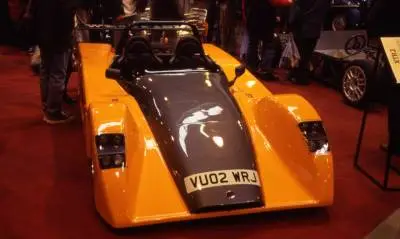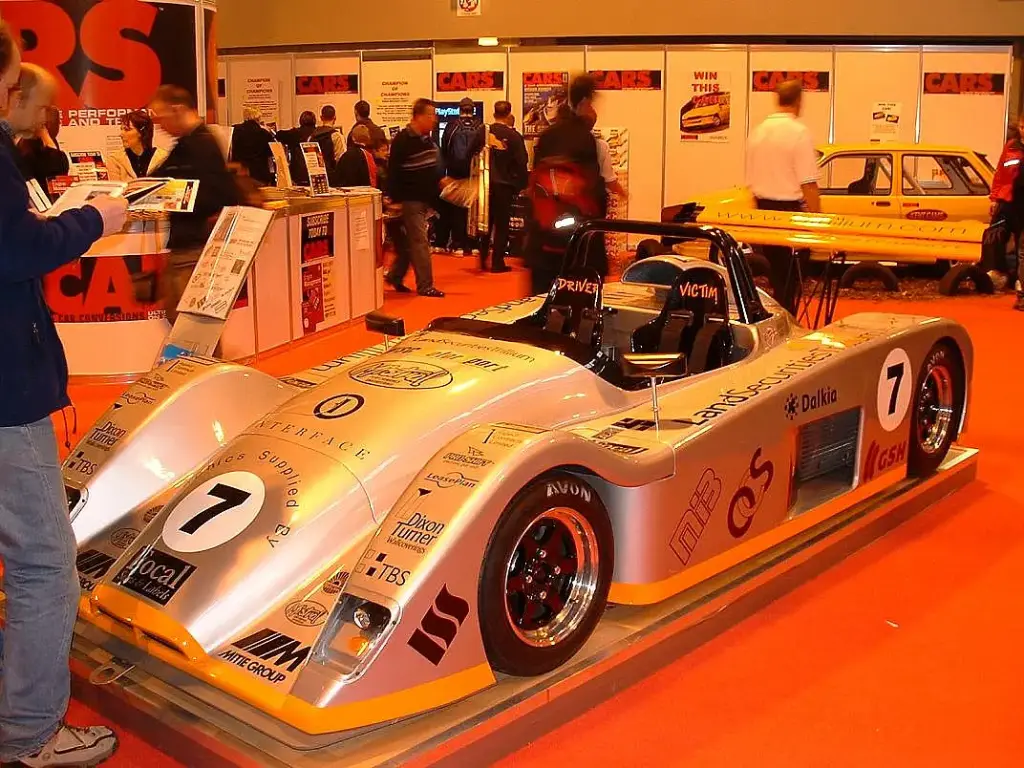
The Westfield XTR2 was an ultralight two-seater built by Westfield Sportscars in the West Midlands. It used a steel tubular spaceframe and a 1299 cc Suzuki Hayabusa engine, and with no windscreen, doors or roof it weighed as little as 410 kg — light enough to worry far more expensive cars.
Westfield XTR2 at a glance
| Maker | Westfield Sportscars Ltd, West Midlands, UK |
|---|---|
| Layout | two-seater, open, no doors or roof |
| Chassis | lightweight steel tubular spaceframe |
| Engine | 1299 cc Suzuki Hayabusa four-cylinder |
| Power | 170 hp (127 kW) |
| Gearbox | six-speed sequential |
| Weight | 410–440 kg, depending on configuration |
| Class | Bike Engined Car (BEC) |
| Road legal | yes, at least in the UK |
| Top Gear | faster lap than the Pagani Zonda |
| Production end | end of 2010 |
| Replaced by | Westfield XTR4 (Audi 1.8 turbo) |
This page is based on the English Wikipedia articles on the XTR2 and on Westfield Sportscars.
History of the Westfield XTR2
The XTR2 was built for the track first and the road second. Its chassis was a lightweight steel tubular spaceframe, and behind the cockpit sat a 1299 cc Suzuki Hayabusa four-cylinder engine of the kind used in motorcycles, rated at 170 hp (127 kW) and driving through a six-speed sequential gearbox. There was no windscreen, no side doors and no roof, and the interior was almost devoid of luxury; the result was a car weighing between 410 and 440 kg depending on configuration.
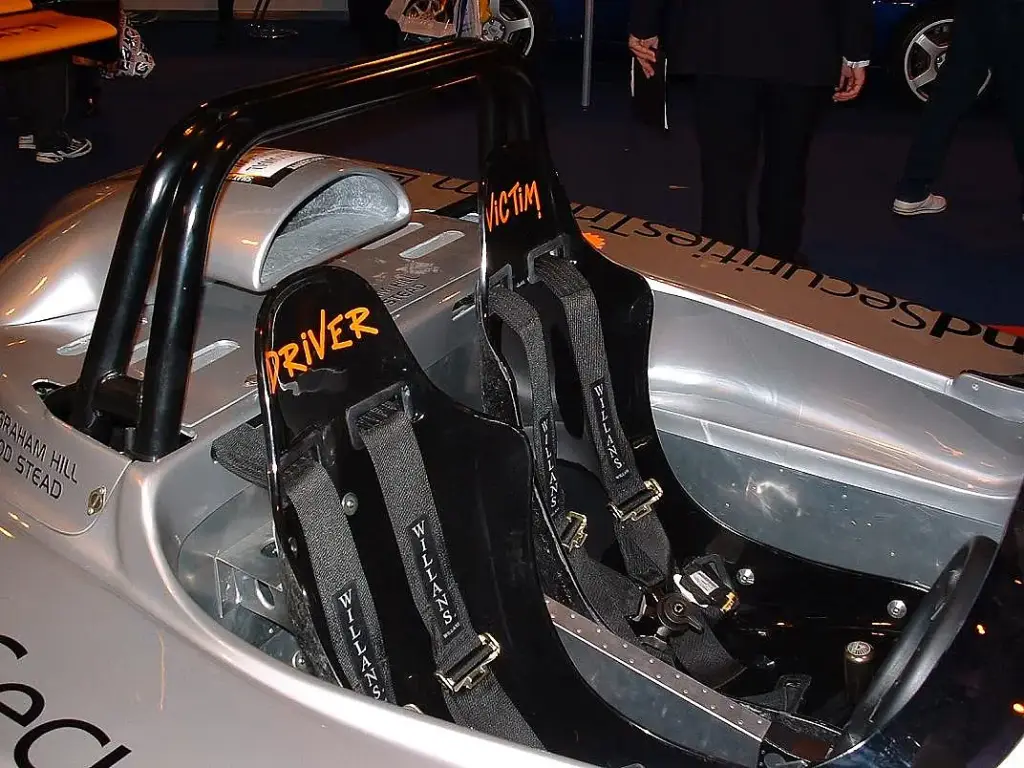
That power-to-weight ratio made the XTR2 a member of the Bike Engined Car class popular at track days, and it was intended primarily as a track car — though it remained legal for road use, at least in Britain. It made a notable appearance on the revamped BBC Top Gear, where it outperformed a Pagani Zonda in a timed lap. The Zonda was the current track-time champion at the time. The record was later beaten by several expensive sports cars, but the lap foreshadowed what another minimalist machine, the Ariel Atom, would do; the XTR2 has often been compared with the Atom.
The car’s career ended when Westfield stopped production of the XTR2 at the end of 2010 to concentrate on its core Seven product. Its replacement, the Westfield XTR4, had already gone: it offered an Audi 1.8 DOHC turbo engine and various aesthetic and structural differences to accommodate a car engine rather than a motorcycle unit, and it ceased production some years before the XTR2.
Design and features
- Motorcycle engine: a 1299 cc Hayabusa four with a six-speed sequential gearbox.
- Extreme light weight: 410–440 kg thanks to a spaceframe and minimal bodywork.
- Track-first design: no windscreen, doors or roof; road legal in the UK.
- Giant-killing lap: quicker round the Top Gear test track than a Pagani Zonda.
Westfield XTR2 versions
- XTR2: the Hayabusa-engined original, built until the end of 2010.
- XTR4: the Audi 1.8 turbo successor, with a wider cockpit and a revised rear end.
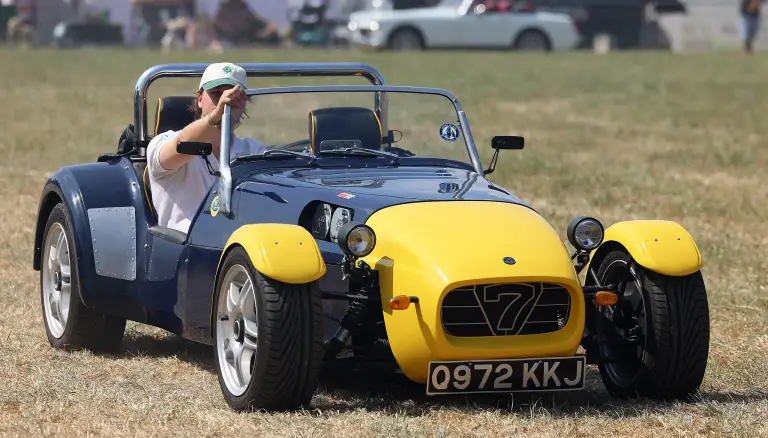
The XTR2 belongs to the XTR line and shares its Lotus Seven ancestry with the Westfield SE. More cars are in the Westfield collection.
Video: Westfield XTR power lap – Top Gear – BBC
Video on YouTube.
Sources
- Westfield XTR2, English Wikipedia: specification, weight, Top Gear, end of production
- Westfield Sportscars, English Wikipedia: company background, Top Gear lap