The Westfield XTR is the track-oriented branch of the Westfield range, grown out of the same Lotus Seven-inspired thinking as the road cars but aimed at the circuit. It became the XTR2, famous for beating a Pagani Zonda on Top Gear, and then the Audi-engined XTR4.
Westfield XTR at a glance
| Maker | Westfield Sportscars Ltd, Kingswinford, West Midlands |
|---|---|
| Family | track-focused specials, separate from the SE road cars |
| Output | about 450 SEi and XTR chassis a year (Total Kit Car) |
| XTR2 engine | 1299 cc Suzuki Hayabusa four, 170 hp (127 kW) |
| XTR2 gearbox | six-speed sequential |
| XTR2 weight | 410–440 kg |
| XTR2 production end | end of 2010 |
| XTR4 shown | 2005 |
| XTR4 engine | Audi 1.8 DOHC turbo, 195 CV |
| XTR4 0–100 km/h | 3.2 seconds |
| XTR4 top speed | about 160 mph |
| XTR4 gearbox | six-speed sequential |
The XTR has no Wikipedia article of its own; the page draws on the XTR2 article and on the Westfield Sportscars articles in English, German and Italian.
History of the Westfield XTR
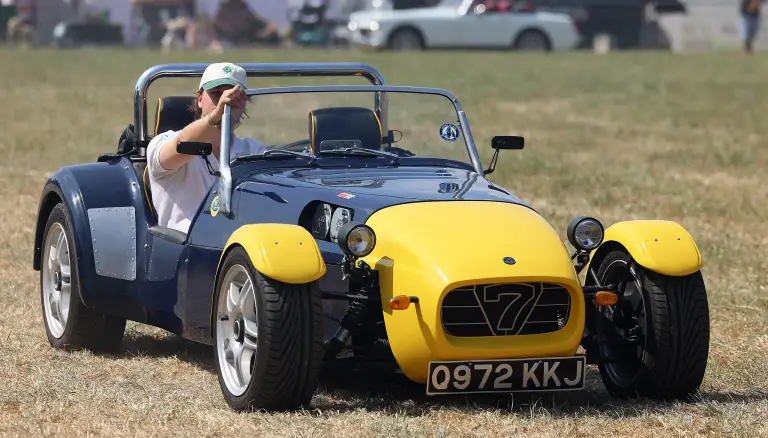
Westfield built its name on the SE, a Lotus Seven replica, but the company also made cars aimed squarely at the track. The XTR line grew out of that idea and shared the Kingswinford works with the road cars: according to figures Westfield gave the magazine Total Kit Car, the company produced about 450 SEi and XTR chassis each year.
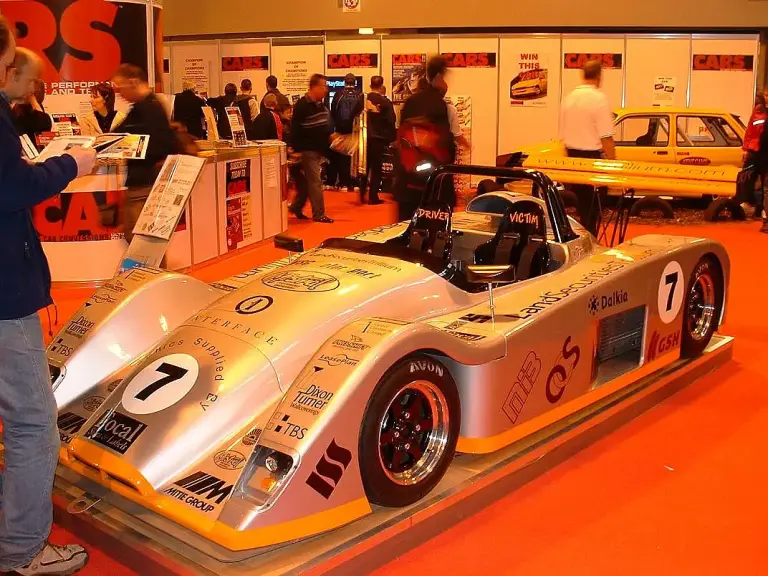
The best-known member of the family is the XTR2, an ultralight two-seater with a steel tubular spaceframe, a 170 hp (127 kW) 1299 cc Suzuki Hayabusa four-cylinder engine and a six-speed sequential gearbox. With no windscreen, doors or roof it weighed only 410–440 kg depending on specification and was intended mainly for the race track, although it remained legal for road use at least in Britain. In the first series of BBC’s Top Gear a Westfield XTR2 driven by the black Stig set a faster lap time than the reigning record holder of that series, the Pagani Zonda.
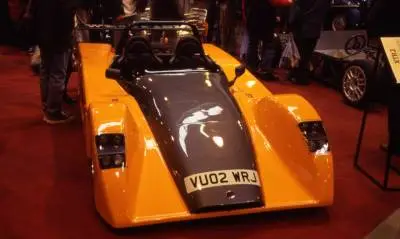
The XTR4 was presented in 2005 to replace the XTR2. It moved from a motorcycle engine to a car engine, an Audi 1.8 DOHC turbo rated at 195 CV, which took it from 0 to 100 km/h in 3.2 seconds with a top speed estimated at 160 mph. Compared with the XTR2 it had a roomier cockpit and a revised rear end with a new rear wing, engine cover and roll bar; the gearbox was a six-speed sequential, the brakes were discs all round and the suspension was independent with adjustable dampers. Westfield stopped making the XTR2 at the end of 2010 to concentrate on its core Seven product, the XTR4 having ceased some years earlier.
Design and features
- Race-track intent: a stripped two-seater rather than a road-going tourer.
- Steel spaceframe: a light tubular chassis carrying minimal bodywork.
- Motorcycle power in the XTR2: a Hayabusa engine and sequential gearbox.
- Car power in the XTR4: an Audi 1.8 turbo with a wider cockpit and revised rear.
Westfield XTR versions
- XTR2: Hayabusa-engined, 410–440 kg, built until the end of 2010.
- XTR4: Audi 1.8 turbo, 195 CV, shown in 2005 as the XTR2’s replacement.
The XTR was developed alongside the road-going Westfield SE; the XTR2 has a page of its own. More cars are in the Westfield collection.
Sources
- Westfield Sportscars, English Wikipedia: output, Top Gear lap, end of XTR2
- Westfield XTR2, English Wikipedia: XTR2 specification, XTR4
- Westfield Sportscars, Italian Wikipedia: XTR4 engine, performance, rear-end changes
- Westfield Sportscars, German Wikipedia: company background