The Wartburg 1.3 was the last Wartburg. Built at Eisenach from October 1988 to April 1991, it replaced the long-serving two-stroke with a 1.3-litre four-cylinder Volkswagen engine, but it arrived late, cost nearly twice as much as the 353 W and was swept away by German reunification.
Wartburg 1.3 at a glance
| Maker | Automobilwerk Eisenach (AWE), East Germany |
|---|---|
| Production | October 1988 – 10 April 1991 |
| Based on | Wartburg 353 |
| Engine | 1.3-litre four-cylinder four-stroke, Volkswagen EA111 |
| Power | 58 PS (43 kW); 64 PS (47 kW) from July 1990 |
| Gearbox | new transaxle, floor-mounted gear lever |
| Front end | new ahead of the A-pillar |
| Track | 10 cm wider at the front, 6 cm at the rear |
| Price | nearly twice that of the 353 W |
| Pickup | 1.3 Trans, about 920 built |
| Built | 152,757 |
Based on one source, the English Wikipedia article on the Wartburg 1.3; the German article could not be retrieved.
History of the Wartburg 1.3
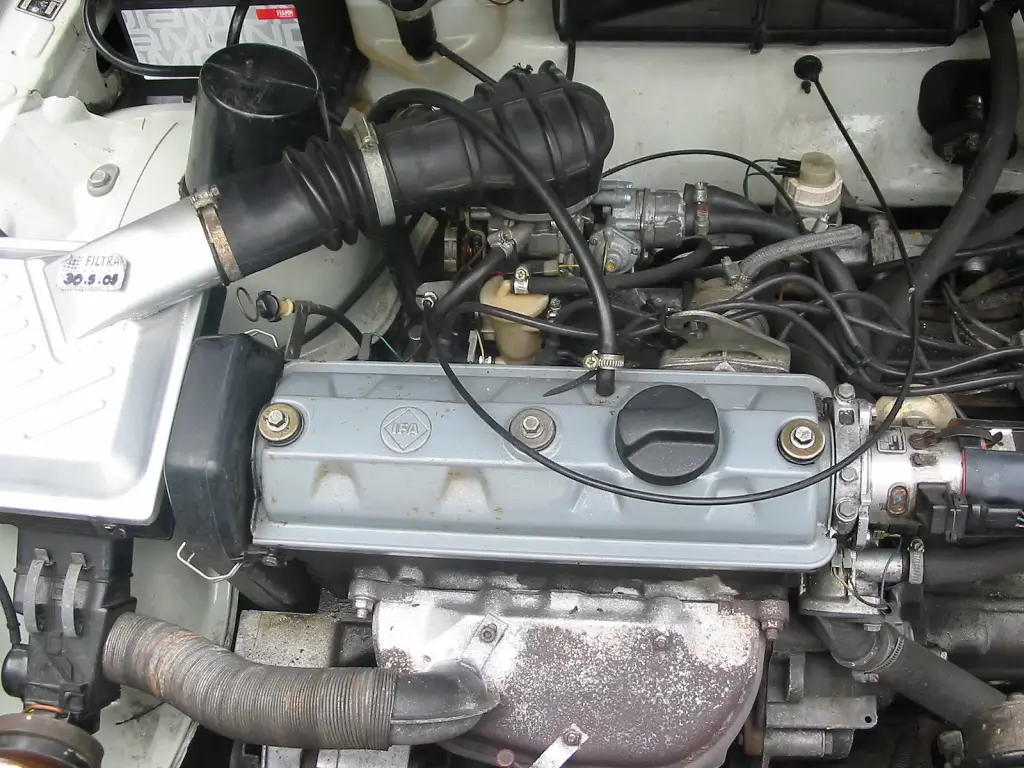
In 1984 a deal was reached for IFA to assemble Volkswagen’s 1.3-litre EA111 engine under licence at the Barkas plant in Karl-Marx-Stadt. The engine was too long to be mounted lengthways in the 353 and too long to fit between the front wheels in a transverse layout. One prototype with the engine mounted lengthways was nicknamed Nasenbär (coati) because of its long nose; Wartburg chose the transverse option, and the 1.3 only entered production in October 1988 because a new transmission and an entirely new front end had to be developed.
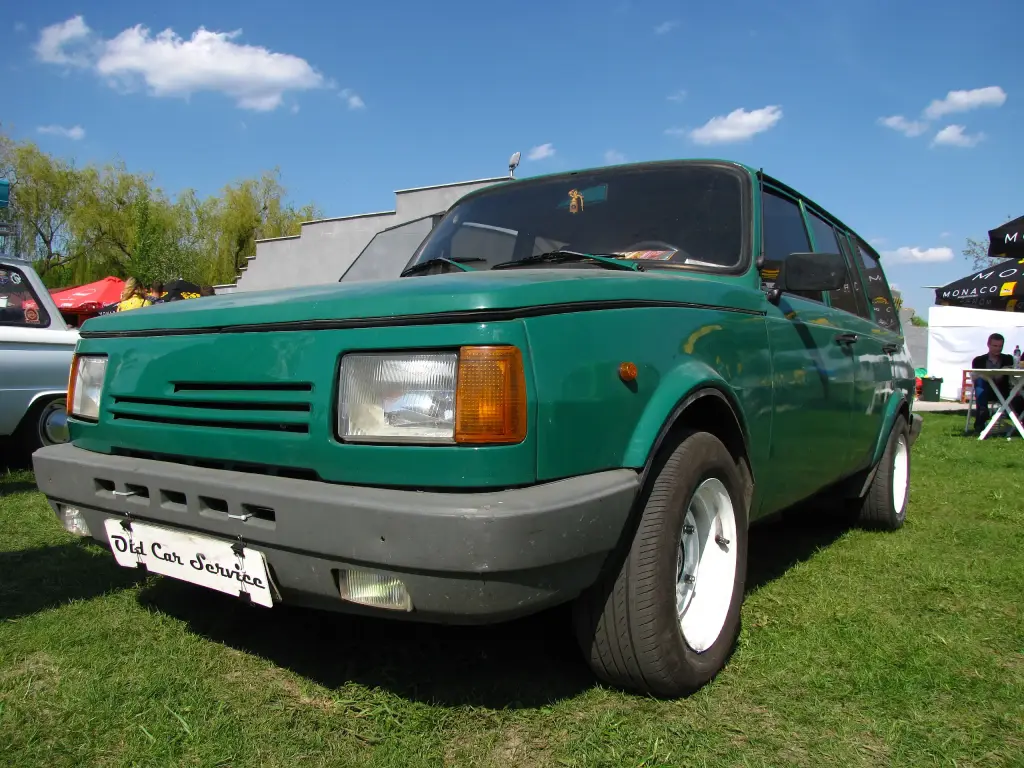
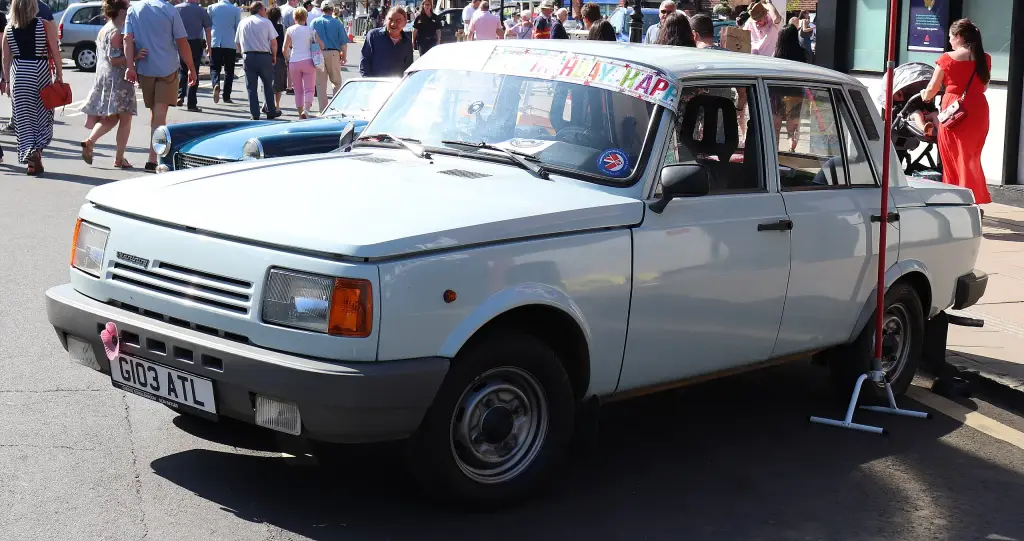
Everything ahead of the A-pillar was new, with large wraparound turn signals and a smoother shape. The track grew by 10 cm at the front and 6 cm at the rear, which required small extensions to the wings, and the gear lever moved from the steering column to the floor. The changes cost far more than the 1600 cc four-stroke that Wartburg’s own engineers had developed in the early 1970s would have done.
The 1.3 was expensive — nearly twice the price of the 353 W — and sold slowly from the start. The two-stroke 353 W stayed in production until 1989, when imported cars became available, and being a four-stroke was not enough to convince buyers, especially in Western export markets. After German reunification in October 1990 the car was no longer competitive, and production ended on 10 April 1991. In all 152,757 were built, about half for export.
A pickup, the 1.3 Trans, was offered outside the Eastern Bloc and about 920 were made. Karmann showed a more luxurious prototype based on the Tourist called the Tourist L, with a glass sunroof, roof rails and an upgraded interior, while Irmscher built a sportier 1.3 New Line on 14-inch alloy wheels of which only two were made. A Wartburg 1.4 with a Renault engine was developed in 1990, but the plant was liquidated instead; the site became the Opel Eisenach joint venture, which built the Opel Vectra.
Design and features
- Volkswagen engine: the 1.3-litre EA111 four-cylinder, built under licence at the Barkas plant.
- New front end: everything ahead of the A-pillar was redesigned for the transverse engine.
- Wider track: 10 cm at the front and 6 cm at the rear, with small wing extensions.
- Floor gear change: a move away from the column lever used on earlier Wartburgs.
- More power: 58 PS at launch, raised to 64 PS in July 1990.
Wartburg 1.3 versions
- 1.3 saloon: the standard four-door car.
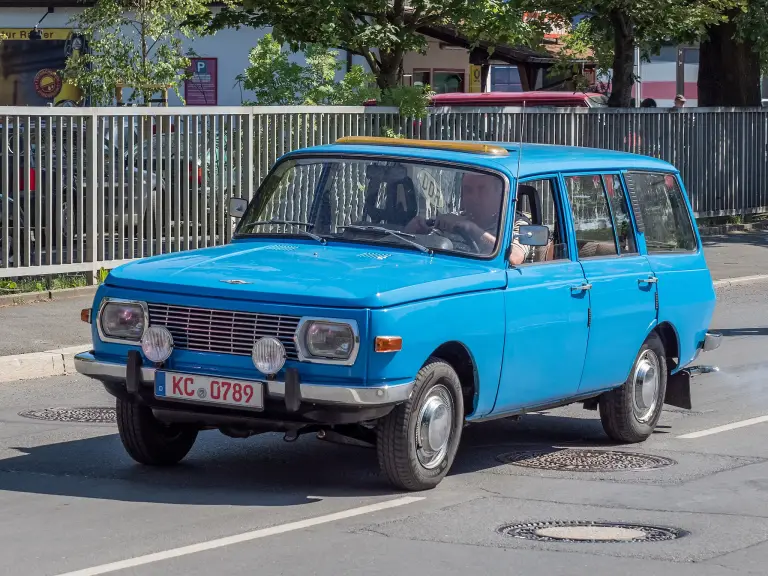
- 1.3 Tourist: the estate version.
- 1.3 Trans: pickup sold outside the Eastern Bloc, about 920 built.
- Tourist L by Karmann: prototype with glass sunroof and roof rails.
- 1.3 New Line by Irmscher: sporty prototype on 14-inch alloys, two built.
- Wartburg 1.4: 1990 prototype with a Renault engine.
The 1.3 was the last development of the Wartburg 353, itself the successor of the Wartburg 311. More cars from Eisenach are in the Wartburg collection.
Video: Wartburg 1.3 commercial
Video on YouTube.
Sources
- Wartburg 1.3, English Wikipedia: engine deal, development, production, variants