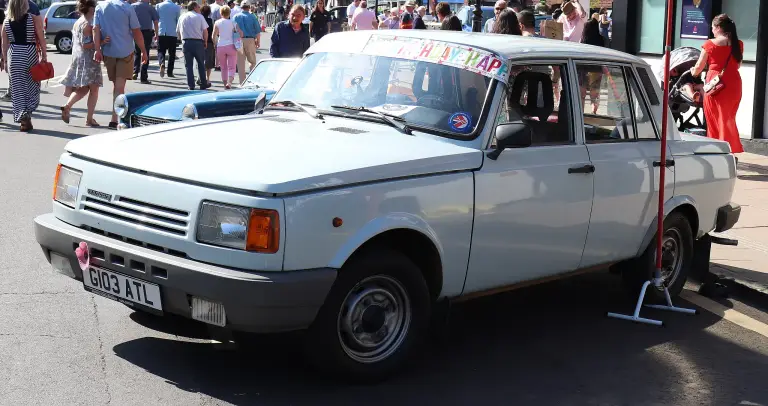
The Wartburg 353 was the longest-lived Wartburg of all. Built at Eisenach from 1966 to 1989 and known in some export markets as the Wartburg Knight, it carried a 1-litre three-cylinder two-stroke engine with only seven major moving parts, and it stayed in production long after its rivals had moved to four-stroke engines.
Wartburg 353 at a glance
| Maker | VEB Automobilwerk Eisenach (AWE), East Germany |
|---|---|
| Production | 1966–1989 |
| Predecessor | Wartburg 311 and 312 |
| Successor | Wartburg 1.3 |
| Engine | 992 cc three-cylinder two-stroke |
| Power | 50–55 PS (37–40 kW) |
| Torque | 106 N·m in the last version |
| Top speed | 150–155 km/h |
| 0–100 km/h | about 12 seconds, reached in second gear |
| Gearbox | four-speed, five-speed rare; freewheel fitted |
| Boot | 525 litres |
| Export name | Wartburg Knight |
| Pickup | 353 Trans, 450 kg payload, export only |
Based on one source, the English Wikipedia article on the Wartburg 353; the German article could not be retrieved.
History of the Wartburg 353
The 353 was first shown in June 1966, created by the former BMW works at Eisenach, then operating as EMW under Soviet occupation. Its origins went back to a 1938 DKW design, and it was powered by a three-cylinder two-stroke with only three pistons, three connecting rods and a crankshaft — which gave rise to the saying among owners that one drives a car but only has to maintain a motorcycle. The engine was close to the DKW-derived unit used in the Saab 93, 95 and 96.
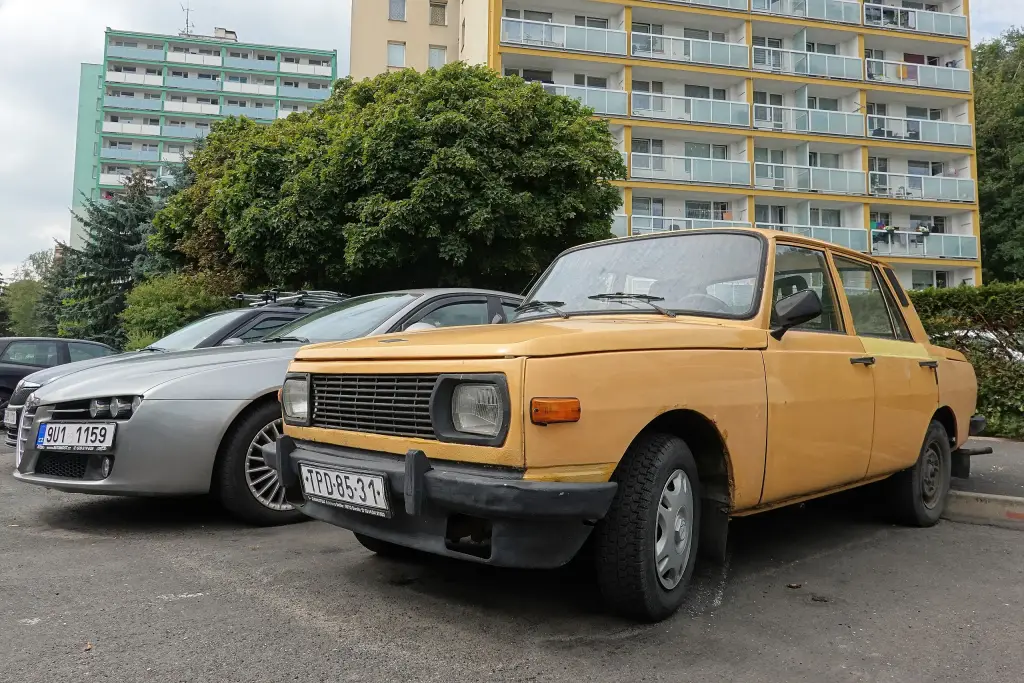
The transmission had a freewheel, so the clutch was not needed between gears. Intended to save fuel and protect the engine from oil starvation, it also disabled engine braking; drivers could switch it off under the steering column, which was useful because the front brakes were prone to overheating and fading. Early cars had a column gear change, later ones a floor lever. Ignition used three coils and contact breakers, one per cylinder, with no distributor. Four- and five-speed gearboxes were offered, the latter rare.
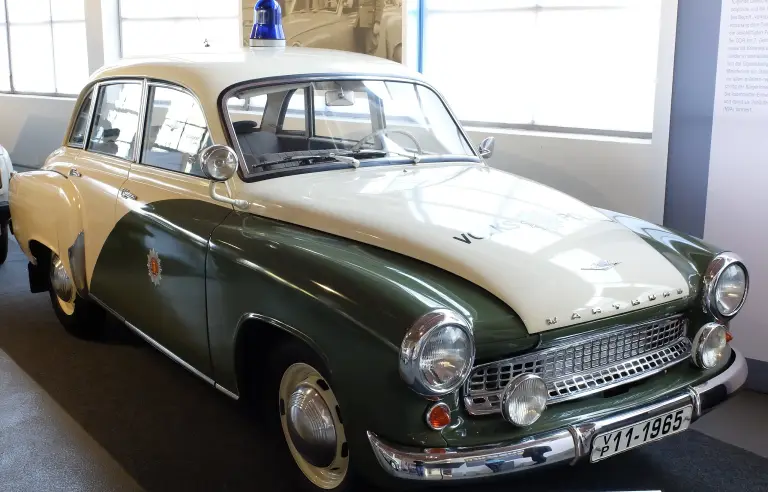
At home the 353 served as official transport, sometimes as a Volkspolizei patrol car, though private buyers could wait ten to fifteen years for delivery under the planned economy. It was exported to most European markets and to South Africa, where its low price made it competitive; its 58 hp and 170 km/h were unusual for a car of that engine size. The 1985 facelift brought a new front, a different layout around the engine and a new carburettor. In 1988 the car was renamed Wartburg 1.3 with a four-stroke Volkswagen-designed engine, and production ended in 1991 after Opel bought the plant.
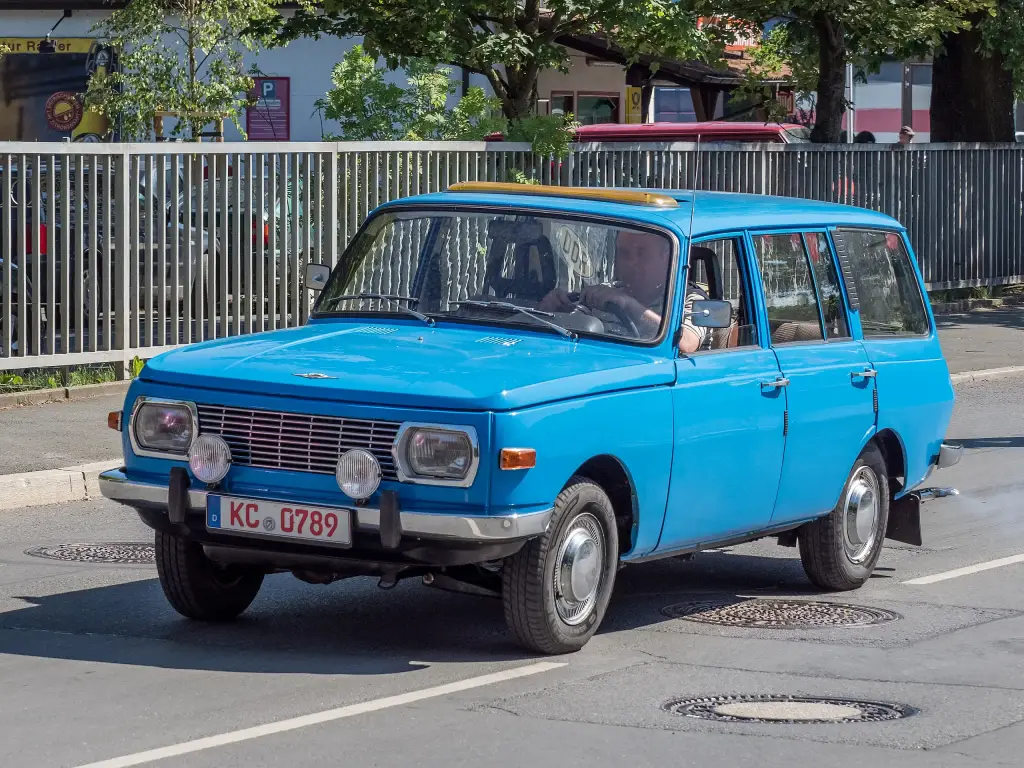
Besides the saloon, the range included the 353 Trans pickup, which had a payload of only 450 kg and was sold for export only, and estate versions built as the Tourist. Today owners’ clubs exist across Europe and many 353s are still used as rally cars, often tuned well past the original 150–155 km/h.
Design and features
- Seven moving parts: three pistons, three connecting rods and a crankshaft made the two-stroke cheap to maintain.
- Freewheel: clutchless changes between gears, at the cost of engine braking unless it was switched off.
- Smooth engine: owners compared the three-cylinder two-stroke to a six-cylinder four-stroke.
- Practical body: a 525-litre boot and a flat floor between the front seats.
- Electronic gauges: fitted after 1983, unusual for an Eastern Bloc car.
- Rally following: the strong chassis and simple engine keep the 353 in historic motorsport.
Wartburg 353 versions
- 353 saloon: the standard four-door family car.
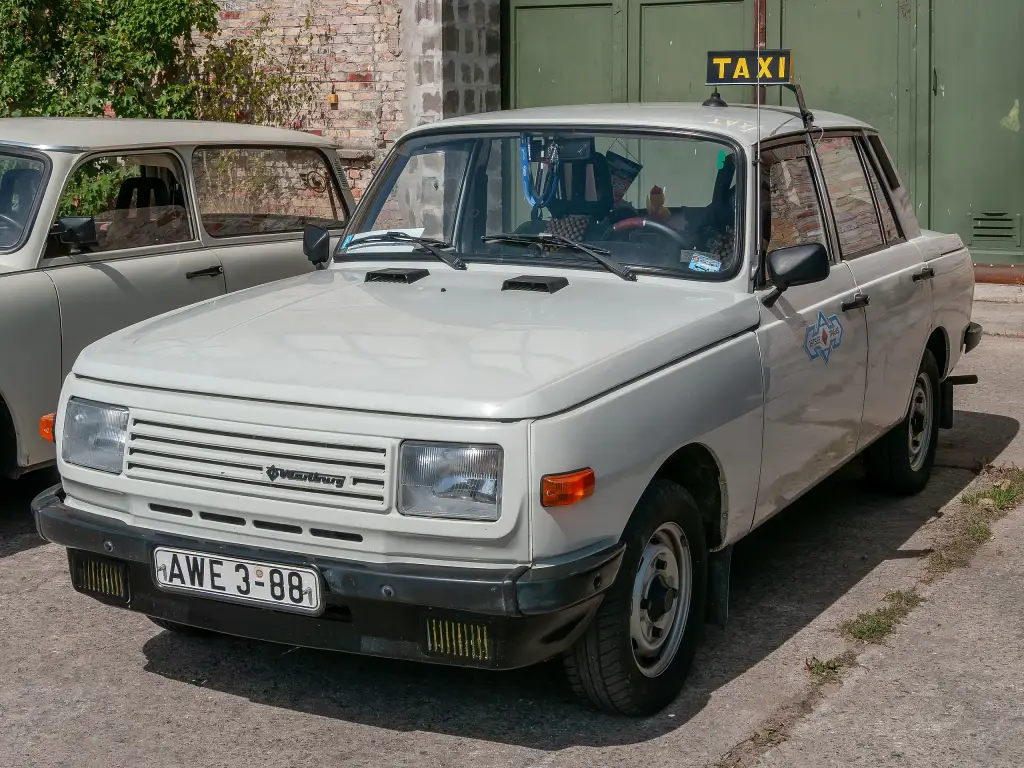
- 353 W: the updated model of the 1970s and 1980s, with the 1985 facelift and new carburettor.
- 353 Tourist: the estate version, built alongside the saloon.
- 353 Trans: pickup with a 450 kg payload, export only.
- Knight: the name used for the 353 in some export markets.
- 353 rally cars: privately and works-prepared competition cars.
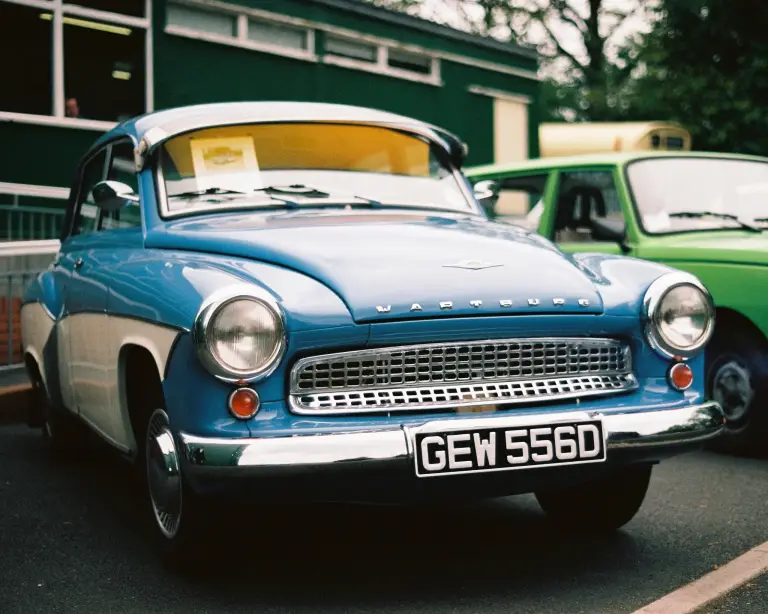
The 353 replaced the Wartburg 311 and 312, and was replaced by the Wartburg 1.3. More cars from Eisenach are in the Wartburg collection.
Video: 1988 Wartburg 353 Tourist estate, one owner from new
Video on YouTube.
Sources
- Wartburg 353, English Wikipedia: design, engine, transmission, exports, variants