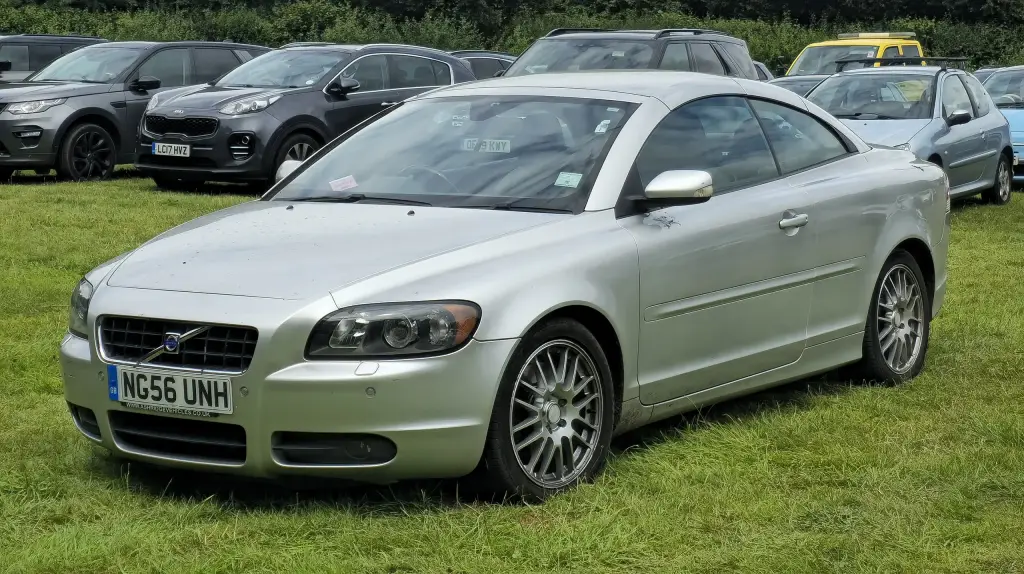
The Volvo C70 was a two-door car built from 1996 to 2013 in two generations. The first, from 1996 to 2005, came as a coupé and then a cloth-roof convertible; the second, from 2006 to 2013, was a convertible with a three-piece retractable hardtop.
Volvo C70 at a glance
| Production | 1996–2013 |
|---|---|
| First generation | coupé 1996–2002, convertible 1997–2005 |
| First-gen built | 72,000 in total, 26,036 coupés and 46,786 convertibles |
| Built in | Uddevalla, Sweden |
| First-gen design | exterior by Ian Callum, interior led by Jose Diaz de la Vega |
| Engineering partner | TWR (Tom Walkinshaw Racing) |
| Engines | 2.0, 2.4 low-pressure turbo, 2.0 and 2.3 high-pressure turbo |
| Second generation | 2006–2013, retractable hardtop, built by Pininfarina Sverige |
| Safety | ROPS rollover hoops, boron-steel A-pillars, front and side airbags |
History of the Volvo C70
Volvo showed the first-generation C70 at the 1996 Paris Motor Show, launching it in Europe as a 1997 model and in North America a year later as a 1998 car. Ian Callum designed the exterior and the Mexican designer Jose Diaz de la Vega led the interior team. The car broke Volvo’s decades-long tradition of boxy shapes and was the company’s first luxury coupé since the 780; design chief Peter Horbury joked that with the C70 Volvo “kept the toy, and threw away the box”.
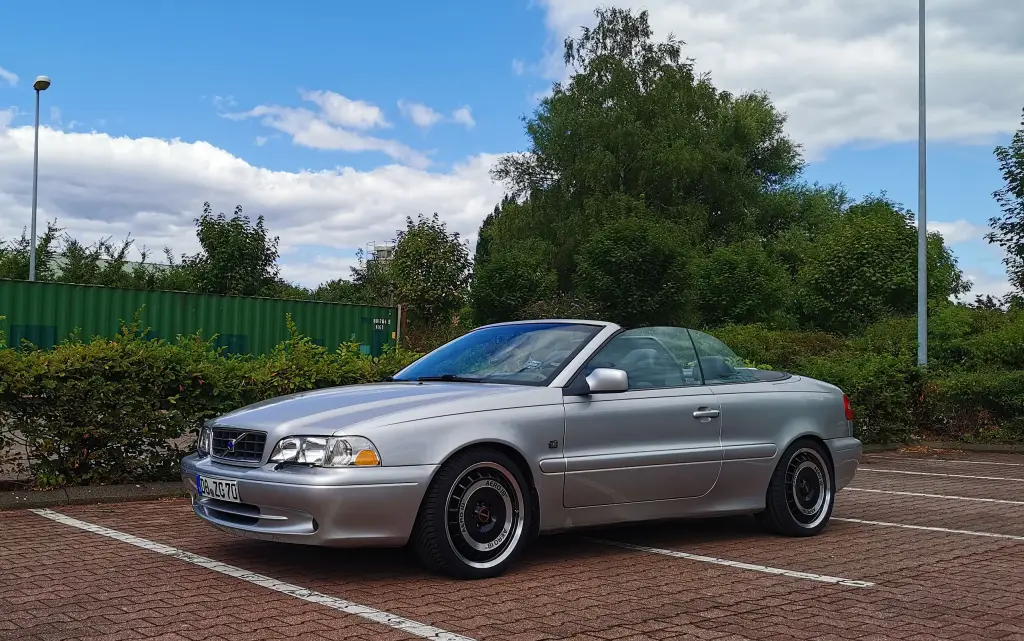
The car was developed over 30 months on a platform derived from the 850, with Britain’s TWR co-designing the basic structure and tuning the suspension. The joint venture later ran into disputes, and TWR took no part in the second generation. The C70 was built at Uddevalla on a line separate from the 70-series saloons and estates, and it was Volvo’s first modern convertible.
Convertible engineering
The four-seat convertible had an electrically heated glass rear window, an automatic pop-up rollover hoop system marketed as ROPS, seatbelt pre-tensioners, boron-steel reinforced A-pillars, front and side airbags and a horseshoe-shaped safety cage around the passenger compartment. The fully automatic cloth roof, offered in four colours at first, was worked by a single dashboard control and folded under a rigid tonneau cover. Like most convertibles it suffered from poor rear visibility and scuttle shake.
Of the 72,000 first-generation C70s built up to 2006, 26,036 were coupés and 46,786 convertibles; 24,948 convertibles and 6,465 coupés were sold in the United States. The car was launched in saffron pearl metallic, the colour used in the 1997 film The Saint, and only about 145 cars were painted in it. A C70 Collection edition appeared in February 2004 with special leather and 17-inch wheels.
Second generation
The second C70 made its debut at the 2005 Frankfurt Motor Show, sharing the S40 platform and designed by John Kinsey. It was built by Pininfarina Sverige AB, the first time Pininfarina had manufactured outside Italy, and its three-section retractable hardtop replaced both the earlier coupé and convertible. The American Insurance Institute for Highway Safety named it a Top Safety Pick in its first convertible crash tests.
Design and features
- Two generations: a coupé and soft-top, then a retractable hardtop.
- TWR input: British racing engineering in the first-generation chassis.
- Conversion safety: ROPS hoops, boron-steel A-pillars and a safety cage.
- Pininfarina build: Italian coachbuilding in Uddevalla for the second generation.
- The Saint link: launched in saffron pearl, recalling the P1800 of the television series.
Volvo C70 versions
- C70 coupé (1996–2002): the original two-door.
- C70 convertible (1997–2005): cloth roof, 46,786 built.
- C70 Collection (2004): special leather and wheel package.
- 2006–2013 C70: retractable hardtop on the S40 platform.
- T5 models: high-pressure turbo versions of the first generation.
The C70 sat above the Volvo 850-derived range and, in its second generation, shared the platform of the Volvo C30. More cars are in the Volvo collection.
Sources
- Volvo C70, English Wikipedia: generations, design, safety, production numbers