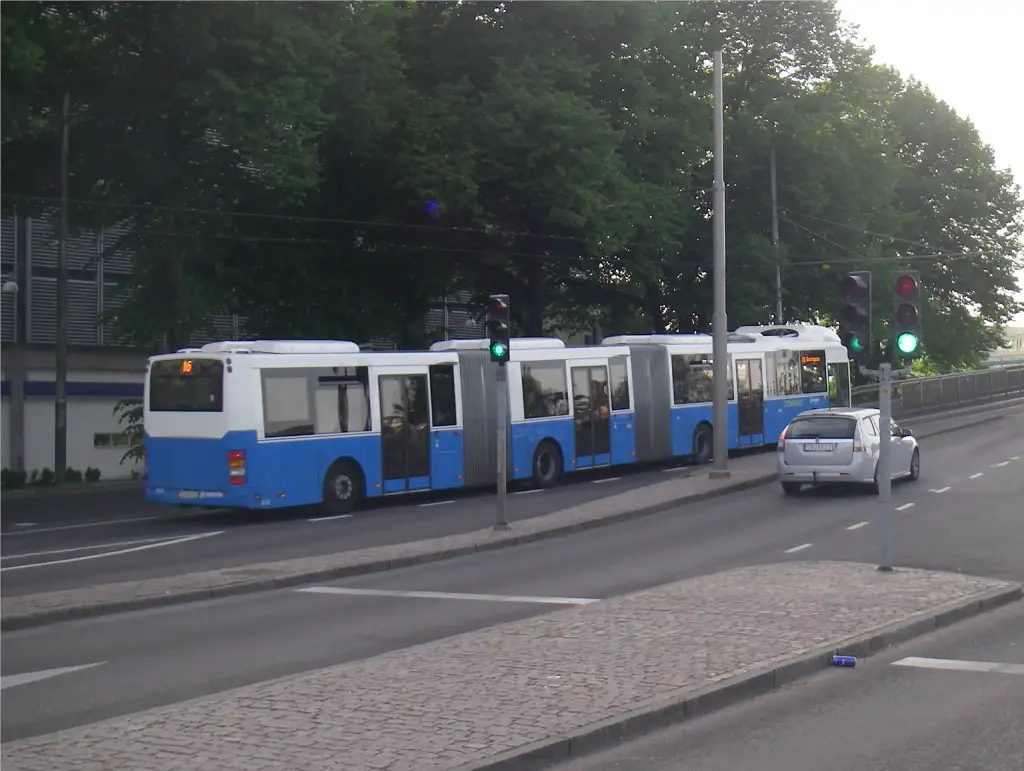
The Volvo B9S was an articulated bus chassis built from 2002 to 2011. It was designed as a mid-engined successor to the B10MA and B12MA, with a low floor along at least 40% of its length, and it sold in large numbers in Sweden, Chile and Brazil.
Volvo B9S at a glance
| Production | 2002–2011, Europe |
|---|---|
| Type | mid-engined articulated bus chassis |
| Engine | 9.4-litre six, D9A 340 bhp then D9B 360 bhp |
| Versions | B9SALE low-entry, B9SALF full low floor |
| Front section wheelbase | 6.4 m, shortened to 5.0 m for Santiago |
| Built in | Borås, Sweden and Curitiba, Brazil |
| Integral buses | Volvo 7500 and 8500 |
| Chilean order | 1,159 B9SALF for Santiago |
| Successor in Europe | B9LA, 2011 |
History of the Volvo B9S
The B9S was launched in 2002 to replace the Volvo B7L, though production of the older chassis continued, and it was meant to repeat the success of the B10MA and B12MA articulated buses. Volvo conceived it as a mid-engined articulated bus with a low floor at least along 40% of its length and an engine of less than ten litres, using the new 9.4-litre unit from the FM truck range as an alternative to the 12-litre engines of rivals such as the Van Hool AG300 and AGG300.
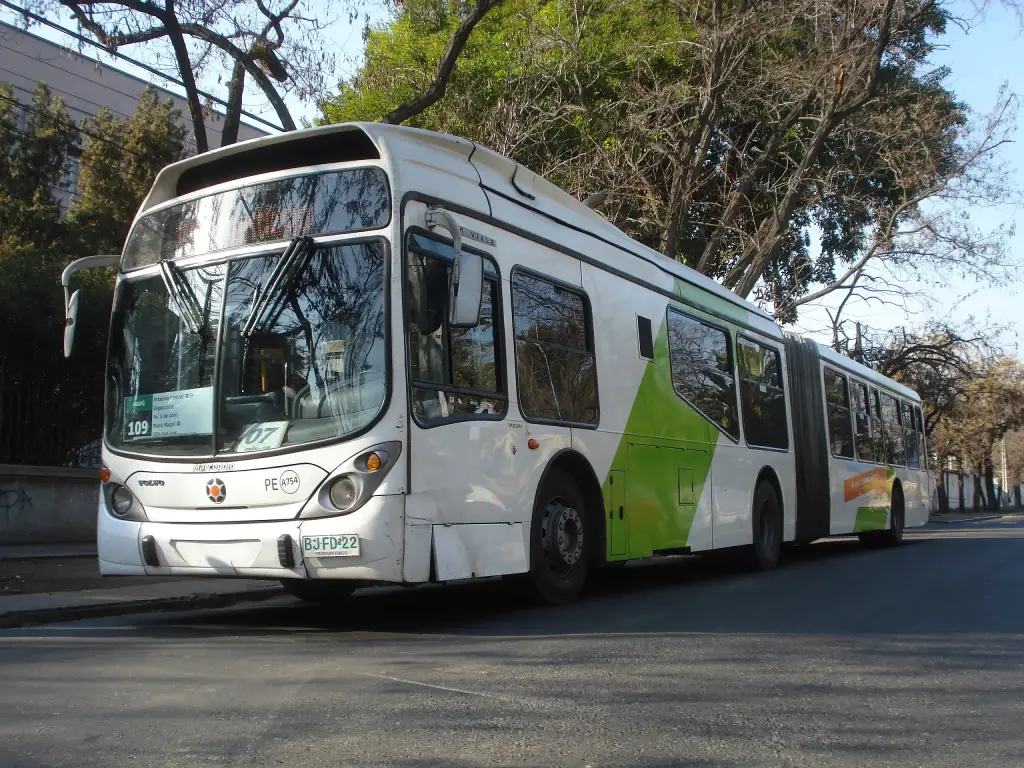
Putting a vertical engine in the centre of the front section avoided a wasted space, freed room at the rear and gave more even weight distribution. Unlike the earlier B10MA and B12MA, the B9S had a step-free entrance and was fully wheelchair accessible. It was built at Volvo’s Borås plant in two forms, the B9SALE with a low entry and the B9SALF with an entirely low floor, with a 6.4-metre front section wheelbase and Säffle bodywork as the integral Volvo 7500.
Buses built up to 2005 used the 340 bhp D9A engine, which then gave way to the 360 bhp D9B to meet Euro 4 and Euro 5 rules. In 2005 production spread to Volvo’s Curitiba plant in Brazil, which took an order for 1,159 B9SALF buses for the Santiago de Chile urban system; the front section was shortened to 5 metres to cope with narrow streets. Between 2007 and 2010 about 100 more were built there for Chile and 100 for Brazil.
Where it ran
The B9S succeeded in only a few countries. In Sweden it served the urban systems of Stockholm, Östergötland, Umeå and Gothenburg, including rapid transit services; in Chile it formed part of the biggest single Volvo bus order; and in Brazil it worked the São Paulo rapid transit corridors in articulated and bi-articulated form. European production stopped in 2011 because it was not profitable enough, and Volvo offered the existing rear-engined B9LA, with the same final engine, as the successor.
Design and features
- Mid-engined articulated layout: a vertical 9.4-litre engine in the front section.
- Accessibility: step-free entry and full wheelchair access.
- Two floors: B9SALE low-entry and B9SALF fully low-floor.
- Huge single order: 1,159 buses for Santiago de Chile.
- Integral bodies: supplied as the Volvo 7500 and 8500.
Volvo B9S versions
- B9SALE: low-entry articulated chassis.
- B9SALF: fully low-floor version, the Chilean order.
- Volvo 7500 and 8500: integral buses on the chassis.
- Bi-articulated: Brazilian versions for São Paulo.
- B9LA: rear-engined successor offered from 2011.
The B9S replaced the articulated B10MA and B12MA and was sold alongside the Volvo B9R coach chassis; its integral bodywork is described in the Volvo 8500 article. More buses are in the Volvo collection.
Sources
- Volvo B9S, English Wikipedia: design, versions, engines, plants, markets