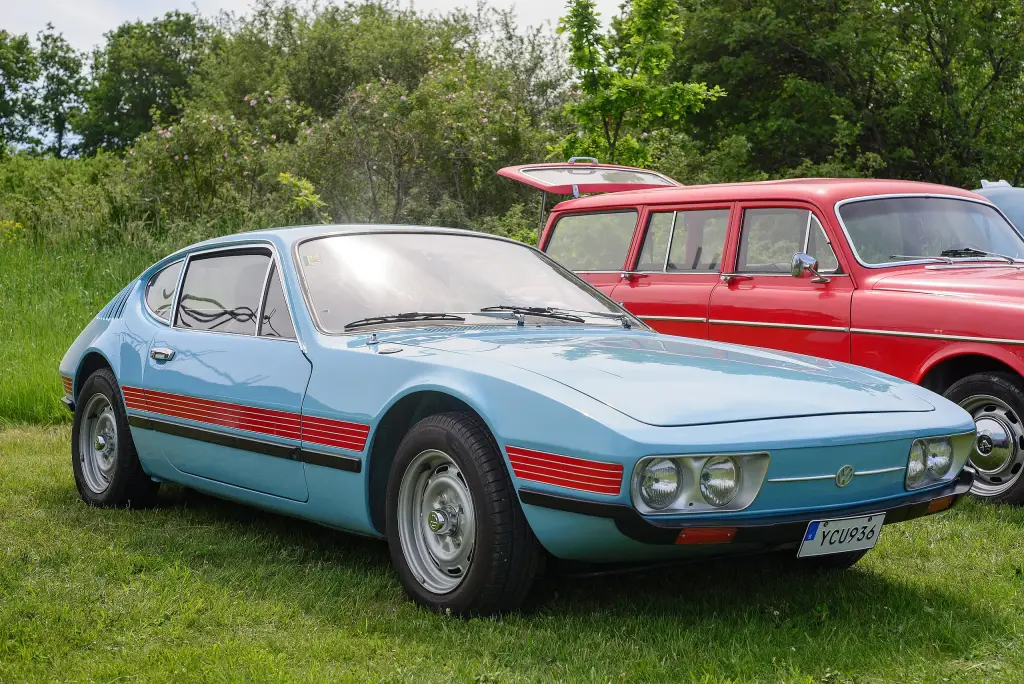
The Volkswagen SP2 is a sports car developed by Volkswagen do Brasil and built from July 1972 until December 1975 on the chassis of the Brazilian Type 3. Its initials are said to stand for São Paulo, where it was built, or for “sports prototype”. In its issue of 20 June 1973 the German magazine Hobby called it the most beautiful Volkswagen in the world.
Volkswagen SP2 at a glance
| Maker | Volkswagen do Brasil |
|---|---|
| Internal code | Type 149 |
| Production | July 1972 – December 1975 |
| Basis | Brazilian Volkswagen Type 3 chassis |
| Project | Projeto X, started by Rudolf Leiding in 1970 |
| Designers | Márcio Lima Piancastelli, José Vicente Novita Martins, Jorge Yamashita Oba |
| Engineers | Paulo Iványi, then Wilhelm Schmiemann |
| Study shown | 24 March 1971, German industrial fair, São Paulo |
| Launch | 26 June 1972, together with the SP1 |
| Price | 29,700 cruzeiros, almost two Beetles |
| Bodies | hand-built by Karmann-Ghia do Brasil |
| Assembly | sheet metal at Anchieta, painting at Volkswagen, final assembly at Karmann-Ghia |
History of the Volkswagen SP2
From August 1952 Brazil passed progressively stricter laws that effectively closed its market to imported cars, and the local manufacturers, mostly divisions of multinational firms, offered few sports cars. Into that gap came small makers such as Willys with the Interlagos, Puma with its DKW- and later Volkswagen-engined GT, Brasinca, FNM and Adamo. The sportiest cars in Volkswagen do Brasil’s own range in the late 1960s were the ageing Karmann Ghia Type 14 and its Brazilian stablemate, the Karmann Ghia TC. Rudolf Leiding, who took over Volkswagen do Brasil in March 1968, is said to have been convinced of the need for a sports car when a Puma director suggested that Volkswagen, having nothing new to show, display a Puma on its stand at the 1969 Brazilian motor show.
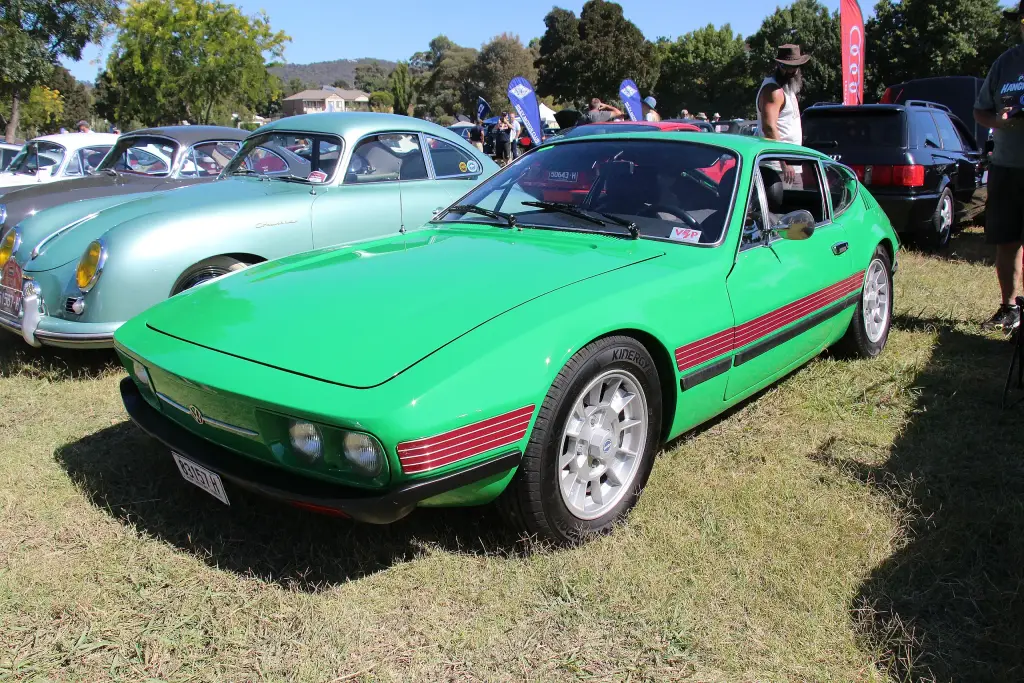
In 1970 Leiding launched Projeto X to build a sports car that would liven up Volkswagen’s staid image in Brazil, and he drew some of the earliest sketches himself, asking his wife Helga for advice because he wanted the car to appeal to women buyers. Designers Márcio Lima Piancastelli, José Vicente Novita Martins and Jorge Yamashita Oba were assigned to the project, with Paulo Iványi as first lead engineer and later Wilhelm Schmiemann. The first prototype was handcrafted by Giuseppe Accasto, who had come to Brazil from Italy for Carrozzeria Fissore. The resulting study was the first Volkswagen with the “shark face” nose, also called the Leiding face, which later appeared on the German 412 and the Brazilian Brasília; it was shown at the German industrial fair in São Paulo on 24 March 1971. Leiding returned to Germany to head Volkswagen’s worldwide operations before the SP2 reached production.
Three facilities were involved in building the car. Design and development, plus testing on the local track, took place at Factory 2 in São Paulo; the Anchieta plant in São Bernardo do Campo made all the sheet metal and built the chassis, engines, transmissions and axles on a dedicated line and painted the bodyshells; and Karmann-Ghia do Brasil hand-assembled the bodies on a line shared with the Karmann Ghia TC, mounted them on the floor assemblies and finished the cars. The first chassis, serial BL-000101, was made on 23 June 1972, and the SP1 and SP2 were both launched on 26 June 1972. The SP2 cost 29,700 cruzeiros, almost as much as two Beetles, and because of its modest engine output a contemporary joke claimed that SP stood for Sem Potência, Portuguese for without power.
Design and features
- Brazilian project: Projeto X, begun by Rudolf Leiding in 1970 to give Volkswagen a sports car.
- Type 3 basis: the chassis came from the Brazilian Type 3.
- Shark face: the first Volkswagen with the Leiding nose, later used on the 412 and the Brasília.
- Hand-built: bodies assembled by Karmann-Ghia do Brasil alongside the Karmann Ghia TC.
- Expensive: at 29,700 cruzeiros it cost almost as much as two Beetles.
Volkswagen SP2 versions
- SP1 (1972): launched together with the SP2.
- SP2 (1972–1975): the better-known model, coded Type 149.
The SP2 used the chassis of the Brazilian Type 3 and was built next to the Karmann Ghia TC, a generation after the Brasília had taken the shark-face nose. More cars are in the Volkswagen collection.
Video: Garagem do Bellote TV: Volkswagen SP2
Video by Renato Bellote on YouTube.
Sources
- Volkswagen SP2, English Wikipedia: project, designers, assembly, launch and price