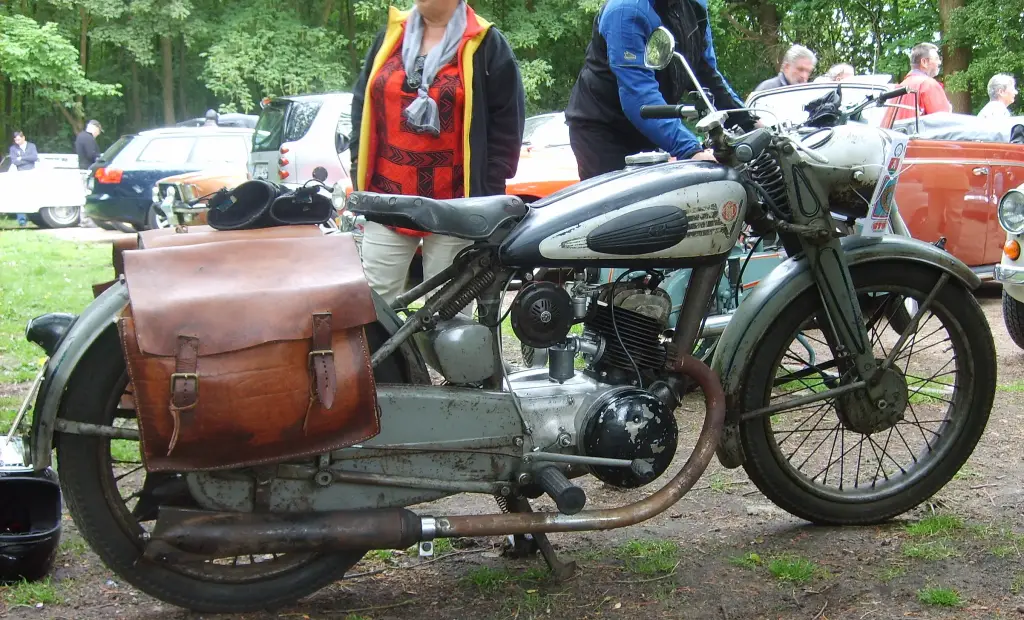
The Victoria KR 25 was a 250 cc motorcycle made by Victoria-Werke of Nuremberg. It belonged to the firm’s Neue Linie, first presented at the International Automobile and Motorcycle Exhibition in Berlin in February 1937, and its design went back to work by Richard Küchen. Production began in 1937 and was taken up again after the Second World War with more powerful engines.
Victoria KR 25 at a glance
| Maker | Victoria-Werke, Nuremberg |
|---|---|
| Model series | KR 25 |
| Production | from 1937; resumed after the Second World War |
| Class | 250 cc motorcycle |
| Premiere | IAMA Berlin, February 1937 |
| Name | KR = Kraftrad, 25 = 250 cc; HM = Hochleistungsmotor |
| Carburettor | Bing two-slide AJ 2/22; AJ 2/24 on the KR 25 HM |
| Gearbox | four-speed, shift pattern 1-0-2-3-4 |
| Final drive | roller joint chain, 120 rollers of 1/2 x 5/16 inch |
| Wheelbase | 1,375 mm |
| Ground clearance | 125 mm unloaded, 115 mm loaded |
| Fuel consumption | 2.75 litres per 100 km at 60 km/h |
Based on one source, the German Wikipedia article on the KR 25. The English Wikipedia has no page for this model. The page describes the KR 25 series; the video shows a KR from the same family.
History of the Victoria KR 25
Victoria-Werke of Nuremberg built bicycles, motorcycles and later motor vehicles, and in the 1930s it replaced its older range with the Neue Linie. The KR 25 belonged to that new line together with the larger models of the series. The name was a description rather than a fancy: KR stood for Kraftrad, the German word for motorcycle, and 25 for the 250 cc engine displacement. On some versions the letters HM were added, meaning Hochleistungsmotor, a high-performance engine.
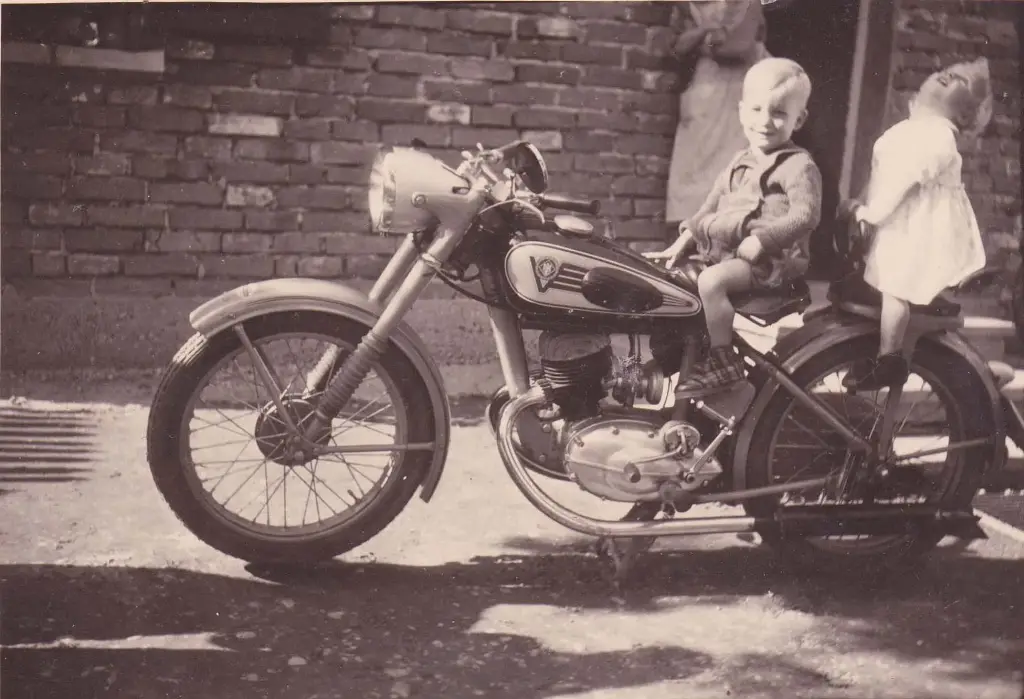
The new models were shown to the public for the first time in February 1937 at the International Automobile and Motorcycle Exhibition in Berlin. Production started in the same year. The war interrupted it, and after 1945 Victoria resumed the KR 25 with engines revised for more power; the surviving instruction book for the KR 25 Aero is dated December 1950, which shows the model was still being sold around that time.
The technical character of the KR 25 was typical of a well-made German lightweight of its day. The crankshaft ran in three roller bearings and one ball bearing, all lubricated from the gearbox oil, and the fuel-air mixture came from a Bing two-slide carburettor. The four-speed gearbox used the 1-0-2-3-4 shift pattern, and the rear wheel was driven by a roller joint chain with 120 rollers of 1/2 by 5/16 inch. Final gearing was 1:2.69 for solo use and 1:2.86 when a sidecar was fitted, so the bike could be ordered with a chair in mind.
Design and features
- Neue Linie construction: based on designs by Richard Küchen and shown at the 1937 Berlin show.
- Simple 250 cc single: the KR 25 name states its class directly.
- Bing carburettor: a two-slide AJ 2/22, replaced by the AJ 2/24 on the HM version.
- Sidecar gearing: a lower final ratio of 1:2.86 was available for sidecar use.
- Electrical equipment: a Noris MLZS 45/60/1 L alternator with a mechanical regulator.
Victoria KR 25 versions
- KR 25 (1937 onwards): the standard 250 cc model of the Neue Linie.
- KR 25 HM: the Hochleistungsmotor version, with a Bing AJ 2/24 carburettor.
- Post-war KR 25: built again after 1945 with engines revised for more power.
- KR 25 Aero: the version described in the December 1950 instruction book.
The KR 25 was one of the motorcycles that made Victoria-Werke a household name in Germany; the firm’s earliest product, the Victoria Combination, belongs to a completely different chapter of French motor history. More vehicles are in the Victoria collection.
Sources
- Victoria KR 25, German Wikipedia: model history, names, technical details