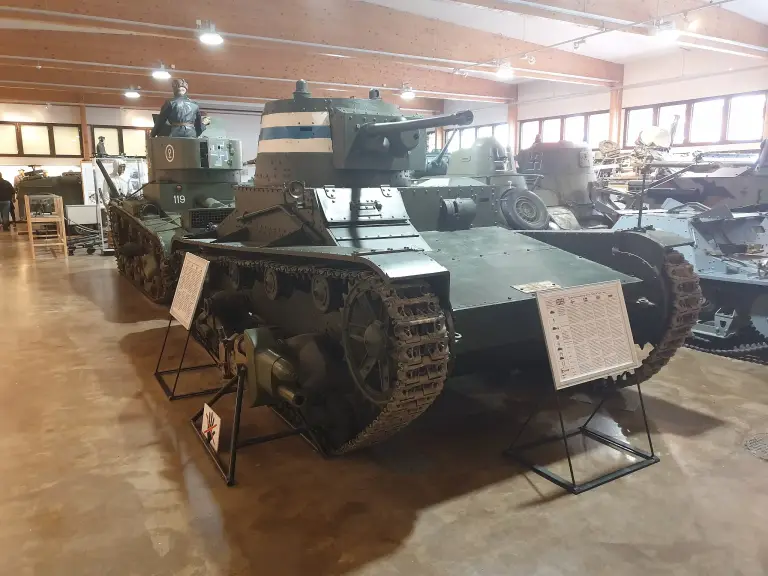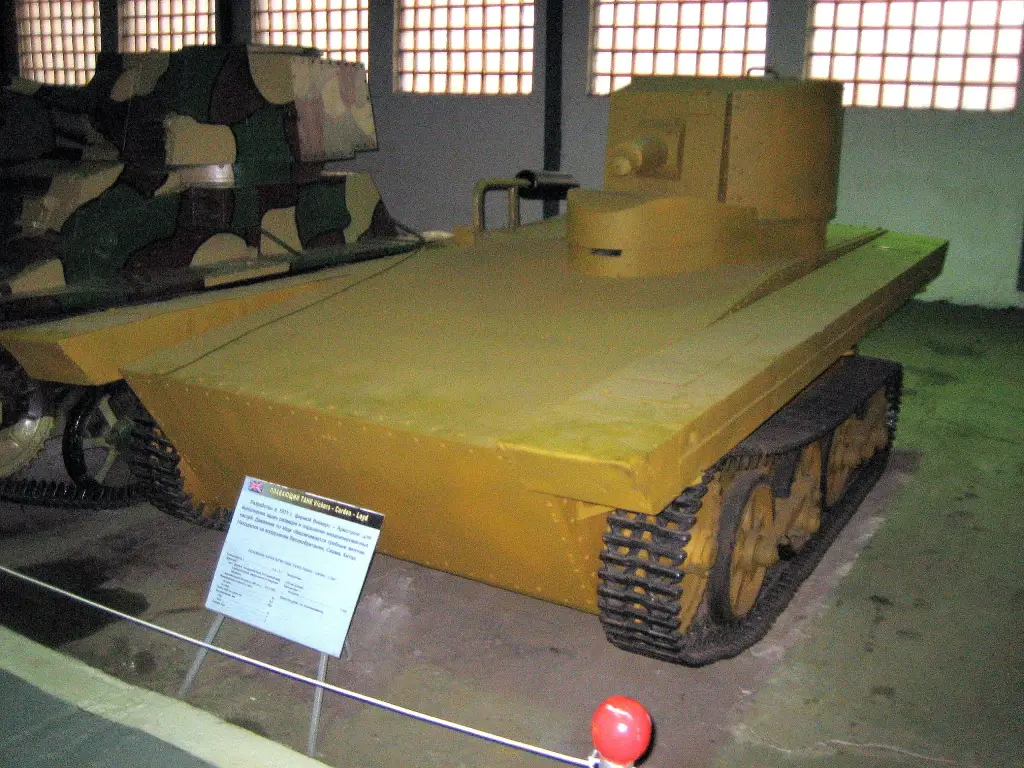
The Vickers-Carden-Loyd light amphibious tank, designated the A4E11 and A4E12 by the War Office, was a series of British experimental light tanks of the interwar years that resembled tankettes. It was not taken into British service, but it was sold to a number of other countries, which produced modified versions for their own armies.
Vickers-Carden-Loyd light amphibious tank at a glance
| Type | Experimental light amphibious tank (tankette type) |
|---|---|
| Designations | A4E11 and A4E12 (War Office) |
| Maker | Vickers-Carden-Loyd, United Kingdom |
| Period | Between the world wars |
| British service | Not taken into service |
| China | 29 or 32 tanks |
| Thailand | Buyer of the type |
| Dutch East Indies | Two delivered in 1937 |
| Japan | One tank sold together with a licence |
| Poland | Negotiations failed; the indigenous PZInż 130 designed instead |
| Soviet derivative | T-37A, about 1,200 built |
| Survivor | The only surviving tank, in the Kubinka Tank Museum, Russia |
Based on one source, and a short one: the English Wikipedia article on the Vickers-Carden-Loyd light amphibious tank.
History of the Vickers-Carden-Loyd light amphibious tank
The Vickers-Carden-Loyd light amphibious tank was a series of British experimental light tanks of the pre-war years, similar in size and layout to tankettes. The War Office designated the design A4E11 and A4E12, but the British Army did not take the type into service. Instead Vickers sold it abroad, and several buyers produced modified versions that did enter service with their own forces.
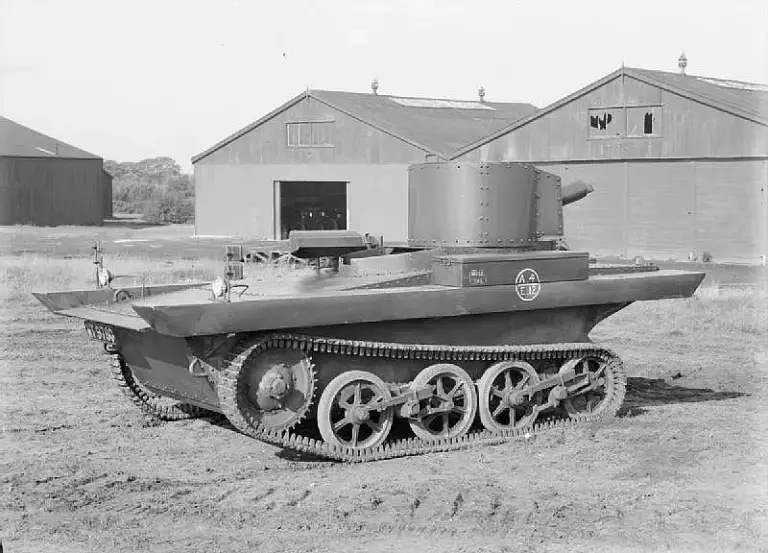
The foreign buyers included China, which bought 29 or 32 tanks, Thailand and the Dutch East Indies, which received two tanks in 1937. The Soviet Union took the design further than anyone else: some 1,200 T-37A tanks were developed from the A4E11 and A4E12. One tank was sold to Japan together with a licence. Poland was interested in the Vickers-Carden-Loyd amphibious tanks in the 1930s, but the negotiations failed and the PZInż works instead began the PZInż 130 project, an indigenous design inspired by the British concept.
Very little of the type survives. The only surviving tank is kept in the Kubinka Tank Museum in Russia, while the countries that bought it relied on their own modified versions.
Design and features
- Amphibious light tank: a small pre-war design of the tankette family, with the War Office designations A4E11 and A4E12.
- Export only: rejected for British service, the type was offered to foreign buyers instead.
- Licensed abroad: the Soviet T-37A and the Polish PZInż 130 project both grew out of the design.
Vickers-Carden-Loyd light amphibious tank versions
- Chinese tanks: 29 or 32 vehicles, the largest direct purchase listed.
- Dutch East Indies: two tanks delivered in 1937.
- Japanese tank: a single vehicle sold with a production licence.
- Soviet T-37A: about 1,200 tanks developed from the A4E11 and A4E12.
- PZInż 130: a Polish indigenous design inspired by the British tank after negotiations failed.
The bigger Vickers export tank of the same years is described in the article on the Vickers 6-ton, and more vehicles are in the Vickers collection.
Sources
- Vickers-Carden-Loyd light amphibious tank, English Wikipedia: designations, foreign buyers, survivors