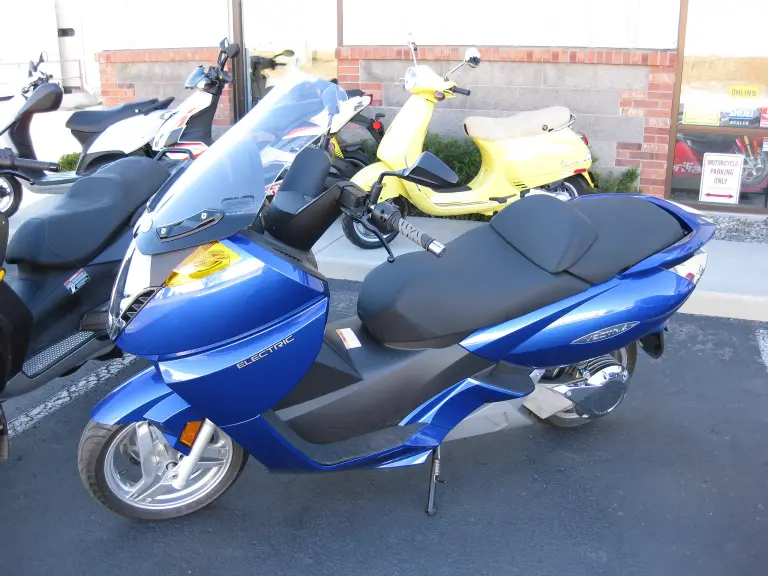
The Vectrix VX-1 was a maxi-size electric scooter introduced in 2006 and the first commercially available high-performance electric scooter. Built in Wrocław, Poland, it combined a 20.2 kW peak motor with a 125-volt nickel-metal hydride battery and could reach 110 km/h.
Vectrix VX-1 at a glance
| Maker | Vectrix Corporation, Middletown, Rhode Island, USA |
|---|---|
| Assembly | Wrocław, Poland |
| Production | 2006–2014, NiMH version to 2012 |
| Class | maxi-size electric scooter |
| Motor | brushless DC motor with integrated planetary gear in the rear wheel |
| Peak power | 20.2 kW |
| Torque | 65 Nm from zero rpm |
| Top speed | 110 km/h |
| Battery | 125 V NiMH, 3.7 kWh; LiFePO4 from 2012 |
| Range | 50–80 km on NiMH; 80–120 km for the Li+ |
| Weight | 231 kg with the NiMH battery |
| Wheelbase | 1525 mm |
The VX-1 has its own article in German Wikipedia; company background comes from the English and German articles on Vectrix.
History of the Vectrix VX-1
The Vectrix Corporation was founded in the United States in 1996 with the aim of creating a commercial platform for zero-emission vehicles, driven by California’s CARB legislation. Its scooter was assembled at a plant in Wrocław, Poland. Introduced in 2006, the VX-1 was a maxi-size scooter and the first commercially available high-performance electric scooter. It had fewer than 250 parts, against about 2,500 for a conventional scooter, and its maximum torque was available from zero rpm, a characteristic of electric motors. It was capable of over 60 mph (97 km/h), reached 50 mph (80 km/h) in a little under seven seconds and covered up to 65 miles (105 km) at a steady 25 mph (40 km/h). In the United Kingdom, Italy, the Netherlands and Slovenia the Vectrix was exempt from road tax.
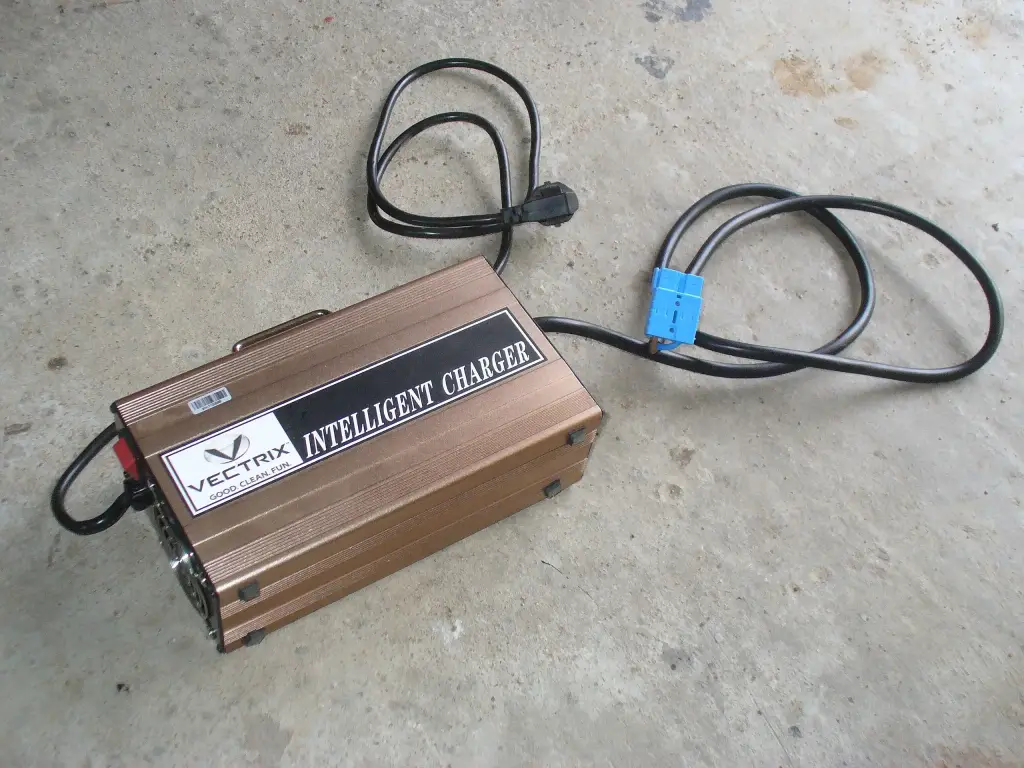
The scooter used a 125-volt nickel-metal hydride battery of 3.7 kWh, with a manufacturer-claimed life of ten years and 1,500 recharges. Charging to 80 per cent took about 2.5 hours from a 230-volt socket or four hours from 110 volts, and regenerative braking returned energy to the pack. The replacement cost of the battery was estimated at around $3,000, almost a third of the price of the bike. Under the seat there was a lockable 40-litre storage compartment large enough for a helmet, plus a 6-litre glovebox and an optional 46-litre top case.
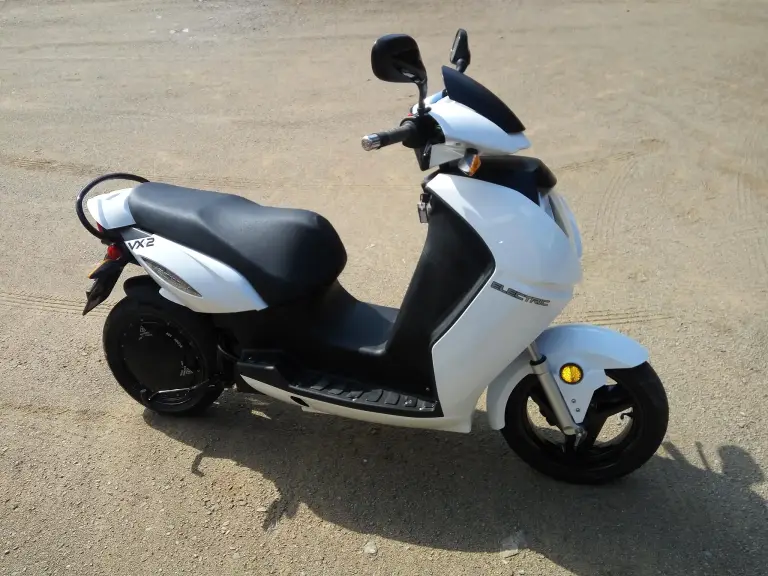
In June 2008 Vectrix announced that it would test lithium iron phosphate battery packs with GP Batteries International of Hong Kong. That autumn it also announced two cheaper models, the VX-1E for March 2009 and the VX-2 for June 2009, but pre-production examples shown in New York and Birmingham never entered production because the company ceased trading. Vectrix filed for insolvency in July 2009 and was taken over by GP Batteries that November; production of the VX-1 continued in Poland. A VX-1 took part in the Zero Race, a 28,000-kilometre round-the-world run by electric vehicles that started in August 2010.
From 2012 the original NiMH version was replaced by the VX-1 Li with a lithium iron phosphate battery, which was 30 kg lighter for the same capacity and improved performance. The VX-1 Li+ had a larger 5.4 kWh pack and a range of 80–120 km while still weighing 22 kg less than the original. In October 2013 Vectrix lost its French distributor Italmotori, and a French magazine reported that the company appeared to be abandoning the VX-1 and VX-3. Vectrix stopped all US operations in January 2014 and filed for Chapter 7 liquidation in March. The MPTECH group bought the assets and moved them to Wrocław, and in June 2015 restarted production of the VX-1 and VX-2 with new batteries and electronics.
Design and features
- High performance for an electric scooter: a 20.2 kW peak motor and 110 km/h top speed in 2006.
- Simple construction: fewer than 250 parts against about 2,500 for a conventional scooter.
- Regenerative braking: energy returned to the 125-volt pack, which recharged to 80 per cent in about 2.5 hours.
- Practical body: a 40-litre lockable compartment under the seat, a 6-litre glovebox and an optional top case.
Vectrix VX-1 versions
- VX-1 (2006–2012): the original model with a 3.7 kWh NiMH battery.
- VX-1 Li (2012): lithium iron phosphate battery of 30 Ah, 30 kg lighter for similar range and performance.
- VX-1 Li+ (2012): 42 Ah and 5.4 kWh, giving 80–120 km on a charge and 22 kg less than the original.
- VX-1E: a cheaper version announced in 2008 for March 2009 but never put into production.
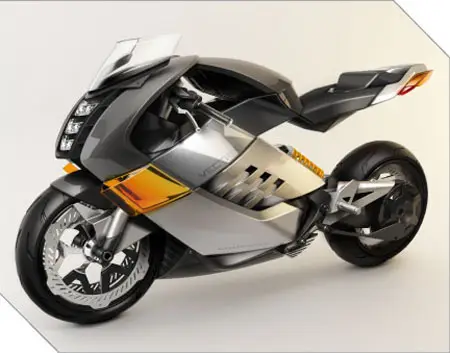
The VX-1 was joined in the range by the smaller VX-2 and the three-wheeled VX-3, while the Vectrix Superbike remained a concept. More electric scooters are in the Vectrix collection.
Video: Vectrix VX-1 Li SWM
Video on YouTube.
Sources
- Vectrix, English Wikipedia: introduction, performance, battery, company history
- Vectrix VX-1, German Wikipedia: technical data, charging, storage, Li and Li+ versions
- Vectrix, German Wikipedia: company background, Zero Race, production in Poland