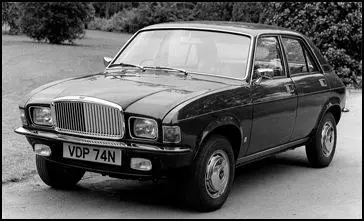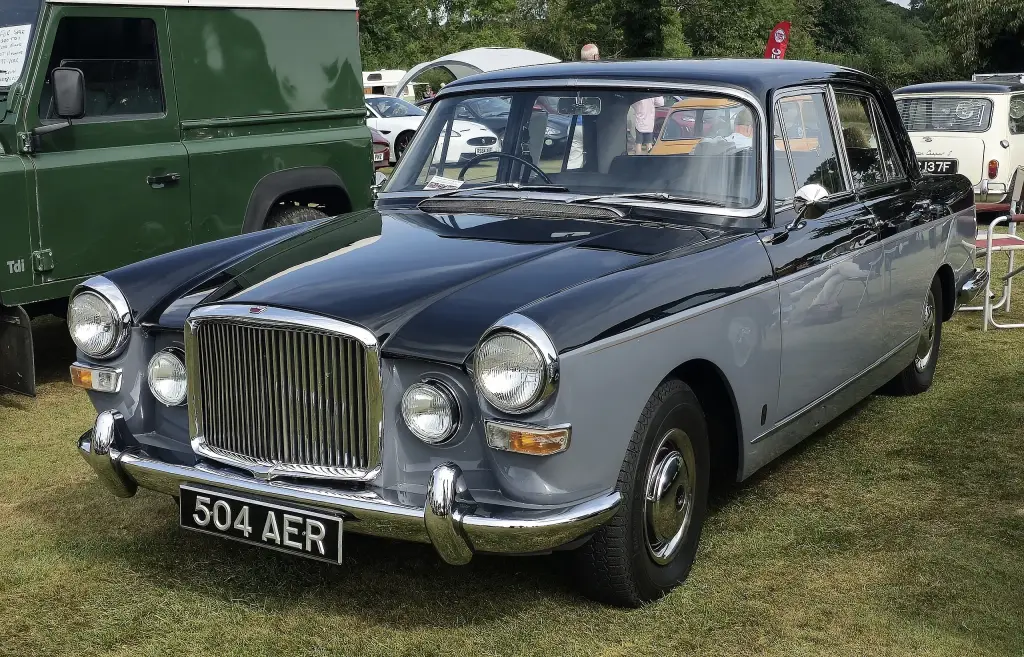
The Vanden Plas Princess was the most luxurious form of the Austin A99 Westminster, built by BMC from 1959 to 1968. It began as the Princess 3-litre, became the Vanden Plas Princess in July 1960, and from 1964 was offered with a Rolls-Royce engine as the 4-litre R.
Vanden Plas Princess at a glance
| Maker | BMC, finished at Vanden Plas, Kingsbury, London |
|---|---|
| Production | 1959–1968 |
| Based on | Austin A99 Westminster / Wolseley 6/99 |
| Princess 3-litre | October 1959, C-Series 3-litre, 108 hp |
| Mark II | 1961, wheelbase 2 in longer, 120 hp |
| 4-litre R | August 1964, Rolls-Royce FB60, 175 bhp |
| Gearbox | manual or automatic; Borg-Warner 8 in the R |
| Test, The Motor 1961 | 99.3 mph, 0–60 mph in 16.1 s, 21.1 mpg |
| Price, 3-litre 1961 | £1,467 including taxes |
| Price, 4-litre R | £1,994 (Jaguar Mark X £2,022) |
| Built | 6,687 at Kingsbury plus 312 CKD kits, 6,999 in all |
based on one source
History of the Vanden Plas Princess
The car was launched in October 1959 as the Princess 3-litre and shared its Pininfarina-designed body and chassis with the Austin A99 Westminster and the Wolseley 6/99. Vanden Plas gave it a separate identity through a square grille with a thick surround and vertical slats, round headlamps and horn grilles in the front wings. Inside there was burr walnut, leather on the seats and panels, high-quality carpeting and, as an option, a division between the driver and the rear compartment. The 3-litre C-Series engine produced 108 hp.
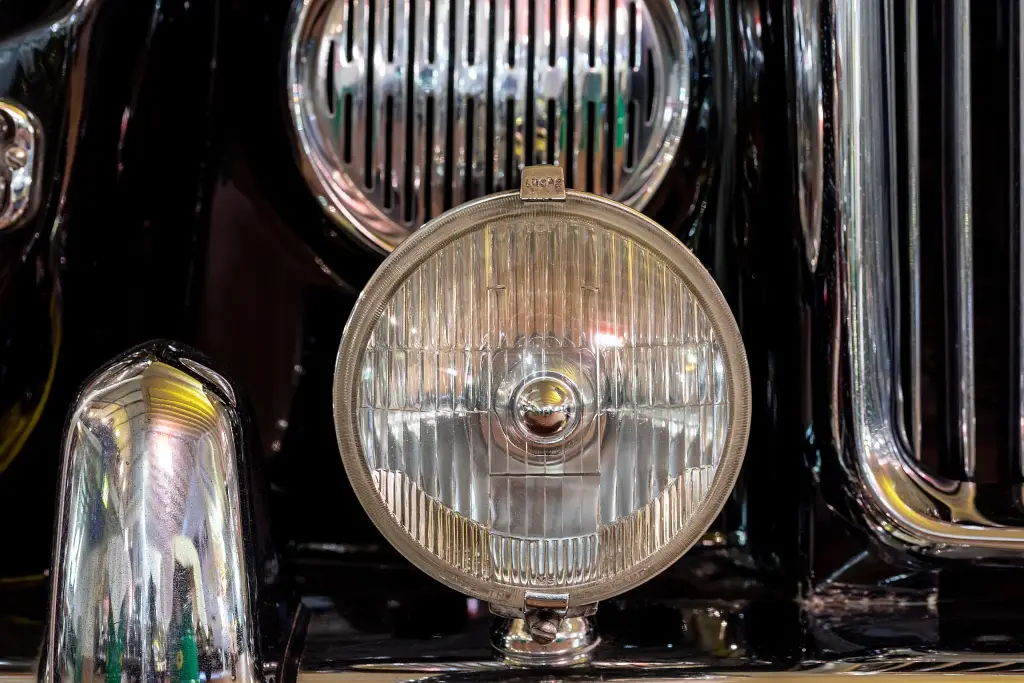
In July 1960 the cars took the name Vanden Plas Princess, Vanden Plas having become a marque in its own right rather than a coachbuilder for other makers. The Mark II followed in 1961 with a wheelbase two inches longer, anti-roll bars at both ends, an engine uprated to 120 hp and better brakes. Rear passengers gained built-in drop-down picnic tables, and Smith’s air-conditioning joined the options list. This model was discontinued in 1964.
The Vanden Plas Princess 4-litre R, announced in August 1964, replaced the 3-litre with a Rolls-Royce all-aluminium FB60 six of 3,909 cc. It was a short-stroke member of the Rolls-Royce B-series family, weighed only 450 lb and produced 175 bhp at 4,800 rpm through twin SU carburettors. The engine came out of more than two years of collaboration between BMC and Rolls-Royce.
The R also brought a Borg-Warner model 8 automatic, its first use in a British car, Hydrosteer variable-ratio power steering and wider tyres. Outside, the fog lamps moved up beside the grille and the tailfins were replaced by small corner ridges. It cost £1,994, level with the manual Jaguar Mark X and half as much again as the 3-litre it replaced, and sold slowly. Production ran to 1968: 6,687 cars at Kingsbury plus 312 CKD kits for South Africa, 6,999 in total. Queen Elizabeth II owned an estate version, of which four to seven are thought to have been made.
Design and features
- Vanden Plas grille: square, with a heavy surround and vertical slats, plus round headlamps.
- Walnut and leather interior: burr walnut, leather seats and panels, deep carpeting, optional division behind the driver.
- Rolls-Royce FB60 engine: an all-aluminium 3.9-litre six of 175 bhp, the only such engine in a mass-produced civilian car from another maker.
- Borg-Warner 8 automatic: first fitted to a British car, with variable-ratio power steering.
- Picnic tables: polished drop-down tables for rear passengers from the Mark II onwards.
Vanden Plas Princess versions
- Princess 3-litre (1959–1960): the original car, 108 hp C-Series engine.
- Vanden Plas Princess 3-litre (1960–1961): same car under the new marque name.
- 3-litre Mark II (1961–1964): longer wheelbase, anti-roll bars, 120 hp, picnic tables.
- 4-litre R (1964–1968): Rolls-Royce FB60 engine, automatic gearbox, restyled nose and tail.
- Estate for the Queen: a handful of estate cars, four to seven believed built.
The Princess sat above the smaller Vanden Plas cars; the later Vanden Plas 1500 applied the same walnut-and-leather treatment to the Austin Allegro. More cars are in the Vanden Plas collection.
Sources
- Vanden Plas Princess, English Wikipedia: history, engines, prices, production