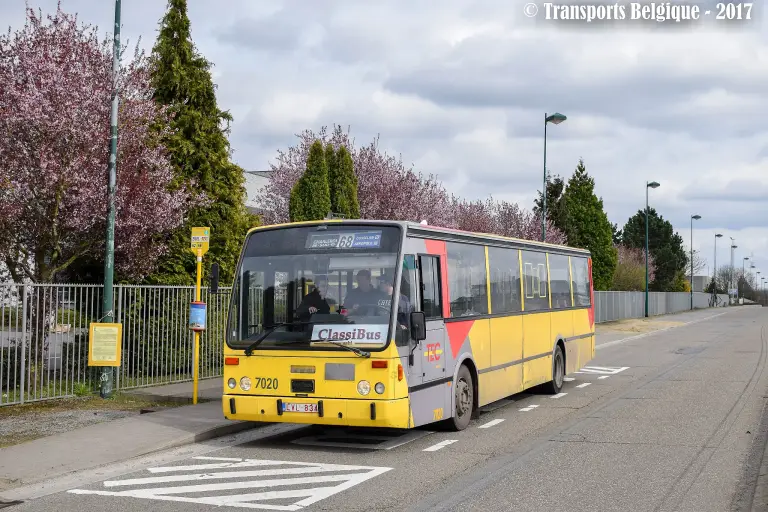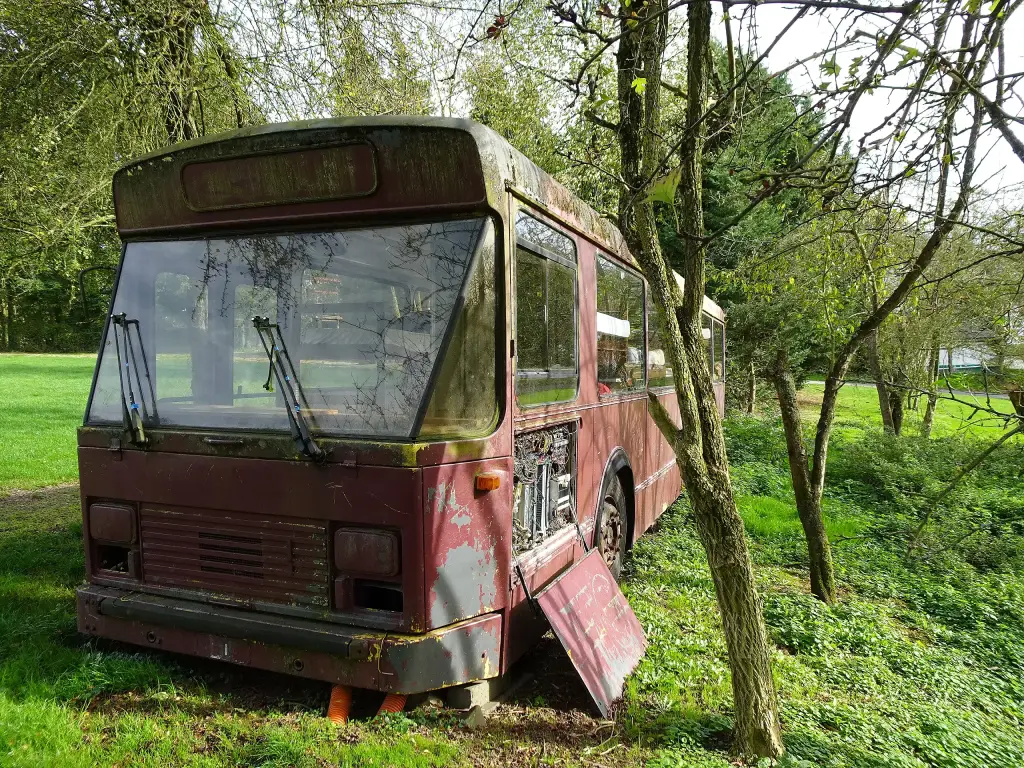
The Van Hool A120 and its private-operator sister, the A120P, were city buses built by the Belgian manufacturer Van Hool from 1977 to 1991. The A120 was designed around a new unified specification for Belgian public transport and became one of the standard city buses of the country before it was replaced by the A600.
Van Hool A120 at a glance
| Maker | Van Hool, Koningshooikt, Belgium |
|---|---|
| Production | 1977–1991 |
| Successor | Van Hool A600 |
| Body | integral, modular, low floor |
| Doors | two or three |
| Capacity | 84–94 places depending on version and country |
| Engines offered | Fiat, DAF or MAN |
| Transmissions offered | ZF, Allison or Voith automatic |
| Also built on chassis | Scania, Volvo, Leyland, DAF, Mercedes-Benz |
| Private version | A120P, different front only |
| First shown | Brussels commercial vehicle show, January 1977 |
This article is based on one source, the French Wikipedia article on the A120.
History of the Van Hool A120
In the mid-1970s the transport administration of the Belgian Ministry of Communications drew up a unified specification for passenger vehicles, strongly influenced by the Belgian manufacturers of the day. Van Hool answered it with the A120. The groundwork had begun on 29 December 1972, when the Brussels operator STIB ordered four series of prototypes to define the city bus of the future. Van Hool won an order for fifteen city buses with DAF engines, numbered 8001 to 8014 and known as type AU115X; the last of the series, 8015, was the AU115/1 with a prototype body that already anticipated the general shape of the A120. The finished bus was exhibited at the Brussels commercial vehicle show in January 1977.
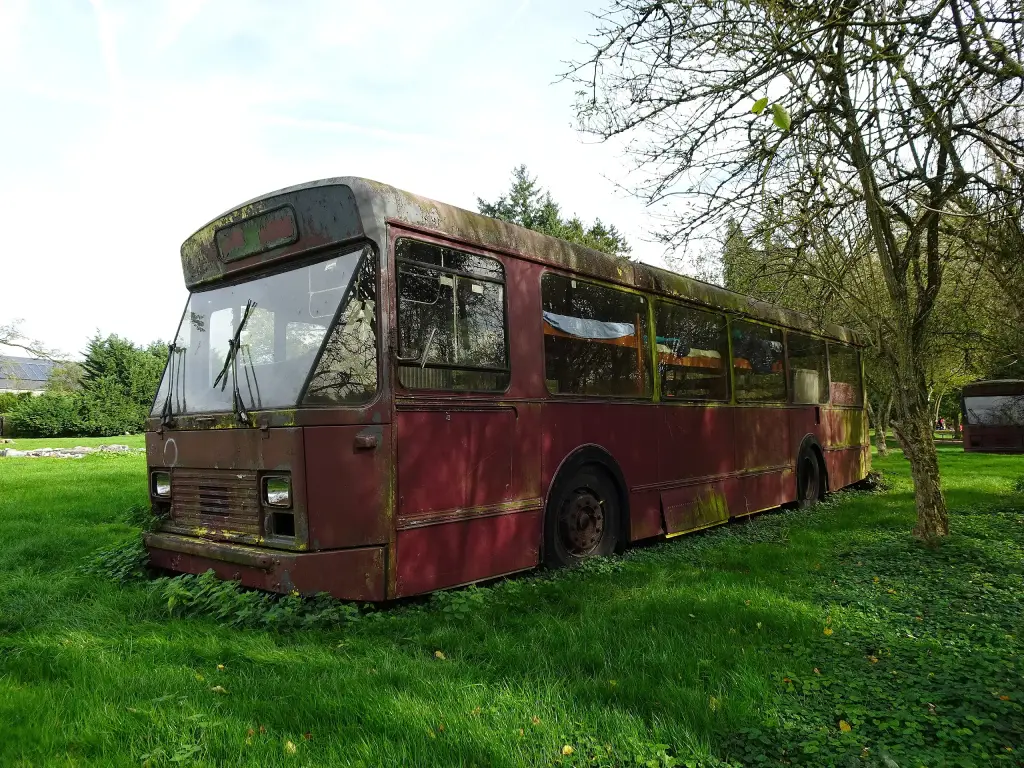
The A120 was conceived as a modular vehicle: a set of coordinated sub-assemblies could be combined, within limits, to the customer’s wishes. The structure could take three types of engine — Fiat, DAF or MAN — three automatic transmissions from ZF, Allison or Voith, two types of axle and other preselected mechanical components. For its time the design was new: a low floor (the term low-entry was not yet in use), as few steps as possible, widened double doors, oversized glazing, air suspension and an ergonomic driving position. The bus came with two or three doors, and capacity varied from 84 to 94 places according to version and country.
From the early 1980s Van Hool offered the A120P, intended mainly for private operators; only the front face differed. Bodies were also supplied on Scania, Volvo, Leyland, DAF and Mercedes-Benz chassis. Most A120s were sold in Belgium, with a few bought by operators in France and Luxembourg. In France the bus was shown at the Bourget in April 1977 and sold under the commercial name Agoréon. Production ran from 1977 to 1991, when the model was replaced by the A600.
Design and features
- Low floor and few steps: the A120 was designed for easy access before low-floor buses became the norm.
- Modular specification: customers could choose between Fiat, DAF and MAN engines and ZF, Allison or Voith transmissions.
- Wide doors and large glazing: double doors were widened and the windows oversized for a city bus of the 1970s.
- Air suspension and ergonomic cab: comfort and driver ergonomics were part of the original brief.
- External chassis: the body could be mounted on Scania, Volvo, Leyland, DAF or Mercedes-Benz chassis.
Van Hool A120 versions
- A120/01: first version with round headlights; 266 delivered to the SNCV in 1977–78.
- A120/06: version ordered by STIB, 79 built in 1978 with Neerman bodywork.
- A120/11: second SNCV version, 190 buses with round headlights.
- A120/14: ten buses for the SNCV in 1980; rectangular headlights from this version on.
- A120/31: built in large numbers, including 378 for the SNCV and ten three-door buses for the STIV at Verviers.
- A120/77-115: from 1980 with a Fiat 8200.13 engine of 178 DIN hp at 2,500 rpm.
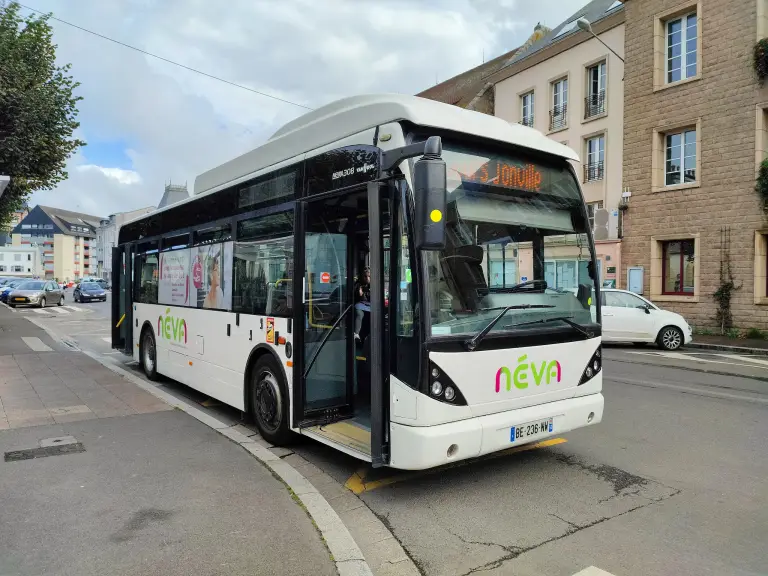
The A120 was replaced by the Van Hool A600, and its smaller stablemate was the A308. More buses are in the Van Hool collection.
Video: VanHool A120/01 5236 -7°C Coldstart
Video on YouTube.
Sources
- Van Hool A120, French Wikipedia: history, versions, chassis, production