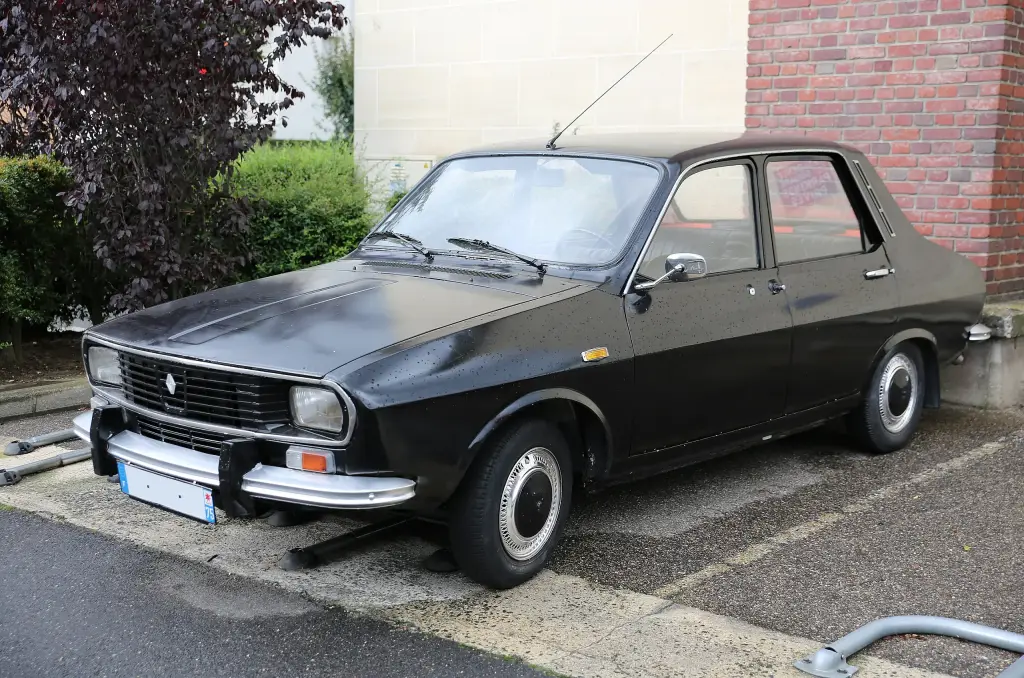
The VAM Rally is the Mexican version of the Renault 12, the small family saloon that Renault presented at the Paris Motor Show in October 1969. Renault built the car in France until 1980 and licensed it to assemblers around the world; in Mexico it was produced by Vehículos Automotores Mexicanos (VAM) as the VAM Rally.
VAM Rally at a glance
| Maker | Renault (France); VAM, Mexico |
|---|---|
| Production | 1969–1980 in France; licensed production continued later |
| Class | small family car |
| Body | four-door saloon; estate from 1970 |
| Layout | front-wheel drive, longitudinal engine |
| Engine | 1,289 cc four, 60 PS (54 PS DIN) |
| Top speed | 145 km/h |
| Trim at launch | L and TL |
| Gordini | 1,565 cc, 113 PS, 185 km/h, 2,225 built |
| Total sales | 2.5 million |
Based on one source: the English Wikipedia article on the Renault 12. It does not describe the Mexican VAM Rally separately, so the article follows the Renault 12 and names the VAM version only where the record requires it.
History of the VAM Rally
In January 1964 Renault’s styling centre began work on Project 117, a car to bridge the gap between the Renault 8 and the Renault 16. The brief asked for an economical and simple car with a roomy interior and a large boot, easy to build around the world and comfortable enough for France. The result, the Renault 12, had front-wheel drive with the engine mounted longitudinally ahead of the front wheels, and a simple rigid rear axle instead of the independent suspension used on the Renault 4 and Renault 16.
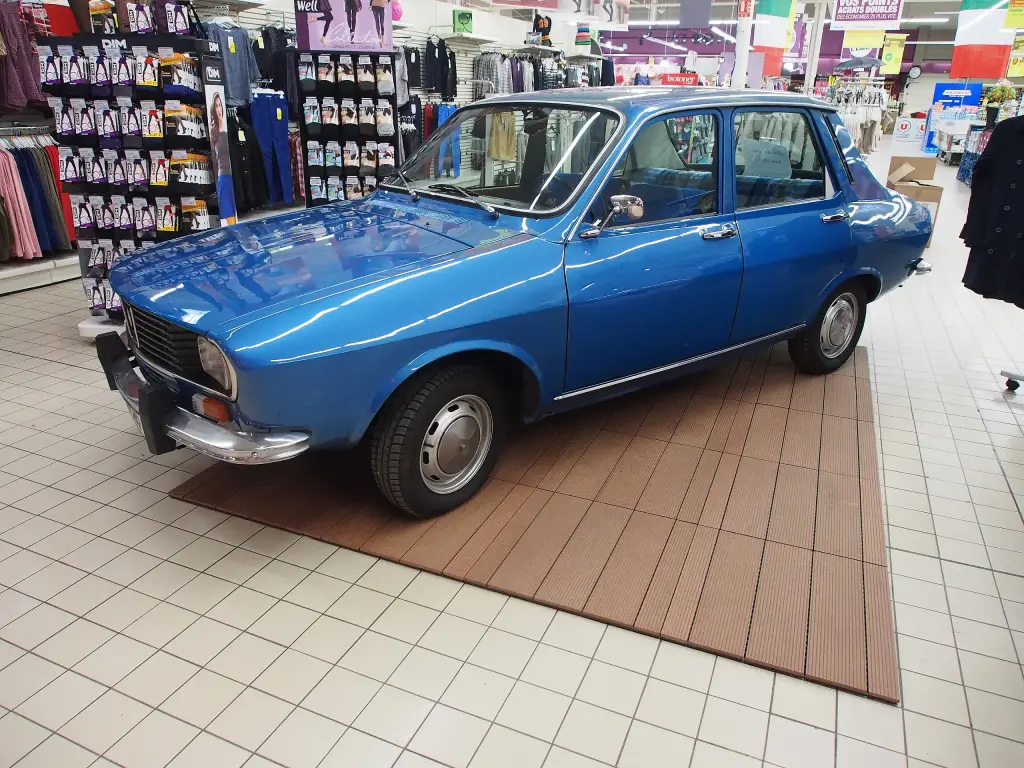
The Renault 12 was launched at the Paris Motor Show in October 1969 as a four-door saloon in L and TL specifications. The TL added separate reclining front seats, door armrests, boot and glovebox lights, a heated rear window and extra warning lights. The engine was an enlarged version of the iron Cléon unit used since 1962 in the Renault 8 and 10: 1,289 cc, 60 PS, giving a top speed of 145 km/h. The gear lever was on the floor.
In 1970 Renault added an estate, with the same trim levels and engines as the saloon, and the Renault 12 Gordini. The Gordini used the all-aluminium 1,565 cc engine from the Renault 16 TS with two double-barrel Weber carburettors, a reinforced crankshaft, a five-speed gearbox, ventilated front disc brakes, disc brakes at the rear and tuned suspension. It reached 185 km/h and 2,225 were built.
The Renault 12 was produced under licence in many countries around the world, and production continued long after it ended in western Europe in 1980. The last Renault 12 was built in Turkey in 2000, while Dacia in Romania made the R12-based 1310 until 2004 and the R12-based pick-up until December 2006. In total the Renault 12 sold 2.5 million units. In Mexico the car was assembled by VAM and sold as the VAM Rally.
Design and features
- Roomy interior: the Renault 12 was praised for its spacious, comfortable cabin and large boot.
- Economy: the 1,289 cc engine and light body gave low fuel consumption.
- Front-wheel drive: the engine sat longitudinally ahead of the front wheels, with a floor-mounted gear lever.
- Simple chassis: a rigid rear axle kept the car cheap to build and maintain.
- Worldwide appeal: the design was easy to produce under licence in many countries.
VAM Rally versions
- L (1969): the basic saloon with a front bench seat.
- TL (1969): the better-equipped saloon with separate reclining front seats.
- Estate (1970): the five-door version with the same engines and trim.
- Gordini (1970): the 113 PS performance model with a five-speed gearbox.
- VAM Rally: the Mexican-built version, assembled by Vehículos Automotores Mexicanos.
The VAM Rally was the smallest car in the VAM range alongside the VAM American and the VAM Gremlin. More cars are in the VAM collection.
Sources
- Renault 12, English Wikipedia: design, engine, trims, Gordini, licensed production