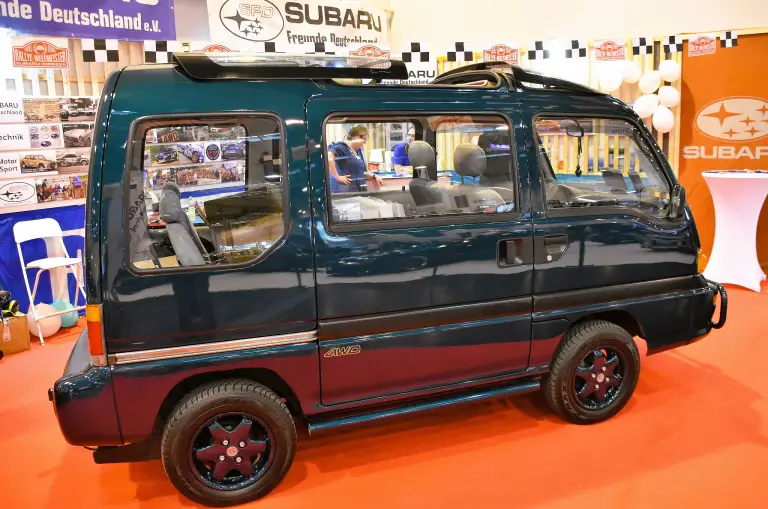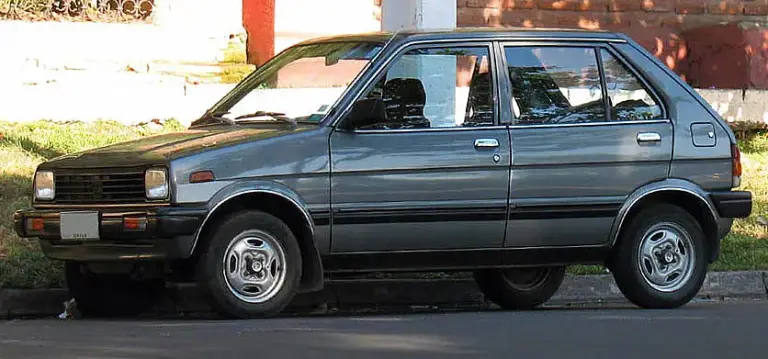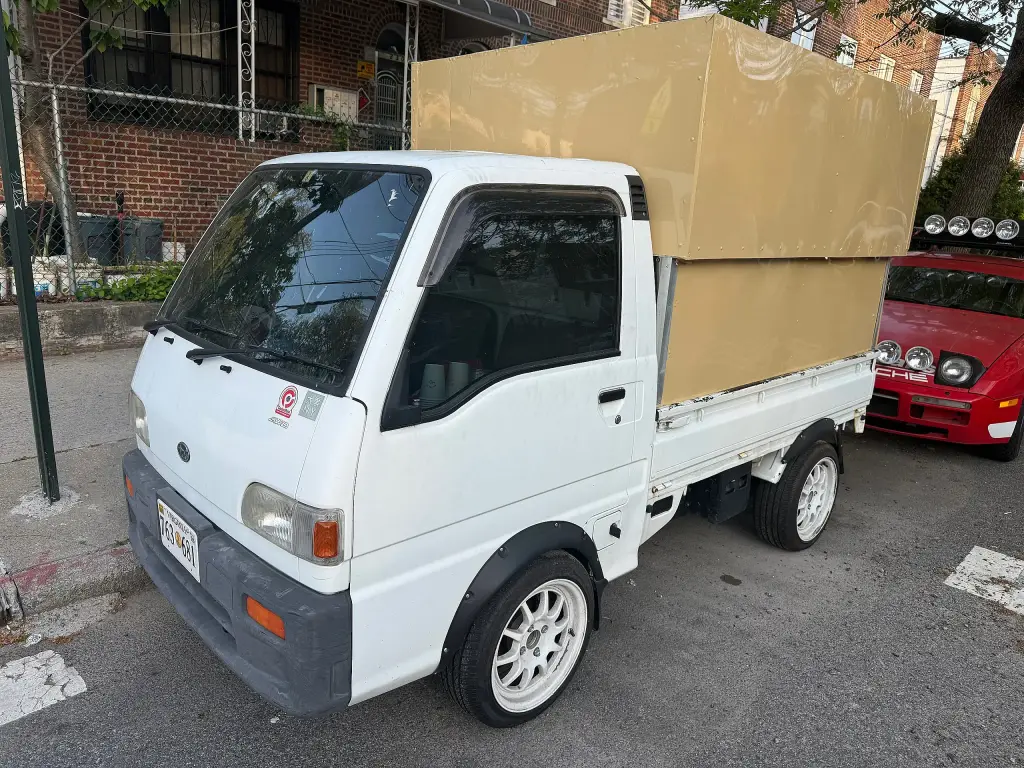
The Subaru Sambar is a cabover kei truck and microvan that Subaru has built since 1961, and it has been in continuous production for more than sixty years. It was the second vehicle to meet Japan’s kei truck rules, after the Kurogane Baby.
Subaru Sambar at a glance
| Maker | Subaru, Japan |
|---|---|
| Production | since 1961 |
| Class | kei truck and microvan |
| Layout | rear engine, rear-wheel drive, body-on-frame |
| First shown | 1960 Tokyo Motor Show |
| First engine | 356 cc two-stroke twin, 18 PS |
| Four-wheel drive | optional from 1980 |
| Chinese version | built as the Sanba |
| Finnish assembly | joint venture with Elcat Automotive |
| Passenger versions | later sold as the Dias Wagon |
| Current generation | eighth, based on the Daihatsu Hijet |
| Name | after a species of deer |
Based on one source, the English Wikipedia article on the Subaru Sambar; it describes the early generations in most detail.
History of the Subaru Sambar
The Sambar was shown at the 1960 Tokyo Motor Show in passenger and commercial form and went into production in 1961. It had four-wheel independent suspension, a rear engine and rear drive, a one-box body based on the Subaru 360 and inspired by the 1957 Fiat 600 Multipla, and a ladder frame with a rear torsion bar trailing arm suspension. The 356 cc two-stroke twin produced 18 PS, the gear lever had a left-pattern reverse and the engine was reached through a hatch inside the car. As on the 360, the front doors were rear-hinged, while the rear doors were front-hinged and there was a cargo hatch at the back. Provisional camping bunk beds were even offered.
Second and third generations
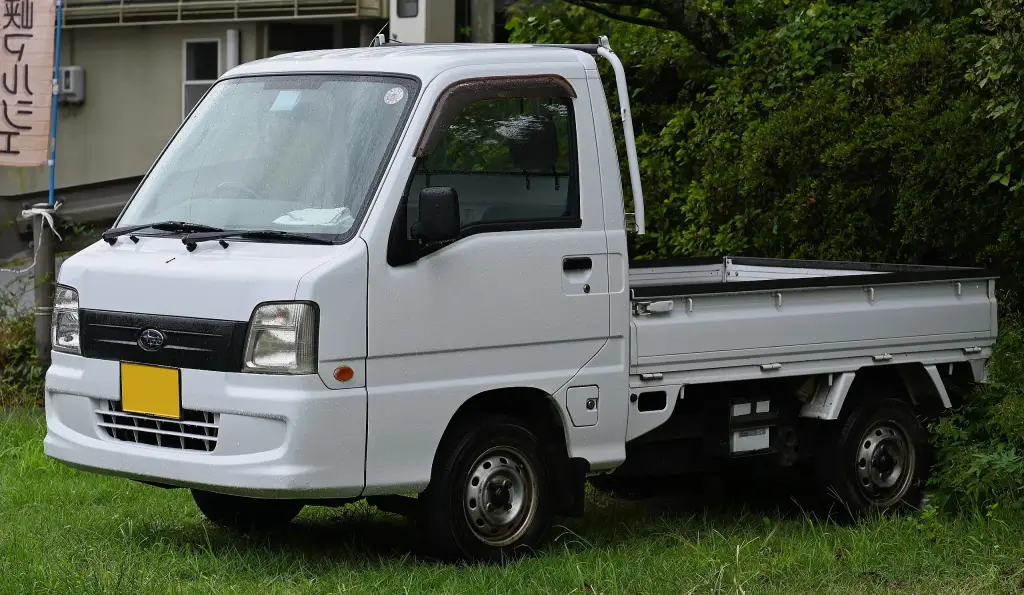
The redesigned second generation arrived in January 1966 with revised styling and a truck variant. It kept the 356 cc EK31 engine, now with 20 PS. A raised roof was offered from 1968, and from 1970 the engine was reached from outside, the front doors were conventionally hinged and a padded dashboard from the new R-2 was fitted. The engine was updated to the EK33 with 26 PS and a false front grille gave the van the look of the new Leone.
The third generation appeared on 10 February 1973 and was nicknamed the “Gōriki” or Herculean Sambar after its advertising campaign. It still had a 356 cc two-stroke, now water-cooled and with 28 PS, before the four-stroke EK21 from the Rex arrived in February 1976. Only three months later the engine grew to 490 cc for the Sambar 5, sold abroad as the Subaru 500, which brought sliding doors on both sides and a full B-pillar. It was replaced in May 1977 by the 550 cc Sambar 550, the Subaru 600 in export markets, which had a wider and longer body, a redesigned dashboard, optional air conditioning, a rear window wiper on the Custom L and a sunroof option in 1979.
Later years
Four-wheel drive became optional in 1980 on both the van and the truck, the same year Subaru offered it on the Leone. Every generation kept the rear-engine, rear-drive layout until the seventh, which was a rebadged Daihatsu Hijet; the Sambar was the last kei vehicle with that arrangement. The van has used engines from the Rex, Vivio and Pleo over the years, and passenger versions were later sold as the Dias Wagon. Sambars were also built in China as the Sanba and assembled in Finland in a joint venture with Elcat Automotive. Subaru may have taken the name, a species of deer, from Volkswagen’s Samba trim, since the Sambar also copied the rear-engined, cabover layout of the Volkswagen Type 2.
Design and features
- Rear engine: the last kei vehicle to keep a rear-engine, rear-drive layout.
- Ladder frame: body-on-frame construction, unusual for a microvan.
- Kei truck rules: designed for Japan’s light commercial vehicle tax class.
- Four-wheel drive from 1980: offered on both van and truck.
- Dias Wagon: the name used for the passenger versions.
Subaru Sambar versions
- First generation (1961): passenger and commercial versions with a 356 cc two-stroke.
- Second generation (1966): new styling and a truck variant.
- Third generation (1973): the Gōriki Sambar.
- Sambar 5 (1976): 490 cc engine, sold as the Subaru 500.
- Sambar 550 (1977): 550 cc, sold as the Subaru 600.
- Seventh generation: a rebadged Daihatsu Hijet.
The Sambar used engines from the Rex, Vivio and Pleo. More Subarus are in the Subaru collection.
Video: 1995 Subaru Sambar Dias kei truck
Video by Vancouver Velocity Cars on YouTube.
Sources
- Subaru Sambar, English Wikipedia: generations, engines, layout, markets