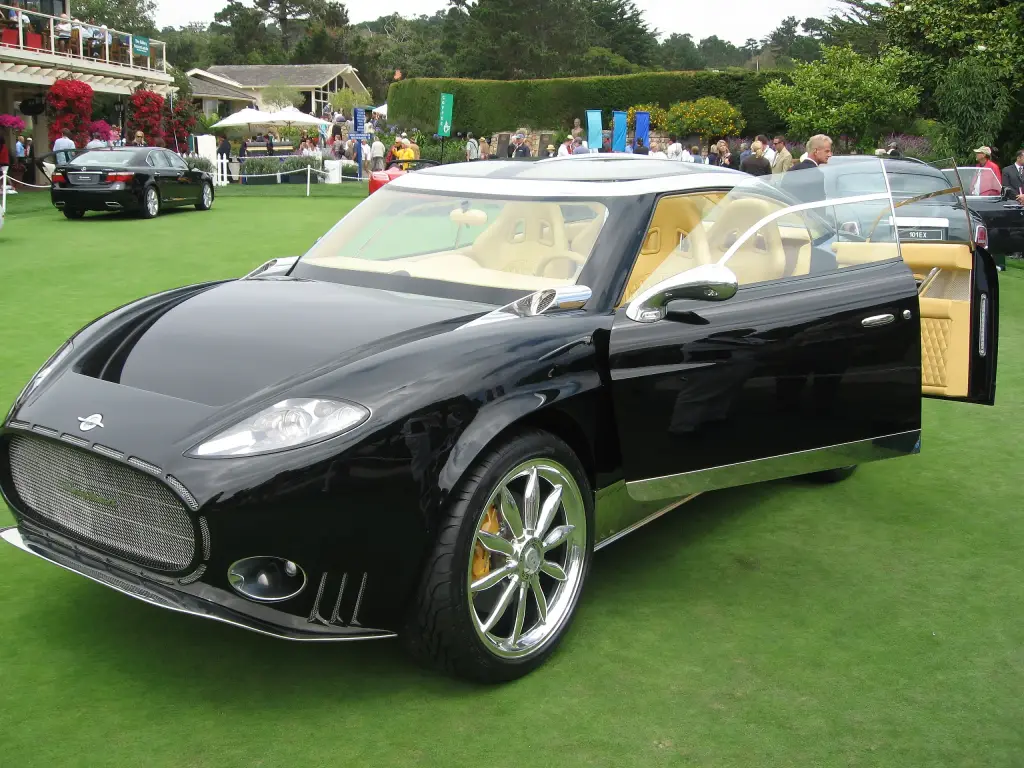
The Spyker D12 Peking-to-Paris is a concept mid-size luxury crossover SUV from the Dutch manufacturer Spyker Cars. Designed by Michiel van den Brink and presented at the 2006 Geneva Motor Show as the D12, it was renamed D8 in 2008 when the proposed engine changed to a supercharged V8.
Spyker D12 at a glance
| Maker | Spyker Cars |
|---|---|
| Type | concept luxury crossover SUV |
| Designer | Michiel van den Brink |
| Unveiled | Geneva Motor Show, 2006 |
| Chassis number | #080 |
| Engine as shown | 6.0-litre W12, 500 bhp (507 PS) |
| Target weight | 1,850 kg |
| Target acceleration | 0–100 km/h in 5.0 seconds |
| Doors | rear-hinged rear doors |
| Renamed | D8, 2008, with a supercharged V8 |
| Status | concept only |
Based on one source: the D12 Peking-to-Paris is described in the D8 section of the English Wikipedia article on the Spyker D8.
History of the Spyker D12
Geneva 2006
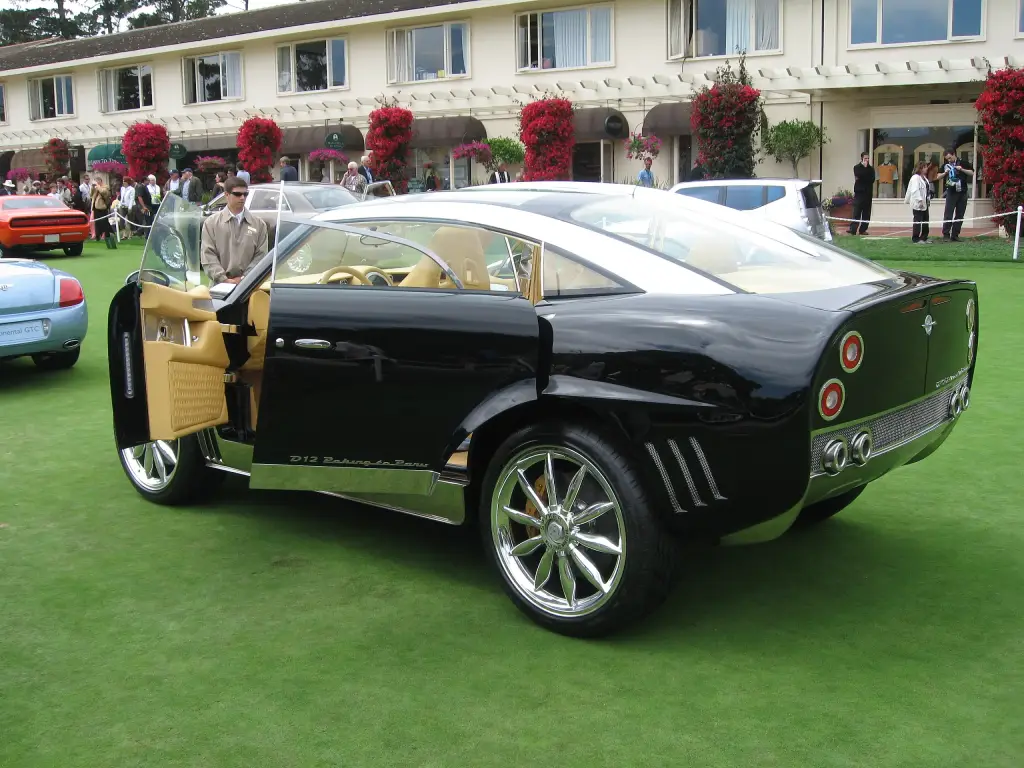
The D12 was first shown to the public at the Geneva Motor Show in 2006, chassis number #080. The black concept had a beige interior, was built to mock-up standards and had no B-pillar, no seat belts and two-piece side windows in the manner of the C8. Under the bonnet was a 500 bhp (373 kW) 6.0-litre W12 from the Volkswagen Group, and Spyker aimed for a weight of 1,850 kg and 0–100 km/h in 5.0 seconds. After Geneva the model was reported to have taken “well over 100 orders”.
From D12 to D8
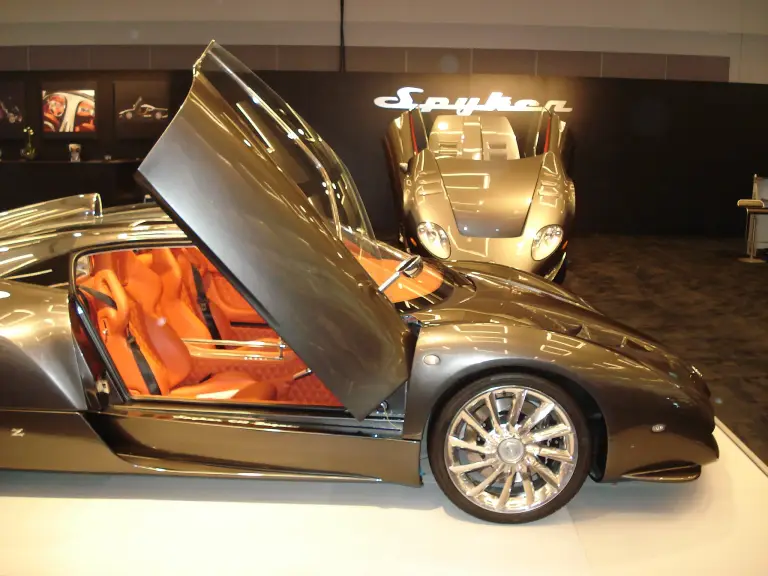
At the 2007 Geneva show a second D12 concept appeared, grey with an orange interior and chassis number #194. Though still a concept, it already showed signs of a production design: the glazing was changed, the side windows became one piece, a lower central pillar appeared and proper seats with seat belts were fitted. Access to the luggage space was possible through hinged doors and through opening glass. A year later another white concept with the same interior was shown in Geneva; this time it was called the D8 and had a supercharged V8, apparently from General Motors. It is believed to have been the same car #194 repainted. The bonnet air intakes and wheel design matched those of the 2008 C8 Aileron concept.
A name from a rally
The Peking-to-Paris name refers to the Peking to Paris endurance rally of 1907, run from Peking, now Beijing, to Paris. An almost standard Spyker took part, driven by the Frenchman Ch. Goddard, and finished second after a drive of three months. The name survived the switch to the D8 designation.
Development and end
At a press conference at the Geneva Motor Show on 2 March 2010, Spyker chief executive Victor Muller said development could now be helped by Saab, which Spyker briefly owned. The car was still under development at the time and had the potential to reach production by 2014. It never did: the project remained a series of show cars, and the D8 name stayed attached to a concept rather than a production model. The design language, however, was shared with Spyker’s road cars, with aluminium “aeroblade” wheels and one-piece aluminium mirrors also used on the C8.
Design and features
- Crossover body: a mid-size luxury SUV concept built on Spyker’s aluminium sports-car thinking rather than a truck platform.
- W12 power: a 6.0-litre Volkswagen Group engine rated at 500 bhp in the original show car.
- Suicide rear doors: the rear doors were hinged at the back, and the boot was reached through hinged doors as well.
- Aviation details: aeroblade wheels and one-piece aluminium mirrors carried over from the C8.
Spyker D12 versions
- D12 concept (2006, #080): black with a beige interior, mock-up standard, no B-pillar and no seat belts.
- D12 concept (2007, #194): grey with an orange interior, production-style glazing, seats and belts.
- D8 (2008): white show car with a supercharged V8 and the D8 name.
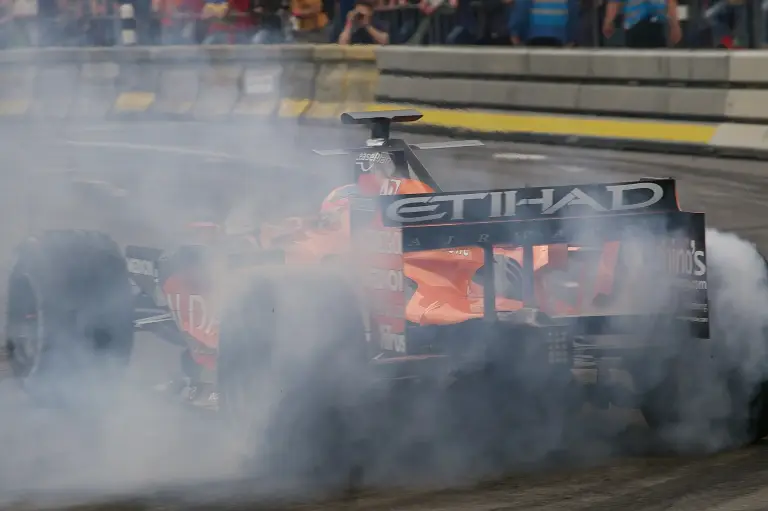
The D12 took its styling cues from the Spyker C8, and its twin instrument sets by the passenger seat were later repeated in the C12 Zagato. Spyker’s Formula One effort is covered by the F8-VII. More cars are in the Spyker collection.
Sources
- Spyker D8, English Wikipedia: design, engine, show cars, development

![Simon Davison ]](https://commons.wikimedia.org/wiki/File:BackSpyker_D12.jpg)