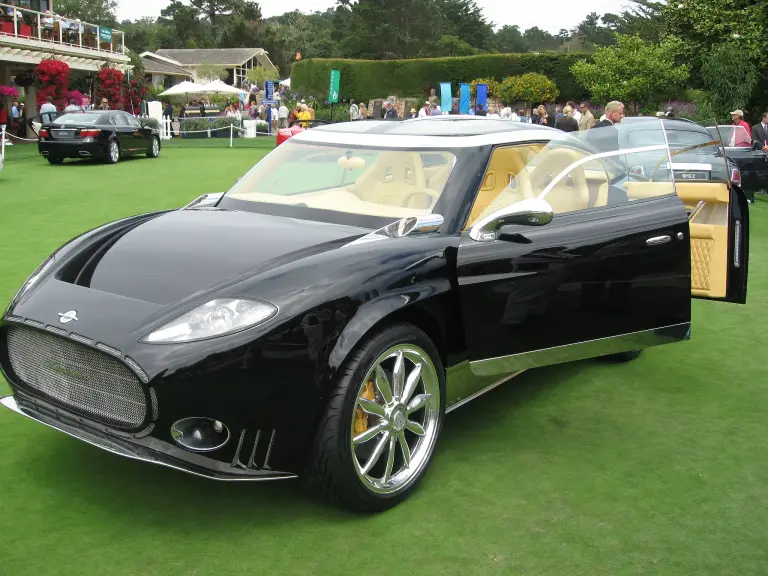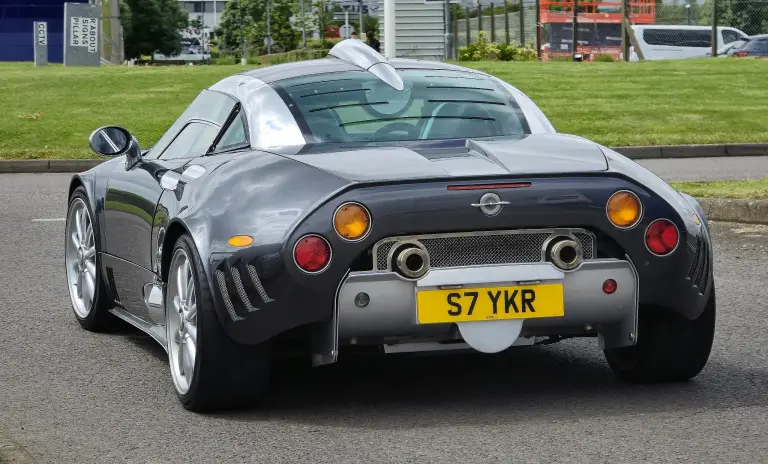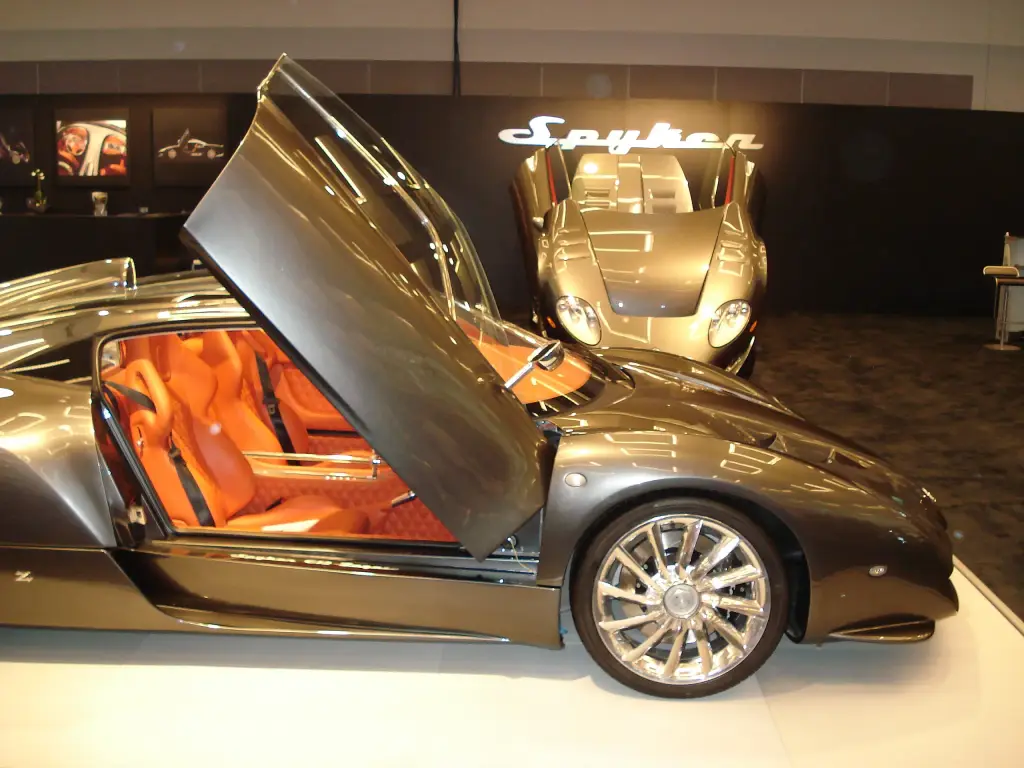
The Spyker C12 Zagato is a limited-edition, all-aluminium, mid-engined rear-wheel-drive luxury sports car from the Dutch maker Spyker. It is based on the C12 platform, alongside the C12 La Turbie that Spyker had shown the previous year, and wears a bespoke body designed with help from the Italian design house Zagato.
Spyker C12 at a glance
| Maker | Spyker Cars |
|---|---|
| Unveiled | 6 March 2007, Geneva Motor Show |
| Design | Spyker with Zagato of Milan |
| Platform | C12 long-wheelbase |
| Engine | 6.0-litre W12 from the Volkswagen Group |
| Power | 500 PS (493 hp; 368 kW) |
| Torque | 610 N·m (450 lb·ft) |
| 0–60 mph | 3.8 seconds |
| Top speed | 193 mph (311 km/h) |
| Kerb weight | 1,480 kg |
| Price | €495,000 |
| Planned production | 24 cars; cancelled in October 2007 |
History of the Spyker C12
Geneva 2007
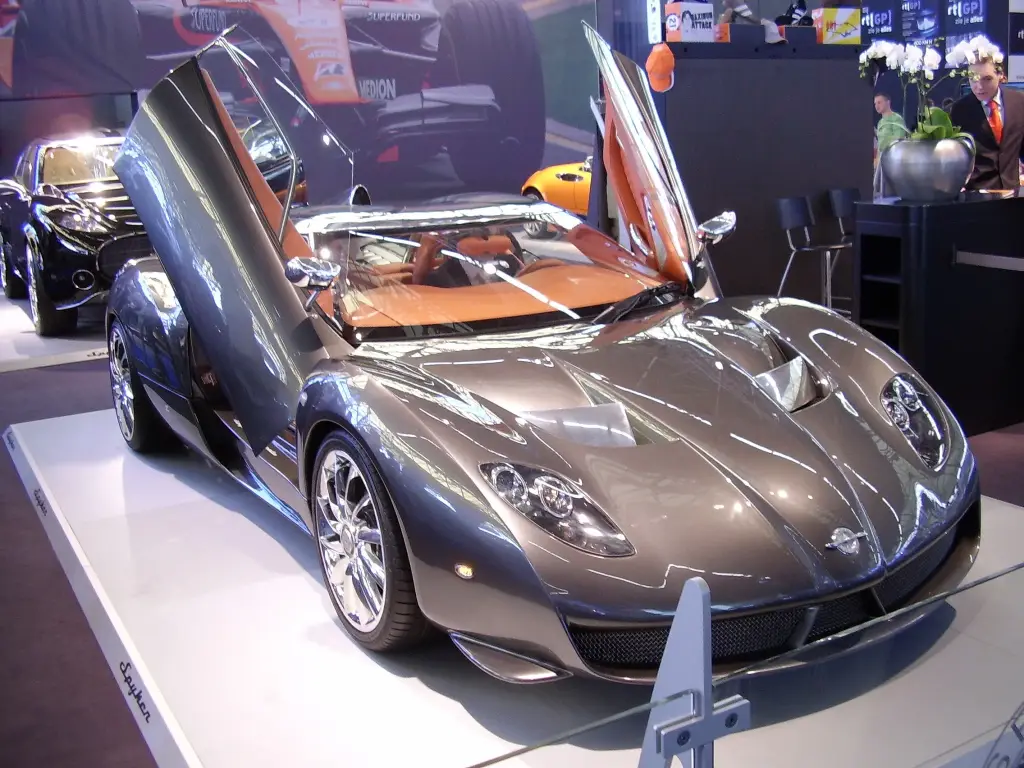
Spyker announced the C12 Zagato at the Salon International de l’Auto in Geneva on 6 March 2007. The Milanese design house Zagato co-designed the body, which introduced all-new styling elements inspired by Formula One. The exterior was something of a departure from the C8, but it kept key C8 features such as the scissor doors, the interior styling and the general aviation theme. Inside, the car followed the D12 Peking to Paris in offering a second set of instruments by the passenger seat so that the passenger could follow the speed.
The C12 platform
The C12 grew out of the long-wheelbase C8 chassis. That underframe had been intended for a W12 engine and only two examples were made: a concept and a single car with the C12 Zagato body. The C12 La Turbie, Spyker’s own design on the same platform, had debuted the year before as a show car.
Engine and performance
Power came from the 6.0-litre W12 sourced from the Volkswagen Group, the same engine used in the Audi A8 and the Volkswagen Phaeton, tuned by Spyker to produce 500 PS. The C12 Zagato was to be offered with either a six-speed automatic with paddle shifters or a traditional six-speed manual. With a kerb weight of 1,480 kg, the car was quoted at 3.8 seconds from 0 to 60 mph and a top speed of 193 mph. Braking was by steel ventilated discs with anti-lock brakes.
Cancellation
The C12 Zagato was priced at €495,000, some $740,000 or £450,000 at the time, and Spyker planned to build just 24 cars, with deliveries from early 2008. In July 2007 C12 production was delayed, and two months later, in October, it was cancelled as Spyker chose to concentrate its resources on other models, notably the C8 and the forthcoming D8. Reportedly only one prototype was built before the project ended, and on the Dutch side the count is the same: of the 24 Zagatos planned, only that single, not yet running, example was ever made.
Design and features
- Zagato bodywork: an all-aluminium design developed with the Milanese coachbuilder, with Formula One-inspired detailing.
- Volkswagen W12: a 6.0-litre engine tuned to 500 PS and 610 N·m, also used by the Audi A8 and Volkswagen Phaeton.
- Aviation cabin: scissor doors, C8-style interior and a passenger-side instrument set first seen in the D12 concept.
- Two-pedal or three-pedal: a choice of six-speed automatic with paddles or a six-speed manual was planned.
Spyker C12 versions
- C12 La Turbie (2006): Spyker’s own-bodied show car on the same long-wheelbase C12 platform.
- C12 Zagato (2007): the Zagato-styled coupé, announced at Geneva and cancelled in October 2007.
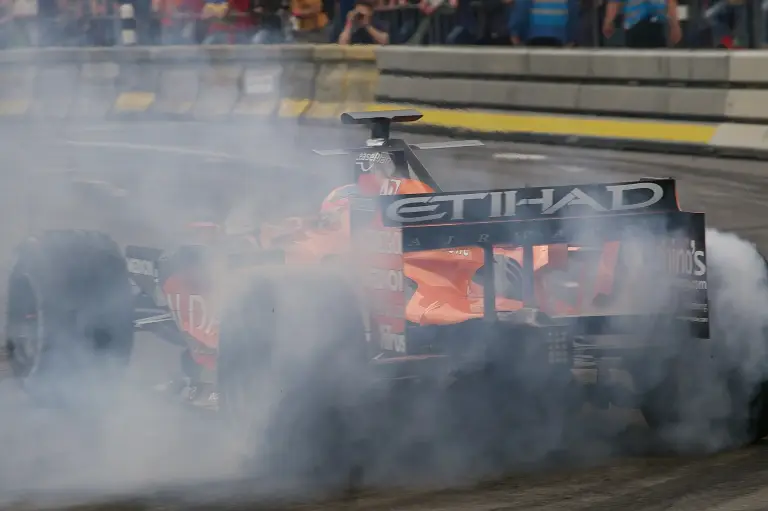
The C12 was built on the long-wheelbase chassis of the Spyker C8, and the money and effort went instead into the C8 and the D12 Peking-to-Paris. Spyker’s racing side is covered by the F8-VII Formula One car. More cars are in the Spyker collection.
Sources
- Spyker C12 Zagato, English Wikipedia: design, engine, performance, cancellation
- Spyker C12 Zagato, Dutch Wikipedia: Geneva debut, price, single prototype