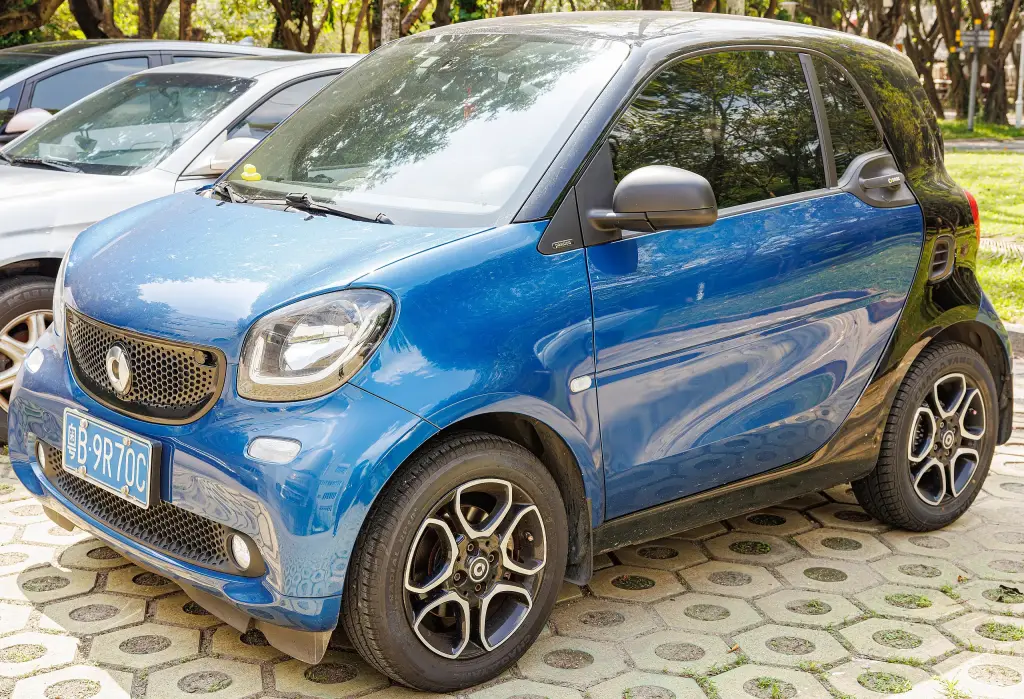
The Smart Fortwo is a two-seat city car launched in 1998 as the first model of the Smart brand. Only 2.5 metres long in its first generation, it combined a rear-mounted three-cylinder engine, a steel Tridion safety cell and interchangeable plastic body panels — a package that has survived three generations.
Smart Fortwo at a glance
| Maker | Smart (MCC, Daimler-Benz), Hambach, France |
|---|---|
| Production | since 1998, three generations |
| First generation | W450, 1998–2007 |
| Second generation | W451, from 2006 |
| Third generation | C453, from 2014 |
| Layout | rear engine, rear-wheel drive |
| Seats | two |
| Body styles | coupé and cabrio |
| Length | 2.5 m (first generation), 2.69 m (second) |
| Gearbox | six-speed automated manual (first), five-speed (second) |
| Safety cell | Tridion steel cell with interchangeable plastic panels |
| Electric version | Smart electric drive from 2007 |
History of the Smart Fortwo
From the Swatch car
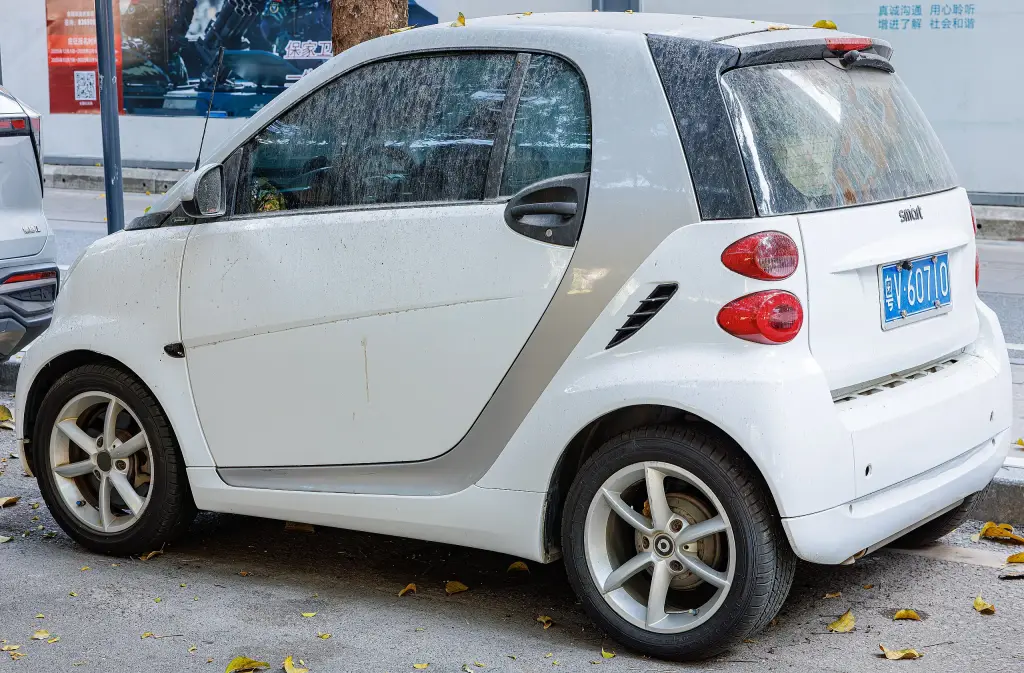
Development of what became the Fortwo began before 1993 as the Swatch car, a project of Nicolas Hayek worked out with Volkswagen. The idea was a modern microcar with an electric or hybrid drive; Volkswagen hesitated, disputes followed and Hayek turned to Mercedes. In 1994 the company MCC (Micro Compact Car AG) was founded in Biel as a joint subsidiary of Daimler-Benz and SMH, the Swatch parent. When MCC dropped the original electric and hybrid plan, Hayek and senior members of the development team left the project. The first production car was launched at the Paris Motor Show in 1998 and was marketed as the Smart City-Coupé until early 2004.
First generation (1998–2007)
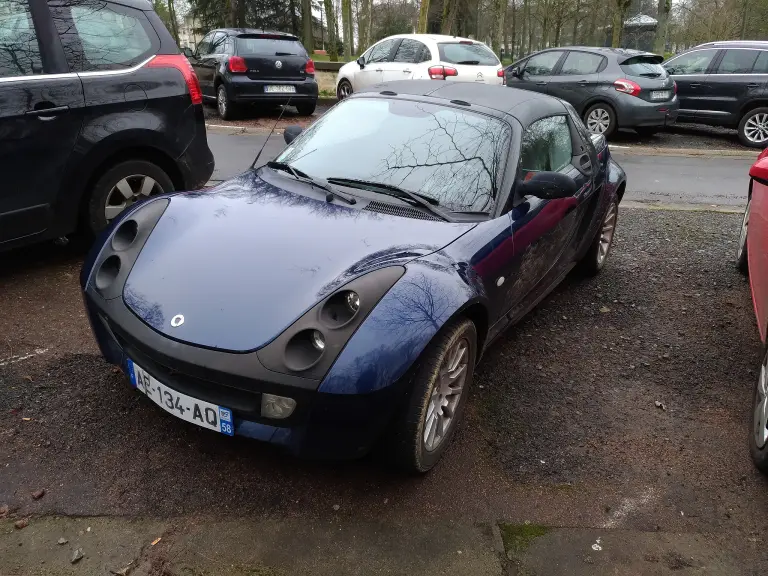
The W450 was a rear-engined two-seater 2.5 metres long, 1.51 metres wide and 1.52 metres high. Its three-cylinder turbocharged engine of 599 cc made 33 kW (45 PS) or 40 kW (54 PS), and 45 kW (61 PS) after the 2003 facelift; top speed was limited to 135 km/h and combined consumption was 5.5 to 6.5 litres per 100 km. A six-speed automated manual gearbox, ABS, airbags and the Tridion safety cell were standard, with MacPherson struts at the front and a De Dion axle at the rear. The car was introduced in the trim levels pure and pulse in October 1998, and passion followed in 1999. A common-rail diesel of 0.8 litres and 30 kW (41 PS) arrived in January 2000; with 88 g/km of CO2 it was among the cleanest combustion cars on sale. In 2002 the Museum of Modern Art in New York added a first-generation Fortwo to its permanent collection.
Second generation (from 2006)
The second generation, the W451, was presented at the Bologna Motor Show in 2006 and kept the familiar one-box shape while growing to 2.69 metres. It used a five-speed automated manual transmission, model 5AMT130. Smart added a version with automatic start-stop sold as the Micro-Hybrid Drive, or MHD, in selected markets, and a sport version prepared by Brabus was available in both generations. The electric Smart, introduced in 2007, became a regular part of the range. Journalists quoted a drag coefficient of 0.345 to 0.35 for the W451.
Third generation (from 2014)
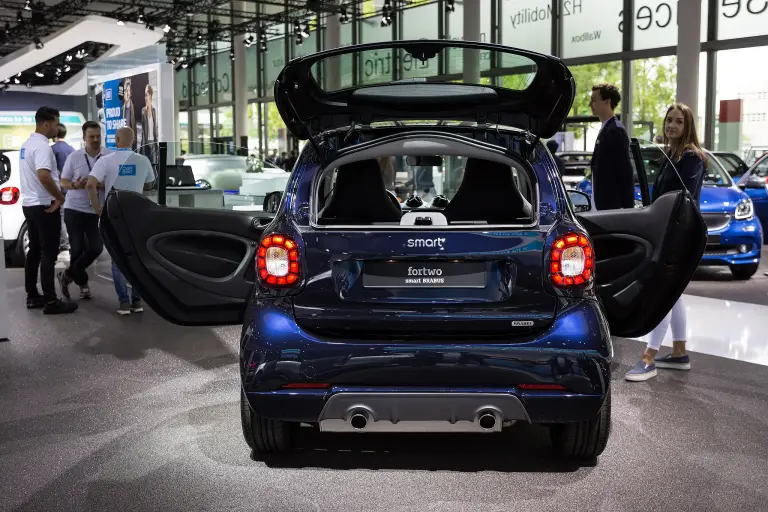
The third generation, build series C453, made its world debut on 16 July 2014 at the Tempodrom in Berlin. It was developed together with the third-generation Renault Twingo, with which it shared its platform and engines, and it appeared as a coupé and a cabrio alongside the closely related four-door Forfour. The new cars offered a manual gearbox or a double-clutch automatic instead of the automated manual, a wider track and better noise isolation. The Smartville factory in Hambach, France, had received a 200 million euro upgrade from mid-2013 for this generation.
Design and features
- Tridion safety cell: a prominent steel hemisphere that carries the plastic body panels and can be ordered in a contrasting colour.
- Very short body: at 2.5 metres the first Fortwo could park across a conventional space.
- Offset seats: in the first two generations the passenger sat 15 cm further back than the driver.
- Automated manual gearbox: a computer-controlled clutch and servo-operated gearbox replaced a conventional automatic.
- Low emissions: the first diesel Fortwo was rated at 88 g/km of CO2.
Smart Fortwo versions
- City-Coupé (1998–2004): the original name of the first-generation car.
- Cabrio: the convertible body style offered in every generation.
- pure, pulse and passion: the first trim levels, with passion added in 1999.
- Brabus: the sport version tuned by Brabus, offered in the first and second generations.
- MHD: the Micro-Hybrid Drive version with automatic start-stop.
- Electric drive: the all-electric Fortwo introduced in 2007.
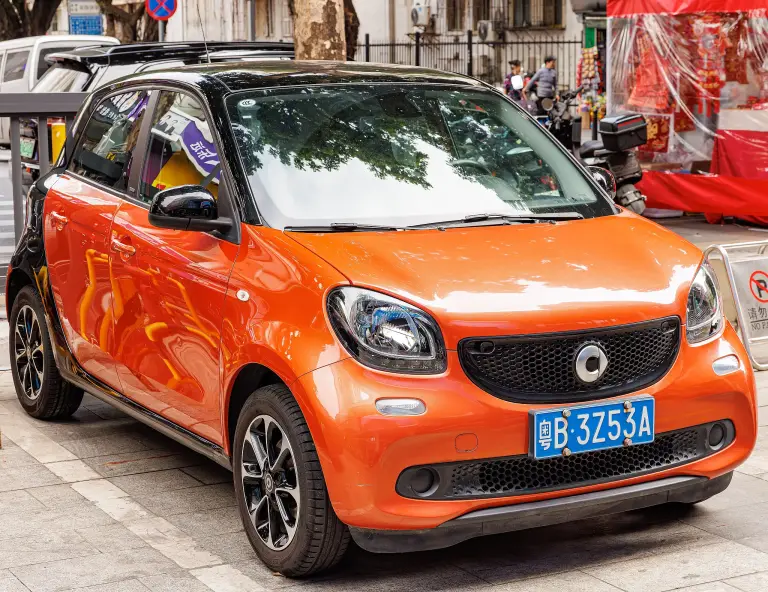
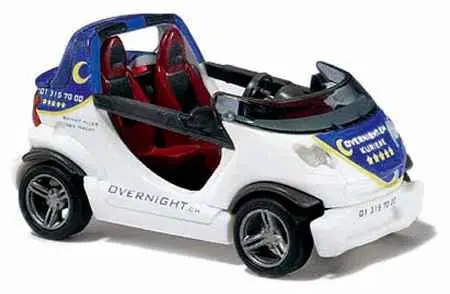
The Fortwo was joined by the four-seat Smart Forfour and the sporting Smart Roadster. The special Crossblade was built on the first-generation City Cabrio. More cars are in the Smart collection.
Video: Erste Fahrt im neuen Smart fortwo/forfour (2014)
Video by YouTube on YouTube.
Sources
- Smart Fortwo, English Wikipedia: development, generations, design, electric drive
- Smart Fortwo, German Wikipedia: first-generation engines, trims, diesel, dimensions