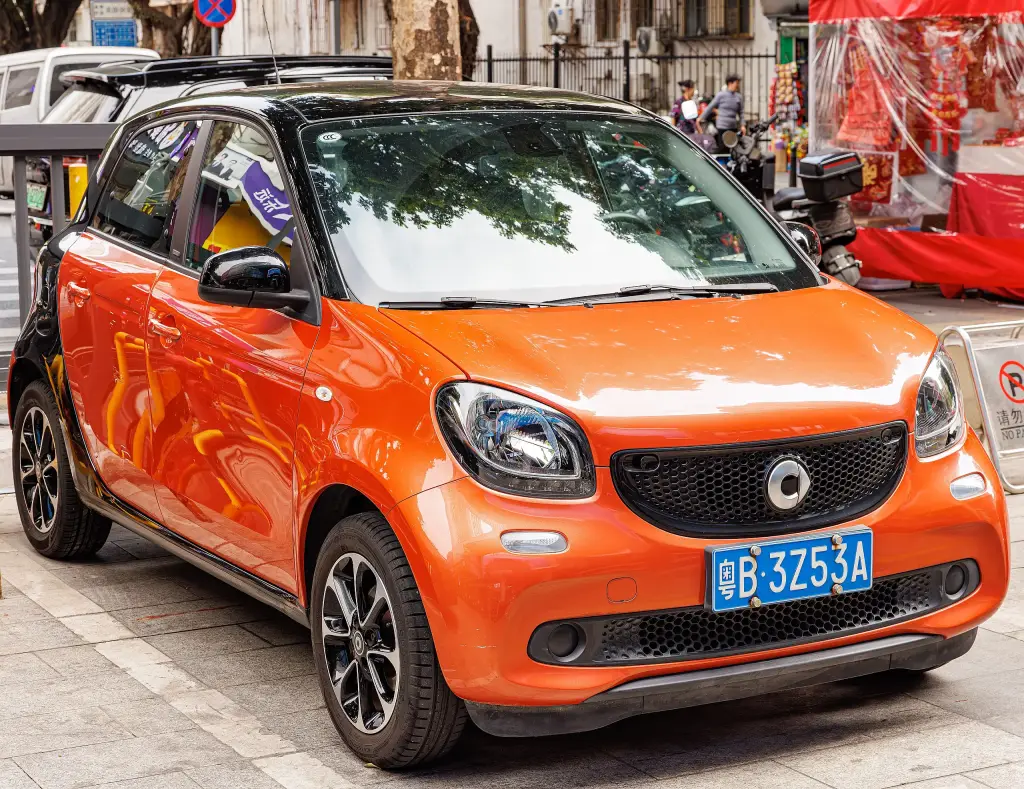
The Smart Forfour is the four-seat member of the Smart range. The first generation of 2004–2006 was a front-engined car built with Mitsubishi; the second, launched in 2014, moved the engine to the rear and shared its platform with the Renault Twingo.
Smart Forfour at a glance
| Maker | Smart, Germany |
|---|---|
| Production | 2004–2006 (first generation); from 2014 (second) |
| Class | A-segment city car |
| Seats | four, or five on request |
| First generation | W454, front engine, front-wheel drive |
| Platform | Mitsubishi Colt (first), Renault Twingo (second) |
| Second generation | W453, rear engine, rear-wheel drive |
| Length | 3.75 m (first), 3.49 m (second) |
| Boot | about 270 litres (first); 185 litres to the cover (second) |
| Top version | Forfour Brabus, 130 kW (177 PS) |
| Sales start | 24 April 2004 (first); 22 November 2014 (second) |
History of the Smart Forfour
First generation (W454)
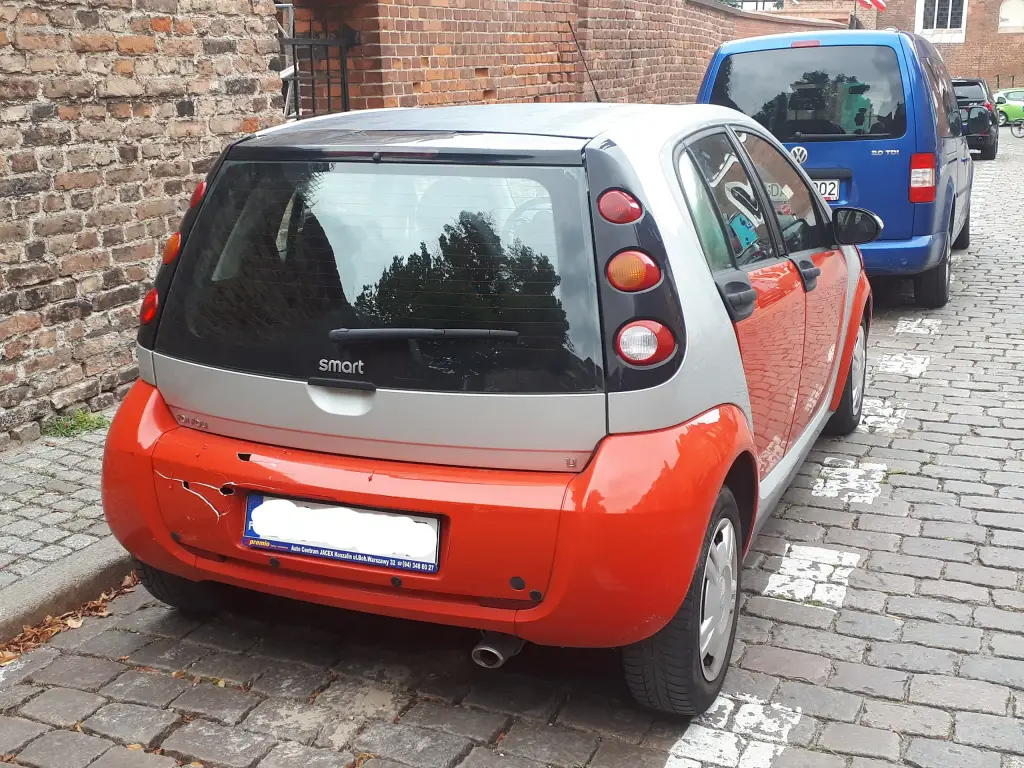
The first Forfour went on sale on 24 April 2004. It was produced at the NedCar factory in Born in the Netherlands, together with Mitsubishi, and shared its platform and about 40 percent of its parts with the 2003 Mitsubishi Colt. The car was 3.75 metres long, had a boot of about 270 litres that grew to 700 litres with the rear seats folded, and used a front engine driving the front wheels through a five-speed manual or a six-speed automated manual gearbox. Petrol engines ran from a 1.1-litre three-cylinder with 55 kW (75 PS) through 1.3-litre and 1.5-litre four-cylinders of 70 kW (95 PS) and 80 kW (109 PS). Two 1.5-litre common-rail diesels of 50 kW (68 PS) and 70 kW (95 PS) were derived from Mercedes-Benz A-Class engines. ESP and ABS were standard, and cars up to 2005 had disc brakes on all four wheels.
Sales and the Brabus version
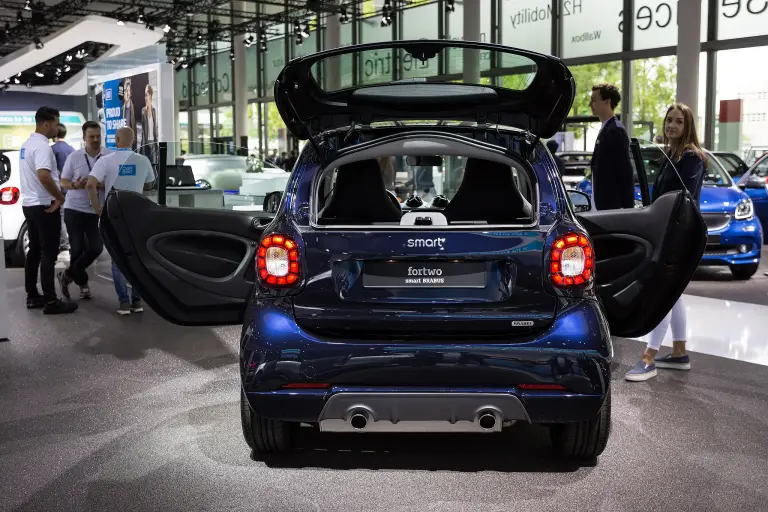
Smart expected to sell 50,000 Forfours in 2004 and 80,000 a year at full production; the first target was beaten with 59,100 cars, but sales fell to 43,700 in 2005. In Germany 44,302 Forfours were registered between 2003 and 2007, with 2005 the best year at 17,543. The top model was the Forfour Brabus of 2005, powered by a turbocharged 1.5-litre Mitsubishi 4G15 engine rated 130 kW (177 PS), 27 PS more than the Mitsubishi Colt CZT. It reached 221 km/h and accelerated from 0 to 100 km/h in 6.9 seconds, and it was offered only with the five-speed manual gearbox and 17-inch wheels. Production of the first generation ended in July 2006 after slow sales.
Second generation (W453)
The second-generation Forfour was presented on 16 July 2014 at the Tempodrom in Berlin and went on sale in Europe on 22 November 2014. It was developed with Renault and shared roughly 70 percent of its parts with the third-generation Renault Twingo. The engine now sat at the rear and drove the rear wheels. At 3.49 metres the new car was about 26 cm shorter than its predecessor, 2 cm narrower and 10 cm taller, with a wheelbase of about 2.49 metres; because the front wheels no longer had to steer around drive shafts, the turning circle fell to 8.65 metres between kerbs. The boot held 185 litres to the load cover and 255 litres to the roof. A manual gearbox or a twinamic double-clutch automatic was offered, and the launch edition was called edition #1. The English Wikipedia says the new Forfour was built at Smartville in Hambach, while the German Wikipedia gives the Revoz plant in Novo mesto, Slovenia.
Fourjoy concept
The Smart Fourjoy concept of 2013 previewed the second generation. It used the Tridion safety cell in polished aluminium, with the tail lights integrated into the cell, a spherical instrument cluster and aluminium lettering milled into the side skirts. Its bumpers, bonnet and tailgate were finished in pearlescent white, the headlamps had no glass cover, and the car had U-shaped daytime running lights and LED front and tail lights.
Design and features
- Four seats in a small car: the Forfour added two seats to the Smart range without growing to conventional compact size.
- Two very different layouts: front engine and front-wheel drive in 2004, rear engine and rear-wheel drive in 2014.
- Mitsubishi and Renault partnerships: the first generation shared its platform with the Colt, the second with the Twingo.
- Brabus performance: the 2005 Forfour Brabus reached 221 km/h from a 1.5-litre turbo engine.
Smart Forfour versions
- Forfour W454 (2004–2006): the first generation, built in Born on the Mitsubishi Colt platform.
- Forfour Brabus (2005): the 130 kW (177 PS) top version with a five-speed manual gearbox.
- Forfour W453 (from 2014): the second generation with a rear engine and rear-wheel drive.
- Fourjoy concept (2013): the styling study that previewed the second generation.
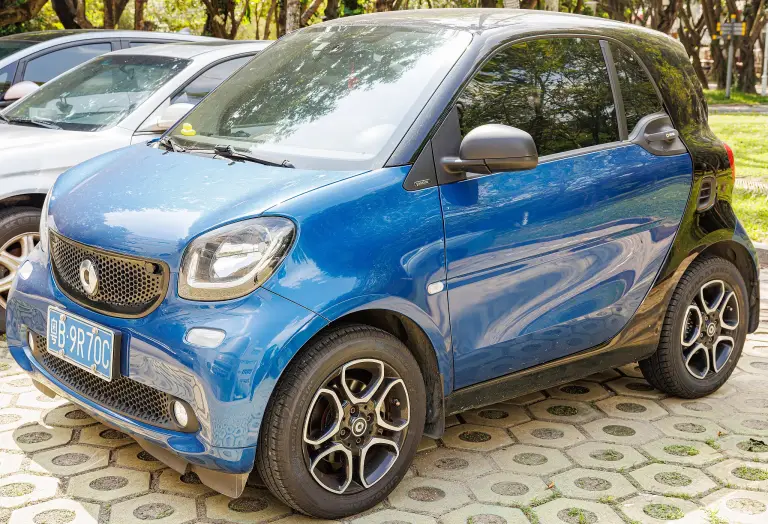
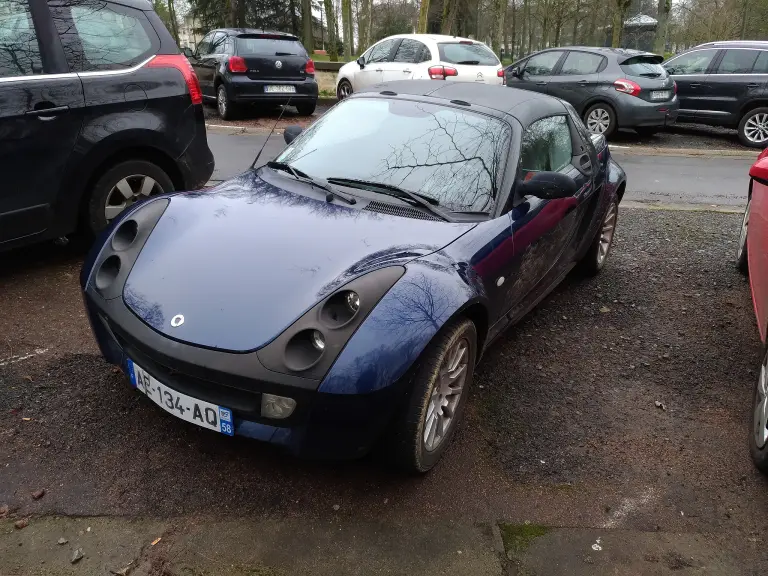
The Forfour shared its second-generation platform with the Smart Fortwo. The two-seat sports car of the range was the Smart Roadster. More cars are in the Smart collection.
Video: Vorstellung neuer smart fortwo / forfour 2014 Weltpremiere / Premiere
Video by YouTube on YouTube.
Sources
- Smart Forfour, English Wikipedia: generations, production, equipment, Brabus
- Smart Forfour, German Wikipedia: sales figures, engines, dimensions, second generation