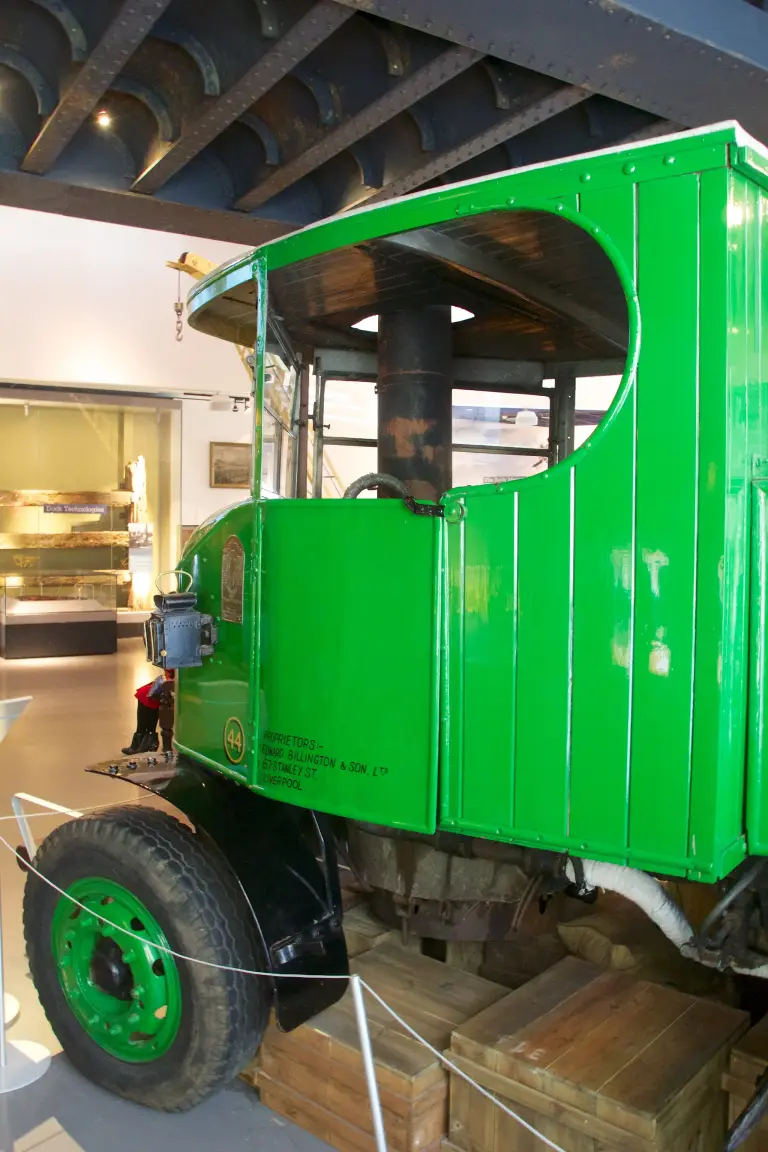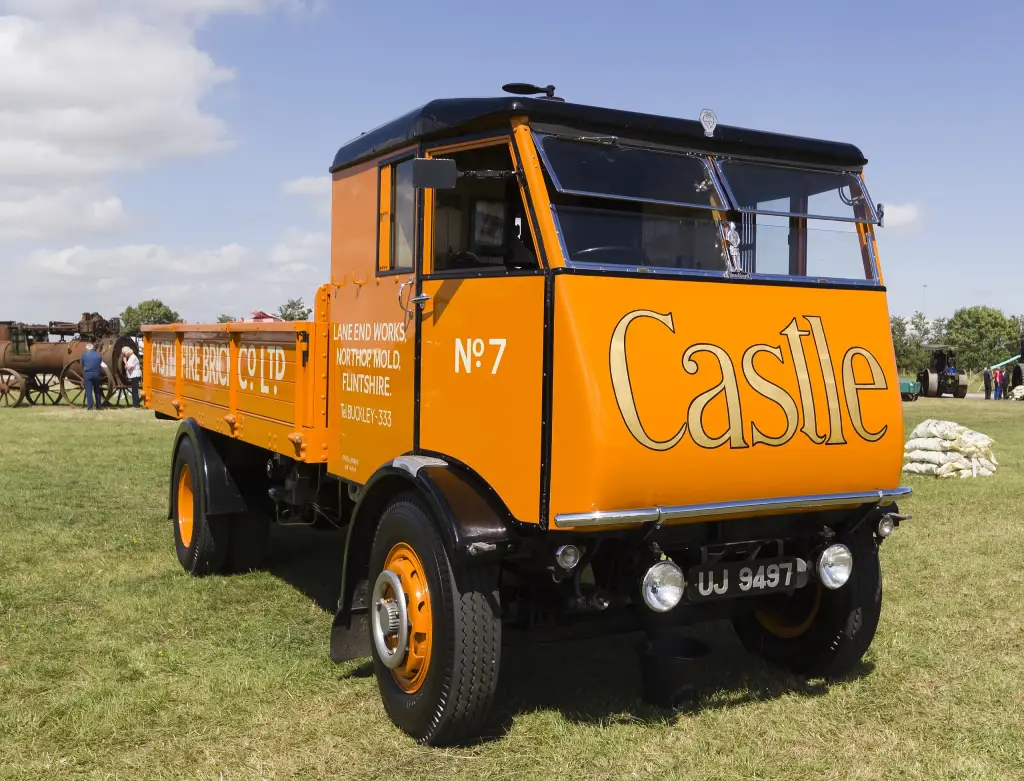
Sentinel steam waggons were the products of Sentinel Waggon Works Ltd of Shrewsbury, Shropshire. The line began with a five-ton vertical-boiler wagon introduced in 1906 and ran through the 1923 Super to the S type of 1934, whose Sentinel Standards became the biggest-selling steam lorry ever built.
Sentinel steam waggon at a glance
| Maker | Sentinel Waggon Works Ltd, Shrewsbury |
|---|---|
| Origin | steam wagon production of Alley & MacLellan, Glasgow |
| First five-ton wagon | 1906, vertical boiler, two-cylinder undertype engine, chain drive |
| Shrewsbury factory | opened 1915 |
| Super | 1923, 1,550 built |
| S type | 1934, single-acting four-cylinder underfloor engine |
| Sentinel Standards | 3,750 built over 17 years from the 1935 design |
| Wheel arrangements | S4, S6 and S8: four, six and eight wheels |
| Export | about 100 S type vehicles to Argentina, up to 1950 |
| Lorry production ended | 1956 |
There is no separate Wikipedia article on the waggons; this page is based on the single article on Sentinel Waggon Works (based on one source).
History of the Sentinel steam waggon
Alley & MacLellan and the first wagon
The steam waggon came to Sentinel through Alley & MacLellan, founded in 1875 at Polmadie, Glasgow, and originally a maker of valves and compressors for steam engines and later of steamships. In 1903 it acquired Simpson and Bibby of Horsehay, Shropshire, a manufacturer of steam-powered road vehicles. Production of steam road vehicles began in 1905, and in 1906 the company introduced a five-ton vertical-boiler steam wagon with a two-cylinder undertype engine and chain drive. It was successful enough to stay in production with relatively few changes until the Super of 1923.
Shrewsbury
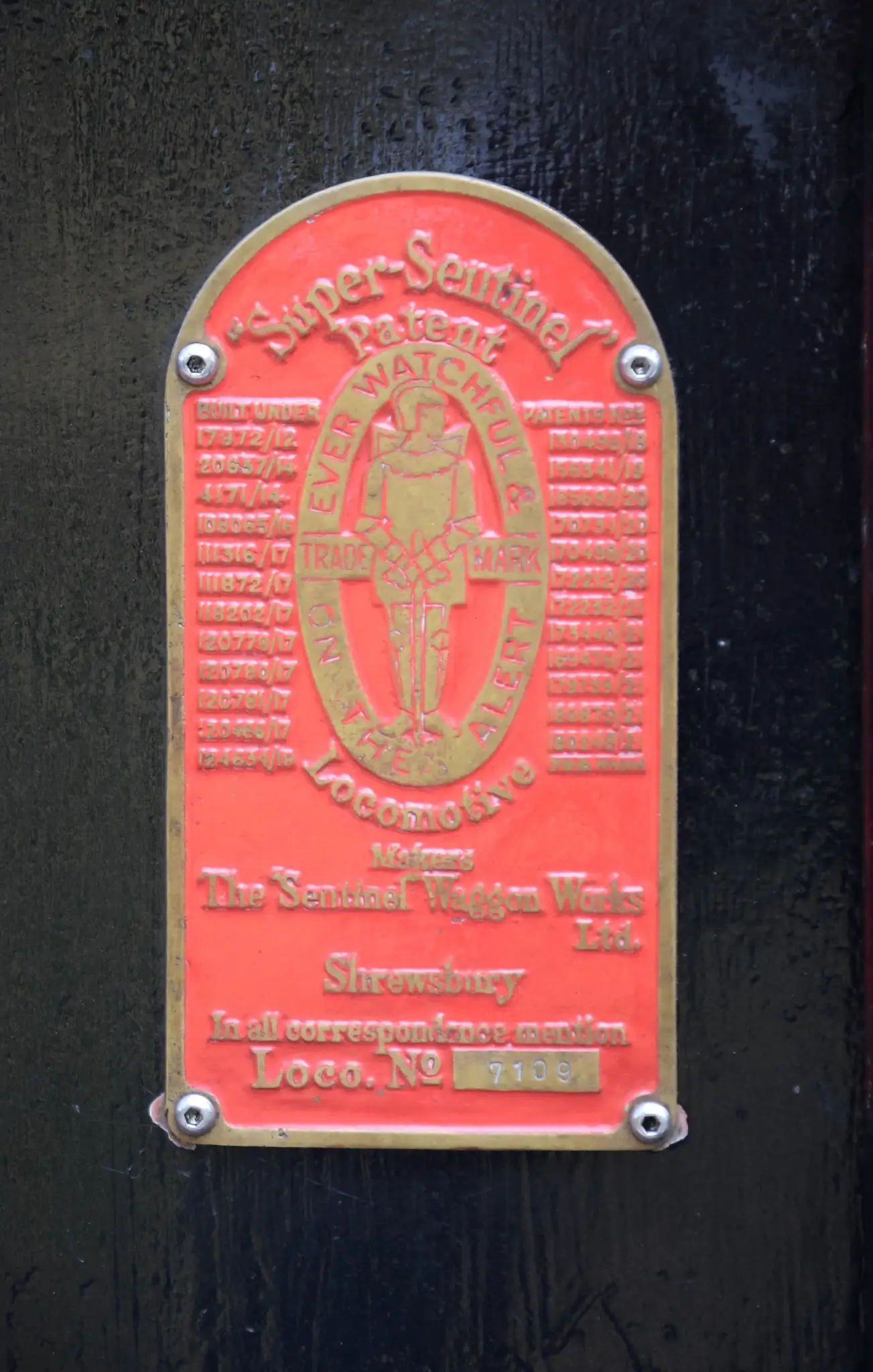
Around 1915 steam wagon production was moved to a new factory at Shrewsbury, and the separate company Sentinel Waggon Works Ltd was formed. The factory building had been prefabricated in Glasgow for local assembly, and core Scottish employees moved with the work. In 1917 the company was bought by William Beardmore and Company, and in 1920, after financial problems, it was reorganised as Sentinel Waggon Works (1920) Ltd.
The Super and the S type
The Sentinel Super of 1923 was assembled in a new plant at Shrewsbury with a flow line modelled on Henry Ford’s Model T factory at Highland Park, Michigan; 1,550 were produced. Sentinel, together with Foden, dominated the steam market, but the 1930s brought the decline of both ranges as new legislation forced the development of lighter lorries. In 1934 Sentinel answered with the S type, which had a single-acting four-cylinder underfloor engine with a longitudinal crankshaft and an overhead worm-drive axle. The design of 1935 led to 3,750 Sentinel Standards in the seventeen years that followed. Lighter than its predecessors and with a modernised cab and a set-back boiler, it was offered as the four-, six- and eight-wheel S4, S6 and S8. It could not match diesel trucks for convenience and payload and was phased out in the late 1930s.
Argentina and the end
Steam did not end there: Sentinel built about 100 S type vehicles for export to Argentina as late as 1950, for the Río Turbio coal mine, and it has been stated that the company was never paid for the last batch. At least two of those wagons survive in Argentina. In 1947 the company became Sentinel (Shrewsbury) Ltd and developed a range of diesel lorries, but sales fell through the 1950s and lorry production ceased in 1956. The factory went to Rolls-Royce for diesel engine production, and the remaining parts and vehicles passed to Sentinel’s chief dealer, North Cheshire Motors of Warrington, which formed Transport Vehicles (Warrington) Ltd in 1957 to build Sentinel-based designs under the TVW name.
Design and features
- Vertical boiler and undertype engine: the layout of the early five-ton wagon, with the engine under the chassis and chain drive.
- Flow-line assembly: the 1923 Super was built on a line modelled on Ford’s Highland Park plant.
- S type engineering: a single-acting four-cylinder underfloor engine, longitudinal crankshaft and overhead worm-drive axle.
- Standard range: four, six and eight wheels as the S4, S6 and S8, with a set-back boiler and a modernised cab.
- Long service: S type wagons were still being built for Argentina in 1950, long after British sales had turned to diesel.
Sentinel steam waggon versions
- Five-ton wagon (1906): vertical boiler, two-cylinder undertype engine, chain drive.
- Super (1923): the famous model, 1,550 built at Shrewsbury.
- S4 (1934): four-wheel S type.
- S6: six-wheel S type.
- S8: eight-wheel S type.
- Sentinel Standard: the 1935 design, 3,750 built, the biggest-selling steam lorry ever.
- Río Turbio batch: about 100 S type vehicles for the Argentine coal mine, up to 1950.
The tractor version of the same steam line is described in the Sentinel tractor article. More vehicles are in the Sentinel collection.
Video: Sentinel steam waggon Errol
Video on YouTube.
Sources
- Sentinel Waggon Works, English Wikipedia: history, models, production figures, Argentina