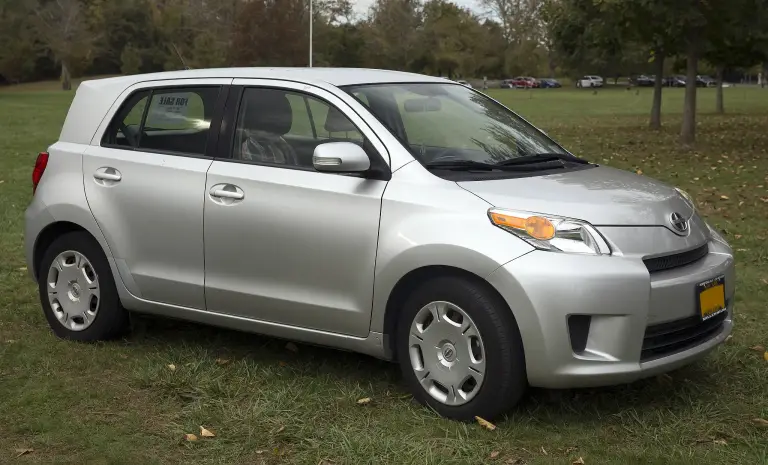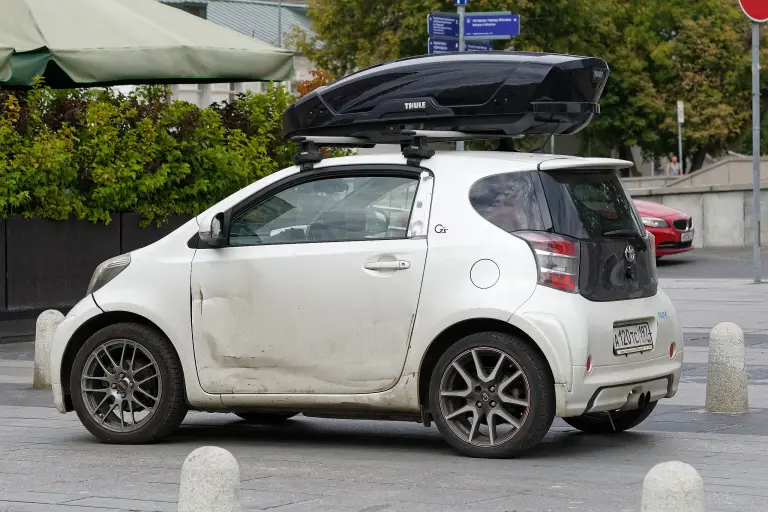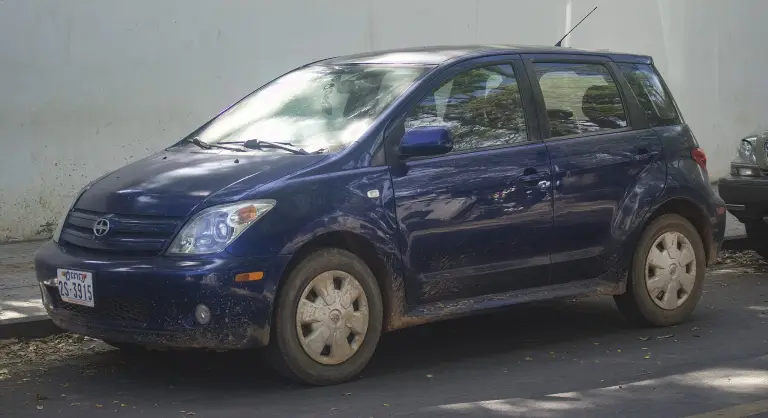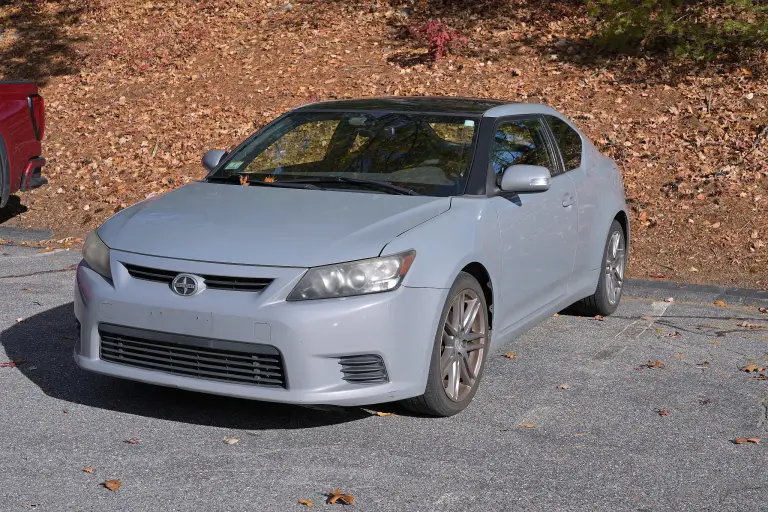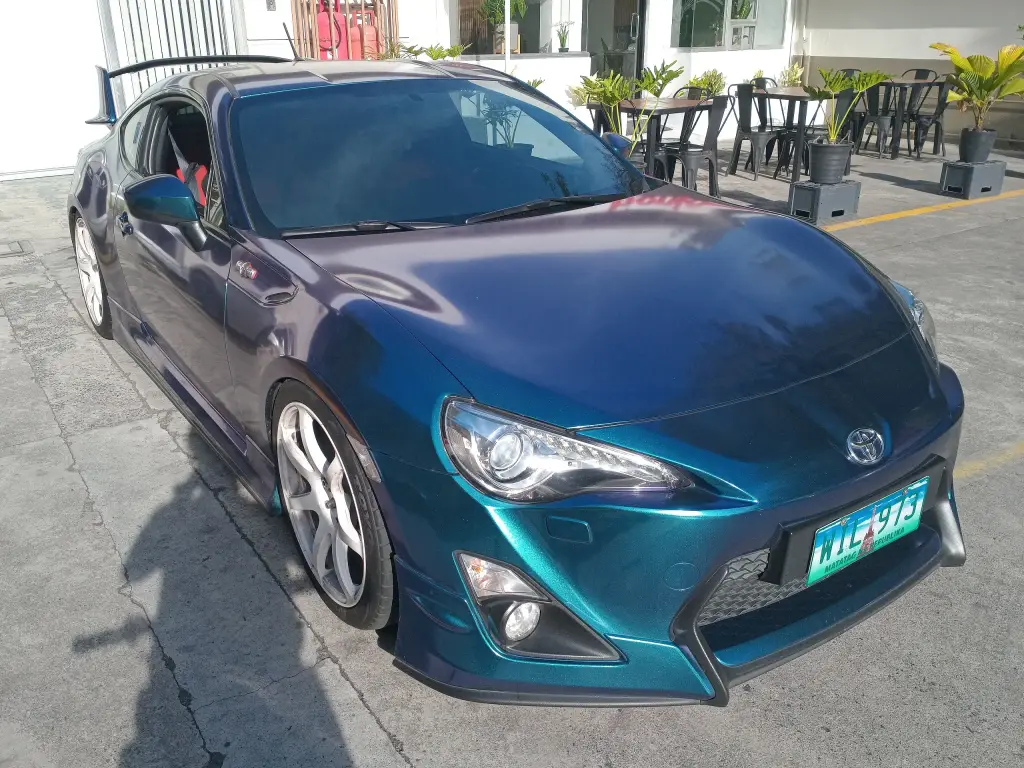
The Scion FR-S was a compact 2+2 sports coupe developed jointly by Toyota and Subaru and built at Subaru’s Gunma plant in Japan. It was sold in the United States and Canada from 2012 to 2016, where it was the Scion-badged version of the Toyota 86 and Subaru BRZ twins.
Scion FR-S at a glance
| Maker | Scion (Toyota), developed with Subaru |
|---|---|
| Production | 2012–2016 (Scion version) |
| Assembly | Subaru Gunma plant, Ôta, Japan |
| Body | 2+2 fastback coupe |
| Engine | 2.0 L FA20 / 4U-GSE flat-four, 1,998 cc |
| Power | 200 PS (197 bhp; 147 kW) at 7,000 rpm |
| Torque | 205 N·m at 6,400 rpm |
| Layout | front-engine, rear-wheel drive |
| Weight balance | 53% front, 47% rear |
| Gearbox | six-speed manual or six-speed automatic |
| Differential | Torsen limited-slip, standard on most models |
| Also sold as | Toyota 86, Toyota GT86 (Europe) |
Based on one source; the English Wikipedia article covers the Toyota 86, of which the Scion FR-S was the US and Canadian version.
History of the Scion FR-S
Joint development
The project began with Toyota’s FT-HS concept at the 2007 North American International Auto Show, a front-engine, rear-drive 2+2 with a hybrid V6. In 2008 Toyota bought 16.5% of Fuji Heavy Industries, the parent of Subaru, and under project leader Tetsuya Tada invited Subaru to co-develop a new D-4S boxer engine. Subaru initially refused, since the project conflicted with its reputation for high-performance all-wheel-drive cars, and work stopped for six months until a development prototype convinced Subaru engineers to take part. The FT-86 concept appeared at the Tokyo Motor Show in October 2009 with a Subaru chassis modified from the Impreza and a red paint said to be based on the backside of a Japanese macaque. A G Sports version followed in 2010 with carbon-fibre panels and a turbocharger, and in April 2011 Scion showed the FR-S Sports Coupé Concept at the New York Auto Show, built with the tuner Five Axis.
Production
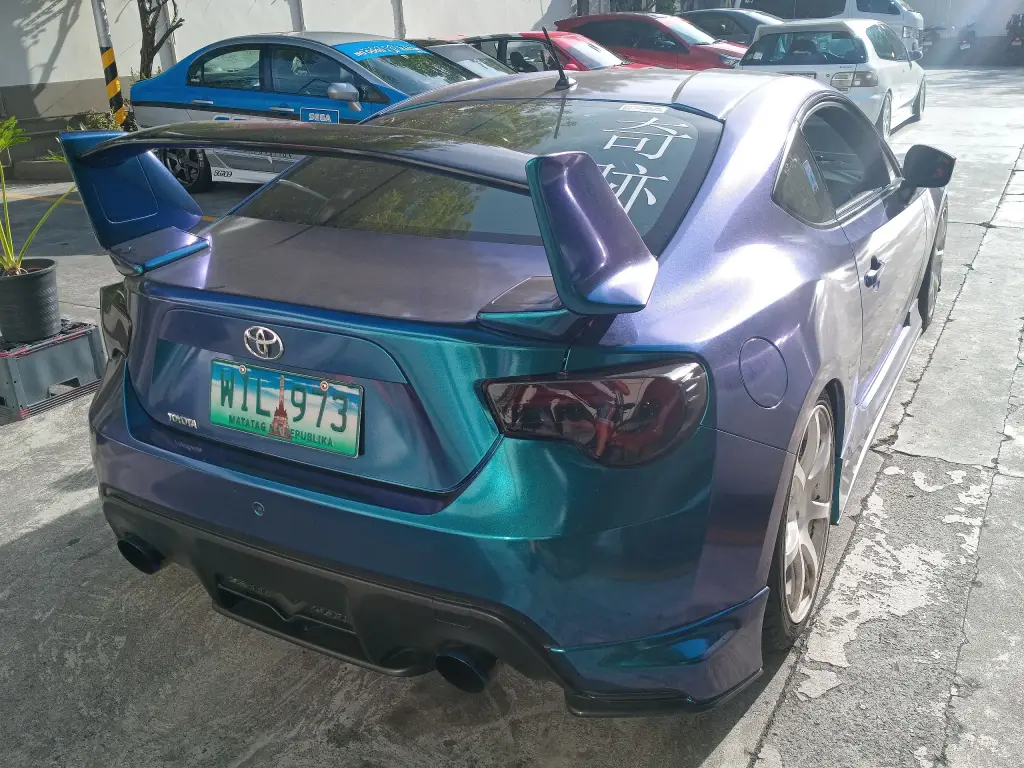
The production Toyota 86 debuted at the Tokyo Motor Show in December 2011 and all versions were built at Subaru’s Gunma Main Plant. The first cars were assembled on 2 February 2012, sales began in March and deliveries in April; 7,000 orders were taken for the Toyota 86 in the first month, against 3,500 for the Subaru. In the United States, Scion was allocated 10,000 units of 2013 model year production while Subaru received 6,000. The low-weight design used an aluminium bonnet, a fixed roof and a boot rather than a hatchback, with the flat-four mounted low to keep the centre of gravity down. The result was a 53/47 front-to-rear weight distribution, and the chassis was inspired by the earlier AE86 Corolla coupe.
Design and features
- Boxer engine: Subaru’s flat-four with Toyota’s D-4S direct injection, 12.5:1 compression and an 86 mm bore and stroke.
- Low centre of gravity: the engine sits low and far back behind the front axle.
- Two gearboxes: a Toyota TL70 six-speed manual based on the Aisin AI AZ6, or an Aisin-Warner automatic with Sport, Snow and Normal modes.
- Torsen differential: a limited-slip unit was standard on most models.
- Lightweight body: aluminium bonnet, fixed roof and a boot lid instead of a hatch.
Scion FR-S versions
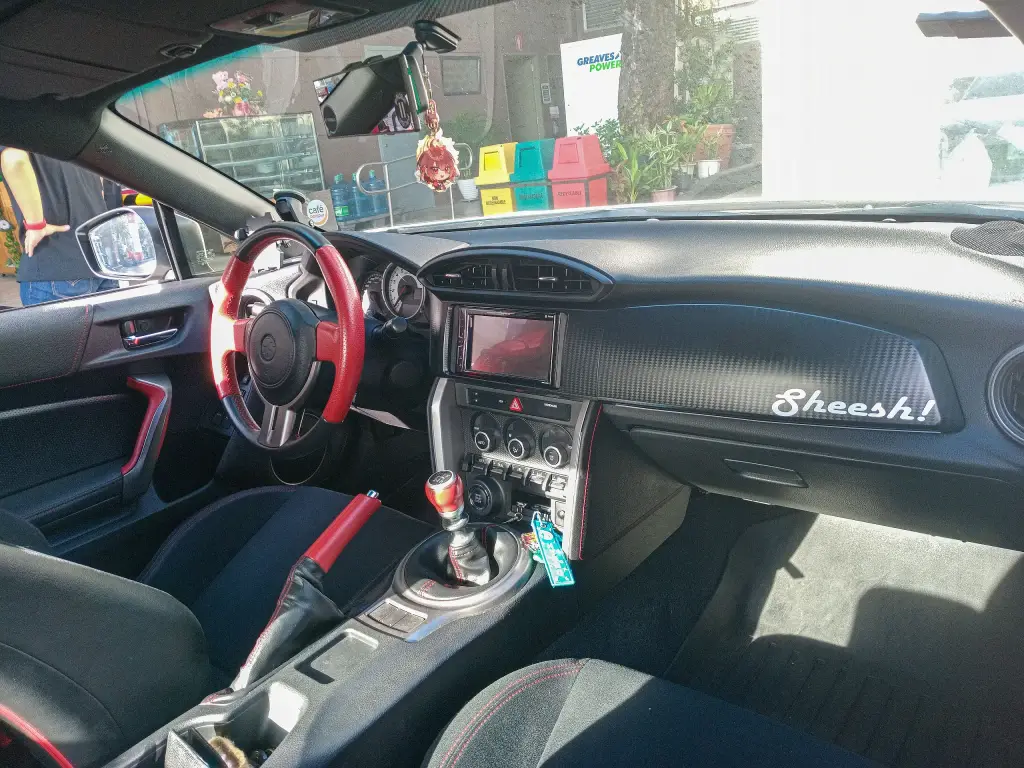
- FR-S with six-speed manual: the purist choice, with the Toyota-developed gearbox.
- FR-S with six-speed automatic: paddle-shift automatic with three driving modes.
- Scion FR-S (2012–2016): the US and Canadian version.
- Toyota 86 and GT86: the same car under Toyota badges in other markets.
- GR86: the second-generation car, marketed as part of Toyota’s Gazoo Racing family.
The FR-S joined the front-drive Scion tC and the boxy Scion xB in Scion showrooms. More models are in the Scion collection.
Sources
- Toyota 86, English Wikipedia: development, engineering, production, Scion FR-S