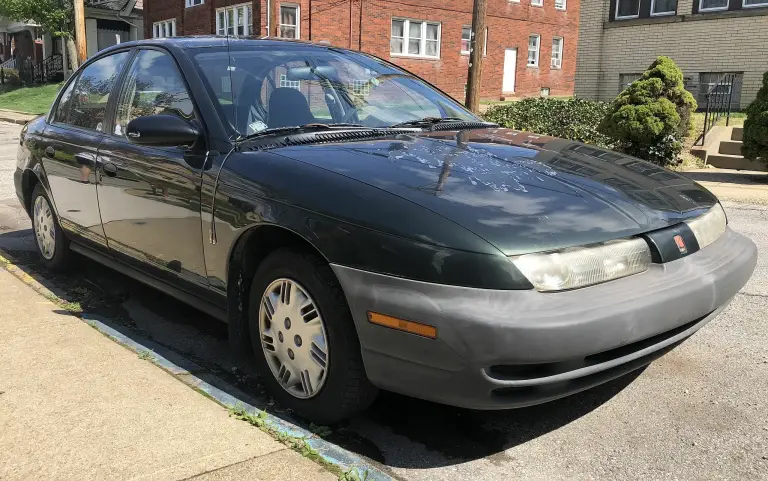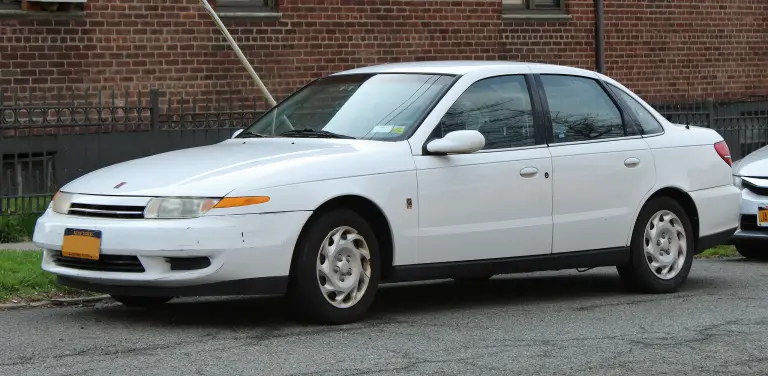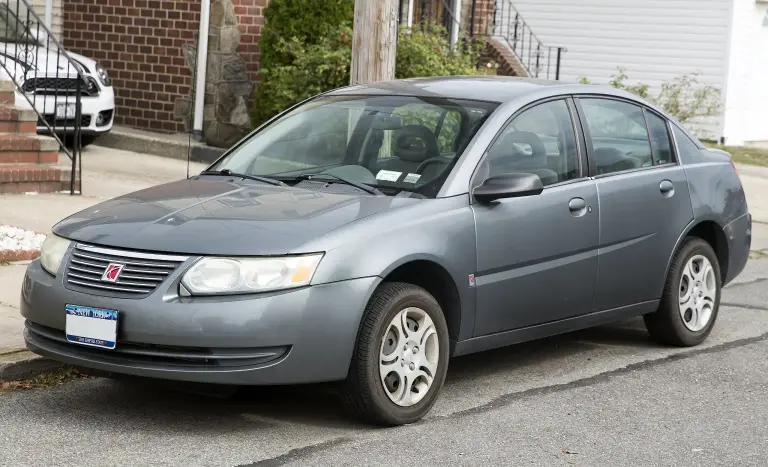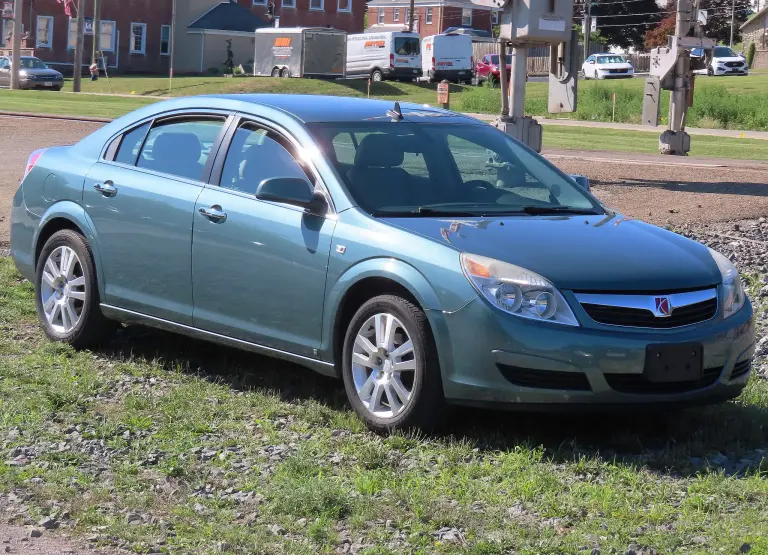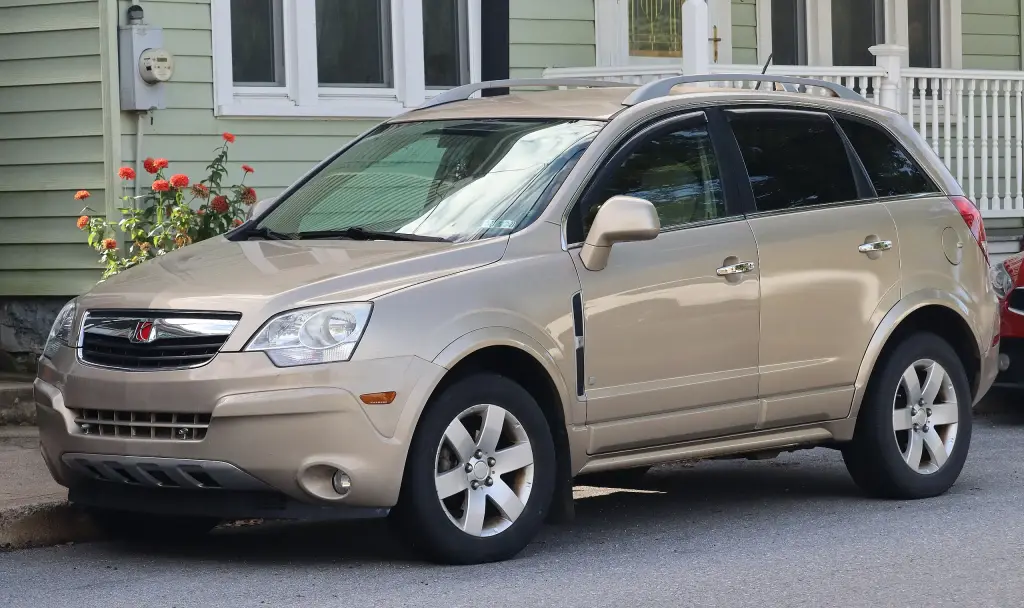
The Saturn Vue was the first car to use the GM Theta platform and became Saturn’s best-selling model. The first generation ran from 2002 to 2007 with four- and six-cylinder engines, a facelift in 2006 and two special versions, the lowered Red Line and the mild-hybrid Green Line. A second generation, a rebadged Opel Antara, arrived for 2008 and lasted until the brand was closed.
Saturn Vue at a glance
| Production | 2002–2009 |
|---|---|
| Assembly | Spring Hill, Tennessee, first generation |
| Platform | GM Theta, first vehicle to use it |
| Body style | five-door compact SUV |
| Engines | 2.2/2.4 L Ecotec four, 3.0 L L81 V6, Honda 3.5 L V6 |
| Honda V6 | 250 hp, from 2004 |
| Transmissions | manual, automatic, continuously variable |
| Versions | base, XE, XR, Red Line, Green Line |
| Facelift | 2006 model year |
| Second generation | 2008, rebadged Opel Antara |
| End of production | with the Saturn brand in 2009 |
Written from the English Wikipedia article on the Vue.
History of the Saturn Vue
2002: the first Theta
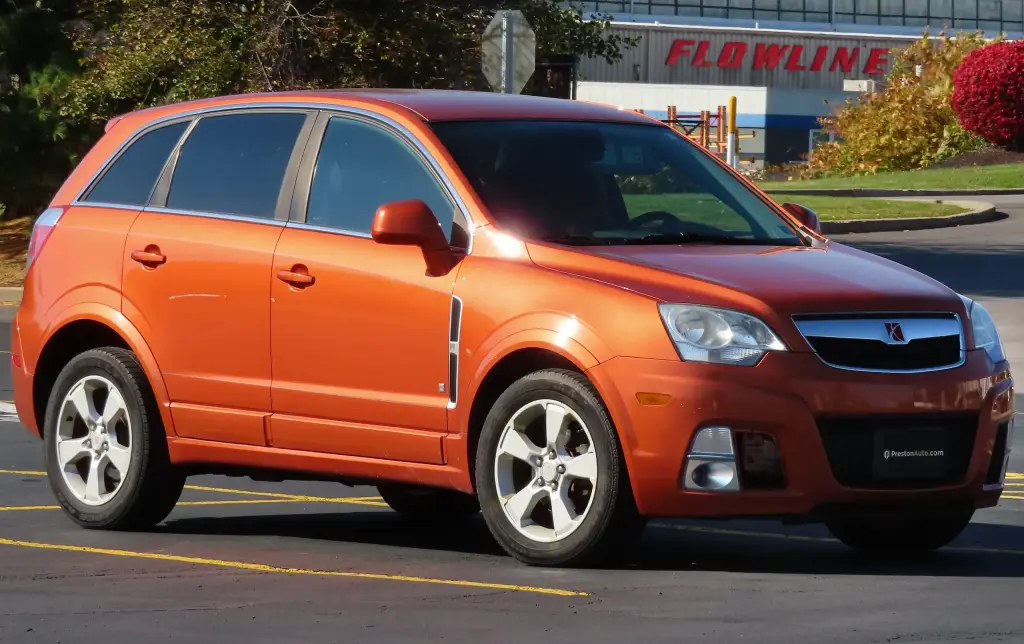
The Vue was designed by Saturn and introduced for the 2002 model year as a compact SUV, built at Spring Hill. It was the first vehicle on the GM Theta platform, a unibody structure shared with the Chevrolet Equinox, the Pontiac Torrent and the European Opel Antara. The range offered four- and six-cylinder engines, manual and automatic gearboxes, and both front- and all-wheel drive. Four-cylinder cars used the Ecotec engine, while the first V6 was the L81 from the L-Series with a five-speed Aisin automatic.
2004–2006: Honda power and a facelift
From 2004 every six-cylinder Vue used Honda’s 3.5-litre J35 V6 of 250 hp with a Honda transmission, which transformed the performance of the car; that engine stayed until the end of the first generation. The four-cylinder could be ordered with a VTi continuously variable transmission, which was dropped for front-wheel-drive cars in 2005 in favour of a four-speed automatic once its reliability problems became known, and the CVT remained on all-wheel-drive cars only while stocks lasted. The 2004 model year also brought the Red Line, a lowered performance version with the same 250 hp V6, suspension an inch lower, 18-inch wheels, ground-effect bumpers, rocker trim and black leather and suede seats. The Vue was facelifted for 2006 with a redesigned interior, a new bumper and grille, and OnStar, cruise control and automatic headlamps as standard.
2007–2009: Green Line and the Opel Antara
For the last year of the first generation Saturn added the Green Line, a mild hybrid using GM’s belt alternator starter. An electric motor driven by a belt from the crankshaft helped the engine on acceleration, a 36-volt nickel-metal-hydride battery under the load floor stored energy from regenerative braking, and a start-stop system cut the engine at a standstill. With the 170 hp 2.4-litre Ecotec it was about $2,000 dearer than a comparable Vue and improved economy from 22/27 to 27/32 mpg. A second generation arrived for 2008 as a rebadged Opel Antara, and production in North America ended when General Motors closed the Saturn brand during its 2009 reorganisation.
Design and features
- First Theta: the Vue was the first GM vehicle on the platform later used by the Equinox and Torrent.
- Honda power: from 2004 the V6 was Honda’s 250 hp 3.5-litre unit with a Honda gearbox.
- Red Line: a performance version lowered by an inch with 18-inch wheels and a body kit.
- Green Line: a belt-alternator mild hybrid with start-stop and regenerative braking.
- Best seller: the Vue was the most popular model Saturn ever sold.
Saturn Vue versions
- Base and XE: the four-cylinder cars, with front- or all-wheel drive.
- XR: the better-equipped trim of the range.
- Red Line: the lowered performance version added in 2004.
- Green Line: the 2007 mild hybrid.
- Second generation: the 2008–2009 rebadged Opel Antara.
The Vue was the volume model alongside the Aura sedan and the Outlook crossover, and it shared its platform thinking with the L-Series V6. More cars are in the Saturn collection.
Sources
- Saturn Vue, English Wikipedia: history, engines, Red Line, Green Line, production