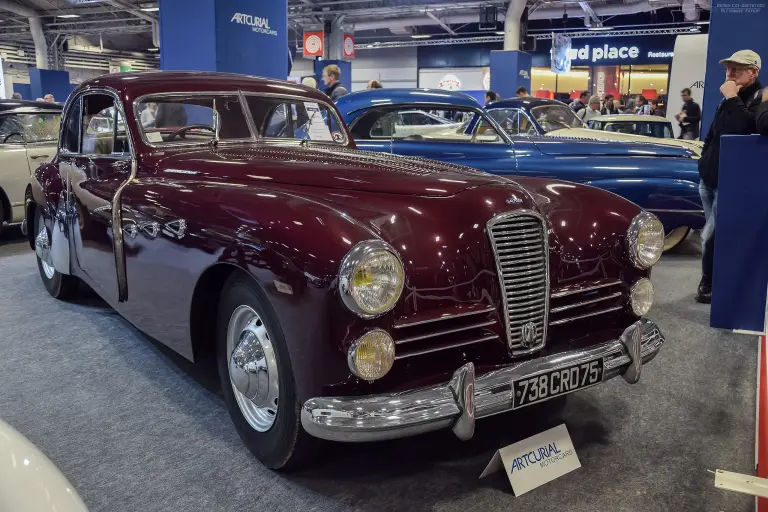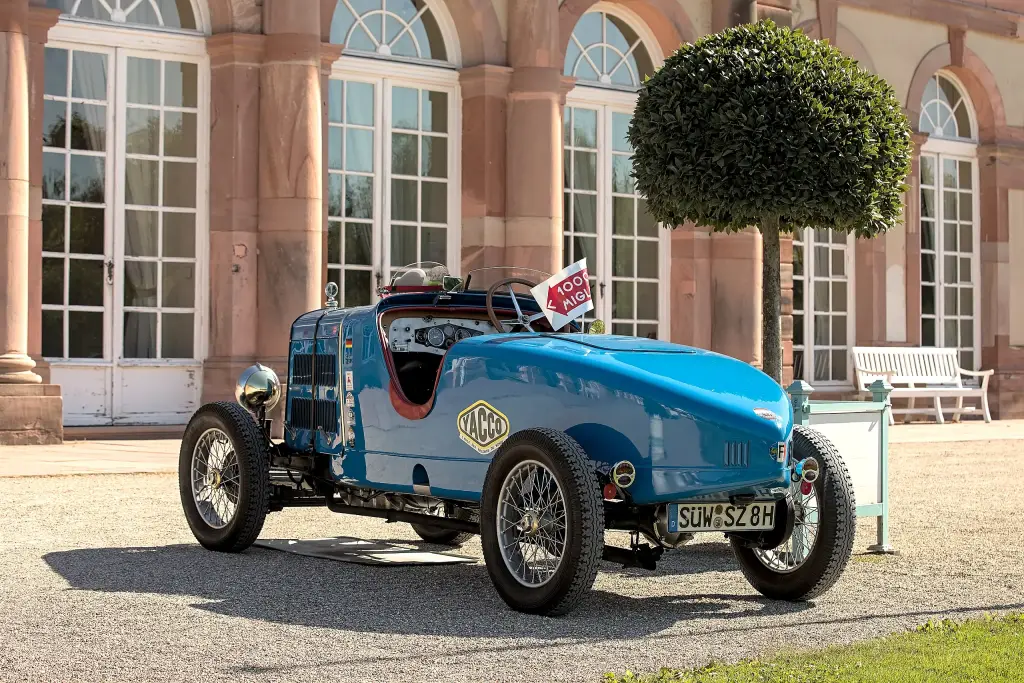
The Salmson S4 was a mid-size executive car introduced as the Salmson S4 C in the autumn of 1932. For the next twenty years it was the manufacturer’s principal and often only model, growing from a 1,465 cc four-cylinder car into the 2.3-litre S4 E and ending its life as the four-cylinder S4-61 in 1952.
Salmson S4 at a glance
| Maker | Société des Moteurs Salmson, France |
|---|---|
| Production | 1932–1952 |
| Launched | autumn 1932 as the Salmson S4 C |
| Engine, 1932 | 1,465 cc four-cylinder, twin overhead camshaft, 41 hp at 3,800 rpm |
| Top speed | 110 km/h (68 mph) |
| Tax class | 8CV at launch, 10CV from the S4 D |
| Engine sizes | 1,465 cc (S4 C), 1,596 cc (S4 D), 1,731 cc (S4 DA), 2.3 litres (S4 E) |
| Gearbox | four-speed manual; Cotal preselector optional from May 1934 |
| Suspension | rigid axles with leaf springs; independent front from the S4 DA |
| Electrical system | 12 volt, with a magneto coil that doubled as the starter motor |
| Price, 1933 | 21,950 francs as a bare chassis |
| Wheelbase | 2,890 mm (114 in) |
Based on one source: the English Wikipedia article on the Salmson S4, which covers the whole S4 range from the S4 C to the S4-61.
History of the Salmson S4
Salmson had emerged as an automobile manufacturer between 1919 and 1922, having already established itself in aviation as an aircraft and aero-engine maker. After the British-designed cyclecars with which its car business started, the company specialised during the mid-1920s in small cars with technically advanced features such as twin overhead camshafts and overhead valves. In October 1928 it presented the Salmson Type S, a six-cylinder 9CV car with a twin-cam engine, distinguished from the existing four-cylinder models only by a “Six” badge in the centre of the grille. The Type S did not sell in huge numbers, but it can be seen as a precursor to the Salmson S4 that appeared with a four-cylinder engine in 1932.
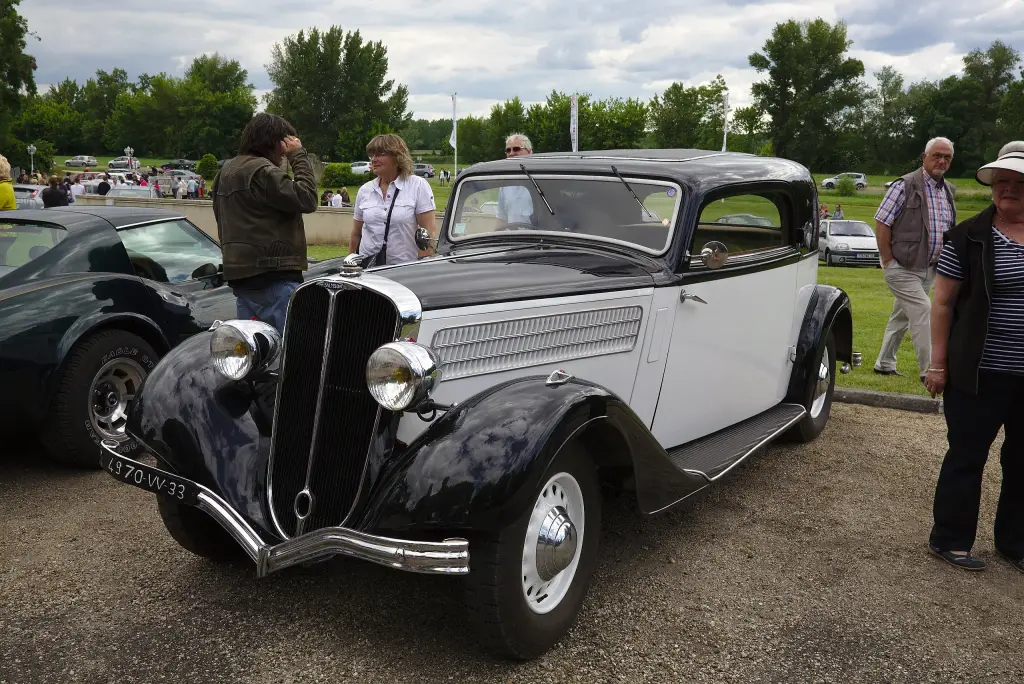
Salmson S4 C (1932–1934)
The S4 was launched in the autumn of 1932 with a 4-cylinder 1,465 cc engine rated at 8CV and quoted at 41 hp (30 kW) at 3,800 rpm, for a listed top speed of 110 km/h. The engine was unusual for the time in using a twin overhead camshaft, and it also employed a dual-direction magneto coil that doubled as a starter motor and a 12-volt electrical system. Power reached the rear wheels through a four-speed manual gearbox; from May 1934 a Cotal Preselector transmission could be specified at extra cost. Suspension was by rigid axles front and rear with longitudinal leaf springs, semi-elliptic at the front and attached using demi-cantilevers at the back. At the Paris Motor Show in October 1933 the car was priced at 21,950 francs as a bare chassis, with standard bodies ranging from a two-door Faux Cabriolet at 29,900 francs to a Cabriolet at 33,500 francs. The flat grille was already thought a little old fashioned by some, and the body options were conventional, but the technology under the bonnet was not.
Salmson S4 D and S4 DA (1934–1938)
With the S4 D, probably introduced in 1934, the engine grew to 1,596 cc and the tax rating rose from 8 to 10CV. In October 1936, after several thousand S4s had been sold in two years, Salmson used the Motor Show to launch the S4 DA. The twin-cam four kept its stroke but gained a larger bore, bringing capacity to 1,731 cc; the cylinder head now had hemispherical combustion chambers and centrally positioned spark plugs, giving a responsiveness not normally associated with a 10CV engine. The S4 DA also acquired independent front suspension on a transverse leaf spring, while the rear wheels stayed on a rigid axle with longitudinal leaf springs. At the 1936 show the bare chassis cost 24,000 francs, a four-seater two-door coupé 31,500 francs and the saloon 32,800 francs. Where comparable bodies existed, the Salmson was priced about 50% above the Peugeot 302, so the company clearly did not intend to compete on price with the volume makers.
Salmson S4 E (1937–1952)
A 2.3-litre variant, the Salmson S4 E, joined the less powerful car — by then itself evolved into the Salmson S4 DA — in October 1937. The bigger engine placed the car in the 13CV class, and production of the S4 E had already ended by the time the last four-cylinder cars were built.
Salmson S4-61 and the end (post-war–1952)
War disrupted production, which probably stopped completely after a major British bomb attack on 3 March 1942. Post-war production resumed, or continued, at feeble levels with the four-cylinder 10CV Salmson S4-61, which remained in production until April 1952. By then the S4 had been the company’s mainstay for two decades, and Salmson’s attempt to replace it with the smaller-engined Randonnée came to nothing.
Design and features
- Twin overhead camshafts: a technically advanced engine in a mid-size French car of the 1930s.
- Magneto coil doubling as a starter: one of several unusual solutions, along with a 12-volt electrical system.
- Cotal Preselector: optional from May 1934, at extra cost.
- Independent front suspension: introduced with the S4 DA in 1936, on a transverse leaf spring.
- Wide body choice: Faux Cabriolet, Coach Lumineux, Berline, Roadster and Cabriolet were all listed on the 2,890 mm chassis.
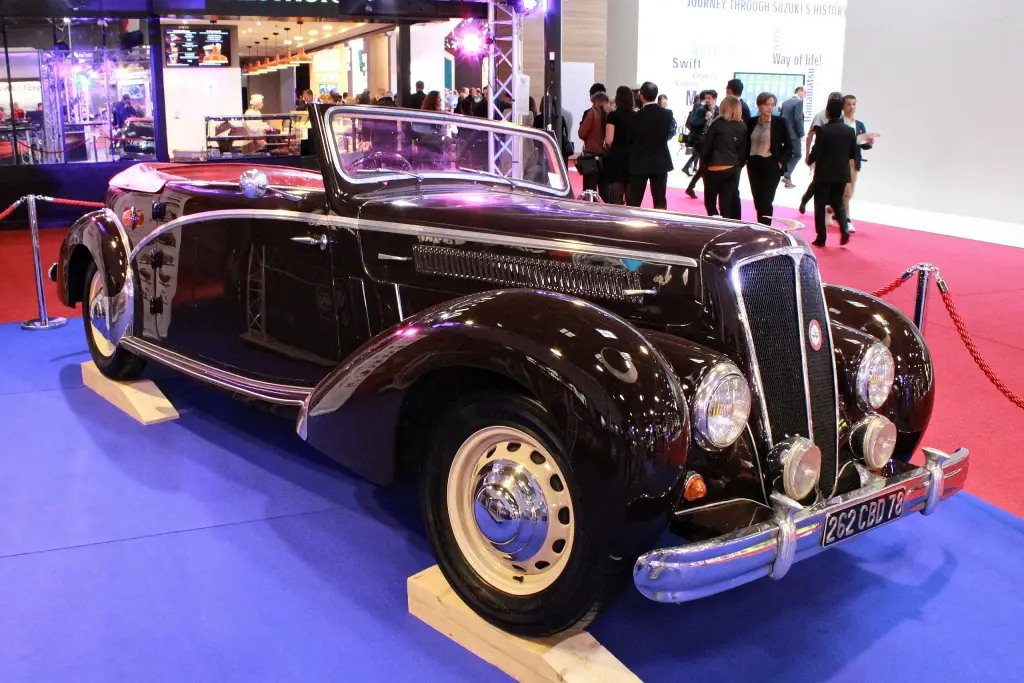
Salmson S4 versions
- S4 C (1932–1934): 1,465 cc, 8CV, 41 hp, 110 km/h.
- S4 D (1934–1936): 1,596 cc, 10CV.
- S4 DA (1936–1938): 1,731 cc with hemispherical cylinder heads and independent front suspension.
- S4 E (1937–1952): 2.3-litre 13CV version.
- S4-61 (post-war–1952): four-cylinder 10CV car built until April 1952.
The S4 was the model that the Salmson Randonnée was meant to replace. More Salmson cars are in the Salmson collection.
Video: SALMSON S461 COACH 1948
Video on YouTube.
Sources
- Salmson S4, English Wikipedia: origins, model evolution, engines, prices, production