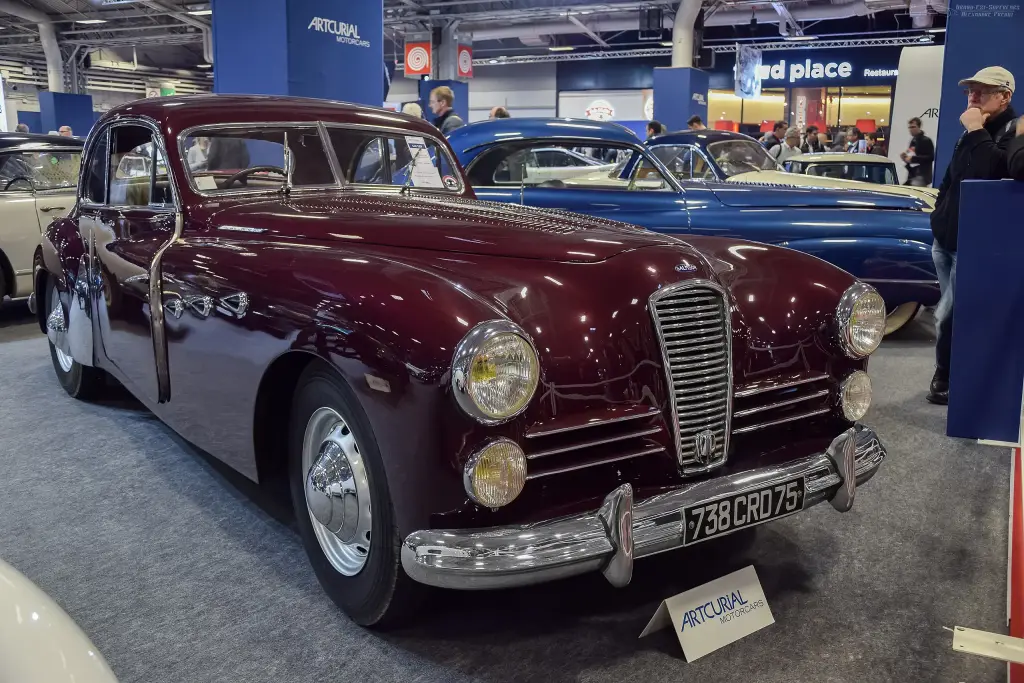
The Salmson Randonnée was a luxury car produced by Société des Moteurs Salmson from the autumn of 1950 until 1954. It was introduced as the Randonnée E-72 and superseded in February 1951 by the broadly similar Randonnée G-72; by 1954 the company had been forced out of car making.
Salmson Randonnée at a glance
| Maker | Société des Moteurs Salmson, France |
|---|---|
| Production | autumn 1950–1954 |
| Versions | Randonnée E-72, then Randonnée G-72 from February 1951 |
| Engine | 2,218 cc alloy inline-four, twin overhead camshaft |
| Tax class | 13CV |
| Body | wood and metal on a separate chassis |
| Special body | Esclassan cabriolet of 1952, two built, both destroyed |
| Company output, 1950 | 1,162 cars |
| Company output, 1951 | 817 cars |
| Company output, 1952 | 89 cars |
| End of car making | 1954 |
| On film | 1995 film Une femme française |
Based on one source: the English Wikipedia article on the Salmson Randonnée.
History of the Salmson Randonnée
The Randonnée arrived in the autumn of 1950 as the Randonnée E-72, a luxury car with an alloy inline-four engine of 2,218 cc. In February 1951 it was replaced by the broadly similar Randonnée G-72, and the model stayed in production until 1954.
Engine and body
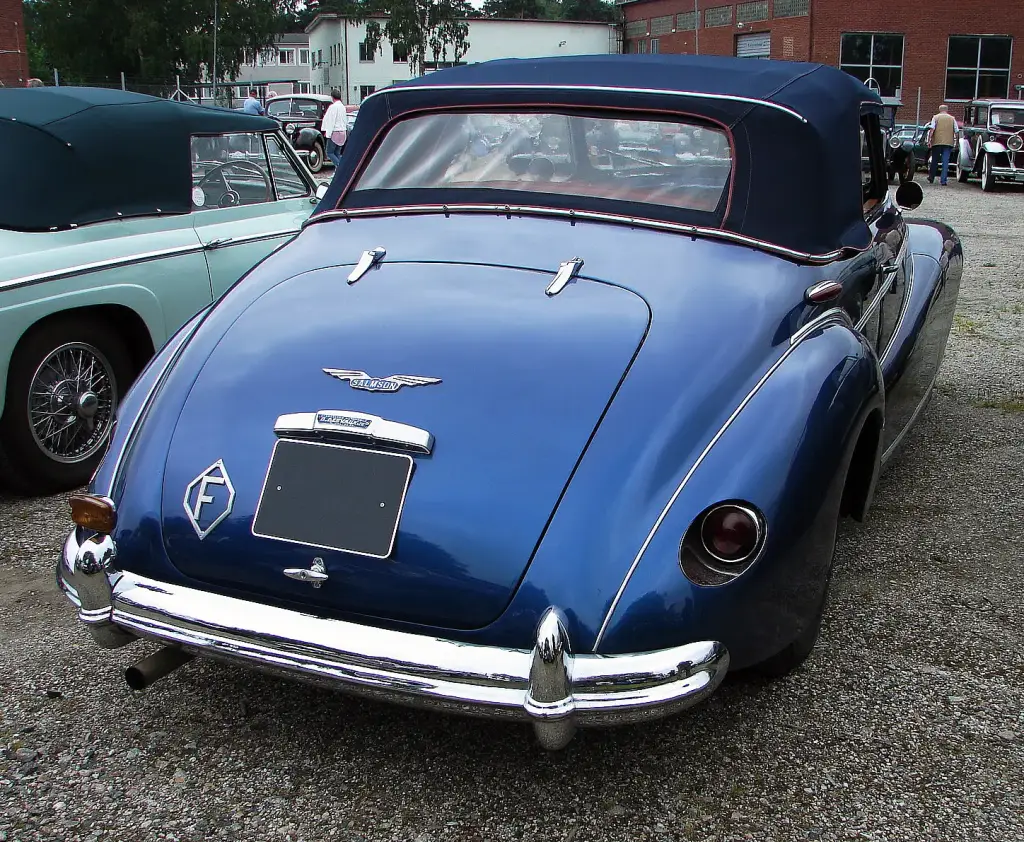
The engine was an alloy inline-four of 2,218 cc, which placed the car firmly in the 13CV taxation class and brought a high annual tax charge for owners living in France. Its twin overhead camshaft was an unusual feature that may have reflected the manufacturer’s expertise in aircraft manufacture. The body was of wood and metal, resting on a traditional separate chassis.
The Esclassan cabriolet
In 1952 the coachbuilder Esclassan exhibited a special cabriolet version based on the Randonnée but inspired by the General Motors “Le Sabre” dream car. Two cars were built, and both have since been destroyed.
Commercial collapse
Government taxation policy combined with post-war austerity to kill off several French car makers at this time. Salmson built 1,162 cars in 1950, 817 in 1951 and just 89 in 1952. At the 1952 Paris Motor Show the Randonnée was the only model on the stand, represented by two cars — a saloon and a cabriolet — unchanged since the previous year. The company had been obliged to enter bankruptcy in 1951 and was rescued by Jacques Bernard in 1952; hopes for a new direction came to nothing, and by 1954 Salmson had been forced out of car making.
The smaller Randonnée that never appeared
French taxation policy strongly discouraged engines above two litres, so Salmson planned to show a modernised, slightly smaller car based on the Randonnée at the Paris Motor Show in October 1952. Its engine would have placed it in the 10CV class and it would have replaced the no longer produced Salmson S4-61 L, but the company’s financial difficulties meant the car never reached the show and the plans were never implemented.
On film
A Salmson Randonnée appeared in the 1995 film Une femme française, produced by Régis Wargnier.
Design and features
- Alloy twin-cam four: 2,218 cc with two overhead camshafts, in the spirit of Salmson’s aero-engine work.
- 13CV tax rating: a high annual tax charge for French owners, one reason the car was expensive to run.
- Wood-and-metal body: coachbuilt panels on a separate chassis.
- Esclassan show car: a Le Sabre-inspired cabriolet of 1952, of which two were built and none survive.
Salmson Randonnée versions
- Randonnée E-72 (1950–1951): the original version.
- Randonnée G-72 (1951–1954): the broadly similar replacement introduced in February 1951.
- G72 ter cabriolet (1954): an open version of the G-72.
- Esclassan cabriolet (1952): a special body inspired by the General Motors Le Sabre; two built, both destroyed.
- Planned 10CV model (1952): a smaller, modernised Randonnée that never appeared.
The Randonnée was intended to succeed the Salmson S4 and shared its fate with the company. More Salmson cars are in the Salmson collection.
Sources
- Salmson Randonnée, English Wikipedia: engine, body, production, commercial history