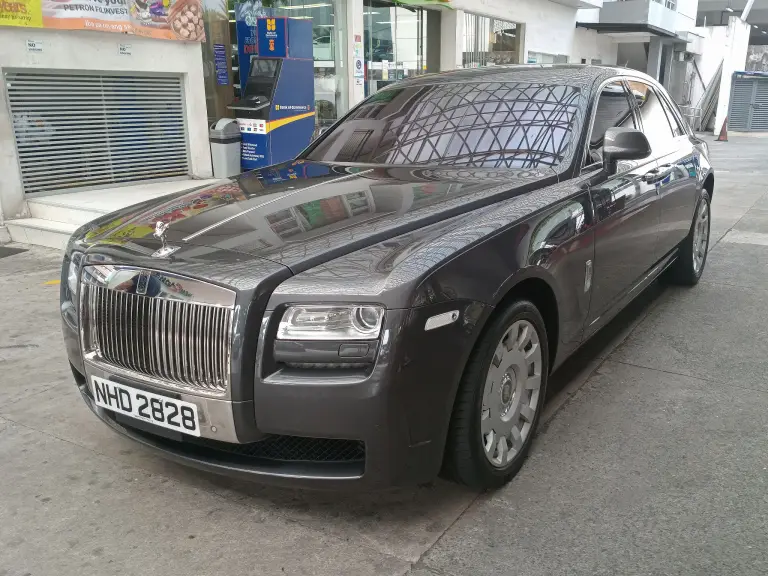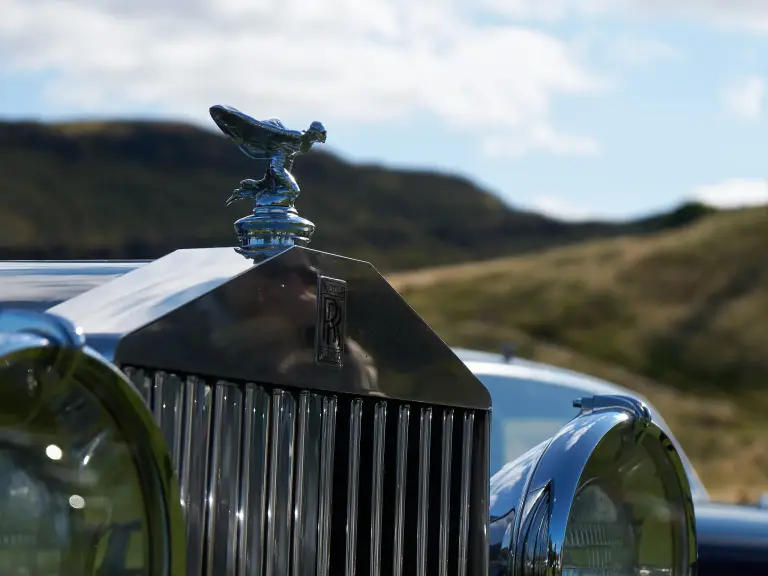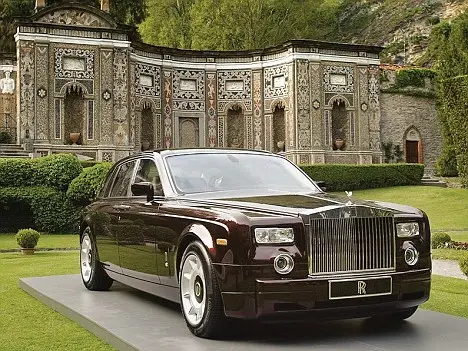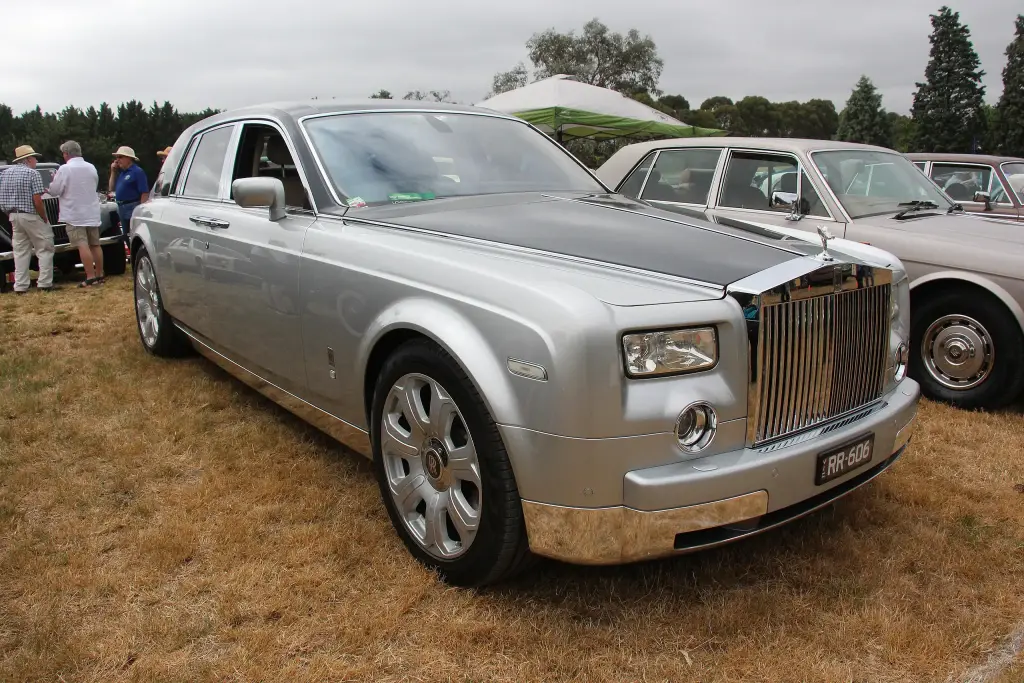
The Rolls-Royce Phantom VII, launched in 2003, was the first Rolls-Royce developed and introduced after BMW bought the right to use the name and logo in 1998. It is credited with successfully reviving the brand and restoring its reputation as a maker of luxury cars, and it remained in production until January 2017.
Rolls-Royce Phantom VII at a glance
| Maker | Rolls-Royce Motor Cars, Goodwood |
|---|---|
| Production | 2003–2017 |
| Body | four-door saloon, aluminium |
| Length | 5,830 mm (229.5 in) |
| Width | 1,990 mm (78.3 in) |
| Height | 1,630 mm (64.2 in) |
| Weight | 2,485 kg (5,478 lb) |
| Acceleration | 0–100 km/h in 5.9 seconds |
| Rear doors | coach doors, hinged at the rear |
| Paint choice | 44,000 colours |
| Derivatives | Extended Wheelbase 2005, Drophead Coupé 2007, Coupé 2008 |
| Successor | Phantom VIII, launched in 2017 |
This page is based on English Wikipedia only, so the figures could not be checked against a second source.
History of the Rolls-Royce Phantom VII
A new beginning
The Phantom launched in 2003 as the seventh Rolls-Royce design to use the nameplate, and it was the first car the company developed after BMW acquired the rights to the Rolls-Royce name and logo in 1998. From 2003 until the smaller Ghost arrived in 2009 it was the only car Rolls-Royce produced, and it acted as the flagship, though it was less exclusive than earlier Phantoms, none of which had surpassed 600 cars a year.
How it was built
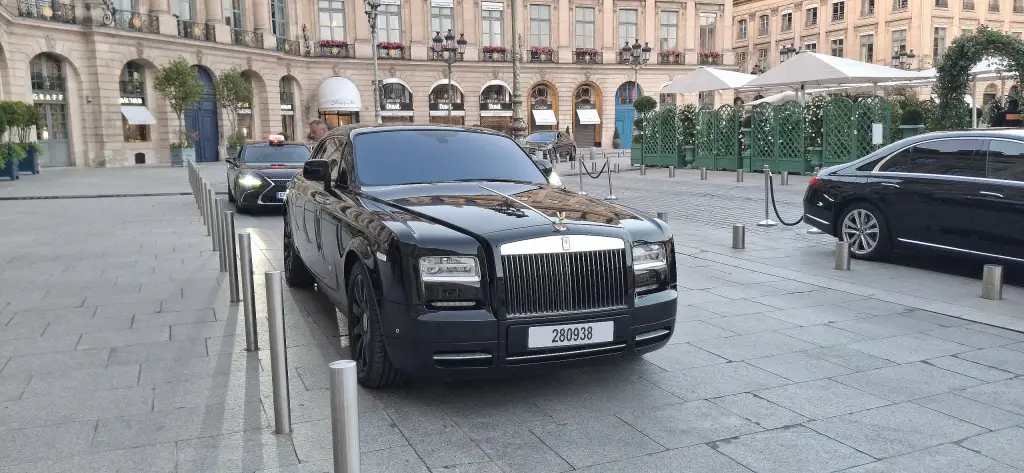
The body was mostly aluminium and the car had its own unique chassis platform, body and interior. Final assembly, including all body, paint, wood and leather work, was completed to each customer’s specification at Goodwood in West Sussex. The plant brought a paint shop, body shop, leather shop, woodworking shop, assembly line and offices under one roof, and there were only three robots in the factory: they painted the body, after which each coat was polished by hand. The coach lines, exactly 3 mm wide, were also applied by hand. The aluminium extrusions for the spaceframe were produced in Norway using hydroelectric power, shaped and machined in Denmark and hand-welded in Germany. The car was 5.83 m long, 1.99 m wide and 1.63 m tall, weighed 2,485 kg and reached 100 km/h in 5.9 seconds.
Details and luxury
Customers could choose from 44,000 paint colours and any leather colour. The instrument panel had no tachometer; instead a power reserve dial showed how much of the engine’s power was not being used. The rear doors were rear-hinged, a style Rolls-Royce called coach doors, and buttons on both C-pillars operated hydraulic motors to close them, with an electronic lock to prevent them opening while moving and automatic braking to walking speed if a door remained open. Umbrella compartments in the rear doors held Teflon-coated umbrellas, the Spirit of Ecstasy retracted electronically to prevent theft and protect pedestrians, and the RR logos on the wheel hubs were independent bezels that stayed upright as the wheels turned. Standard equipment in 2009 included navigation with voice recognition, a power sunroof, a rear-view camera, rear-seat DVD, a 15-speaker Lexicon Logic7 system, an eight-disc CD changer, 18-way front and 16-way rear power seats, heated and cooled cup holders, rear-seat tables, a refrigerator and five-zone climate control, with almost anything else available through the Bespoke programme.
Derivatives
The Phantom Extended Wheelbase was presented at Geneva in March 2005, 250 mm longer than the standard car. The Phantom Drophead Coupé, a two-door convertible previewed by the 100EX design study, was unveiled at the 2007 North American International Auto Show and went into production in June 2007. The Phantom Coupé, previewed by the 101EX concept, was unveiled at Geneva in 2008. An armoured version with a VR7 ballistic rating, fibre composites, steel armour, thickened glass and a polycarbonate layer was sold from 2007, initially in Europe and the Middle East. In October 2010 the Phantom was included in a recall of BMW cars with V8 or V12 engines over a potential leak in the power braking system.
The end
Production of the Phantom VII ceased in January 2017, and the Rolls-Royce Phantom VIII was launched later that year.
Design and features
- Hand-finished at Goodwood: three robots painted the bodies and every coat was polished by hand.
- Coach doors: rear-hinged doors with hydraulic closers and buttons on the C-pillars.
- Power reserve dial: the instrument panel had no tachometer.
- Almost unlimited choice: 44,000 paint colours and any leather colour through Bespoke.
- Aluminium spaceframe: extrusions made in Norway, machined in Denmark and welded in Germany.
Rolls-Royce Phantom VII versions
- Phantom (2003–2017): the standard-wheelbase saloon.
- Phantom Extended Wheelbase (2005): 250 mm longer than the standard car.
- Phantom Drophead Coupé (2007–2017): the convertible previewed by the 100EX.
- Phantom Coupé (2008–2016): the two-door previewed by the 101EX.
- Armoured Phantom (2007–2017): VR7 ballistic protection.
- Series II: the facelifted car of the later production years.
The Phantom VII was joined by the smaller Ghost, and its design studies are described with the 100EX and 101EX. More cars are in the Rolls-Royce collection.
Sources
- Rolls-Royce Phantom VII, English Wikipedia: construction, equipment, derivatives, production