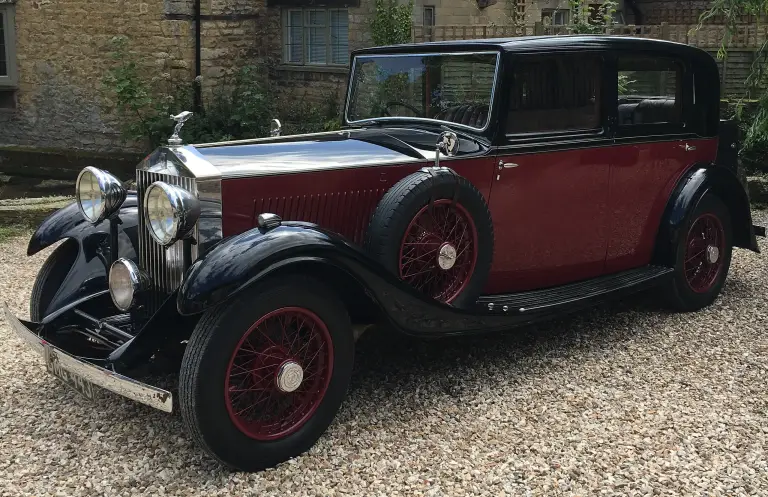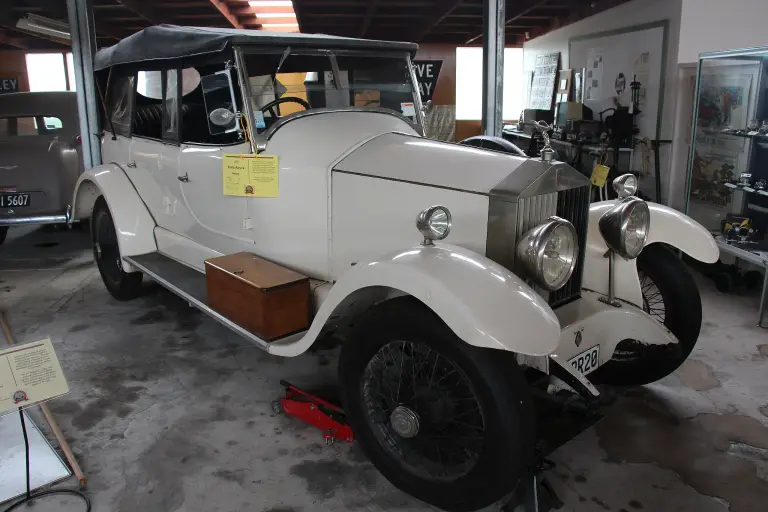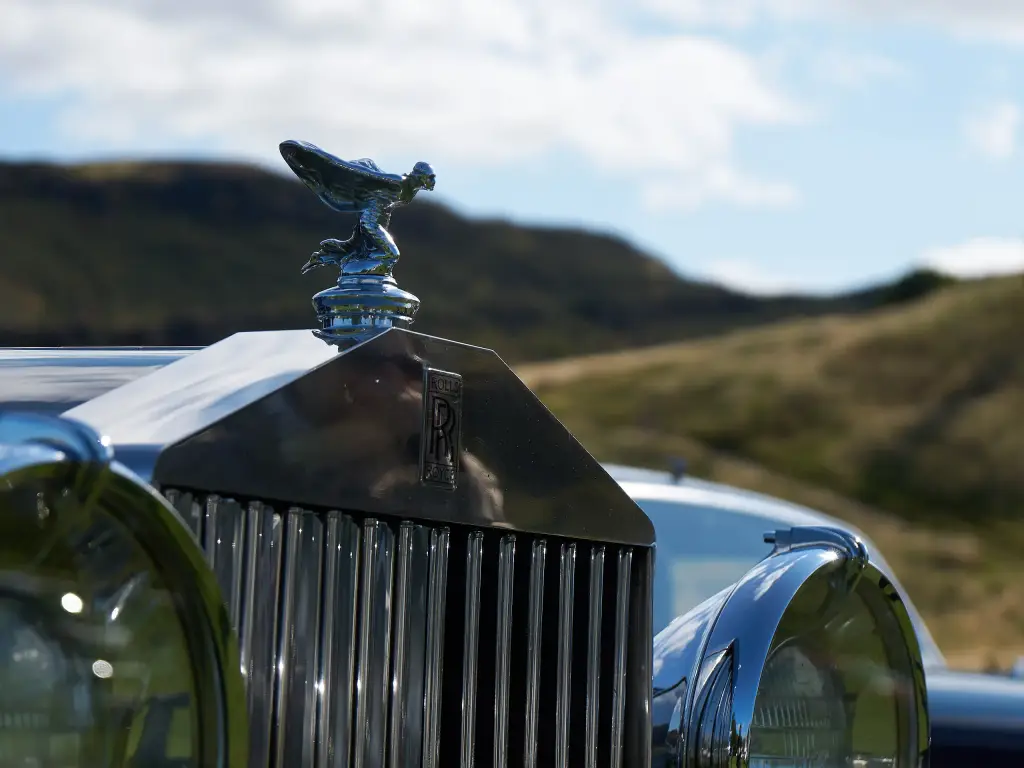
The Rolls-Royce 25/30 was built from 1936 to 1938 as an updated version of the 20/25, with a larger engine to provide more power after owners had complained that the earlier model was too slow with the large coachbuilt bodies often fitted to it.
Rolls-Royce 25/30 at a glance
| Maker | Rolls-Royce Ltd., Derby |
|---|---|
| Production | 1936–1938 |
| Engine | inline six, 4,257 cc (259.8 cu in) |
| Bore and stroke | 3.5 in × 4.5 in (88.9 mm × 114.3 mm) |
| Compression ratio | 6:1 |
| Carburettor | single Stromberg downdraught |
| Ignition | coil with standby coil, no magneto |
| Gearbox | four-speed in unit with the engine, synchromesh on third and top |
| Suspension | rigid axles, half-elliptic springs, hydraulic dampers |
| Brakes | four-wheel with mechanical servo licensed from Hispano-Suiza |
| Coachwork | chassis only, body by the owner’s coachbuilder |
| Successor | the Wraith of 1938 |
This page is based on English Wikipedia only, so the figures could not be checked against a second source.
History of the Rolls-Royce 25/30
Why it existed
The 25/30 was the 1936 answer to a familiar complaint about the 20/25: customers had often fitted bodies far larger and heavier than the chassis was designed for, and the resulting cars were slow. The engine was enlarged to restore performance, and the model lasted two years before the Wraith appeared.
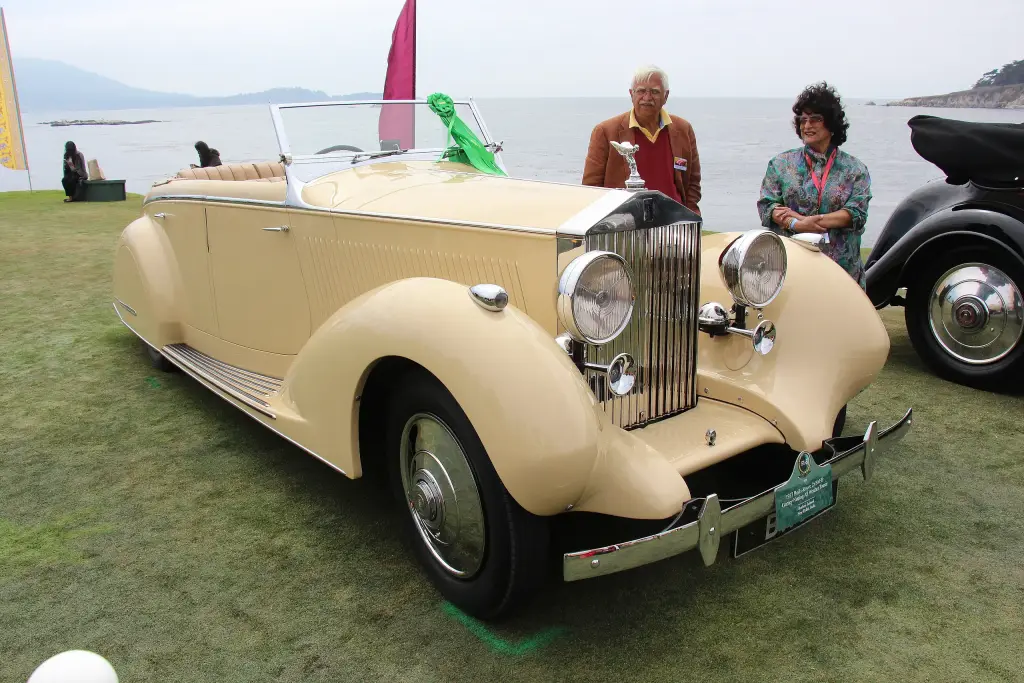
Engineering
The in-line six had overhead valves and was similar to the 20/25 unit, but capacity rose to 4,257 cc (259.8 cu in) by increasing the bore from 3.25 to 3.5 inches (83 to 89 mm), the stroke staying at 4.5 inches (114.3 mm). The compression ratio was 6:1. A single proprietary Stromberg downdraught carburettor replaced the Rolls-Royce unit, and the magneto was dropped in favour of coil ignition with a standby coil. The four-speed gearbox was mounted in unit with the engine and kept the traditional right-hand change, with synchromesh on third and top.
Chassis and brakes
The riveted chassis had rigid front and rear axles on half-elliptic springs with hydraulic dampers. Braking was on all four wheels, assisted by a mechanical servo built under licence from Hispano-Suiza, with separate rear brakes for the handbrake. The traditional Rolls-Royce radiator with a triangular top and vertical louvres was retained; the opening angle of the louvres was controlled thermostatically to regulate engine cooling.
Bodywork
Rolls-Royce made only the rolling chassis and the mechanical parts. The body was made and fitted by a coachbuilder chosen by the owner, among them Park Ward, Thrupp & Maberly, H. J. Mulliner, Arthur Mulliner and Hooper, so surviving cars vary widely in style and weight.
On film
The 25/30 appeared in films including The Naked Truth (1957) and Death on the Nile (1978). In Indiana Jones and the Last Crusade (1989) the sultan calls his car a Phantom II, and the technical details he recites are those of the 25/30, but the car actually used on screen was a 1935 20/25.
Design and features
- Bigger six: 4,257 cc against the 20/25’s 3,699 cc, with a 3.5 in bore.
- Stromberg carburettor: a proprietary downdraught unit in place of the Rolls-Royce carburettor.
- Unit gearbox: the four-speed box was mounted in unit with the engine.
- Servo brakes: mechanical servo licensed from Hispano-Suiza.
- Coachbuilt bodies: only chassis and mechanicals were made at Derby.
Rolls-Royce 25/30 versions
- Standard chassis: rigid axles and half-elliptic springs throughout the run.
- Park Ward bodies: saloons and tourers by the works-associated coachbuilder.
- Thrupp & Maberly and H. J. Mulliner bodies: among the other coachbuilders named for the model.
- Film cars: a 25/30 was used in The Naked Truth and Death on the Nile.
The 25/30 was developed from the 20/25 and replaced by the Wraith. More cars are in the Rolls-Royce collection.
Sources
- Rolls-Royce 25/30, English Wikipedia: engine, chassis, brakes, coachwork, film appearances