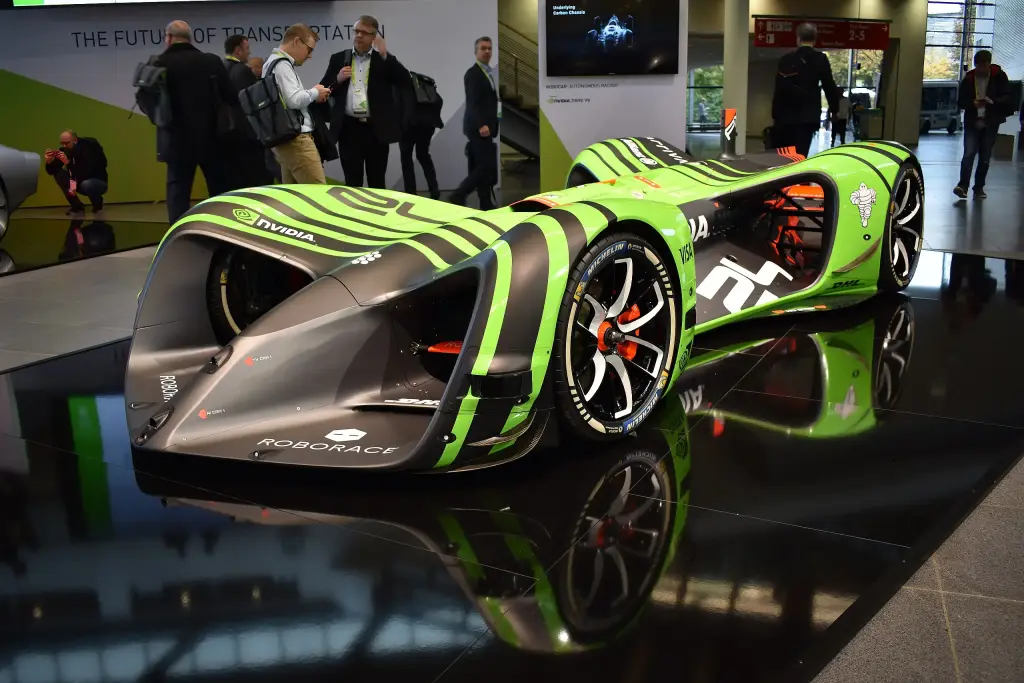
Roborace was a competition for autonomously driving, electrically powered cars. Founded in 2015 by Denis Sverdlov, it aimed to be the first global championship for autonomous cars. Its showpiece was the Robocar, the world’s first purpose-built autonomous racing car, designed by Daniel Simon.
Roborace at a glance
| Founded | 2015, by Denis Sverdlov |
|---|---|
| CEO 2017–2019 | Lucas Di Grassi, 2016–17 Formula E champion |
| Robocar designer | Daniel Simon |
| Robocar weight | about 1,350 kg |
| Robocar size | 4.8 m long, 2 m wide |
| Robocar drive | four electric motors of 135 kW, over 500 hp combined |
| Battery | 840 V |
| Robocar computing | Nvidia Drive PX 2; Michelin tyres |
| Top speed shown | almost 300 km/h |
| Season Alpha | 2019, four trial events |
| Season Beta | 2020–21, seven teams with the same chassis and powertrain |
| Programme ended | May 2022, announced by owner Arrival |
English Wikipedia is the only source used here, so the facts were not cross-checked against a second source.
History of the Roborace
The Robocar
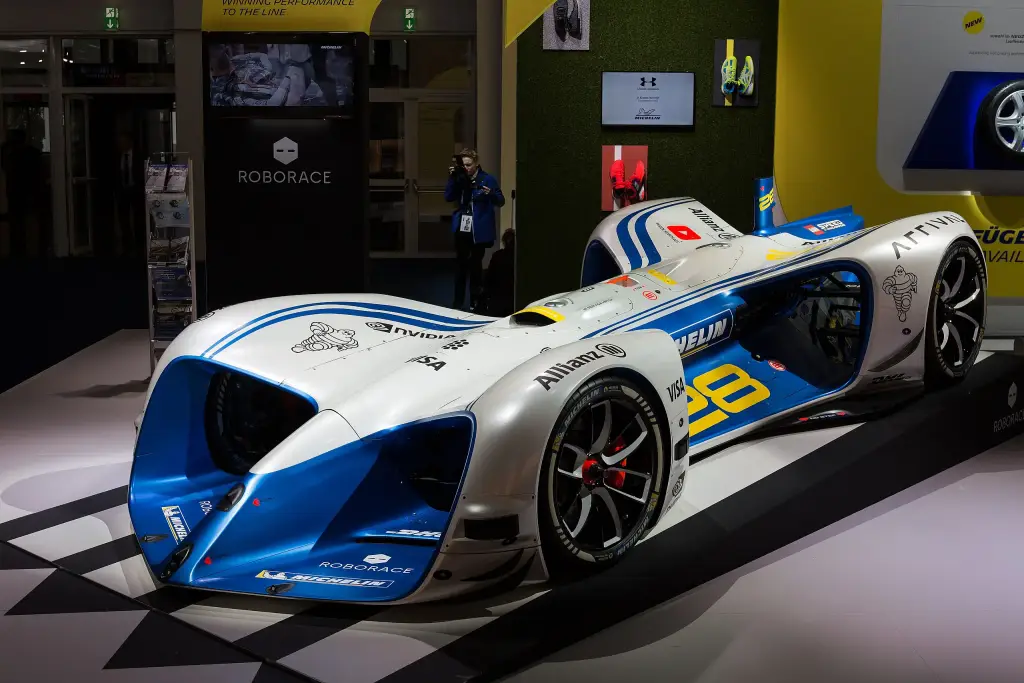
The Robocar was designed by Daniel Simon, who had worked on vehicles for films such as Tron: Legacy and Oblivion. Its teardrop chassis improves aerodynamic efficiency; it weighs around 1,350 kg and is 4.8 m long and 2 m wide. Four electric motors of 135 kW each give over 500 hp, fed by an 840 V battery, and navigation relies on a mixture of optical systems, radars, lidars and ultrasonic sensors. The car was demonstrated at almost 300 km/h.
DevBot
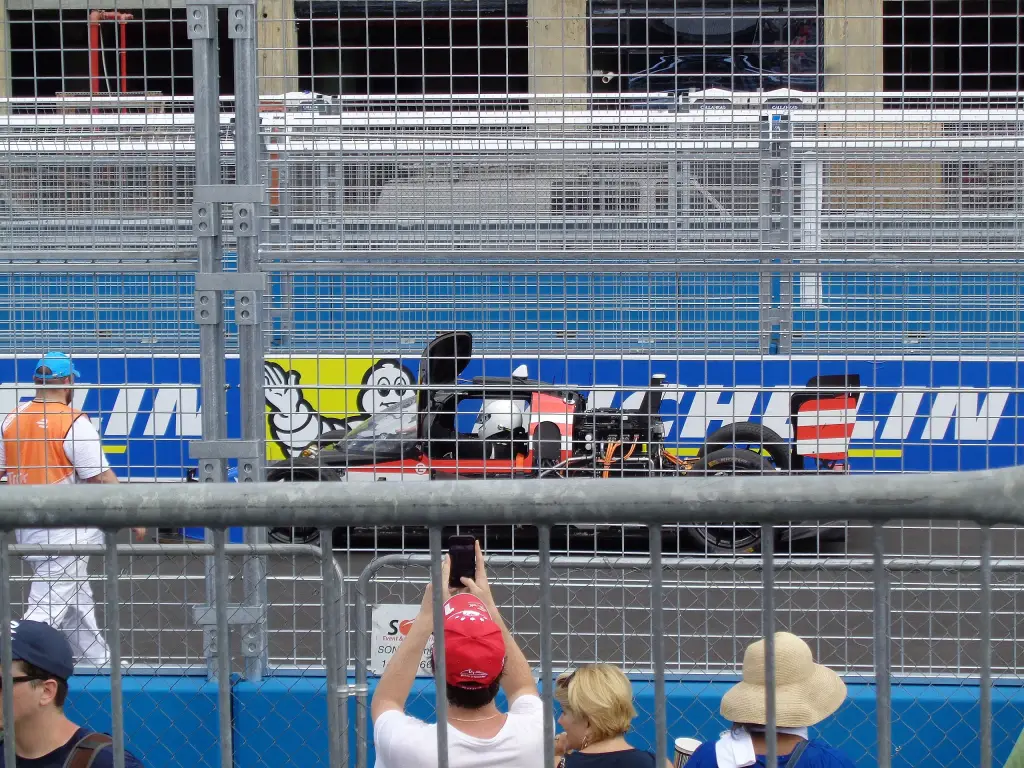
Development started in early 2016, and the first test vehicle, the DevBot, followed that summer: the same battery, motor and electronics as the Robocar in the chassis of a Ginetta LMP3 car without an engine cover. After battery trouble in Hong Kong it drove twelve laps of the Marrakesh Formula E circuit. In testing ahead of the 2017 Buenos Aires ePrix two DevBots raced each other autonomously and one crashed in a corner; at the Rome ePrix pro-drifter Ryan Tuerck was pitched against a DevBot, and at Berlin the Human + Machine Challenge raced combined teams of drivers and AIs. DevBot 2.0, announced in late 2018, was driven on the rear axle only, with a lower driver position and composite bodywork.
Seasons and end
Roborace tested its technology and race formats at Formula E events in 2016–2018. In 2019 it ran Season Alpha, four trial events in which independent teams competed for the first time, and in 2020–21 Season Beta with seven teams using the same chassis and powertrain but their own real-time computing and AI. In May 2022 Arrival, the owner, confirmed that it was no longer continuing the Roborace programme, and in February 2024 its UK division entered administration.
Design and features
- Shape: a teardrop chassis for aerodynamic efficiency.
- Sensors: optical, radar, lidar and ultrasonic.
- Format: in Season Beta every team used the same car and wrote its own driving software.
Roborace versions
- Robocar: the purpose-built autonomous racer.
- DevBot (2016): test car on a Ginetta LMP3 chassis.
- DevBot 2.0 (2019): rear-drive upgrade.
More show cars are in our Concept Cars.
Sources
- Roborace, English Wikipedia: cars, seasons, history