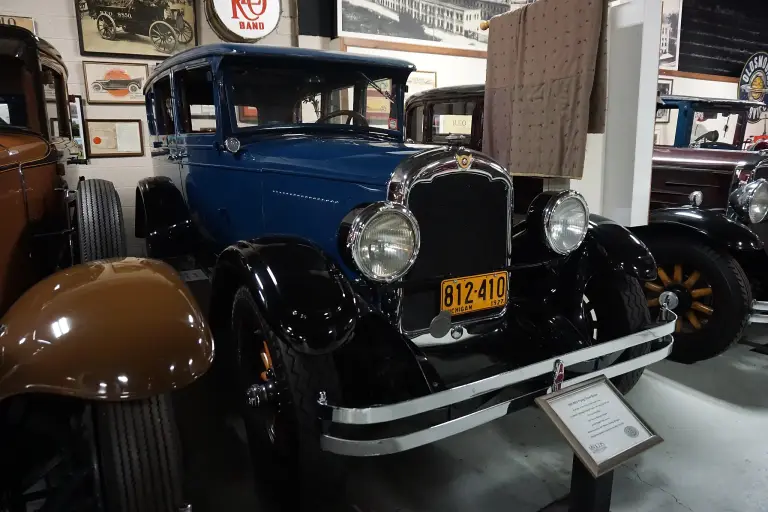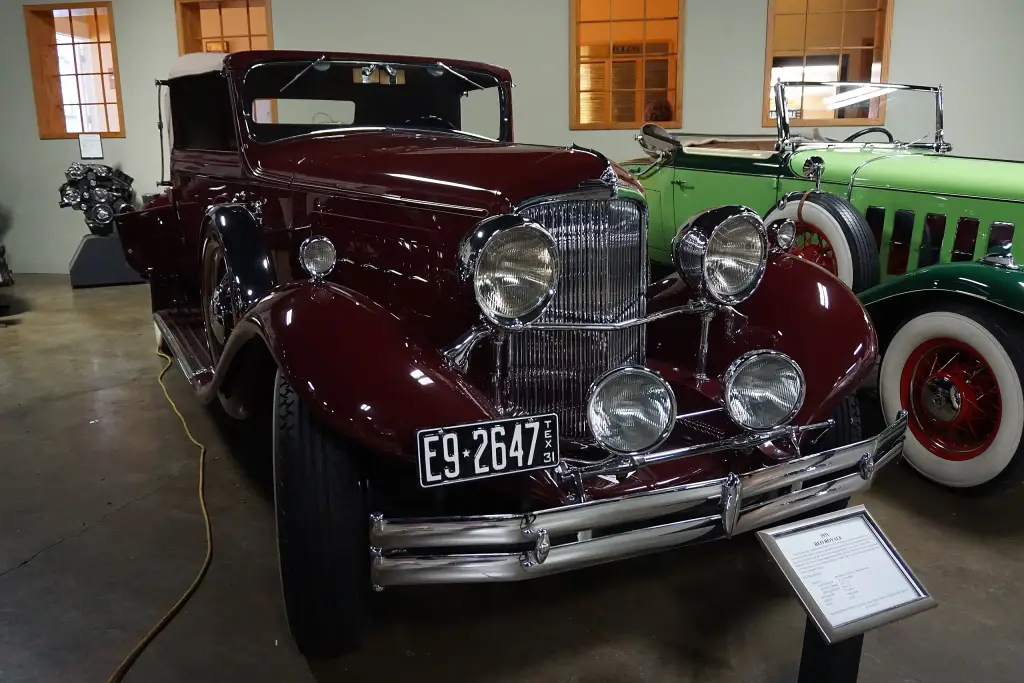
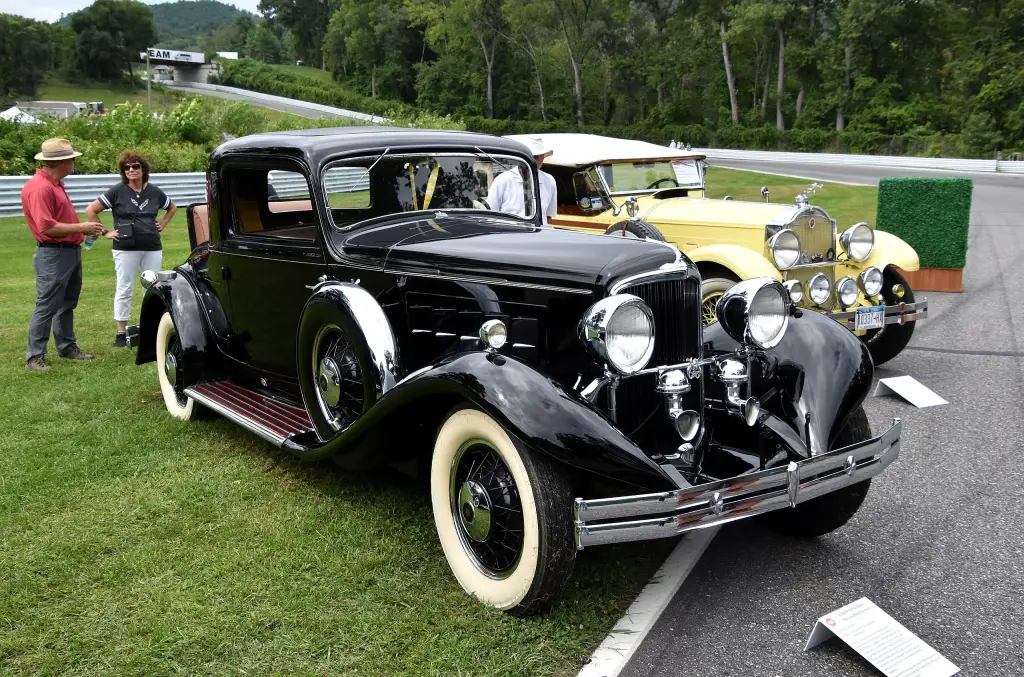
The REO Royale was the flagship of the REO Motor Car Company of Lansing, Michigan, built for the 1931–1935 model years. Styled by Amos Northup of the Murray Corporation with help from Julio Andrade, it introduced true streamlining to the American market and carried a 5.9-litre straight-eight. The eight-cylinder cars, especially the 8-35 and the long-wheelbase variants, are recognised by the Classic Car Club of America as Full Classics.
REO Royale at a glance
| Maker | Reo Motor Car Company, Lansing, Michigan |
|---|---|
| Model years | 1931–1935 |
| Body designer | Amos Northup (with Julio Andrade), Murray Corporation |
| Engine | 5,863–5,867 cc L-head straight-eight, 125 hp |
| Wheelbase | 3,327 mm (8-31), 3,429 mm (8-35), 3,860 mm (8-52) |
| Bodies | coupé, Victoria, four-door sedan, convertible coupé |
| Brakes | hydraulic |
| Transmission | three- or four-speed manual; Self-Shifter semi-automatic from 1933 |
| Top speed | about 90 mph (140 km/h) |
| Price | from about $2,145 (8-31); $985 by 1934 |
| 1934 six-cylinder | 3,736 cc, 95 hp |
| Recognition | CCCA Full Classic (8-35 and 8-52) |
The English and German articles differ slightly on the last model year: the English one carries the six-cylinder Royale into 1935, the German one ends it with 1934.
History of the REO Royale
A luxury car in the Depression
The Royale 35 was shown together with the Flying Cloud 30 for the 1931 model year. REO had invested about $6 million in the development of the new luxury line, but only a few buyers could afford such a large car in the middle of the Great Depression, so the Royale was effectively built in small series to customer order. Prices started at $2,495 according to German sources and reached about $3,000 for the 8-35 sedan and convertible, while custom coachbuilt cars approached $6,000. Bodies were supplied mainly by Murray; a few examples were built on a longer chassis with bodies by Dietrich.
Styling and engineering
The Royale is regarded as one of the earliest American production cars that can be called truly streamlined. Its V-shaped grille carried twenty vertical louvres behind thermostatically controlled radiator shutters; the fenders flowed into the body, the windshield was raked and the rear deck concealed the fuel tank. Elements of the grille and body were patented, and a plaster model was reportedly tested in a Michigan wind tunnel. Under the bonnet sat an L-head straight-eight of 5,863–5,867 cc with a nine-main-bearing crankshaft and one-shot chassis lubrication, giving 125 hp and a top speed near 90 mph. Some cars had a patented ‘silent second’ gear, and from 1933 an optional semi-automatic Self-Shifter transmission was offered, although it proved unreliable.
Model years
For 1932 the long-chassis car continued as the Royale 8-35 with a two-door convertible added, while the shorter Royale 8-31 on a 3,327 mm chassis was sold as a coupé, Victoria and sedan in normal and sport versions. In 1933 the long chassis was dropped for cost reasons and all four body styles moved to the short chassis as the Royale 8; at the end of that model year the eight-cylinder cars disappeared for lack of demand. For 1934 a new 3,736 cc six-cylinder engine of 95 hp was fitted and the Self-Shifter became available, but the price had fallen to $985 without reviving sales, and the Royale was dropped at the end of the model year. The English article carries the six-cylinder Royale into 1935 and quotes 535 cars for the 1935 Royale 75, while the German one ends production with 1934.
Design and features
- V-shaped grille: twenty louvres behind thermostatically controlled shutters, one of the earliest streamlined fronts on an American car.
- Murray coachwork: bodies designed by Amos Northup, with flowing fenders and a fuel tank hidden under a smooth rear deck.
- Straight-eight: 5.9 litres, 125 hp and a nine-bearing crankshaft for smooth running at speed.
- Full Classic status: the 8-35 and 8-52 are recognised by the Classic Car Club of America.
REO Royale versions
- Royale 8-31 (3,327 mm): the shorter car, in coupé, Victoria and sedan form.
- Royale 8-35 (3,429 mm): the long-chassis flagship, with a convertible coupé from 1932.
- Royale 8-52: about 152 inches (3,860 mm) of wheelbase; three Dietrich-bodied cars were built.
- Royale 6 (1934): the cheaper six-cylinder car with the new 3.7-litre engine and the Self-Shifter.
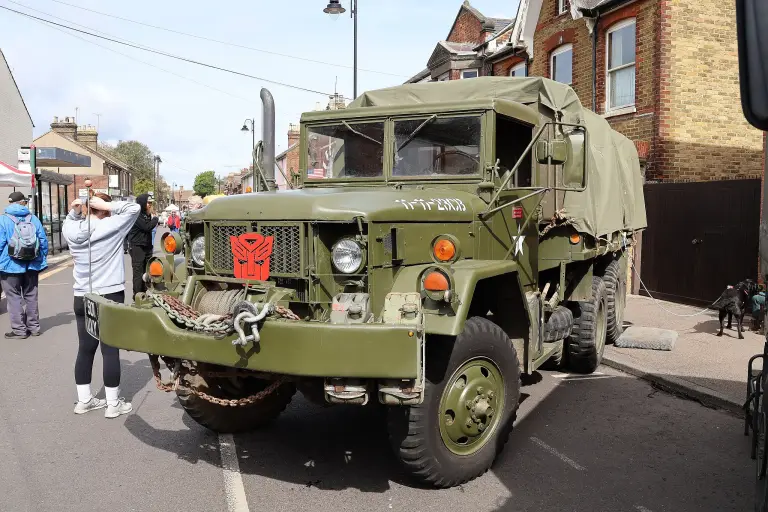
The Royale shared its showroom with the REO Flying Cloud, and REO’s later output was military trucks such as the M35. More cars are in the REO collection.
Sources
- REO Royale, English Wikipedia: design, engineering, model years
- Reo Royale, German Wikipedia: year-by-year production, prices
- REO Motor Car Company, English Wikipedia: company background