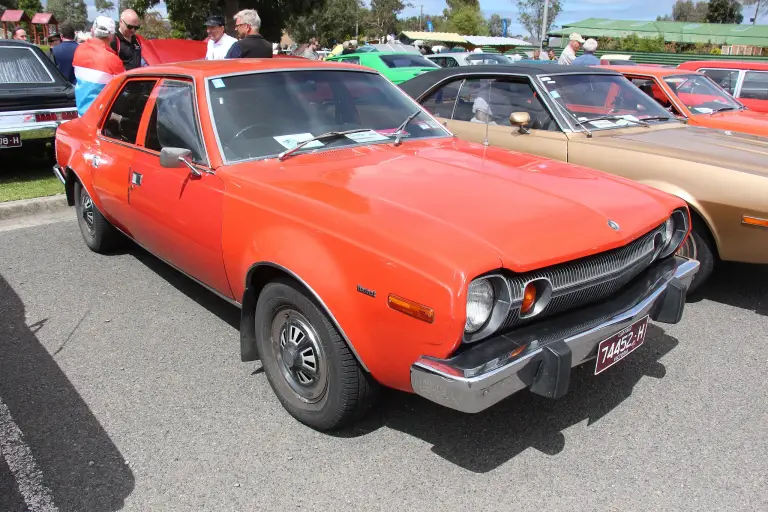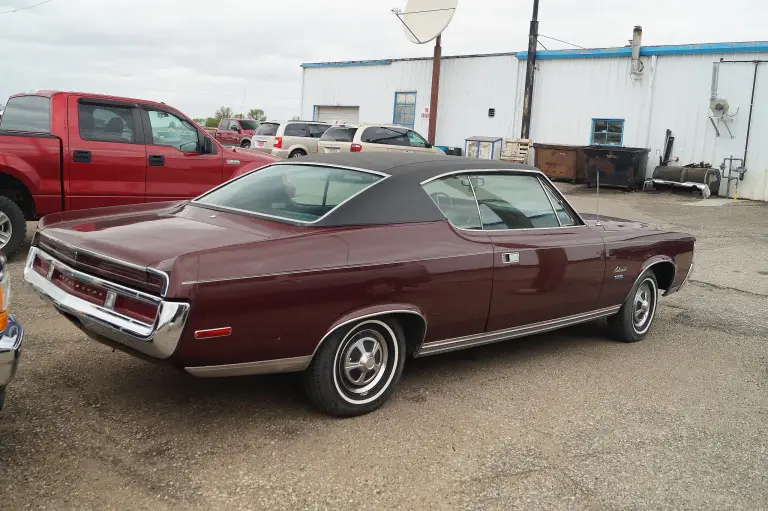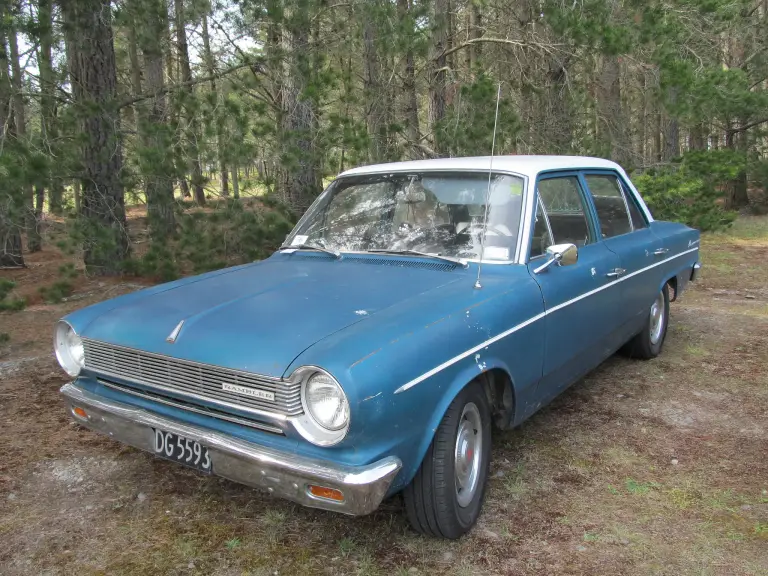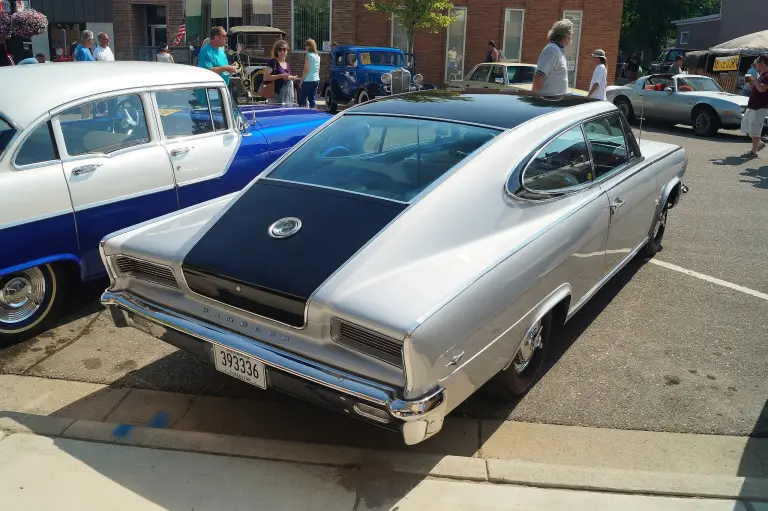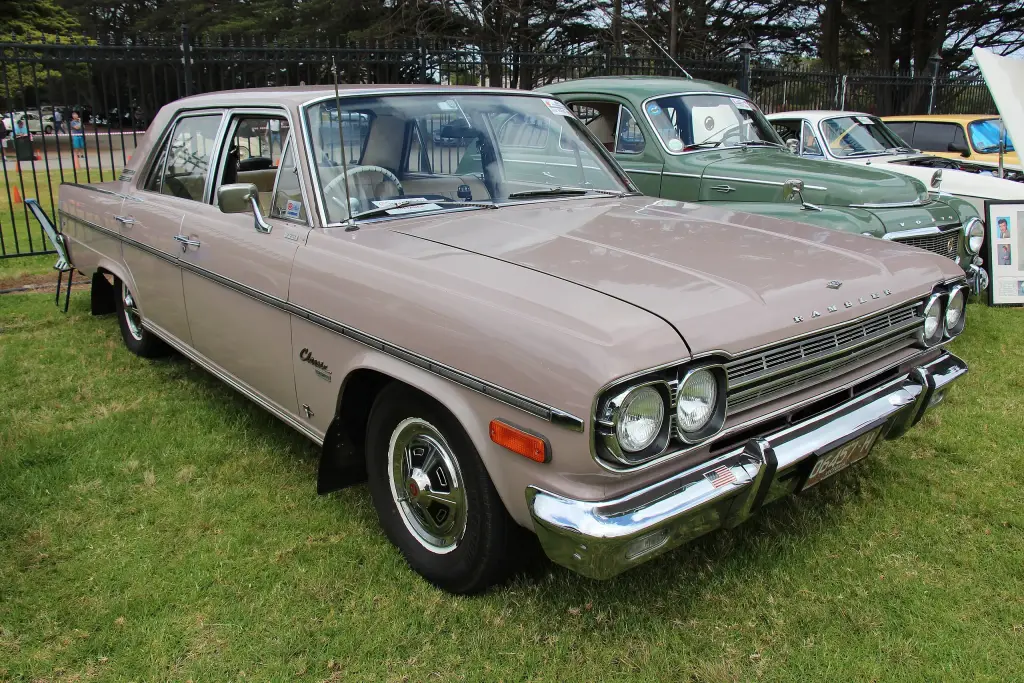
The Rambler Classic was the intermediate car of American Motors from 1961 to 1966, built in three generations. It took over from the Rambler Six and Rambler Rebel V8, became Motor Trend’s Car of the Year for 1963, and was replaced by the Rebel for 1967.
Rambler Classic at a glance
| Maker | American Motors Corporation |
|---|---|
| Production | 1961–1966, three generations |
| Replaced | Rambler Six and Rambler Rebel V8 |
| Replaced by | Rambler Rebel, from 1967 |
| Wheelbase | 108 inches |
| Launch | on display in Rambler showrooms on 12 October 1960 |
| Body styles at launch | four-door sedan and station wagon with two or three rows of seats |
| 1963 additions | two-door post sedan |
| 1964 additions | pillar-less two-door hardtop |
| 1965–1966 | convertible added |
| Engines, 1961 | 195.6 cu in six or 250 cu in V8 |
| Award | Motor Trend Car of the Year 1963 |
History of the Rambler Classic
First generation
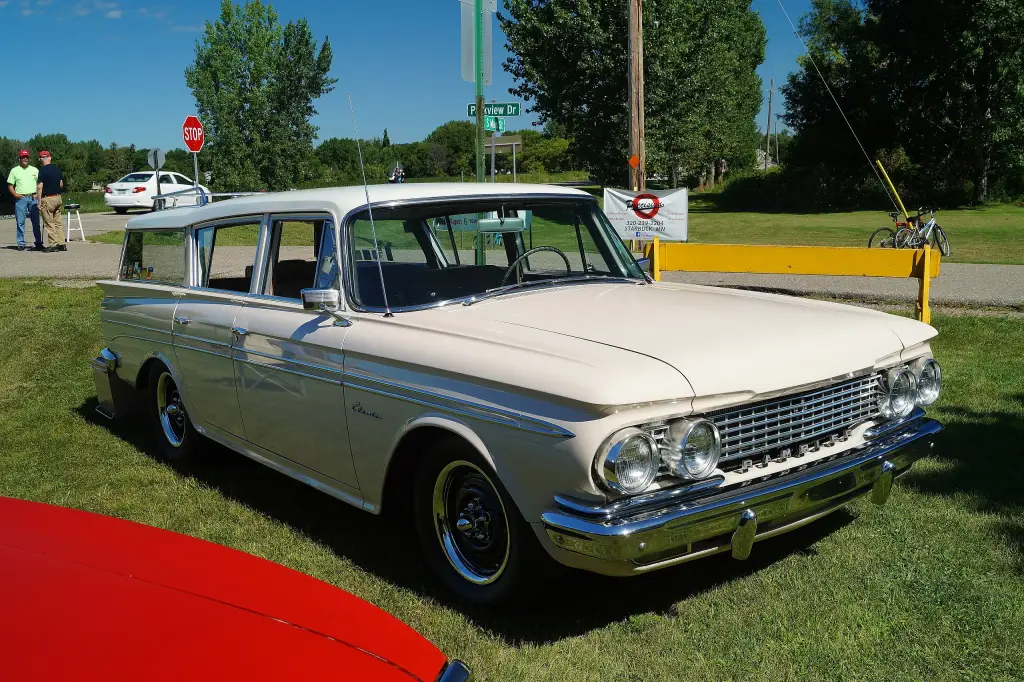
The Classic was created in 1961 when AMC renamed its larger Rambler series, which was based on a 1956 design, to give it a stronger identity against the smaller Rambler American. Edmund E. Anderson designed the 108-inch wheelbase car, which looked new but was in fact an inexpensive reskin; AMC kept the basic body shell for five or six years instead of the industry norm of three and relied on facelifts to keep it looking current. The 1961 Classic 6 and V8 went on display in Rambler showrooms on 12 October 1960, filling the mid-range between the compact American and the Ambassador. They came as a six-passenger four-door sedan and as a station wagon with two rows of seats and a drop-down tailgate, or an optional rear-facing third row with a side-opening fifth door. The front end was new, with a one-piece rectangular extruded aluminium grille, new fenders, hood, sculptured door panels and side trim and redesigned one-piece bumpers.
Trim and engines
Trim levels ran from the basic Deluxe through the mid-level Super to the top Custom, which had bucket seats in a four-door sedan. The Deluxe four-door sedan was listed at $2,098, only $339 less than the station wagon. The engine choice was a 195.6 cu in six or a 250 cu in V8. A lighter aluminium-block version of the overhead-valve six, sometimes called the 196, was optional on the Deluxe and Super; it used cast iron cylinder liners and a cast iron alloy head and produced the same 127.5 hp as the cast iron engine, and was described as a wave of the future in engine production. The 1961 Classic was promoted as “The All-Purpose Compact Car”, and Rambler rose to third place among domestic makes in 1961 with 370,600 vehicles sold.
1962 and after
For 1962 the Super was dropped and replaced by a 400 model. The Ambassador was shortened to the same 108-inch wheelbase and the V8 was withdrawn from the Classic, leaving the Ambassador as the only V8 in the AMC range. A two-door sedan was offered for that one year only. The grille was revised, the tail fins were shaved off and the rear received round tail lamps; AMC was among the last to adopt fins and among the first to remove them. From 1962 all Ramblers had twin-circuit brakes, a safety feature then offered by only a few makers, and cars with automatic transmission kept push-button controls on the left of the dashboard with a separate sliding pull tab for park. Over the following seasons AMC added a two-door post sedan for 1963, a pillar-less hardtop from 1964 and a convertible for 1965 and 1966, and the line was a high-volume seller built in the United States and Canada and exported to more than 100 countries. The Rebel name replaced Classic on the redesigned intermediate cars for 1967.
Design and features
- Car of the Year: Motor Trend selected the Classic line for its 1963 award.
- Aluminium six: an optional aluminium-block 195.6 cu in engine with iron liners, 80 lb lighter than the cast iron unit.
- Twin-circuit brakes: fitted to all Ramblers from 1962, when only a few cars had them.
- Efficient reskinning: the same body shell was kept for years with facelifts, which kept tooling costs and prices down.
Rambler Classic versions
- Deluxe: the basic trim, from $2,098 for the 1961 four-door sedan.
- Super: mid-level trim, dropped after 1961.
- 400: replaced the Super for 1962 and used the aluminium six as standard.
- Custom: top trim, with bucket seats in the four-door sedan.
- Cross Country wagon: the station wagon body, with two or three rows of seats.
The Classic sat between the Rambler American and the Rambler Ambassador and was replaced by the Rambler Rebel. More cars are in the Rambler collection.
Video: Show Winning 1963 AMC Rambler Classic 660
Video on YouTube.
Sources
- Rambler Classic, English Wikipedia: generations, trims, engines, 1962 changes