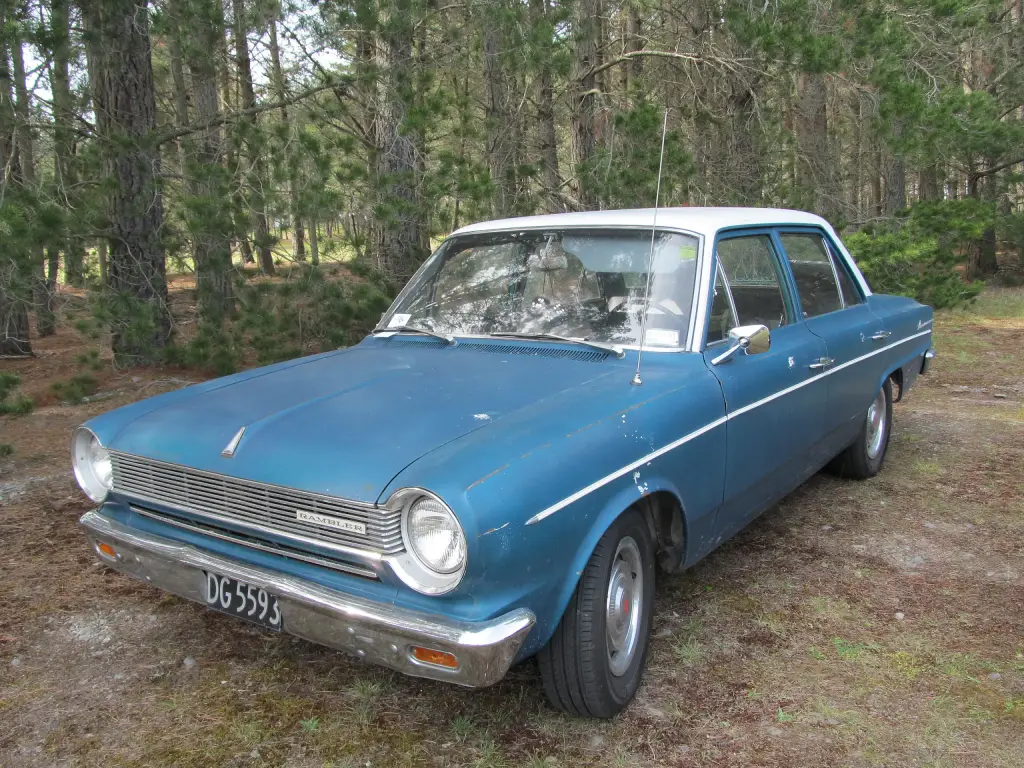
The Rambler American was American Motors’ compact car from 1958 to 1969, the second incarnation of the small Rambler that Nash had introduced in 1950. It was among the cheapest cars built in the United States and was sold on low running costs, but by the end of its life it could be ordered as a 390 cu in muscle car.
Rambler American at a glance
| Maker | American Motors Corporation, Kenosha, Wisconsin |
|---|---|
| Production | 1958–1969 |
| Generations | three: 1958–1960, 1961–1963, 1964–1969 |
| Basis | a modified version of the 1955 Nash Rambler, 100-inch wheelbase |
| 1958 body | two-door sedan only |
| 1958 engine | 195.6 cu in flathead six, 90 hp |
| 1958 prices | Deluxe $1,789, Super $1,874 |
| 1958 sales | 30,640 cars |
| Late 1966 | optional AMC V8 turns the American into a compact muscle car |
| SC/Rambler | 390 cu in (6.4 L) version developed with Hurst Performance |
| Overseas | assembled or marketed in Australia, Iran, Mexico, Argentina and South Africa |
| Last year | 1969, the final car to carry the Rambler name in the US and Canada |
History of the Rambler American
Why AMC built it
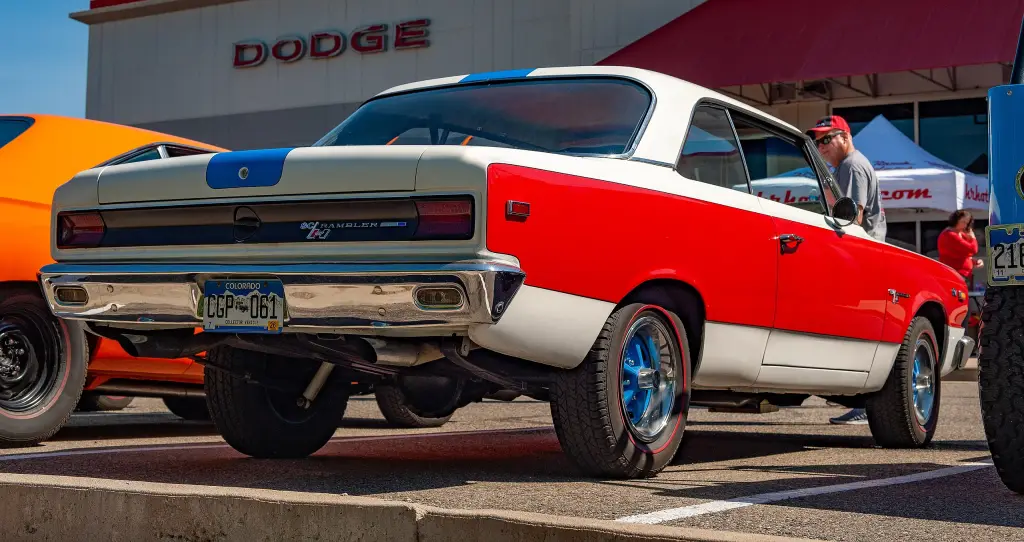
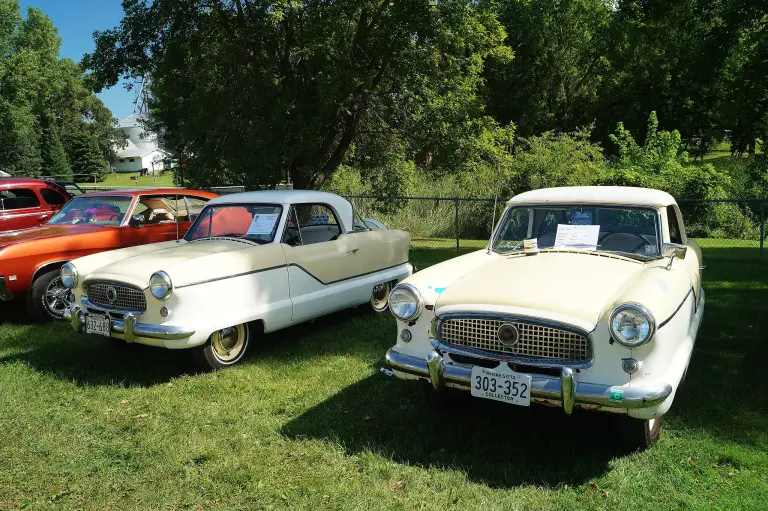
The American began with the Nash Rambler of 1950. AMC president George Mason believed in small cars, but the Rambler line grew to a 108-inch wheelbase in 1956 and the Metropolitan, built in England, was becoming expensive. American Motors still had the tooling for the 1955 Rambler and its 100-inch wheelbase, which fitted neatly between the larger Ramblers and the imported Metropolitan. Reusing that design was the only affordable option for a company that could not develop an entirely new model, and it also let AMC build on the Rambler’s reputation for economy and its wins in the Mobil Economy Run. The new president, George Romney, wanted a third car line to challenge the Big Three, and a low-priced small car was ideal as the country entered the recession of 1958.
First generation, 1958–1960
The first American used the Nash Rambler platform with a new grille and more open rear wheel arches, which gave the car a lighter look than the earlier model with its deeply skirted rear wheels. The original tail lamps were turned upside down to save on tooling. Romney worried about taking sales from the larger, more profitable Ramblers, so for 1958 the American was offered only as a two-door sedan, while the senior cars came only as four-doors. The sole engine was a 195.6 cu in flathead six with 90 hp. The car went on sale in late January 1958 with little marketing, in Deluxe form at $1,789 and as a Super at $1,874, which allowed AMC to claim the lowest-priced car made in America. It was advertised as the only small car with an automatic transmission, and every car was dipped in rust proofing. The press was positive and 30,640 were sold in the shortened 1958 model year.
Later generations
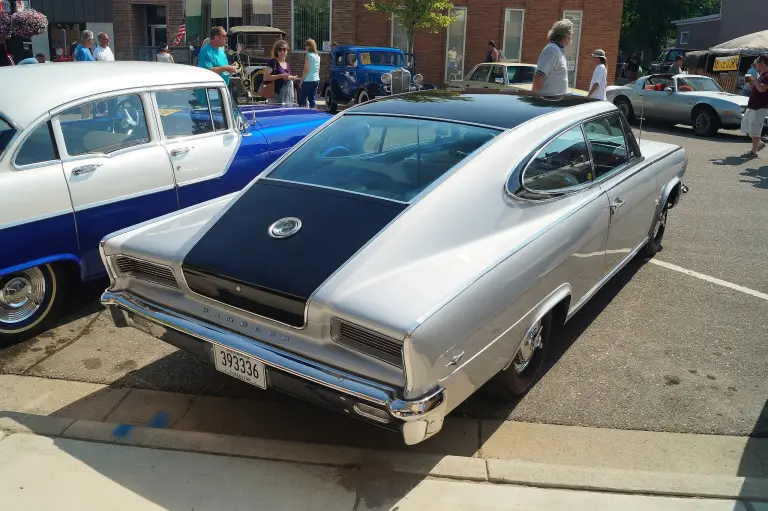
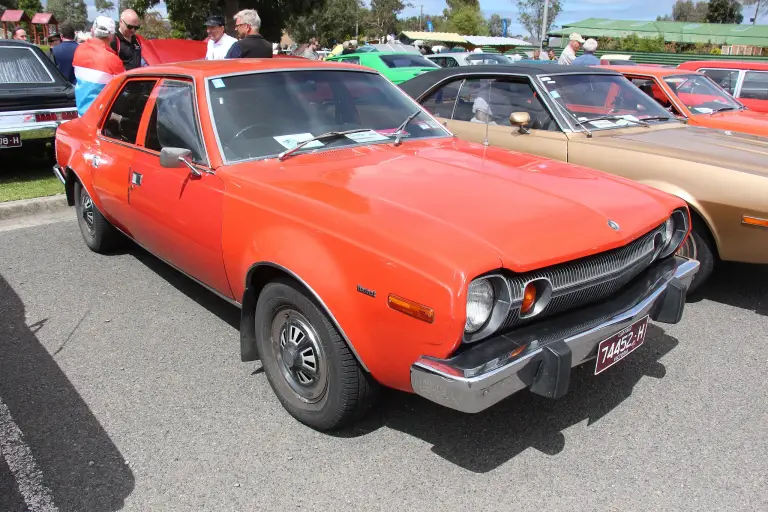
Two more generations followed, for 1961–1963 and 1964–1969. The American remained a compact and kept its reputation for low cost of ownership, reinforced by further victories in the Mobil Economy Run. In late 1966 an optional AMC V8 became available, which turned the light car into a compact muscle model, culminating in the 390 cu in (6.4 L) SC/Rambler developed with Hurst Performance. The platform was also used for other designs: the 1964 Rambler Tarpon concept car previewed the fastback of the 1965 Rambler Marlin, the platform moved on to the 1968 AMC Javelin pony car and was reconfigured for the 1970 AMC Hornet that replaced the American. The 1969 model year was the last car to carry the historic Rambler name in the United States and Canada. The American was also marketed or assembled under licence in Australia, Iran, Mexico, Argentina and South Africa, and right-hand drive versions were available.
Design and features
- Low price: at $1,789 in 1958 the Deluxe was the cheapest car made in America.
- Economy: the flathead six and overdrive gave up to 30 miles per gallon, and victories in the Mobil Economy Run backed the reputation.
- Reused tooling: the 1955 Nash Rambler body was reworked rather than replaced, which kept development costs down.
- Late performance: the optional V8 from late 1966 and the Hurst-built SC/Rambler turned the economy car into a muscle compact.
Rambler American versions
- Deluxe (1958): the base two-door at $1,789.
- Super (1958): a better-equipped two-door at $1,874.
- V8 Americans (from late 1966): the optional AMC V8 in the compact body.
- SC/Rambler (1969): 390 cu in (6.4 L) engine developed with Hurst Performance.
The American shared its platform with the Rambler Marlin and was replaced by the Rambler Hornet. More cars are in the Rambler collection.
Video: 1967 Rambler American walk around – car was sold in 2012
Video on YouTube.
Sources
- Rambler American, English Wikipedia: development, 1958 model, later generations, overseas assembly