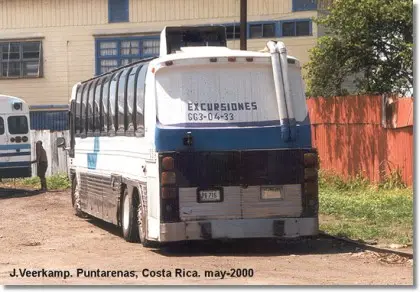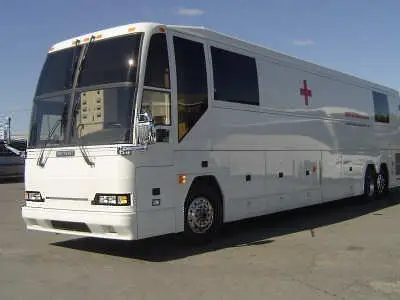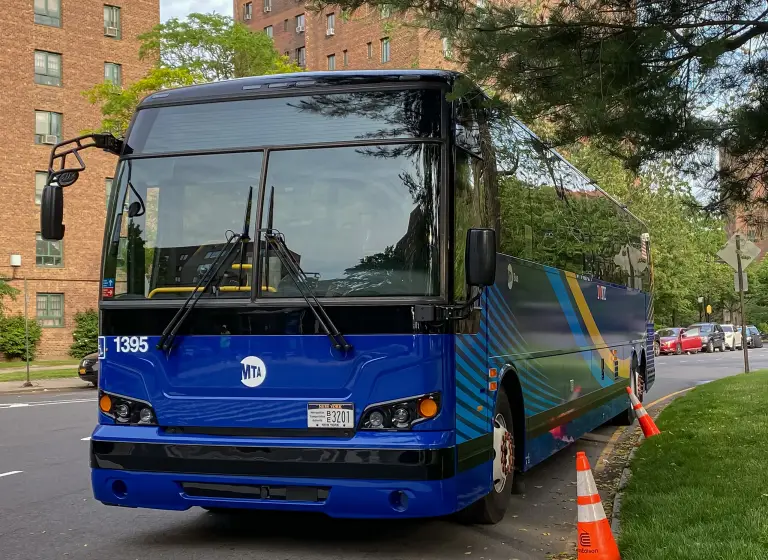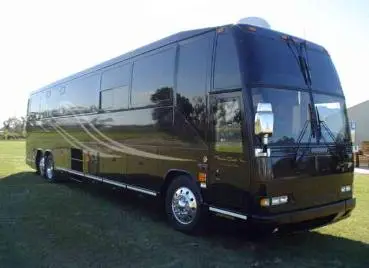
The LeMirage replaced the Champion and Le Prestige in 1977 and became the coach that gave Prevost its first substantial sales in the United States. Its full-front, four-piece windscreen did away with the stepped front of its predecessors, while the tall curved side windows of the Prestige were carried over.
Prevost LeMirage at a glance
| Maker | Prevost Car, Sainte-Claire, Quebec, Canada |
|---|---|
| Type | intercity motorcoach and conversion shell |
| Introduced | 1977 |
| Replaced | Champion and Le Prestige |
| Windscreen | full-front, four-piece |
| Side windows | tall and curved, carried over from the Prestige |
| Wide-body version | LeMirage XL, 1984 |
| Width | 96 in (2,400 mm); 102 in (2,600 mm) for the XL |
| Conversion shells | offered from 1978 |
| Predecessor’s end | Le Prestige production stopped in 1981 |
| Later XL models | XL-45 in 1992, LeMirage XL-II in 2000 |
| Rival | MCI |
The LeMirage has no separate article on Wikipedia; the page is built from the company article and the history section of the X-Series article, which describes the same coach.
History of the Prevost LeMirage
A new front
Prevost had been building coaches with a stepped front since the Panoramique of 1962, and the Champion and Le Prestige kept that layout. The LeMirage of 1977 abandoned it. A full-front, four-piece windscreen gave the driver a cleaner view and the coach a more modern face, while the tall side windows with rounded upper corners survived from the Prestige, so passengers kept the bright interior that had made the older coach popular.
First real American sales
The Champion had been sold in the United States since 1968, but it was the LeMirage that produced Prevost’s first substantial American business. The new front and the brighter cabin made the coach competitive with American builders, and the model stayed in production long enough to overlap with its own successor: Le Prestige assembly ended in 1981, four years after the LeMirage had arrived.
The wide-body XL
After the factory was expanded in 1980, Prevost introduced wide-body coaches in 1984 at the North American standard width of 102 in (2,600 mm). The LeMirage XL led a group of three models called the XL Series: the Marathon XL was a more economical intercity coach, and the Astral XL was a touring coach with glass roof panels above the passengers. The wide body grew into the XL-45 of 1992 and the LeMirage XL-II of 2000, and from that line came today’s X3-45.
Conversion shells
From 1978 the LeMirage was also sold as a conversion shell, following the Champion shells that Prevost had supplied to motorhome upfitters since 1970. The practice turned into a permanent part of the business, and the H3-45 VIP and X3-45 VIP shells are its direct descendants.
Design and features
- Full-front windscreen: a four-piece screen replaced the stepped front of the Champion and Le Prestige.
- Bright cabin: the tall, curved side windows of the Prestige were carried over.
- Wide-body option: the LeMirage XL of 1984 raised the width from 96 to 102 in (2,400 to 2,600 mm).
- Conversion shell: sold to upfitters from 1978 for luxury motorhomes.
- Long-lived line: developed into the XL-45, the XL-II and finally the X3-45.
Prevost LeMirage versions
- LeMirage (1977): the original coach with the four-piece windscreen.
- LeMirage XL (1984): the wide-body version, 102 in (2,600 mm) wide.
- Marathon XL (1984): an economical intercity model in the XL Series.
- Astral XL (1984): a touring coach with glass roof panels.
- LeMirage XL-45 (1994): the long premium touring coach.
- LeMirage XL-II (2000): the second-generation wide-body, later developed into the X3-45.
The LeMirage’s XL descendants are covered in the X3-45 article, and its predecessor in the Le Prestige article. The H3-45 is the other long-running Prevost coach, and the company history covers the rest, with pictures in the Prevost collection.
Video: 1989 Prevost Mirage Bus With 2002 Montreal STM LFS And Semi DumpTruck
Video on YouTube.
Sources
- Prevost (bus manufacturer), English Wikipedia: LeMirage, XL Series, conversion shells
- Prevost X-Series, English Wikipedia: windscreen, American sales, wide-body development