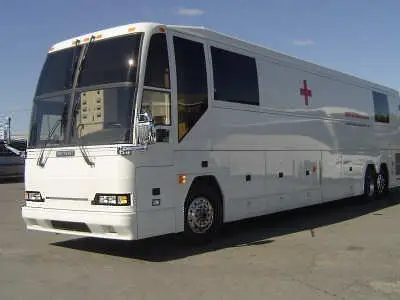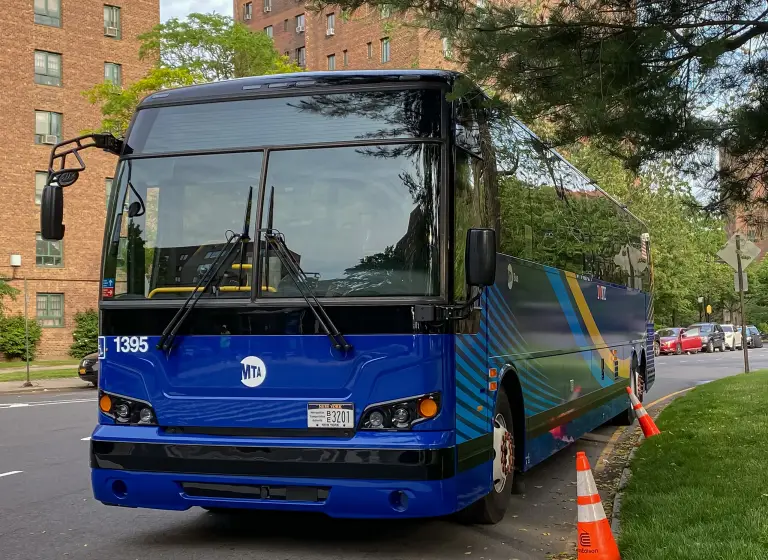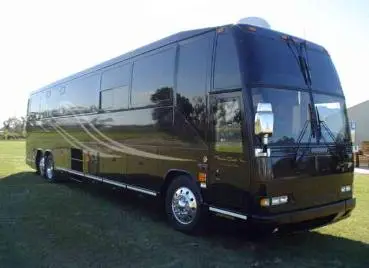
Prevost Car is a Canadian manufacturer of touring coaches, intercity buses and bus shells for high-end motorhomes and specialty conversions, and it has been a subsidiary of the Volvo Buses division of the Volvo Group since the 1990s. Its story begins in 1924, when a cabinet maker was asked to build a bus body on a truck chassis.
Prevost coach at a glance
| Company | Prevost Car |
|---|---|
| Founded | 1924, by Eugène Prévost |
| First product | a custom bus body on a REO truck chassis |
| First factory | Sainte-Claire, Quebec, built 1937–1939 |
| First plant capacity | ten vehicle bodies a year |
| Renamed Prevost Car | 1957, under Paul Normand |
| Owner | Volvo Buses, with Henlys Group from 1995; Volvo alone since 2004 |
| Early models | Interurbain, Prévocar, Citadin |
| Peak early output | over 100 vehicles a year in 1949, 1950 and 1952 |
| 1970s coach | Champion, then Le Prestige |
| 1980s coach | LeMirage and the XL Series |
| Current coaches | H3-45 and X3-45 |
| Presidents | Georges Bourelle 1996–2003, Gaétan Bolduc 2004–2015, François Tremblay since 2016 |
This is an overview of the maker and its model range; the individual coaches have their own pages.
History of the Prevost coach
Early years, 1924–1951
Eugène Prévost (1898–1965) was a cabinet maker who specialised in church pews and school furniture. In 1924 he was asked to build a custom bus body for a new REO truck chassis, and repeat orders followed, but he limited production to one bus body per winter. A dedicated plant was built in Sainte-Claire, Quebec, between 1937 and 1939 with a capacity of ten bodies a year, and its buses were sold mainly to operators in eastern Canada. The first vehicles used metal panels over a wooden frame; from 1945 both panels and frames were metal. A large contract for the Defence Ministry of Canada came in 1943, and commercial sales resumed in 1948 under the name Les Ateliers Prévost, with a foundry, die-casting, plating and woodworking shops under one roof. A further contract for 100 motorcoaches from the Canadian government followed in 1951, alongside the Interurbain and Prévocar coaches in four sizes and the Citadin city bus. Output passed 100 vehicles in 1949, 1950 and 1952, making the firm the largest Canadian builder of intercity coaches, but it collapsed to three buses in 1956.
The Normand era, 1957–1995
Paul Normand bought the company in 1957 and renamed it Prevost Car. The LeNormand of that year brought stainless steel side panels, pneumatic suspension and a diesel engine; the Travelair of 1961 was a 25-foot coach for short trips; and the 40-foot Panoramique of 1962, which served Grey Goose Bus Lines, replaced the LeNormand a year later. The Champion of 1966, with its integrated frame, competed with the General Motors Buffalo and became the first Prevost bus marketed in the United States. An upgraded Champion with taller, rounded side windows appeared in 1968 and was renamed Le Prestige in 1973. LeMirage took over in 1977 with a full-front, four-piece windscreen, and from 1984 the wide-body XL Series added the LeMirage XL, Marathon XL and Astral XL. Long-wheelbase versions arrived in the 1990s: the XL-45 Entertainer in 1992 and the LeMirage XL-45 in 1994. André Normand, who had succeeded his father in 1968, brought in two American partners, Thomas B. Harbison and William G. Campbell, in 1969; the three sold the company to Volvo Bus Corporation and Henlys Group in 1995.
The H-Series and the X-Series
The articulated H5-60 of 1985 opened the H-Series, followed by the rigid H3-40 in 1989 and, after 45-foot buses were legalised in 1994, the H3-41 and H3-45. On the other side of the range, the second-generation LeMirage XL-II of 2000 became the X3-45 in 2006. Both families have been updated several times: the H-Series in 2002, 2009 and 2023, the X3-45 in 2011 with a commuter version and in 2019 with new styling. Today the H3-45 and the X3-45 are the two current coaches.
Under Volvo
Volvo took sole ownership in 2004. Georges Bourelle was president from 1996 to 2003, Gaétan Bolduc from 2004 to 2015, and François Tremblay has held the post since 2016. Coaches have also been assembled in the United States: the Volvo Buses factory at Plattsburgh, New York, shared with Nova Bus, built X3-45 Commuter buses for New York until production there ended in 2022 and returned to Quebec.
Design and features
- Coaches and shells: Prevost builds complete touring coaches and unfinished shells for luxury motorhome converters.
- Quebec base: production is centred on Sainte-Claire, Quebec, where the first dedicated plant was built in the late 1930s.
- Volvo ownership: part of the Volvo Group through its Buses division, with shared engines such as the Volvo D13.
- Long model history: a continuous line from the Champion of 1966 through LeMirage and the XL Series to the H3-45 and X3-45.
Prevost coach versions
- Early coaches: Interurbain, Prévocar and Citadin of the early 1950s.
- Normand-era coaches: LeNormand (1957), Travelair (1961) and Panoramique (1962).
- Champion and Le Prestige: the integrated-frame coach of 1966 and its 1973 renaming.
- LeMirage and XL Series: the 1977 coach and the wide-body models of 1984.
- H-Series: from the articulated H5-60 of 1985 to today’s H3-45.
- X-Series: the XL-II of 2000 developed into the X3-45 of 2006.
Single models are described in the articles on the H3-45, the X3-45, the LeMirage and the Le Prestige. More pictures are in the Prevost collection.
Sources
- Prevost (bus manufacturer), English Wikipedia: company history, models, ownership, presidents
- Prevost H-Series, English Wikipedia: H-Series dates and updates
- Prevost X-Series, English Wikipedia: X-Series dates, Plattsburgh assembly