Pierce-Arrow was an American luxury-car maker based in Buffalo, New York, active from 1901 to 1938. Its cars were large, expensive and conservatively engineered, and the headlights moulded into the front fenders became the marque’s signature. With Peerless and Packard it was one of the Three P’s of American luxury motoring.
Pierce-Arrow at a glance
| Founded | 1901, as the George N. Pierce Company |
|---|---|
| Renamed | 1908, Pierce-Arrow Motor Car Company |
| Headquarters | Buffalo, New York |
| Production | 1901–1938 |
| First car | 1901 single-cylinder Motorette |
| Breakthrough | 1904 Great Arrow; winner of the 1905 Glidden Tour |
| Engines | four, six, straight-eight and V12; up to 13.5 litres |
| Trademark | headlights moulded into the front fenders from 1914 |
| Ownership | Studebaker control from 1928 to 1933 |
| Silver Arrow | 1933 show car, five built, three survive |
| Closed | 1938 |
The English article is the fullest account; the German, French and Italian pages add the Glidden Tour record, the White House cars and the Silver Arrow details.
History of the Pierce-Arrow
From birdcages to the Great Arrow
The forerunner of Pierce-Arrow was established in 1865 as Heinz, Pierce and Munschauer, a maker of household goods best known for gilded birdcages. In 1872 George Norman Pierce bought out his partners, renamed the business the George N. Pierce Company and added bicycles in 1896. An attempt to build a steam car under Overman licence in 1900 failed, but by 1901 the company had built its first single-cylinder, two-speed, no-reverse Motorette. A two-cylinder car, the Arrow, followed in 1903. In 1904 Pierce concentrated on a larger and more luxurious car, the Great Arrow, which became its most successful product: the four-cylinder car won the 1905 Glidden Tour, a 350-mile endurance run from New York City to Bretton Woods, New Hampshire, with Percy Pierce driving. The architect Albert Kahn designed the Pierce Arrow Factory Complex at Elmwood Avenue and Great Arrow Avenue about 1906; it was listed on the National Register of Historic Places in 1974. George Pierce sold his rights in 1907 and died three years later, and in 1908 the company was renamed the Pierce-Arrow Motor Car Company.
Engines and the fender headlamps
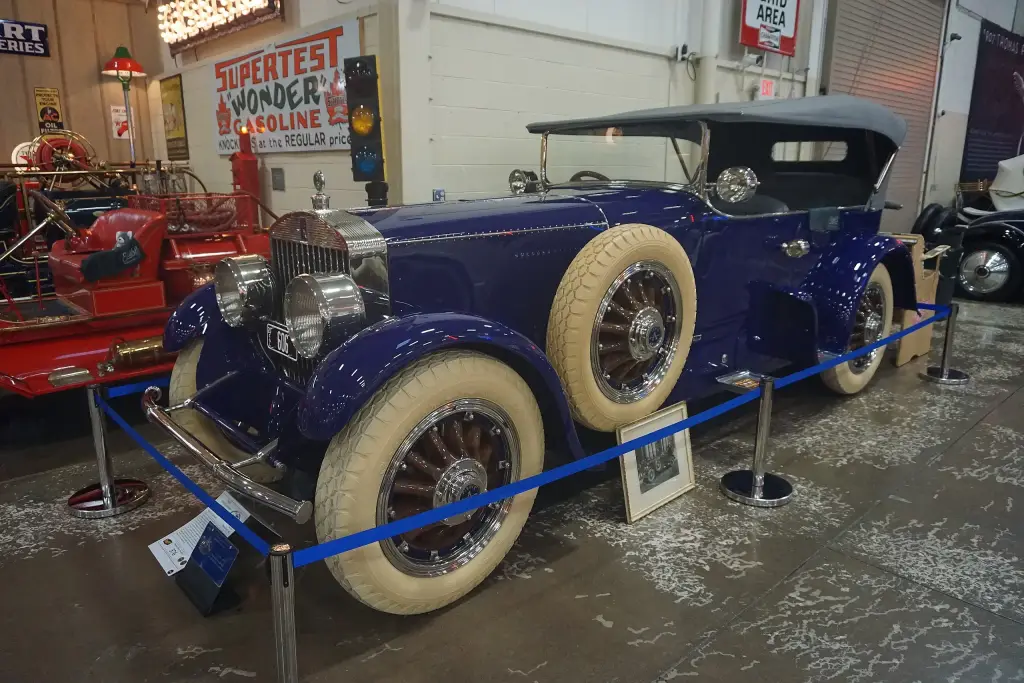
Pierce-Arrow engine displacement started at 453 cu in (7.4 litres) and grew to 11.7 litres and then 13.52 litres, at the time the largest Otto engine in any production car. In 1910 the company dropped its four-cylinder models and concentrated on sixes until 1929; the 6-36, 6-48 and 6-66 continued for a decade, and from 1918 the Dual Valve Six used four valves per cylinder and three spark plugs. An eight appeared with the 1929 Model 126 and a V12 from 1931 until the company closed. In 1914 Pierce moved the headlights from the sides of the radiator into flared housings moulded into the front fenders, a patented arrangement that lasted to the final 1938 model; conventional lamps were offered, but few customers chose them. Herbert M. Dawley, later a Broadway actor-director, joined in 1912 and designed almost every model until 1938. In 1909 President William Howard Taft ordered two Pierce-Arrows, among the first official White House cars.
The Three P’s and the end
The Pierce-Arrow was a status symbol owned by Hollywood stars, tycoons and royalty, and with Peerless and Packard it was known as one of the Three P’s of Motordom. In 1928 Studebaker gained control for five years, giving Pierce-Arrow a dealer network but little engineering benefit; under Studebaker the six was retired in favour of a 366 cu in straight-eight in 1929. In 1933 the company showed the Silver Arrow, a streamlined sedan with a V12, at the New York show; five were built at $10,000 each and three survive. Studebaker’s bankruptcy forced the sale of Pierce-Arrow to Buffalo investors, and the company closed in 1938.
Design and features
- Fender headlamps: from 1914 the lamps were moulded into the front fenders, a patented arrangement copied by no other American maker on the same scale.
- Reliability: the Great Arrow won the 1905 Glidden Tour, a 350-mile endurance run, with Percy Pierce at the wheel.
- Large engines: displacement grew from 7.4 litres to 13.52 litres, the largest Otto engine in a production car at the time.
- Status: Pierce-Arrow, Peerless and Packard were the Three P’s of American luxury, and the cars served in the White House from 1909.
- Silver Arrow: the 1933 show car combined a traditional grille and fender lamps with an aerodynamic all-metal sedan body.
Pierce-Arrow versions
- Motorette (1901): single-cylinder, two-speed, no reverse.
- Great Arrow (1904–1908): the four-cylinder luxury car that made the marque.
- Model 66: the largest six of the 1910s; the 1919 A-4 is a known survivor.
- Model 126 (1929): the first straight-eight, of 366 cu in.
- V12 (1931–1938): the final engine, offered until the company closed.
- Silver Arrow (1933): five built at $10,000 each, three survive.
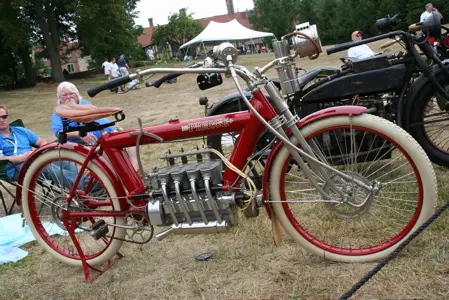
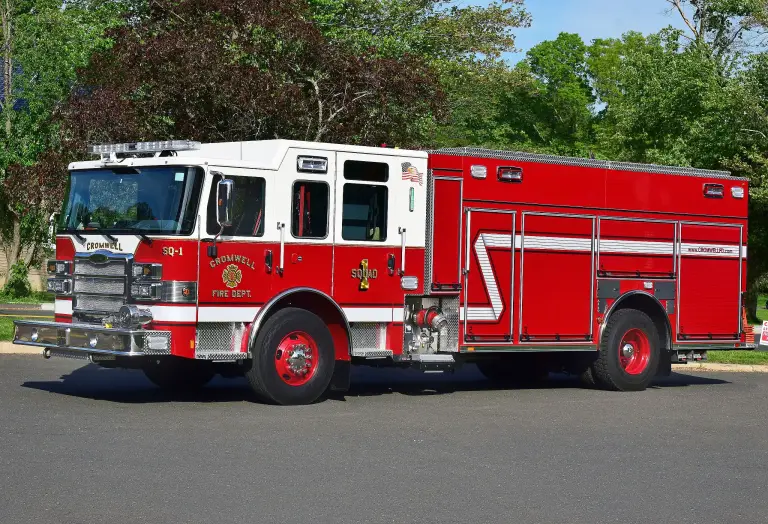
The Pierce Four motorcycle was built by the associated Pierce Cycle Company, and the modern Pierce fire apparatus of Wisconsin is a different company. More in the Pierce collection.
Sources
- Pierce-Arrow Motor Car Company, English Wikipedia: history, engines, headlamps, Studebaker, Silver Arrow
- Pierce-Arrow, German Wikipedia: Glidden Tour wins, V12, Silver Arrow
- Pierce-Arrow, French Wikipedia: White House, trucks
- Pierce-Arrow, Italian Wikipedia: Three P’s, models 41 and 42, Silver Arrow