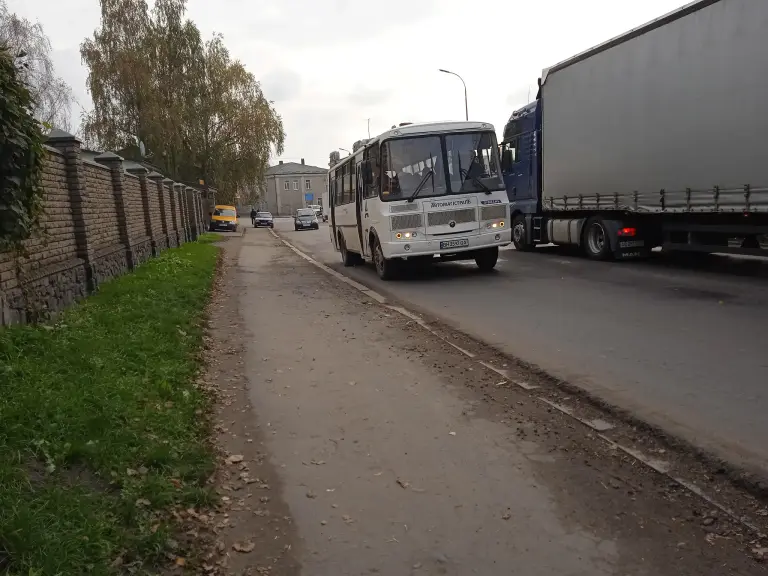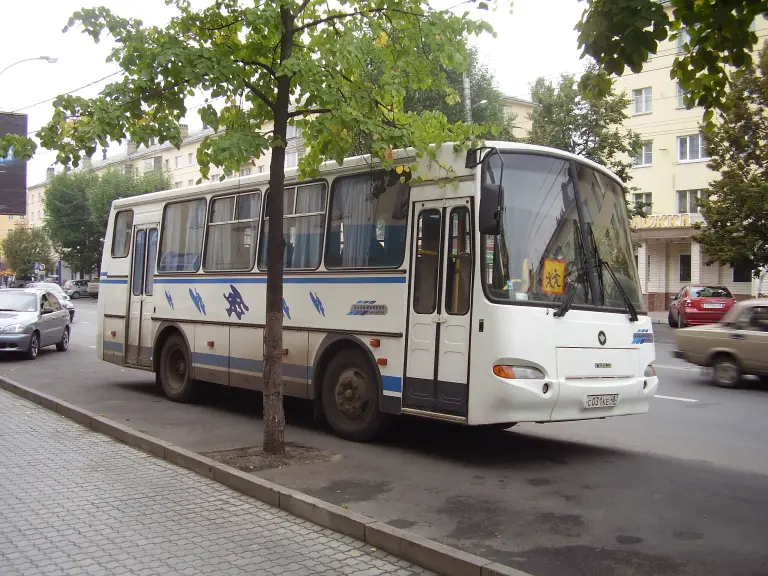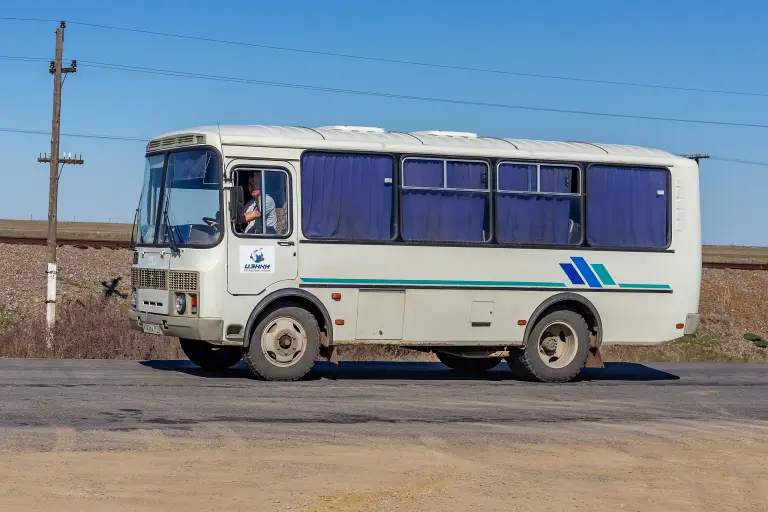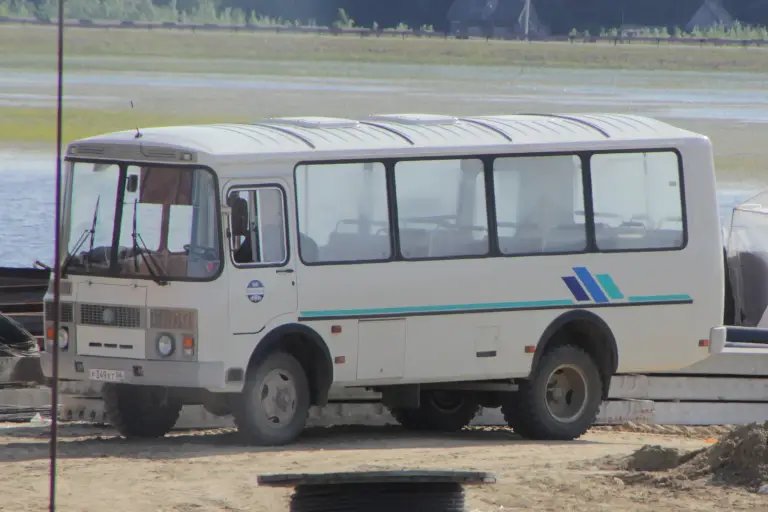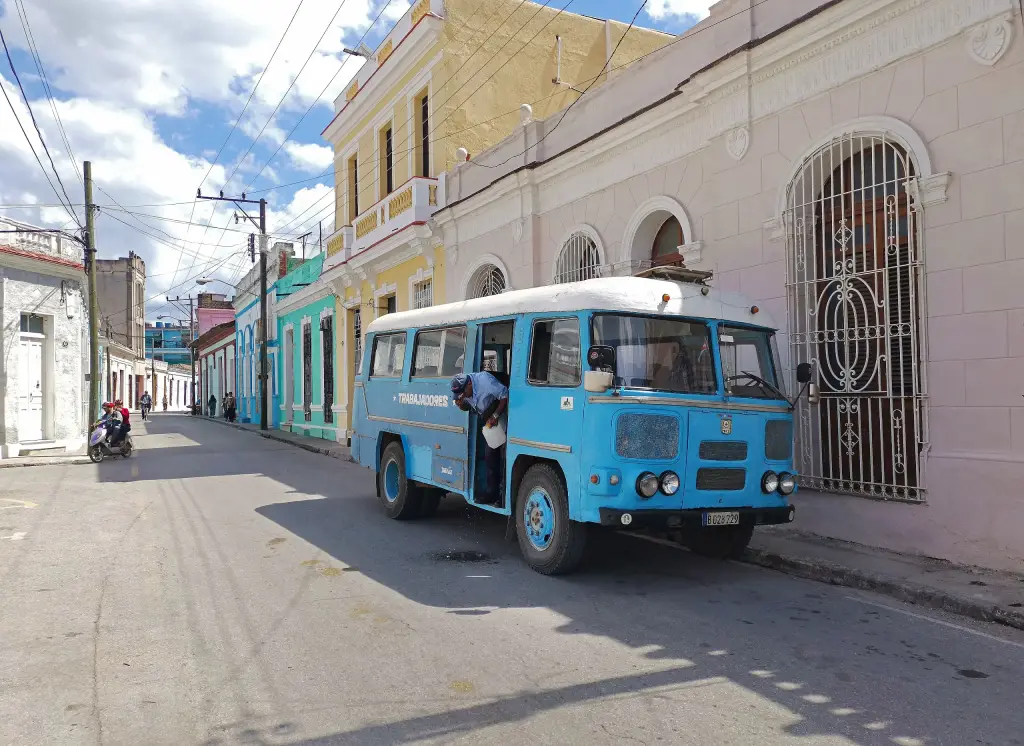
The PAZ-672 was the bus that put most of the Soviet Union’s rural routes on wheels: a V8-engined development of the PAZ-652 on the GAZ-53 chassis, built at Pavlovo from 1967 to 1989. In 22 years the factory made 190,150 of the base bus and 288,688 including all modifications.
PAZ-672 at a glance
| Maker | Pavlovo Bus Factory (PAZ) |
|---|---|
| Production | 1967–1989 |
| Replaced / succeeded by | PAZ-652 / PAZ-3205 |
| Chassis | GAZ-53 lorry |
| Engine | ZMZ-672 V8, 4.25 l, 115 hp (120 hp with the ZMZ-672.11) |
| Gearbox | four-speed manual |
| Length / wheelbase | 7,150 mm / 3,600 mm |
| Seats / capacity | 23 seats, 45 passengers |
| Top speed | 80 km/h |
| Fuel consumption | 20.5 l/100 km |
| Built | 190,150; 288,688 with all modifications |
Based on the Russian Wikipedia article on the PAZ-672 and the English article on the Pavlovo Bus Factory.
History of the PAZ-672
From the PAZ-652 to the GAZ-53
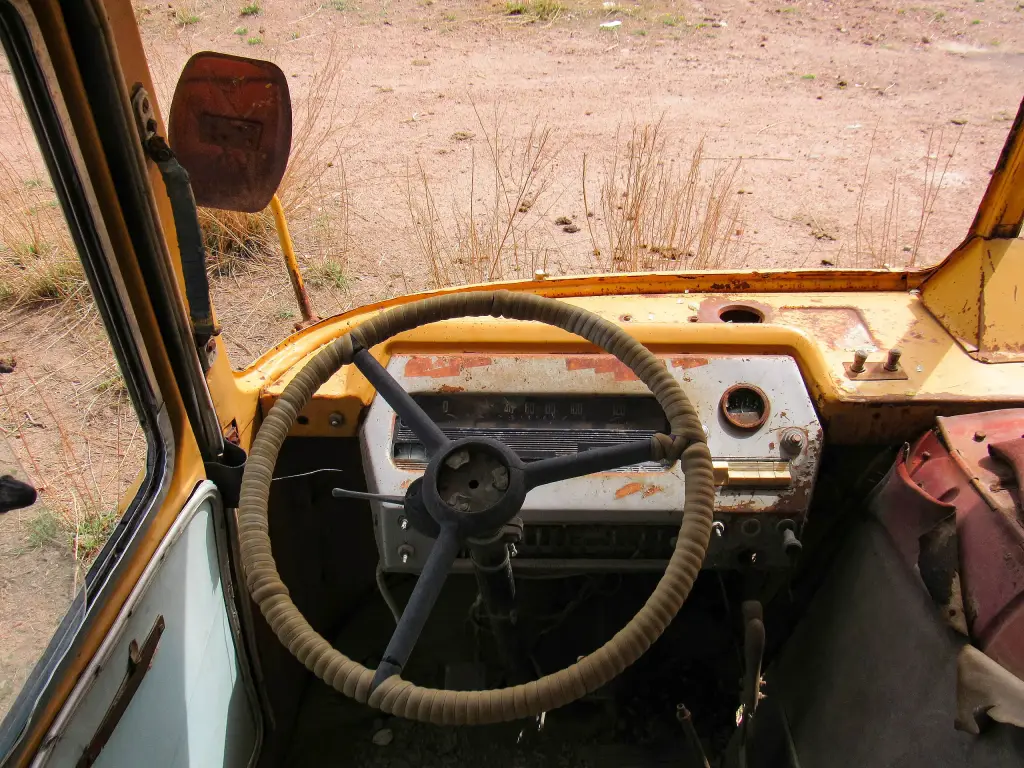
Work on a replacement for the PAZ-652 began in 1957 as a further development of the PAZ-652B. The new bus took the V8 engine and running gear of the GAZ-53 lorry and gained power steering; a passenger trailer, the PAZ-750, was designed alongside it but never built in series. The technical project was finished at the end of 1958, the first prototype appeared in November 1959, and after three more prototypes and factory trials the bus was recommended for production at the end of 1963.
A long road to the conveyor
The body frame was completely reworked in 1964: it became lighter and the side windows grew. Production was expected to begin within the year, but preparation dragged on through 1965 and 1966, and the first series PAZ-672s were built only in 1967: the first two bodies were welded on 25 October 1967, and ten buses were delivered by the end of the year. In November 1968 the last PAZ-652B left the line and the factory switched entirely to the new model. A December 1969 decision began a long programme of improvement covering engine life, the reliability of the steering and brakes, and body sealing.
The PAZ-672M and the end of the line
Service life between overhauls rose to 320,000 km in 1975 and 330,000 km in 1979, and in 1980 a modernised PAZ-672M with a 350,000 km overhaul life was tested at the NAMI proving ground. The 672M entered production in December 1982, and 90,645 were built before the end of 1989. New lighting to UNECE rules arrived in stages during 1978. Production stopped on 30 November 1989, when the PAZ-3205 took over the conveyor.
Design and features
- V8 power: the 4.25-litre ZMZ-672 gave 115 hp, or 120 hp with the ZMZ-672.11.
- GAZ-53 running gear: lorry-based chassis made spare parts easy to find.
- Power steering: a novelty in a small Soviet bus of the 1960s.
- Big load for its size: 23 seats and 45 passengers, though in practice up to 100 people were carried.
- Ambulance hatch: a rear door let stretchers be loaded for hospital work.
- Thirsty: fuel consumption was 20.5 litres per 100 km.
PAZ-672 versions
- PAZ-672 (1967–1982): the base series bus.
- PAZ-672A (1967–1968): open-sided excursion bus, two built.
- PAZ-672V and 672VYu: chassis; the tropical 672VYu went to Cuba for Giron buses, 21,100 built.
- PAZ-672G (1983–1986): mountain version with two fuel tanks, 575 built.
- PAZ-672D (1972): diesel prototype, two built.
- PAZ-672Zh (1985–1989): gas-cylinder version.
The PAZ-672 replaced the PAZ-652 and was followed by the PAZ-3205. More Soviet buses are in the PAZ collection.
Video: Old Soviet Bus PAZ 672 Engine Start
Video on YouTube.
Sources
- ПАЗ-672, Russian Wikipedia: history, specifications, modifications
- Pavlovo Bus Factory, English Wikipedia: factory history, model dates