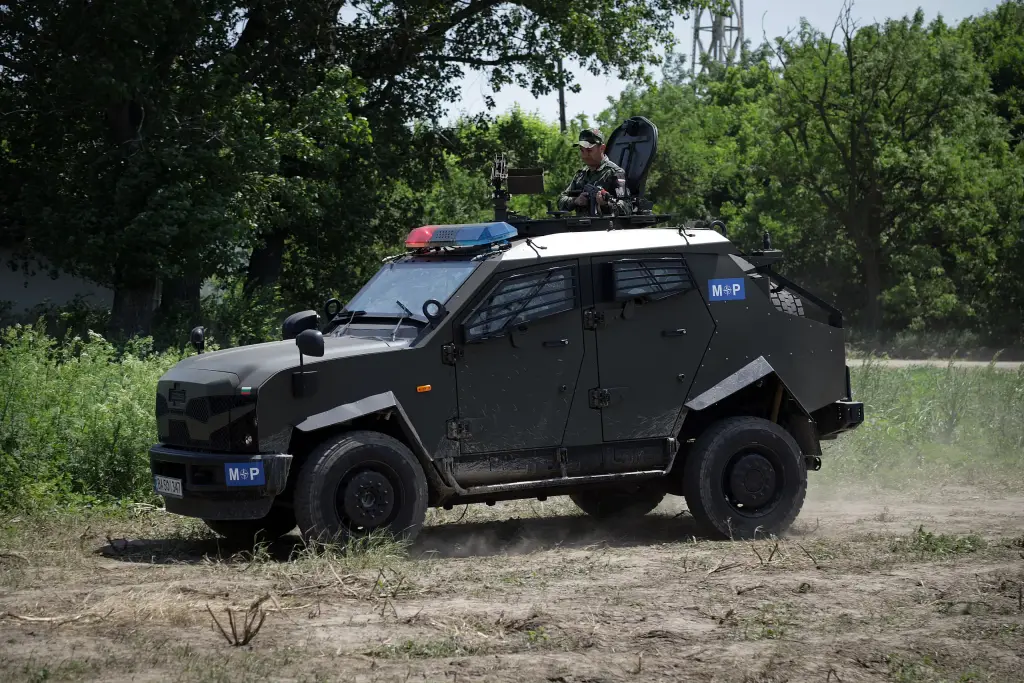
The Oshkosh SandCat is the version of the Plasan SandCat armoured vehicle marketed by Oshkosh Defense. The SandCat was designed by Plasan of Israel on a commercial Ford F-Series chassis, first shown at AUSA in October 2005, and from its second generation in 2008 Oshkosh was licensed to sell it.
Oshkosh SandCat at a glance
| Type | composite-armoured 4×4 vehicle |
|---|---|
| Designer | Plasan of Israel |
| Oshkosh role | licensed to market the SandCat from 2008 |
| Chassis | Ford F-Series; F350 early cars, F550 later |
| First shown | AUSA, October 2005 |
| Generations | four |
| Built | about 700 since 2004 |
| Users | at least 16, on five continents |
| Second-generation GVW | up to 8,845 kg |
| Payload | up to 2,109 kg |
| Configurations | Utility, five seats; Transport, eight seats |
| Mexican TPV | 249 vehicles delivered in 2011 and 2012 |
Based on one source, the English Wikipedia article on the Plasan SandCat; the Oshkosh SandCat is the licence-marketed version of that vehicle.
History of the Oshkosh SandCat
Origins
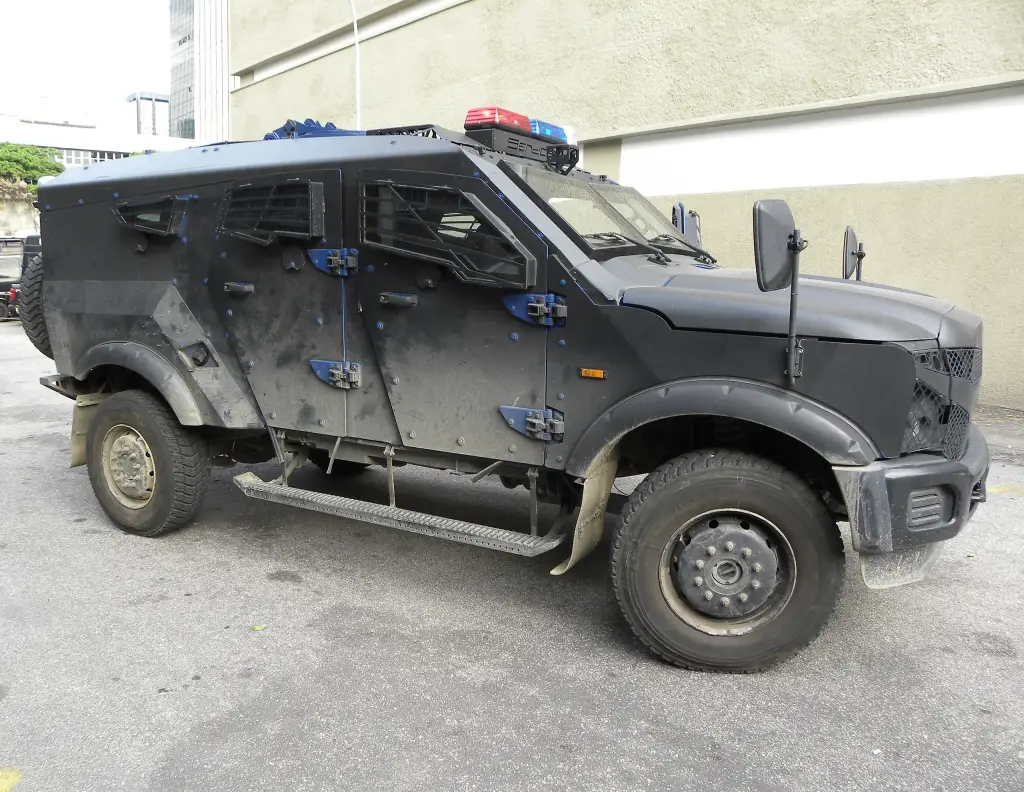
The SandCat was designed from 2004 by Plasan Sasa, now Plasan, for a variety of applications. It was seen as a possible replacement for the AIL Storm jeeps of the Israel Defense Forces and as a protected light vehicle for roles that had been performed by softskin utility types before the deployments to Iraq and Afghanistan. Plasan also intended it to show partner manufacturers that the company could design an armoured hull around any automotive platform. The original design was built around a gross vehicle weight of about 4,000 kg and a four-man crew, later revised to about 5,000 kg and four or five men. Its trapezoidal side windows reduced the mass of the armoured glass while keeping useful viewing angles, and a feline theme ran through the styling. The vehicle was first known as the Caracal, but by Eurosatory 2006 the name SandCat had been adopted to avoid confusion with the Caracal version of the Iveco LMV.
Generations and the Oshkosh licence
The first-generation SandCats were mainly prototypes, although a small number went to Israeli security forces and Sweden received a few in 2008 in an eight-seat station wagon configuration for police and SWAT work. Most used a Ford F350 chassis with the wheelbase shortened from 3.581 m to 2.946 m; the Swedish cars were on a Ford F450. The second generation arrived in 2008 after Ford updated its commercial range, and more than 300 were built. At that point Plasan did not want to bulk-manufacture the vehicle, so Oshkosh Defense was licensed to market the SandCat. Later cars used the Ford F550 chassis with a 2.946 m wheelbase and an overall length of 5 m in both Utility and Transport form, with a gross vehicle weight of up to 8,845 kg and a payload of up to 2,109 kg.
The second generation was the most varied in styling, with several front ends, wings, windows and body configurations. It kept the Ford bonnet but wore a new feline-inspired grille and lights that could take an Oshkosh badge, a generic SandCat badge or, in Israel, a Ford badge. For Mexico, Oshkosh retained the Ford grille and headlights for a Transport version called the Tactical Protector Vehicle; 249 were delivered in 2011 and 2012, built locally by Blindajes Epal. The SandCat MX and the similar-looking DN-XI are not Plasan or Oshkosh products. The third generation came in 2011 and was marketed heavily as the SandCat Stormer; users include Azerbaijan, Colombia, Israel, Kazakhstan, Poland and Ukraine, and Colombia ordered 14 through Oshkosh Defense in December 2012. The fourth generation was shown at Eurosatory 2018. About 700 SandCats had been produced since 2004, serving with at least 16 users on five continents in roles from police work to combat patrols.
Design and features
- Composite armour: a protected hull designed by Plasan around a commercial Ford chassis.
- Trapezoidal windows: an early and distinctive feature that cut the weight of the armoured glass.
- Badge options: the same vehicle could carry an Oshkosh, SandCat or Ford badge depending on the market.
- Two body styles: the five-seat Utility with an open rear cargo area and the eight-seat Transport station wagon.
- Wide user base: police and internal security as well as combat and patrol units.
Oshkosh SandCat versions
- First generation (2005): mainly prototypes, with a few Israeli and Swedish vehicles.
- Second generation (2008): the generation Oshkosh was licensed to market, more than 300 built.
- Third generation (2011): marketed as the SandCat Stormer.
- Fourth generation (2018): latest model, shown at Eurosatory.
- Tactical Protector Vehicle: Mexican Transport version with Ford grille, 249 built.
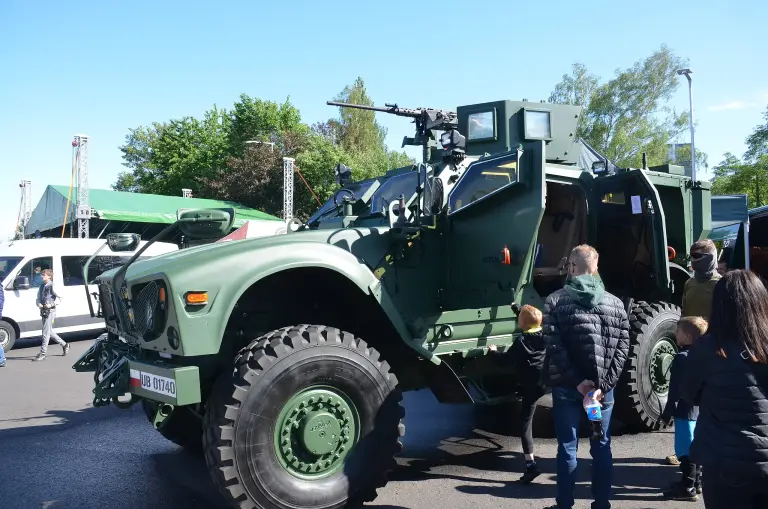
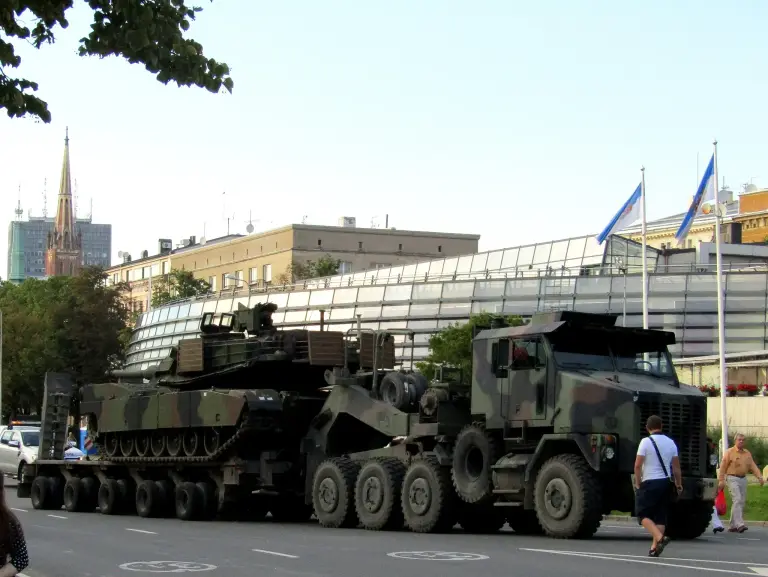
The SandCat is the lightest armoured vehicle associated with Oshkosh, whose larger products include the M-ATV and the M1070 tank transporter.
Sources
- Plasan SandCat, English Wikipedia: design, generations, Oshkosh licence, Mexican production, users