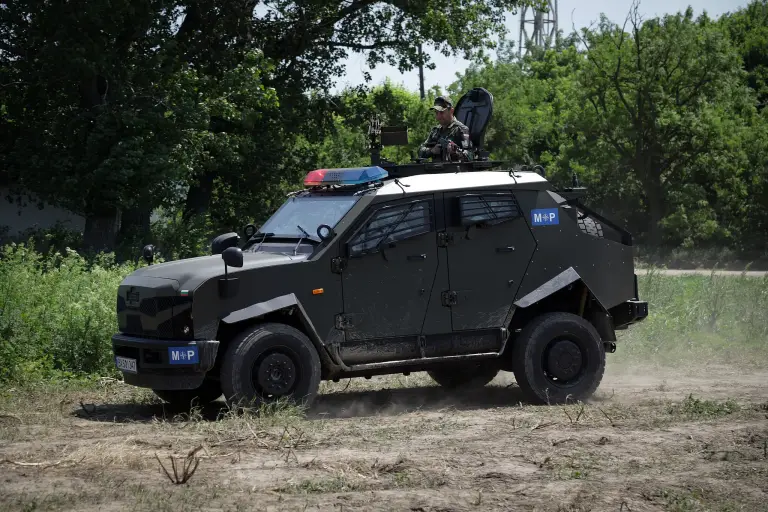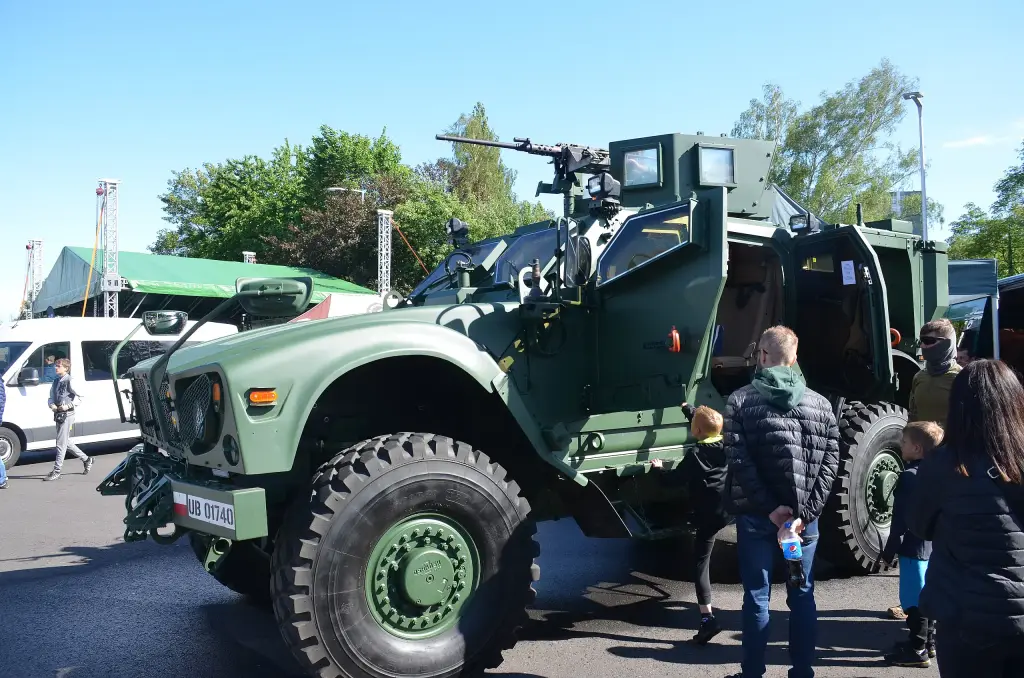
The Oshkosh M-ATV is a mine-resistant ambush protected (MRAP) vehicle developed by the Oshkosh Corporation for the MRAP All Terrain Vehicle programme. It was intended to replace the M1114 HMMWV, giving the same levels of protection as earlier, larger MRAPs while being far more mobile over rough ground.
Oshkosh M-ATV at a glance
| Type | MRAP all-terrain vehicle |
|---|---|
| Maker | Oshkosh Corporation |
| Programme | MRAP All Terrain Vehicle (M-ATV) |
| Contract award | 30 June 2009 |
| Initial order | over US$1 billion for 2,244 vehicles |
| First delivery | July 2009 |
| Total delivered | 8,722 |
| Main variants | M1240 and M1240A1, M1277, M1245 and M1245A1 |
| Production rate | 1,000 vehicles a month reached in December 2009 |
| Users | US Army, Marine Corps, Air Force and Special Operations Command |
| Fleet retained | about 7,000 of 8,722 |
Based on one source: the English Wikipedia article on the Oshkosh M-ATV.
History of the Oshkosh M-ATV
Requirements and selection
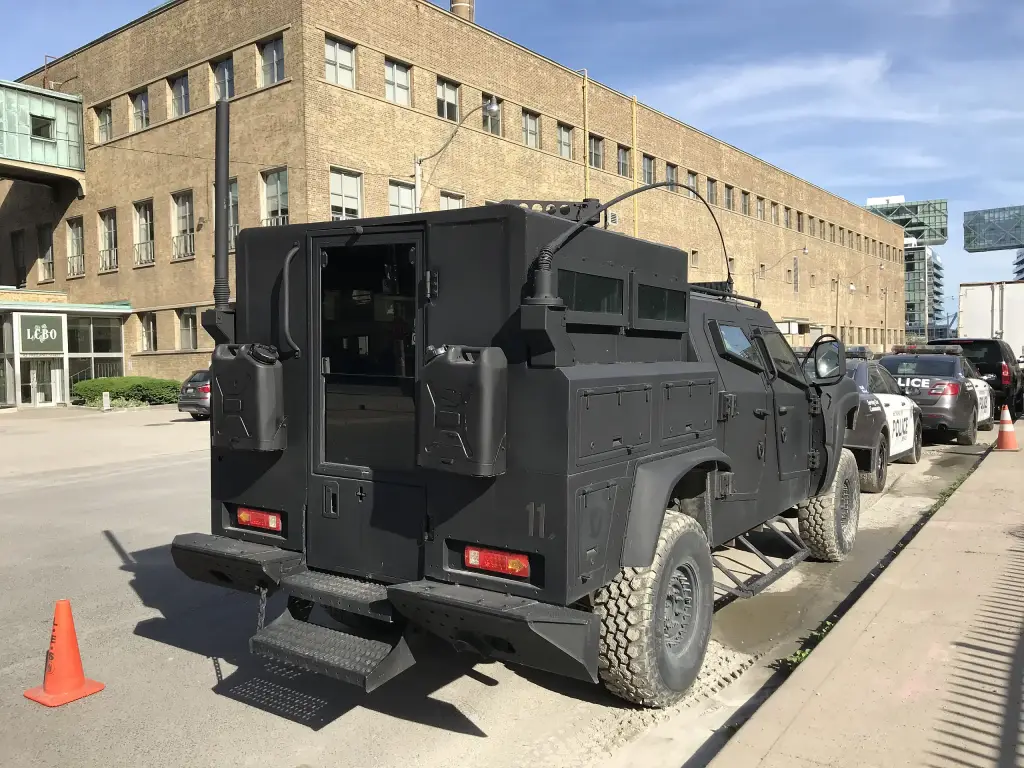
In the summer of 2008 the US Department of Defense began looking for a lighter, all-terrain MRAP variant that could cope with Afghanistan’s poor roads. More than 20 companies answered a request for information dated 21 August 2008; a pre-solicitation followed in mid-November and the formal request for proposals in early December. The original requirement was for between 372 and 10,000 vehicles, with 2,080 given as the most probable quantity.
In March 2009 two examples each of six vehicle types from five manufacturers were delivered to the US Army for two months of evaluation. Besides Oshkosh’s proposal, BAE Systems offered a JLTV-derived design and an FMTV-based Caiman, Force Dynamics entered the Cheetah, GDLS-C proposed an RG-31 derivative and Navistar an MXT-based solution. The RG-31 was eliminated in May 2009 and the remaining bidders each delivered three production-ready test vehicles. On 30 June 2009 the single indefinite delivery/indefinite quantity contract went to Oshkosh. The Army’s programme officer said the M-ATV was chosen for its survivability and because Oshkosh had the best technical and manufacturing capabilities of the competitors; the Oshkosh bid was also the second cheapest. The initial delivery order was worth over US$1 billion and covered 2,244 vehicles, and the overall requirement had grown in early June from 2,080 to 5,244: 2,598 for the Army, 1,565 for the Marines, 643 for SOCOM, 280 for the Air Force, 65 for the Navy and 93 for testing.
Production
The first 46 M-ATVs were delivered in July 2009 and the 1,000th followed in November. Oshkosh reached its contractual obligation of 1,000 vehicles a month ahead of schedule in December 2009 by using its existing works in Oshkosh, Wisconsin, for half the output and its JLG telescopic handler plant in McConnellsburg, Pennsylvania, for the other half. The first vehicles reached Afghanistan in October 2009 and the whole order was to be delivered by March 2010. In total 8,722 M-ATVs were delivered to the Army, Marine Corps, Air Force and SOCOM.
Variants and reset
The base model is the M1240 with the Objective Gunner Protection Kit manned turret; it becomes the M1240A1 when the Underbody Improvement Kit is fitted. The second main variant, the M1277, carries the M153 CROWS remote-controlled weapon station. The SOCOM-specific M1245 and M1245A1, the latter with the underbody kit, were built in smaller numbers. As the MRAP fleet was reduced, the US government kept about 80 per cent of the M-ATVs, around 7,000 vehicles, of which 5,651 including 250 for SOCOM went to the Army. They were reset to the LRIP 22 build standard at Oshkosh and the Red River Army Depot. Oshkosh won an initial 500-vehicle reset contract in August 2014, followed by three options for 100 vehicles each, worth more than US$77 million in total. A May 2015 modification covered 360 more with options for up to 1,440, taking the company’s reset work to 1,160 vehicles and over US$115 million. In January 2017 the Marine Corps said it would refurbish about 80 M-ATVs over five months at roughly US$385,000 each; Marine vehicles carry the manual OGPK while Air Force vehicles have CROWS.
Design and features
- MRAP protection with mobility: the point of the programme was to combine the protection of a heavy MRAP with the ability to cross difficult terrain.
- Two turret solutions: the manned OGPK of the M1240 and the remote CROWS of the M1277.
- Underbody Improvement Kit: the UIK turns M1240 and M1245 vehicles into the A1 standard.
- Rapid industrial ramp-up: 1,000 vehicles a month from two plants by December 2009.
- Reset programme: retained vehicles were rebuilt to a common LRIP 22 standard with improved extinguishing and stowage.
Oshkosh M-ATV versions
- M1240: base model with the OGPK manned turret.
- M1240A1: M1240 with the Underbody Improvement Kit.
- M1277: fitted with the M153 CROWS remote weapon station.
- M1245: SOCOM-specific variant, built in smaller numbers.
- M1245A1: SOCOM variant with the underbody kit.
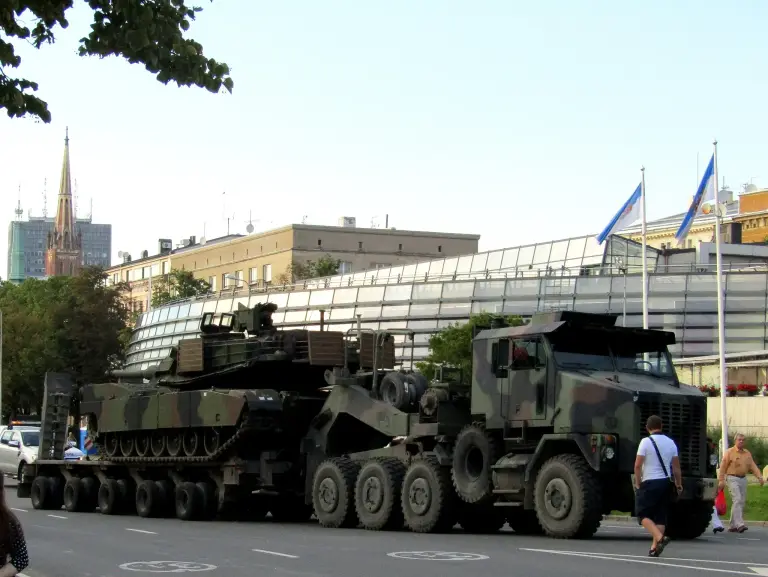
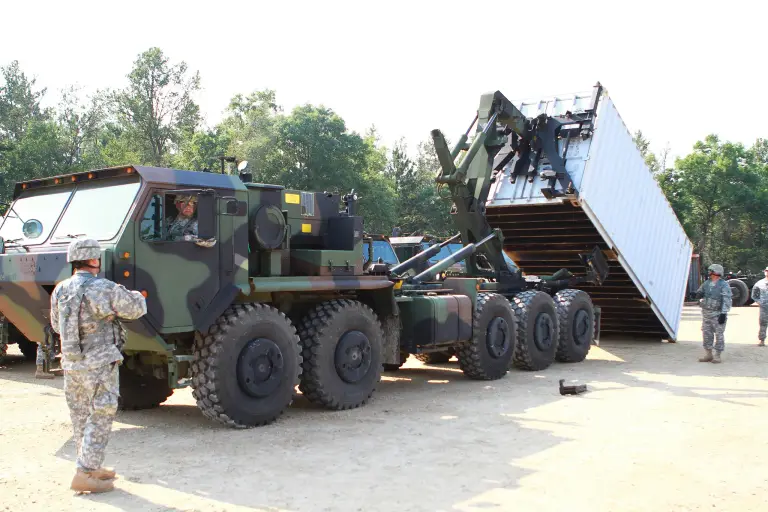
The M-ATV is the lightest vehicle in the Oshkosh collection, alongside the HEMTT and the M1070 tank transporter.
Video: Oshkosh M-ATV – CAR and DRIVER
Video on YouTube.
Sources
- Oshkosh M-ATV, English Wikipedia: programme, contracts, production, variants, reset