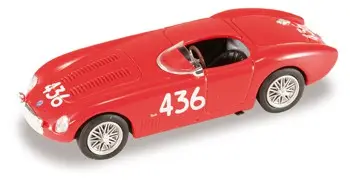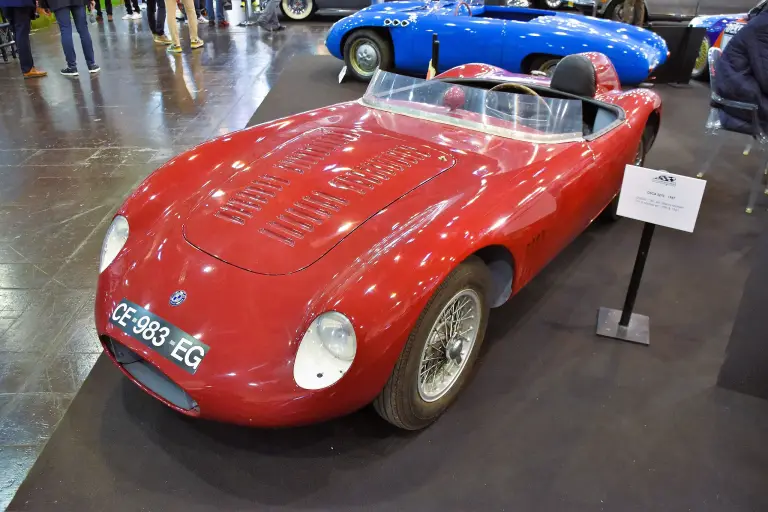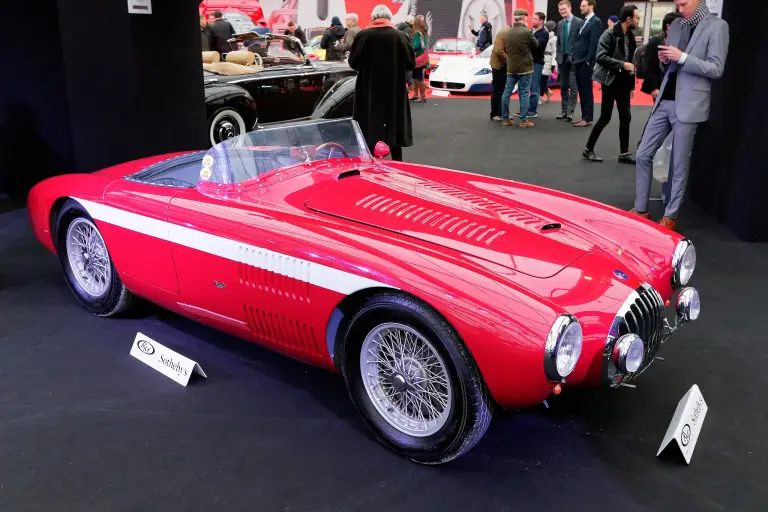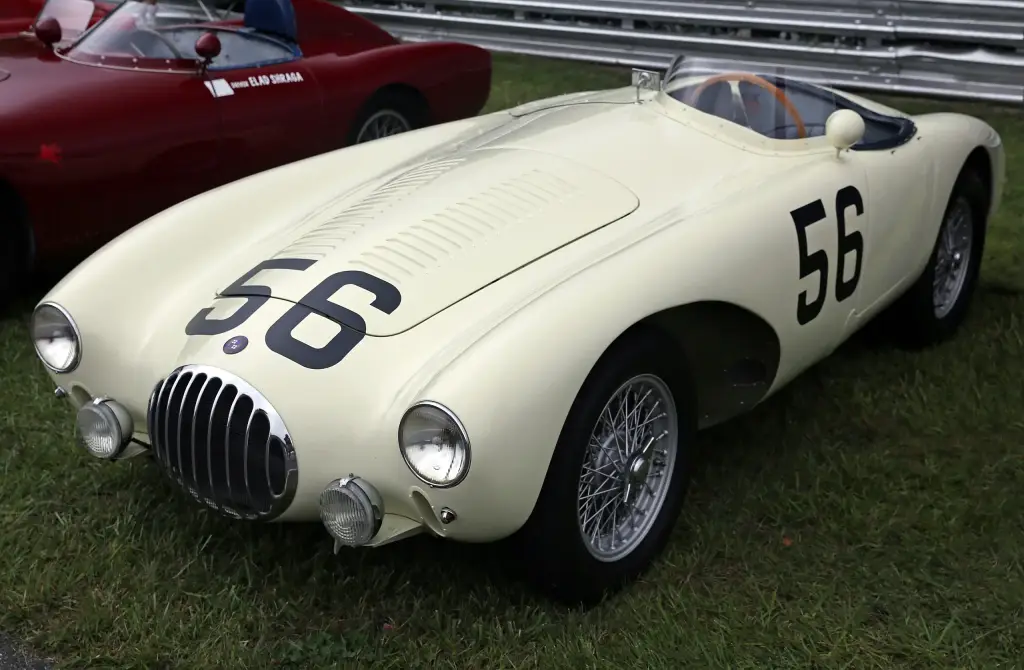
The OSCA MT4, also written O.S.C.A. MT4, is an Italian sports car prototype designed and built by Officine Specializzate Costruzioni Automobili between 1948 and 1956, and raced well into the 1960s. Its lightweight chassis and highly tuned twin-cam engines made it a formidable competitor in the small-displacement classes.
OSCA MT4 at a glance
| Maker | OSCA, San Lazzaro di Savena |
|---|---|
| Production | 1948–1956, raced until 1966 |
| Chassis built | 77 between 1949 and 1956 (some sources say 72, some 78) |
| Based on | Maserati Tipo 4CL of 1939 |
| Engine | four-cylinder, 1,092 to 1,491 cc, twin cam from 1950 |
| Power | 72 hp in 1948, up to 125 hp in the 1500 TN |
| Gearbox | four-speed quick-shift, OSCA design |
| Bodywork | barchetta or roadster; berlinetta by Frua and Vignale |
| Competition record | 92 wins, 109 class wins, 9 pole positions, 194 podiums, 1948–1966 |
| Best result | outright win, 12 Hours of Sebring 1954 |
History of the OSCA MT4
OSCA was founded in 1947 by Ettore, Ernesto and Bindo Maserati, who had sold the family firm to Adolfo Orsi in 1937 and had to stay on for a ten-year term. When that obligation ended they set up their own workshop at San Lazzaro di Savena, near Bologna, and built their first car, the MT4: the name stood for Maserati Tipo 4 cilindri. The chassis and engine were based on the Maserati Tipo 4CL single-seater of 1939, and development used plans and parts from that car. Between 1949 and 1956 OSCA built 77 chassis, although some sources give 72 and others 78.
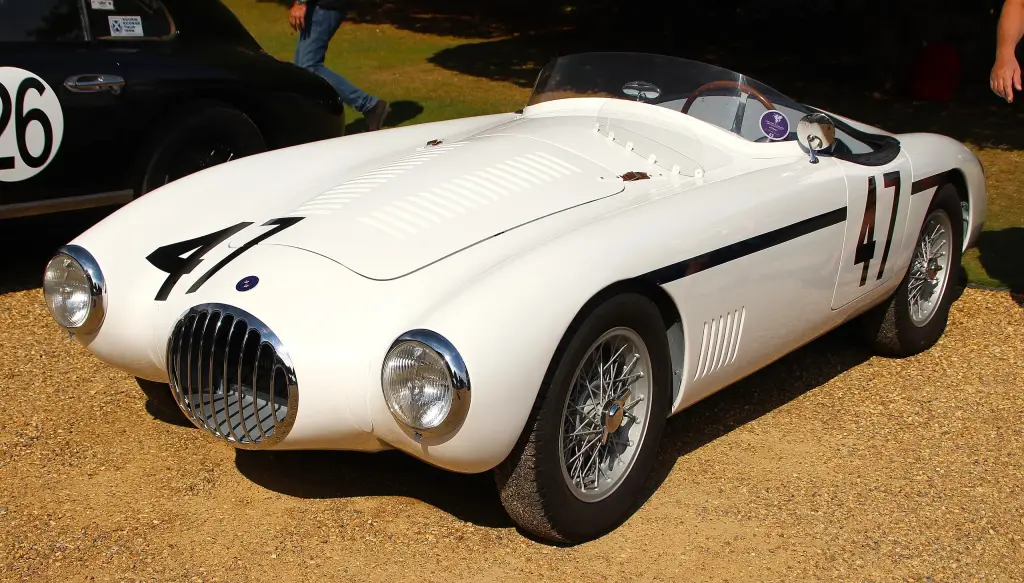
The earliest cars used a Fiat 1100 block and about 55 hp, but OSCA soon produced its own 1,092 cc engine with an aluminium block and alloy head, rated at 72 PS at 6,000 rpm; only about nine cars are thought to have kept the 1.1-litre Fiat-based unit. The original single-cam design was replaced in 1950 by a twin-cam engine, marked by the name MT4-2AD, in which 2AD stood for due alberi di distribuzione. Bore and stroke changed repeatedly so that the car could compete in different classes: 1,092 cc, then 1,342 cc with 80–90 hp, then 1,453 cc with 110 hp for the 1.5-litre class in 1953, and finally a square 78 mm by 78 mm 1,491 cc unit with twin spark plugs and 120 hp, aimed directly at the Porsche 550.
OSCA supplied chassis only, and bodies came from Italian coachbuilders such as Morelli, Moho, Vignale and Pietro Frua, or from the buyers themselves, so few surviving cars look alike. A Vignale-bodied MT4 Berlinetta won the 1,100 cc class at the 24 Hours of Le Mans in 1953. In a period road test Road & Track took an MT4-2AD 1500 to 120 mph with the lowest gearing fitted and recorded 0–60 mph in 7.0 seconds; the car cost $10,000, about the price of three V8 Ford Thunderbirds. By then roughly half of OSCA’s production went to the United States.
The MT4 is best remembered for the 1954 12 Hours of Sebring, which it won outright against far more powerful cars in the hands of Stirling Moss and Bill Lloyd for the Briggs Cunningham team. A 2-litre desmodromic version of the engine had been developed for the world sports car championship and the Mille Miglia. The final development was the 1500 TN of 125 hp; its first use was in the Simpson Special, a record-breaking streamliner on an MT4 chassis that took land speed records at Bonneville in 1955. The engine proved too powerful for the MT4 chassis, and only three cars were built in 1955, followed by three S 1500 TN cars for 1957 with another five horsepower.
Design and features
- Maserati pedigree: the chassis and engine descended from the 1939 Maserati 4CL.
- Twin-cam engines: from 1950 the MT4-2AD used two camshafts and up to 100 hp from 1,350 cc.
- Class-hopping capacity: bores and strokes were changed to suit 1.1, 1.35 and 1.5-litre racing classes.
- Coachbuilt bodies: Morelli, Moho, Vignale and Frua supplied bodies to individual customers.
- Long competition life: the design was still winning races in the mid-1960s.
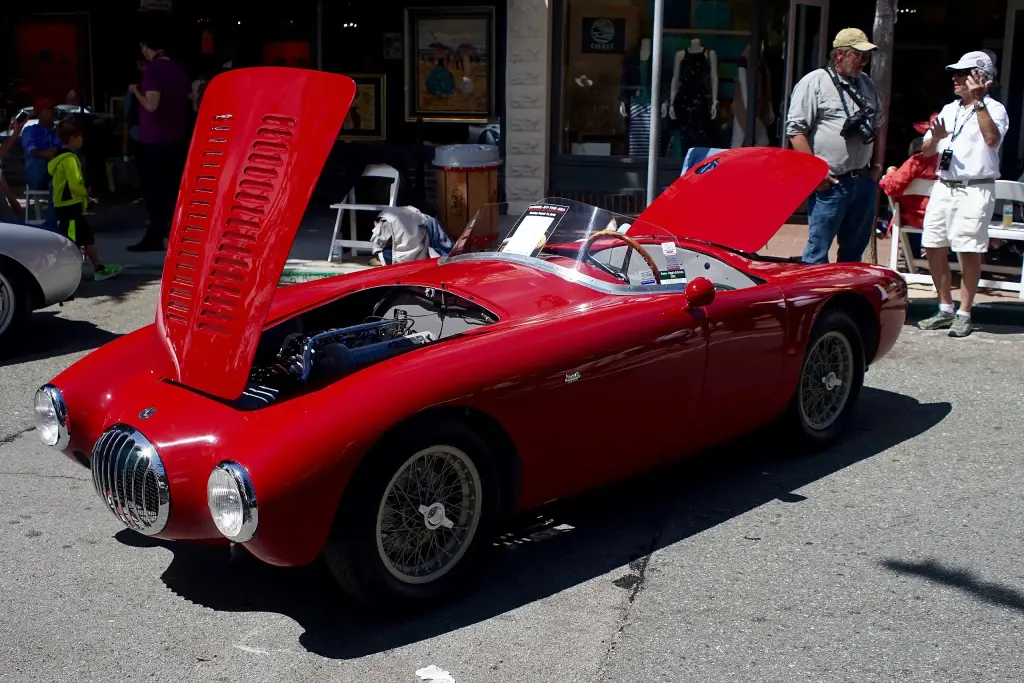
OSCA MT4 versions
- MT4 (1948): the original barchetta with a 1,092 cc engine of 72 PS.
- MT4-2AD (1950): twin-cam version, offered as a 1100 or a 1350.
- MT4 1500 (1953–1954): 1,453 cc and then a square 1,491 cc engine of 120 hp.
- 1500 TN (1955): 125 hp Tipo Nuovo engine, too powerful for the MT4 chassis; three built.
- S 1500 TN (1957): three more cars with five horsepower extra.
- Simpson Special: a streamliner on an MT4 chassis that set records at Bonneville in 1955.
The two-litre derivative of the MT4 became the OSCA 2000, and the later competition cars of the S series are described under the OSCA S. More cars are in the OSCA collection.
Video: Viaje al pasado de la competición: OSCA MT4
Video on YouTube.
Sources
- OSCA MT4, English Wikipedia: design, engines, chassis numbers, road test, race record
- OSCA, Italian Wikipedia: company history, Sebring win, engine sizes