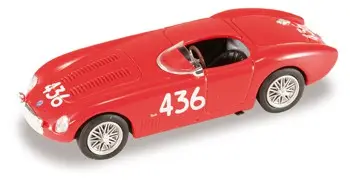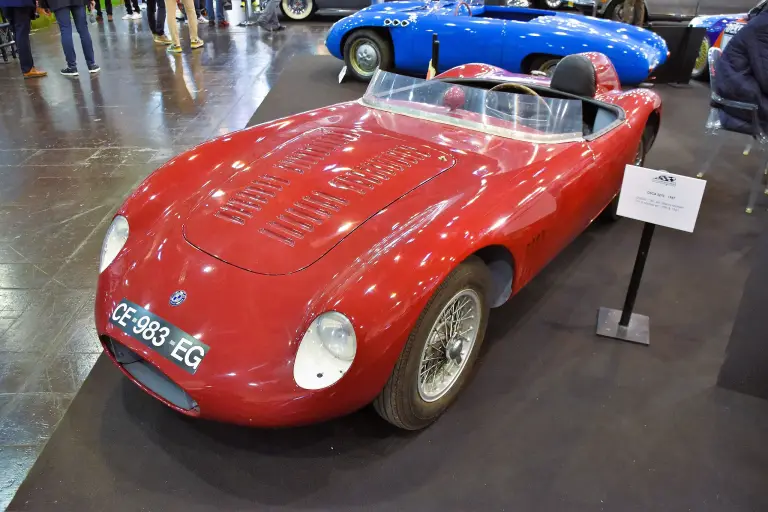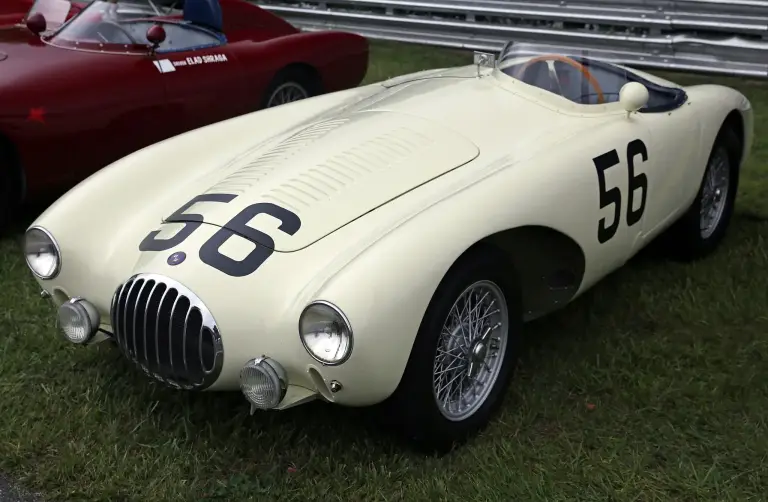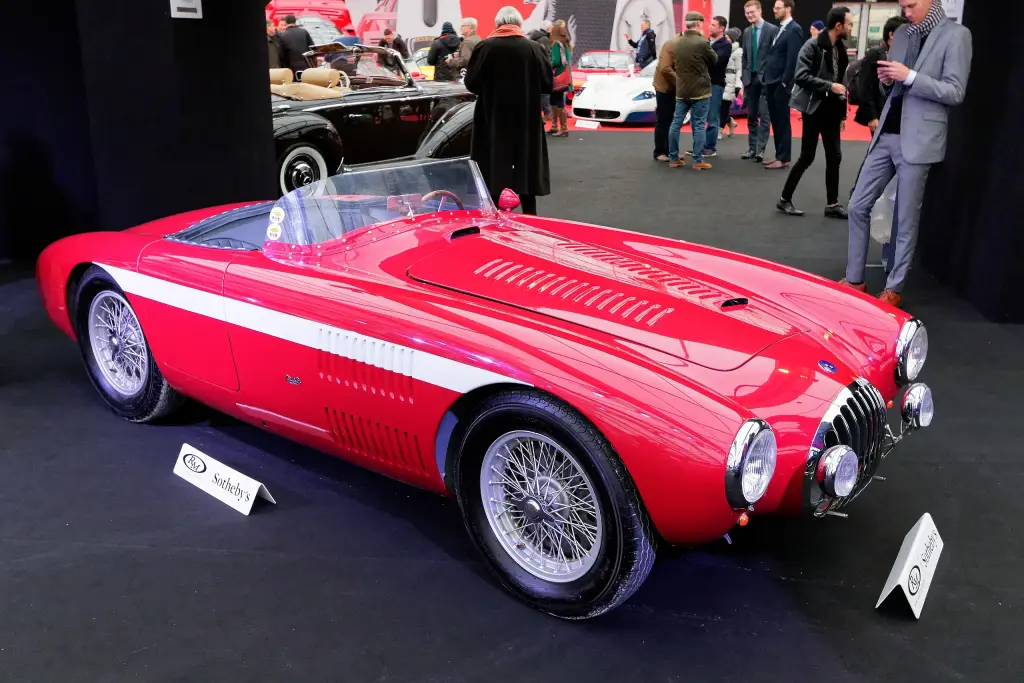
The OSCA 2000 was the two-litre member of the MT4 family, the small Italian sports-racing car built by the Maserati brothers at San Lazzaro di Savena. Its desmodromic twin-cam engine gave 165 CV and carried the marque to its most famous result, an outright win at Sebring.
OSCA 2000 at a glance
| Maker | OSCA, San Lazzaro di Savena |
|---|---|
| Type | two-seat sports-racing car |
| Engine | 2-litre four-cylinder, twin cam, desmodromic valve gear |
| Power | 165 CV |
| Derived from | OSCA MT4 |
| Bodywork | Morelli on the 1959/60 Desmodromico |
| Best result | outright win, 12 Hours of Sebring 1954 |
| Marque active | 1947–1967 |
The two-litre OSCA has no article of its own on Wikipedia; this page uses the section on the two-litre MT4 in the Italian article on OSCA, together with the English article on the MT4.
History of the OSCA 2000
OSCA was set up in 1947 by Ettore, Ernesto and Bindo Maserati after the ten-year consultancy they owed the new owners of Maserati had run out. The firm built small competition cars at San Lazzaro di Savena, and its first model, the MT4, used a twin-cam four-cylinder engine that grew from 1,092 cc to about 1.5 litres as the racing classes demanded.
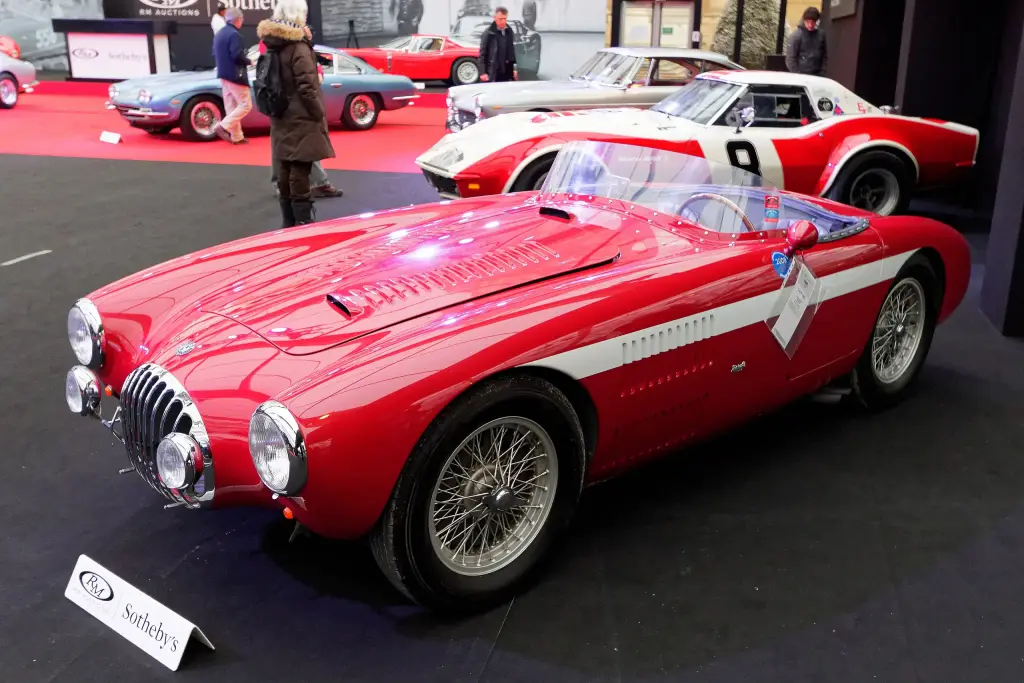
The ambition to race in the world sports car championship and the Mille Miglia led OSCA to fit the MT4 with a two-litre engine. It kept the twin-cam layout but used desmodromic valve gear, in which the valves are closed by a camshaft rather than by springs, and produced 165 CV. A car of this kind, driven by Stirling Moss, added the 12 Hours of Sebring to the marque’s list of victories in 1954, beating cars of much larger capacity. The two-litre OSCA is remembered above all for that race.
The two-litre cars were sold alongside the smaller-engined MT4 and were bodied by outside coachbuilders, as all OSCA chassis were. The Italian account of the marque lists an OSCA 2000 Desmodromico with Morelli bodywork of 1959–60, one of the last developments of the theme before the company’s ownership passed to the Agusta counts at the end of 1964 and the works closed in 1967. Cars carrying the 2000 S name, such as the 1954 example shown here, appear at auction today as the two-litre sports-racing OSCA of the period.
Design and features
- Desmodromic valve gear: camshafts closed the valves as well as opening them, allowing high revs without valve float.
- Two litres from a small chassis: the MT4 chassis carried an engine of twice the capacity of the original 1.1-litre unit.
- 165 CV: enough, in 1954, to beat far bigger cars over twelve hours at Sebring.
- Coachbuilt bodies: Morelli supplied the body of the 1959/60 Desmodromico.
OSCA 2000 versions
- 2000 S (1954): the two-litre sports-racing car of the mid-1950s.
- 2000 Desmodromico (1959/60): the last two-litre development, with Morelli bodywork.
The 2000 grew out of the OSCA MT4, and the marque’s later competition cars are covered under the OSCA S; the OSCA 2500 page describes the 1999 attempt to revive the name. More cars are in the OSCA collection.
Sources
- OSCA, Italian Wikipedia: two-litre engine, Sebring 1954, Morelli car, company history
- OSCA MT4, English Wikipedia: MT4 chassis and engine development