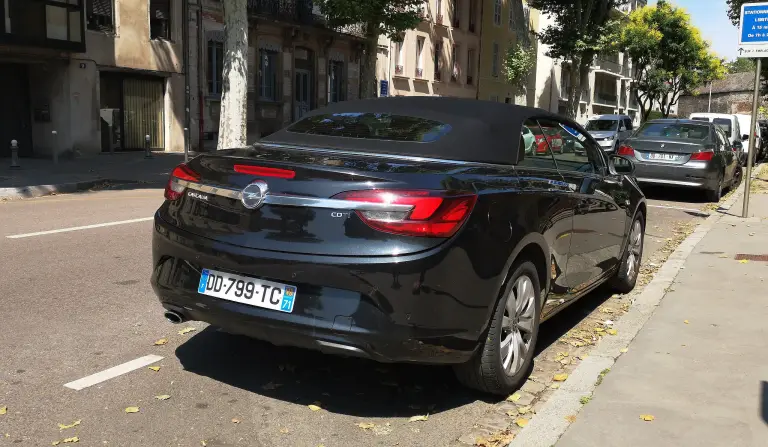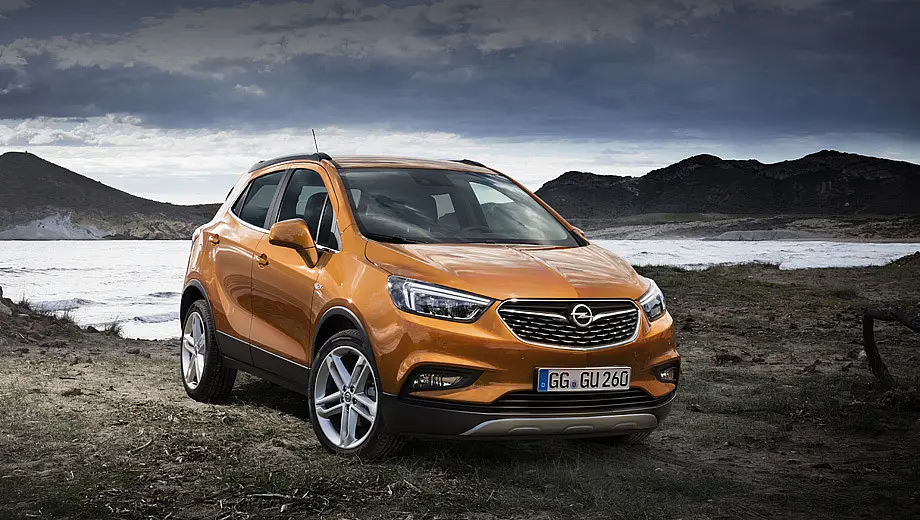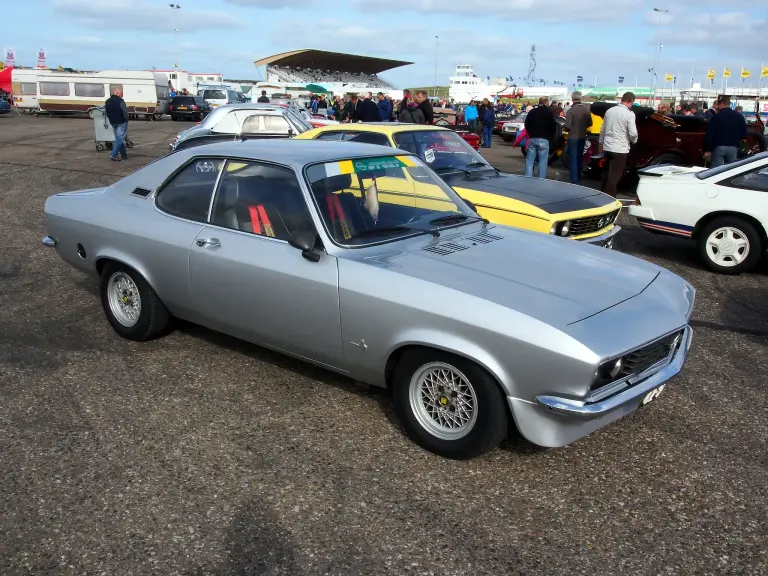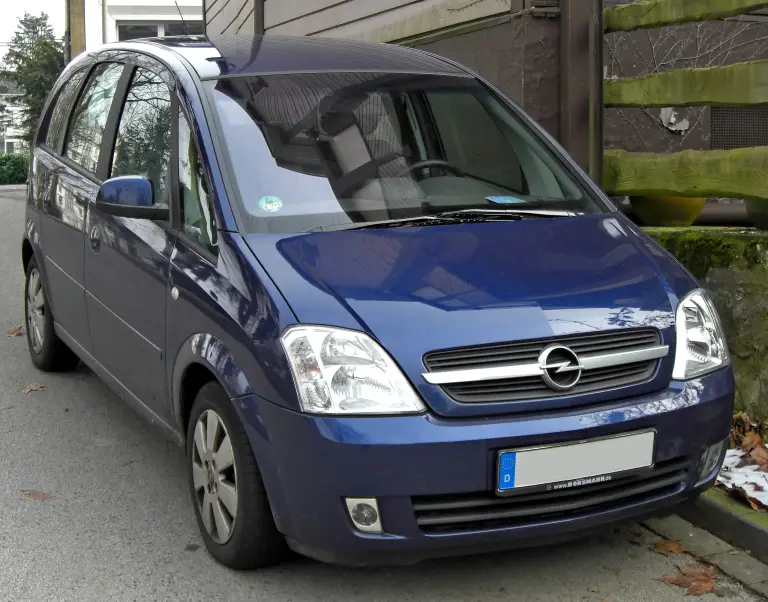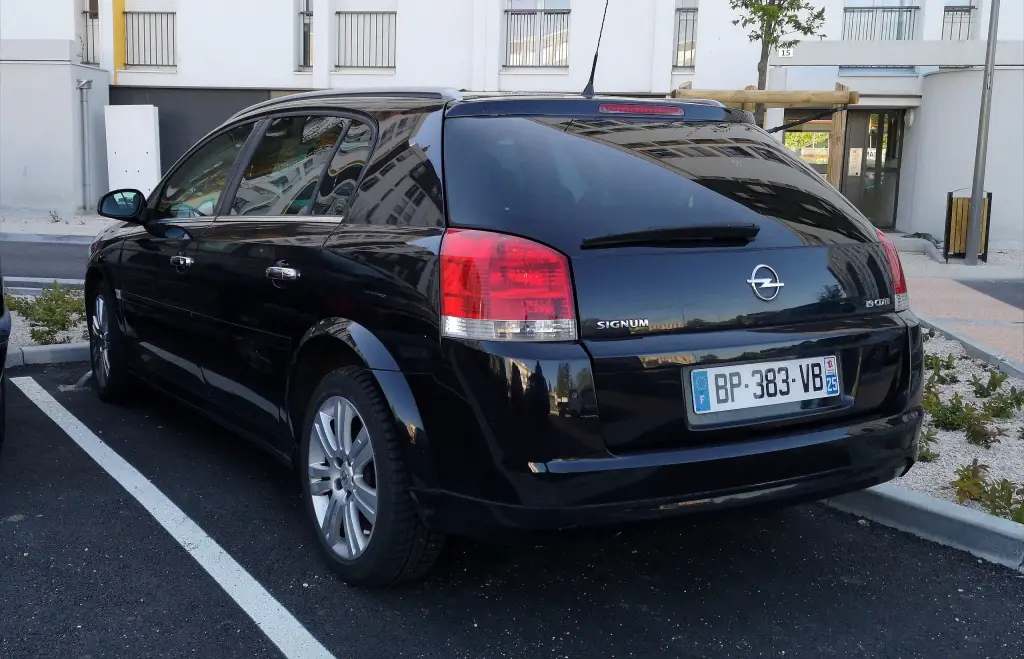
The Opel Signum was a large five-seat hatchback built by Opel from 2003 to 2008. Derived from the Vectra Estate, it had a wheelbase 13 cm longer than the Vectra hatchback and two adjustable rear seats instead of a bench, and it was replaced by the Insignia.
Opel Signum at a glance
| Maker | Opel, a General Motors brand |
|---|---|
| Production | February 2003 – July 2008 |
| Class | large hatchback, between family and executive cars |
| Platform | GM Epsilon, long-wheelbase Vectra Estate |
| Wheelbase vs Vectra | 13 cm longer |
| Rear seats | two individual seats plus a narrow third |
| Interior system | Flexspace |
| Facelift | September 2005 |
| Built at | Rüsselsheim |
| British name | Vauxhall Signum |
| Replaced by | Opel Insignia |
Based on one source, the English Wikipedia article on the Opel Signum.
History of the Opel Signum
An idea from 2001
The Opel Signum2 Concept was a luxury hatchback shown at the Frankfurt and Bologna motor shows in 2001, and its design elements were carried into the production car, which went into production in February 2003. The Signum name had already been used on a concept at the Geneva show in 1997, and the production car’s name was announced in August 2001, with the first official pictures following in August 2002.
Room in the back
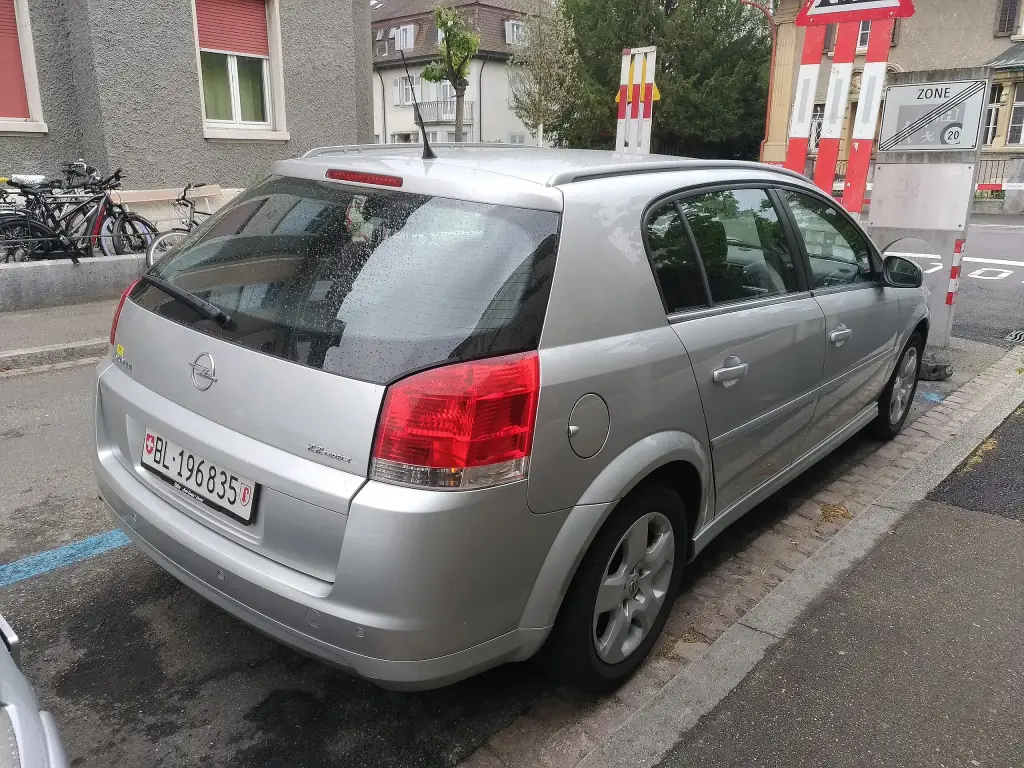
The Signum used the long-wheelbase version of the GM Epsilon platform also used by the Vectra Caravan, so its wheelbase was 13 cm longer than that of the Vectra hatchback and saloon, which gave very generous rear legroom. Instead of a three-passenger bench, the rear had two separate seats that could slide back and forth like the front ones and recline, with a narrow central section carrying a folding armrest that could also serve as a third seat, complete with a third headrest and belt. Each seat folded individually, a system Opel called Flexspace. The Signum shared most of its body panels, including the whole front, and its dashboard and front seats with the Vectra, but the tailgate and rear wings were unique.
Facelift and the end
The Signum was facelifted with the Vectra range in September 2005, gaining a new front end and smaller changes. All Signums were built alongside Vectras at Opel’s Rüsselsheim plant. From the end of 2005 the Italian referee Pierluigi Collina appeared in advertisements for the Signum and the Vectra across Europe. Right-hand-drive production ended after March 2008, and production of the Signum and Vectra C stopped in July 2008 for mainland Europe; the Insignia, launched in October of that year, took over the market territory the Signum had occupied.
Design and features
- Long wheelbase: 13 cm more than the Vectra hatchback, for limousine-like rear room.
- Two rear seats: individual, sliding and reclining, with a narrow third place between them.
- Flexspace: each rear seat folds individually to enlarge the boot.
- Vectra family: shared front bodywork, dashboard and front seats with the Vectra.
Opel Signum versions
- Signum2 Concept (2001): the show car that led to the production model.
- Signum (2003): the original production hatchback.
- Signum facelift (2005): new front end and detail changes.
- Vauxhall Signum: the British version.
The Signum was derived from the Vectra and was replaced by the Insignia. More cars are in the Opel collection.
Video: Opel Signum 2.2 DTI vs. Audi A6 Avant 1.9 TDI Opels Angriff
Video by motorvisiontest on YouTube.
Sources
- Opel Signum, English Wikipedia: concept, platform, interior, facelift, replacement