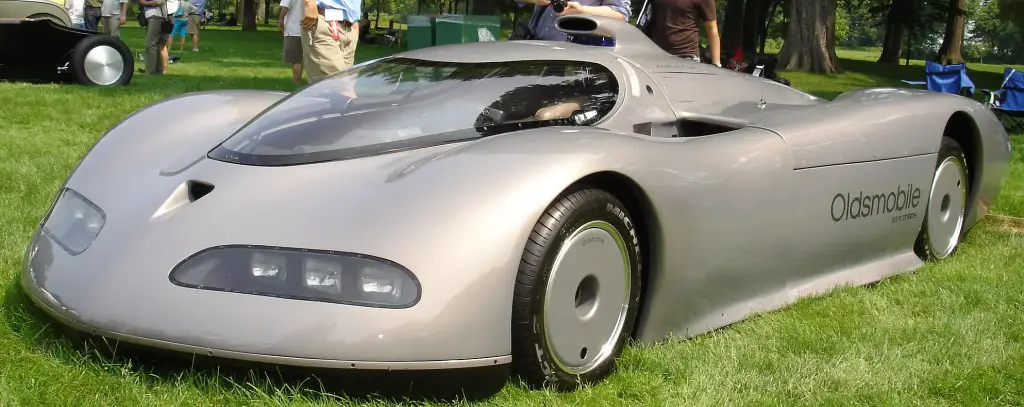
The Oldsmobile Aerotech was a series of three experimental high-speed vehicles built between 1987 and 1992. The first two were created to demonstrate the potential of Oldsmobile’s new Quad 4 engine, and one of them, driven by A. J. Foyt, set a world closed-course speed record on 27 August 1987.
Oldsmobile Aerotech at a glance
| Maker | Oldsmobile Division, General Motors |
|---|---|
| Built | 1987 (first two cars) |
| Purpose | to demonstrate the Quad 4 engine |
| Chassis | modified March 85C CART |
| Body | carbon fibre |
| Test driver | A. J. Foyt |
| Short-tail engine | Batten RE single-turbo, 750–900 hp |
| Long-tail engine | Feuling BE twin-turbo, about 1,000 hp |
| Long-tail record | 267.399 mph (430.337 km/h) over the flying mile |
| Short-tail record | 257.123 mph (413.799 km/h) closed course |
| Record date | 27 August 1987 |
| Track | Fort Stockton, Texas |
Based on one source: the English Wikipedia article on the Oldsmobile Aerotech.
History of the Oldsmobile Aerotech
Why it was built
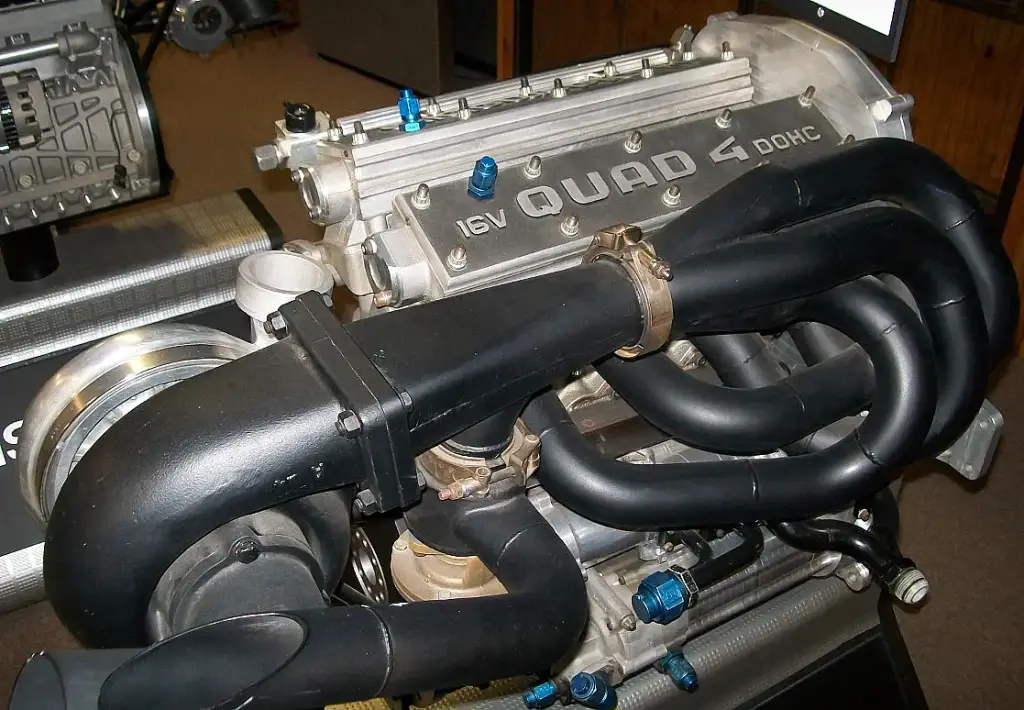
The Quad 4 was a four-cylinder engine with four valves per cylinder and twin overhead camshafts, the first volume production engine designed entirely in the United States with those features; in its initial form it made 150 hp. The engineers behind it, led by Ted Louckes, persuaded General Motors to build a research vehicle that would show its real potential, and in 1985 a team was formed to develop the Aerotech. Ed Welburn, then assistant chief designer at the Oldsmobile studio, led the design, taking inspiration from Le Mans cars such as the Porsche 917. Wind tunnel work at Warren, Michigan, rounded off the nose and moved the air intakes from the sides to the tops of the fenders.
Two cars, two tails
The first car, completed at the end of 1986, had a short tail and a pedestal rear spoiler, since a long tail would have hurt handling on a closed course. Foyt tested it at the General Motors proving grounds in Mesa, Arizona, and reached 218 mph. A second car with Welburn’s long-tail bodywork had begun in late 1985 and used a twin-turbocharged 2.0 L Feuling BE engine of about 1,000 hp instead of the single-turbo Batten RE of 750–900 hp. Both cars sat on modified March 85C CART chassis with carbon fibre bodywork and adjustable underbody panels for downforce.
The records
Because GM refused permission to use its own track, the team went to a 7.712-mile test track near Fort Stockton, Texas. On 26 August 1987 the short-tail car averaged 250.919 mph, just short of the record held by a Mercedes development prototype. Foyt then took the long-tail car to 275 mph in the flying mile, and the next day set a record average of 267.399 mph over runs in both directions. Further runs with the modified short-tail car produced a closed-course record of 257.123 mph. Oldsmobile used the Aerotech name again on two unrelated concept cars in 1989.
Design and features
- Quad 4 showcase: the project existed to prove a four-cylinder production engine.
- Race-car chassis: a modified March 85C CART tub with carbon fibre bodywork.
- Two body shapes: a short tail for closed circuits and a long tail for maximum speed.
- Adjustable underbody: panels that tuned airflow and downforce for each track.
Oldsmobile Aerotech versions
- Short-tail (1987): Batten RE single-turbo engine, 750–900 hp.
- Long-tail (1987): Feuling BE twin-turbo engine of about 1,000 hp.
- 1989 concept cars: two unrelated show cars that used the Aerotech name.
- Racing engines: later competition versions of the four-cylinder engine.
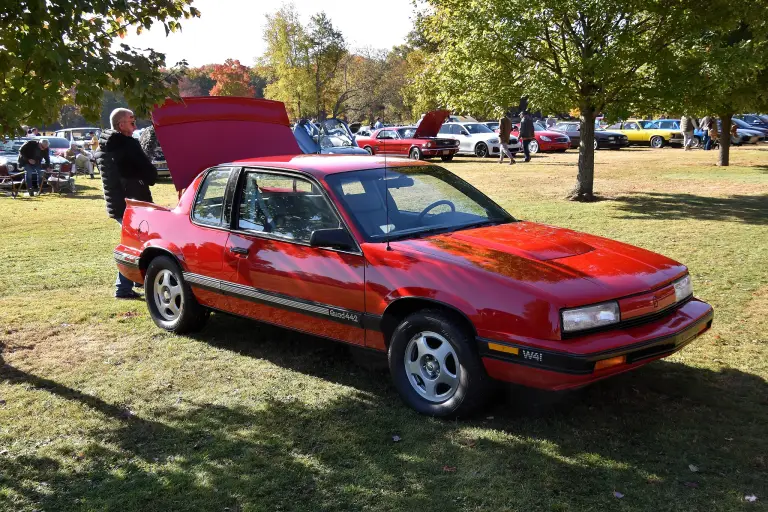
The Aerotech was built around the engine later sold in the Achieva and Cutlass Calais. More models are in the Oldsmobile collection.
Video: Oldsmobile Aerotech test with A. J. Foyt
Video by Joseph Dayton on YouTube.
Sources
- Oldsmobile Aerotech, English Wikipedia: design, chassis, engines, record runs