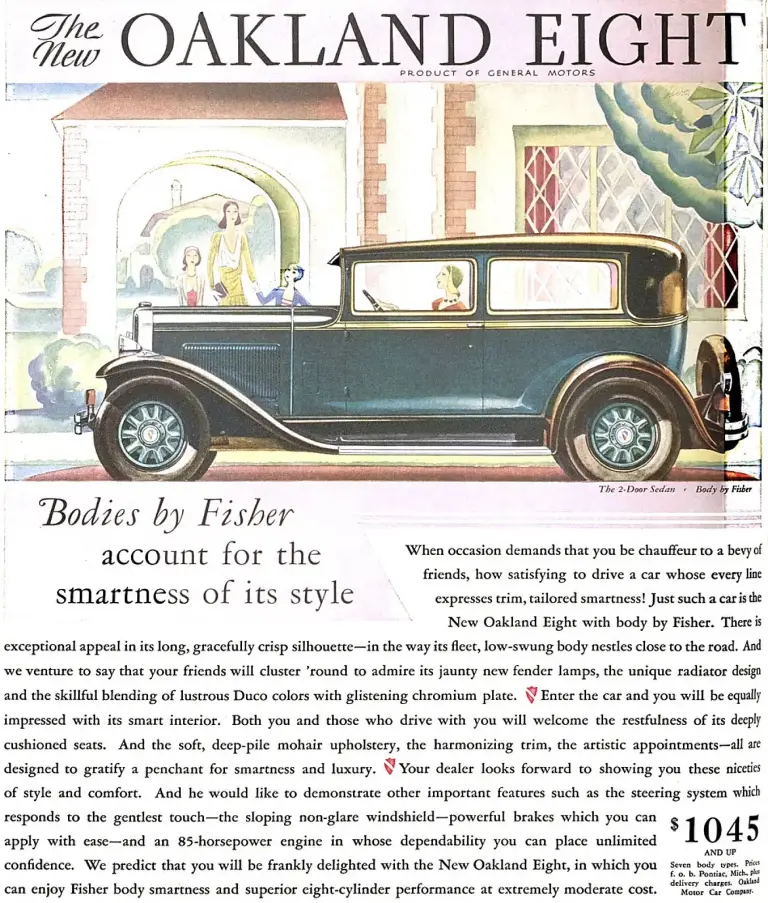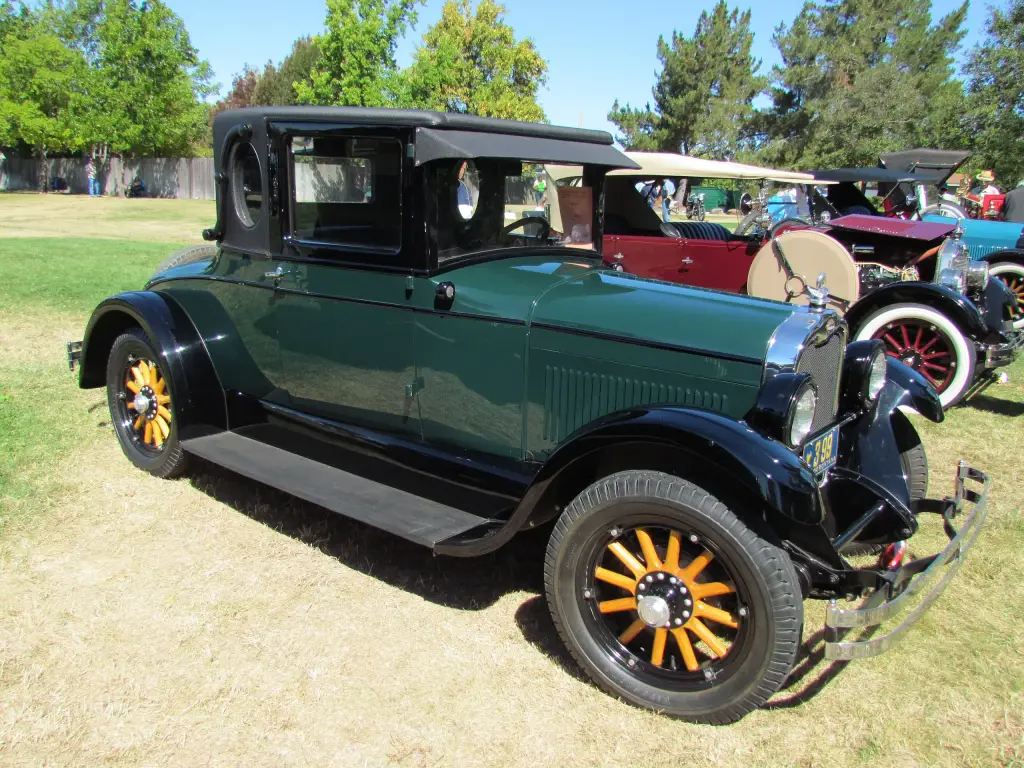
The Oakland Six was the six-cylinder car of the Oakland Motor Company, which had become a division of General Motors in 1909. Introduced in 1913 as the Greyhound, it was built until 1929 under a model name that changed almost every season, with many body styles and two engine displacements.
Oakland Six at a glance
| Maker | Oakland Motor Company, Pontiac, Michigan (GM division from 1909) |
|---|---|
| Introduced | 1913, as the Greyhound |
| Engine at launch | six-cylinder, 334 cu in (5.5 L), 60 hp (45 kW), supplied by Northway |
| Wheelbase at launch | 130 in (3,302 mm) |
| Body styles in 1913 | two, a runabout and a touring sedan |
| Price in 1913 | US$2,400 for the runabout, US$2,550 for the touring sedan |
| 1914 models | 6-60 and 6-48, on the same wheelbase but with different power ratings |
| Production in 1915 | 12,000 cars |
| 1923 model | Model 6-44, 115 in wheelbase, from US$975 |
| 1924–1925 model | Model 6-54, 113 in wheelbase, up to ten body styles |
| 1926–1928 | Greater Six, then Model 212 All-American on a 117 in wheelbase |
| Last year | 1929, the All-American Six in eight body styles |
History of the Oakland Six
1913–1914: the Greyhound
The first six-cylinder Oakland was developed after General Motors bought the Oakland Motor Company, and its engine came from the Northway Motor and Manufacturing Division of GM. It was positioned above the four-cylinder Oakland Four. The Greyhound was offered in two body styles, a runabout at US$2,400 and a touring sedan at US$2,550, with a 334 cu in (5.5 L) engine producing 60 hp (45 kW) on a 130 in wheelbase. In 1913 Oakland radiators also took on the rounded V shape shared with the Oakland Four. For 1914 the range split into the Model 6-60 and the cheaper Model 6-48, both on the previous wheelbase but with two different power ratings: the 6-60 came in four body styles at one listed price of US$2,450, while the 6-48 had three, including a speedster at US$1,785.
1915–1919: Models 49, 32 and 34
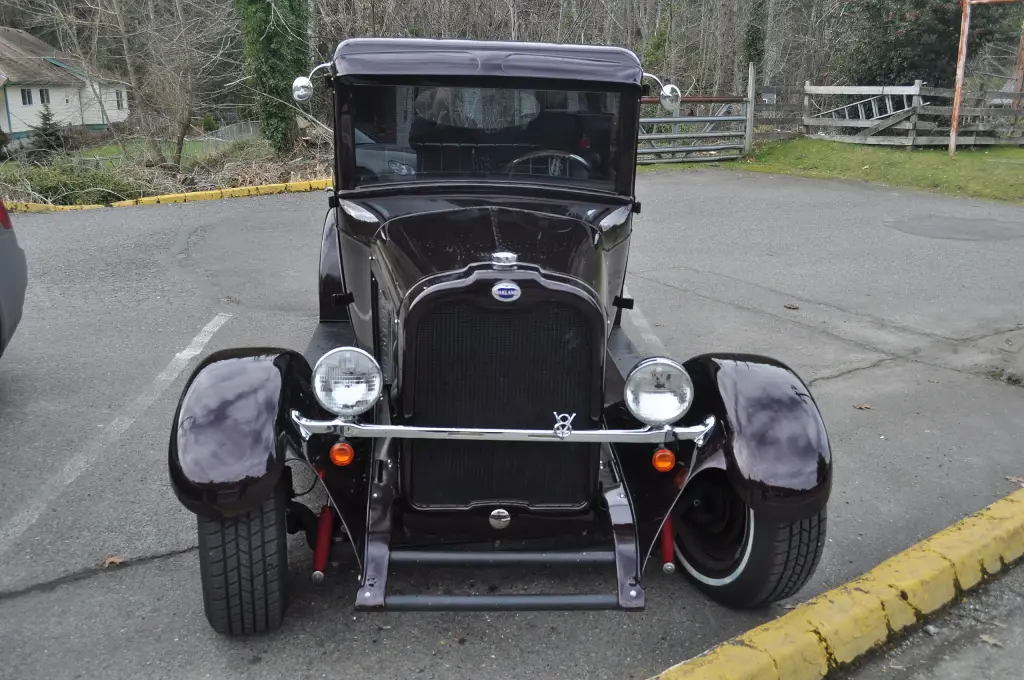
Model year 1915 brought further refinement with only two body styles and two wheelbases, 110 in and 123.5 in. The 1915 car was labelled the Model 49 and the 1916 the Model 32, and total production for 1915 was recorded at 12,000 cars. In 1917, the year the United States entered the First World War, the Six Model 34 became the entry-level product when the Model 50 V8 was introduced. Prices had dropped sharply: four body styles were offered, with a roadster, touring sedan and closed coupe on a 112 in wheelbase at US$945 and the sedan slightly more at US$1,020. The Model 50 V8 did not return for 1918, and the Model 34-B continued through 1919 as Oakland’s only product, in six body styles priced from US$1,050 to US$1,550.
1920–1925: 34-C, 6-44 and 6-54
The 1920 model year kept the 112 in wheelbase, while 1921 and 1922 used 115 in and all models were identified as the 34-C, with only minor changes to technology, appearance and bodies. Prices ran from US$1,395 to US$2,065. In 1923 prices fell to US$975 for a roadster or touring sedan and US$1,545 for a closed sedan, and the naming changed to Model 6-44 on a 115 in wheelbase; roadsters and touring sedans could fold their windscreen forward onto the cowl for open-air driving. The Model 6-54 of 1924 and 1925 used a 113 in wheelbase and offered ten body styles from the new GM division Fisher Body, from a five-passenger touring sedan at US$1,095 to a Landau Sedan at US$1,645.
1926–1929: Greater Six and All-American
Appearance, chassis length and body styles changed again for 1926 and 1927, when the car was called the Greater Six on a 113 in wheelbase. For 1928 it became the Model 212 All-American on a 117 in wheelbase, and 1929 was the last year of the All-American Six, offered in eight body styles. Oakland itself was renamed Pontiac in 1931.
Design and features
- A Northway six: the engine of the 1913 car came from GM’s Northway Motor and Manufacturing Division and produced 60 hp from 334 cu in.
- New names, same idea: the model designation changed almost every season, from Greyhound to 6-60, 49, 32, 34, 6-44, 6-54, Greater Six and All-American.
- Shared GM engineering: when Oakland became a GM division, Oldsmobile and Buick shared the bodywork and chassis of their six-cylinder models with Oakland, and from 1917 so did Chevrolet.
- Many bodies: the choice grew from two body styles in 1913 to ten in 1924 and 1925, supplied by Fisher Body.
- Folding windscreen: from 1923 roadsters and touring sedans could fold the windscreen forward on top of the cowl.
Oakland Six versions
- Greyhound (1913): the first six, a runabout or touring sedan with a 130 in wheelbase.
- 6-60 and 6-48 (1914): two power ratings on one wheelbase, the 6-48 with a speedster body.
- Model 34 and 34-B (1917–1919): the entry-level Oakland after the V8 arrived, from US$945.
- Model 6-44 (1923): 115 in wheelbase, folding windscreen, from US$975.
- Model 6-54 (1924–1925): ten Fisher Body styles on a 113 in wheelbase.
- Model 212 All-American (1928–1929): 117 in wheelbase, eight body styles in its last year.
The V8 Oaklands that replaced it at the top of the range are described in Oakland Eight; the story of the company, from its founding in 1907 to its renaming as Pontiac, is in the Oakland collection.
Sources
- Oakland Six, English Wikipedia: models, prices, production
- Oakland Motor Car Company, English Wikipedia: company history, GM links