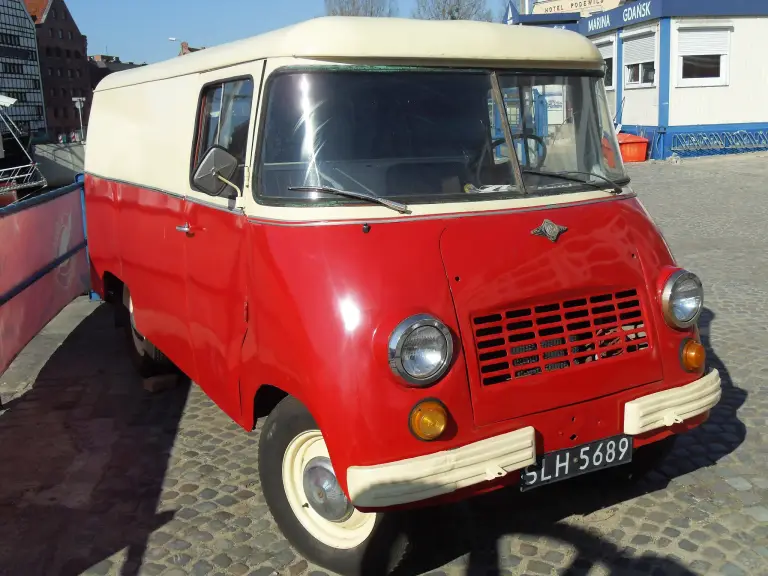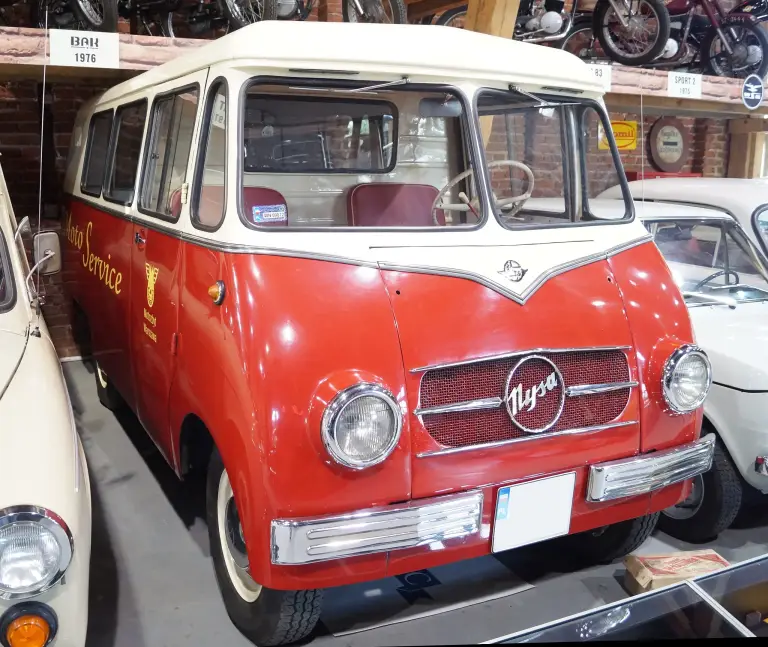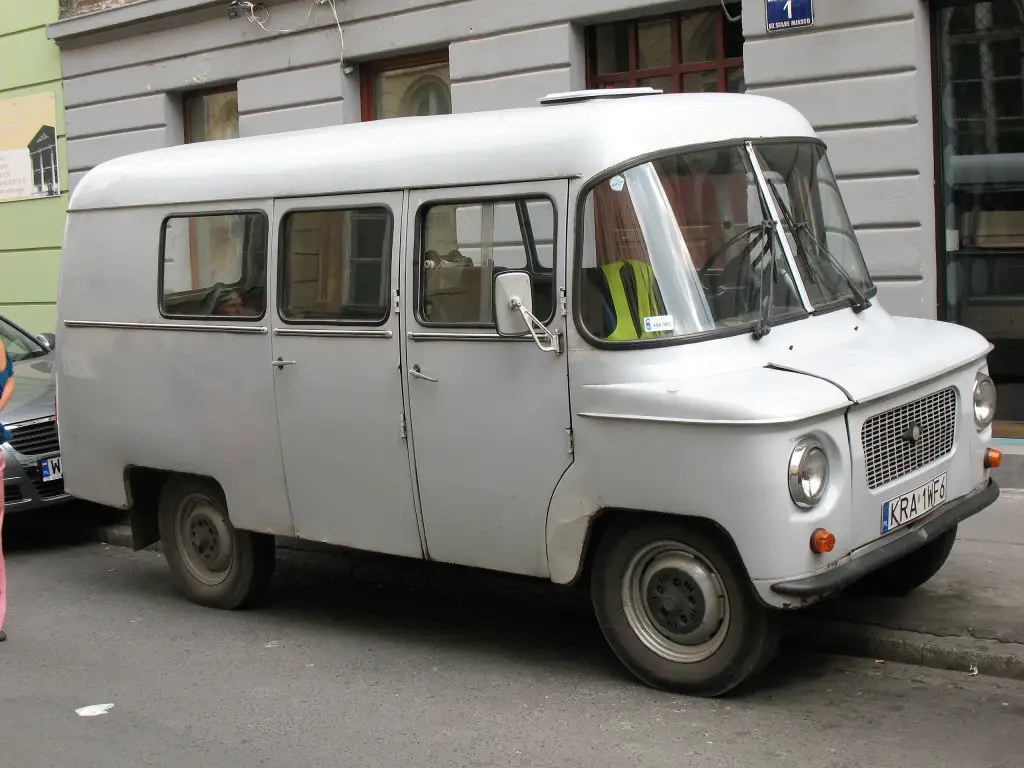
The Nysa 521 of 1968 gave the Polish van a new front and a more comfortable body, and with the 522 it became the most numerous model of the line. It was built for 26 years, served the militia in special versions, and remained almost unchanged until production ended in 1994.
Nysa 521/522 at a glance
| Maker | Zakład Samochodów Dostawczych (ZSD), Nysa, Poland |
|---|---|
| Production | 1968–1994 |
| Predecessor | Nysa 501 |
| Engines | M-20 38.3 kW, S-21 51.5 kW, Andoria 4C90 diesel 51.5 kW |
| Gearbox | three-speed; four-speed for West Germany |
| Body | semi-classic, with a projecting engine compartment |
| Wheelbase | 2,700 mm |
| Kerb weight | 1,465 kg (van) to 1,800 kg (ambulance) |
| Height | 35 mm lower than the 501 |
| Export share | over 50% in 1968 |
| Peak year | 18,200 vehicles in 1978 |
| Total Nysa production | 380,575 vehicles by 1994 |
The Nysa 521 and 522 are described together in the Polish, English and German Wikipedia articles on the Nysa; this page uses those sections.
History of the Nysa 521/522
A new front for 1968
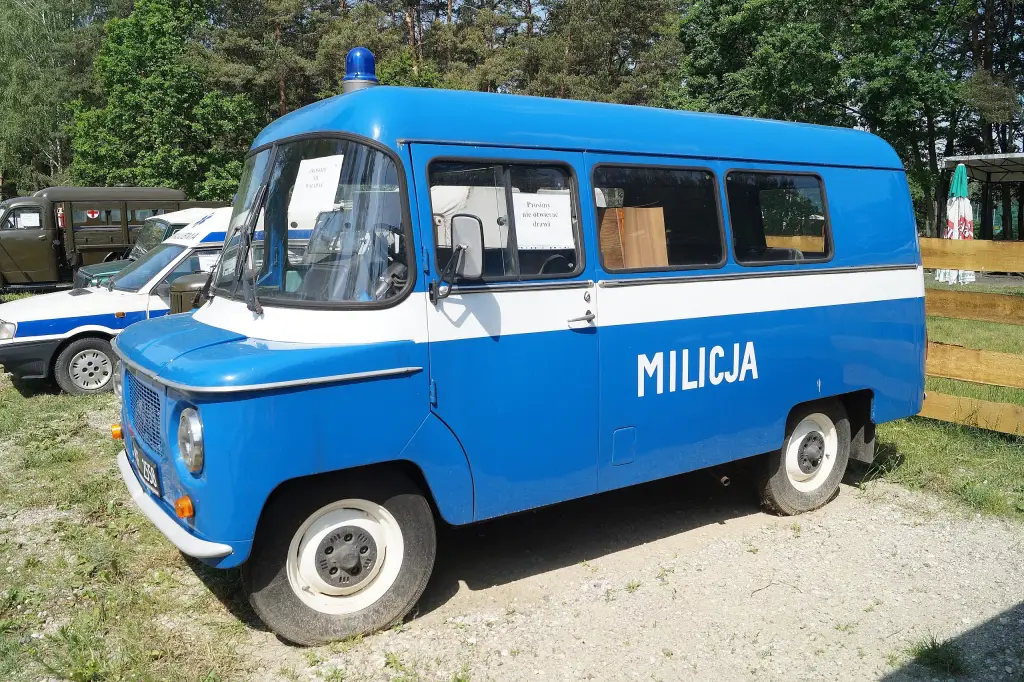
The 521 was created by a serious modernisation of the 501, aimed at better production technology, safety and comfort. The front was restyled and the engine cover, until then removed with two keys that were often lost, was replaced by a hinged bonnet. Prototypes marked 521 were built in 1968, the model was approved for production and shown publicly at the 37th Poznań International Fair in the same year, the tenth year of Nysa production, when the plant took the name Zakład Samochodów Dostawczych.
521 and 522
In 1969 the 521 was produced as a furgon, towos, mikrobus, sanitarka, kinowóz and an insulated version. The M-20 engine of 38.3 kW and the S-21 of 51.5 kW were still fitted alternatively, and a version with the Andoria 4C90 diesel of 51.5 kW was also built. The chassis was largely unchanged from the 501; the work went into the body, which became semi-classic with a slightly projecting engine compartment for easier access, and into the equipment. The windscreen area grew by 30%, two opposed pantograph wipers and a foot-pump washer were fitted, the spare wheel moved to a basket under the rear of the frame, the rear number plate moved from the door to the body panel, and new bumpers and larger translucent roof vents appeared. Van and towos bodies received a sliding side door of 1,100 by 1,130 mm on the right, taken from a prototype high-roof van. Inside there were mountings for front seat belts, better seats and trim on the doors, sides and roof, a more efficient heater, and better sound insulation on the engine cover. The ambulance received a PZ-1 alternator of 750 W, a 119 Ah battery and a stretcher on a trolley fixed to the floor. Kerb weight ranged from 1,465 kg for the van to 1,800 kg for the ambulance, and the body stood 35 mm lower than the 501.
Export and the raised roof
Export share passed 50% in 1968, with the Soviet Union, Hungary, Bulgaria and Romania as the main customers. The 521 shown at the Brussels motor show in 1971 attracted orders from Belgium and West Germany; at the request of the German importer the cars were delivered with a roof raised by 100 mm and a four-speed gearbox, and the raised roof distinguished the 522 from the 521. A short-cab lorry version was developed specially for West Germany. In August 1972 the 100,000th Nysa left the line, a 521-C for the home market.
The militia versions
The 521 and 522 were widely used by the Militia, whose blue vans became one of the symbols of the force. Special versions had sliding doors on both sides and a roof hatch: the 521/522 KW escort vehicle with a windowless rear compartment for detainees behind a partition, the OW operational version for nine officers, and the RSD mobile command post with double seats along the walls and a map table in the middle. They carried radios, a blue warning light, twin sirens, a roof megaphone and a searchlight, and could have double fuel tanks and four batteries. The 522 remained almost unchanged until production ended in 1994, after 380,575 Nysa vehicles had been built.
Design and features
- Hinged bonnet: the engine cover opened on hinges instead of being unbolted with two keys.
- Better visibility: the windscreen area was 30% larger, with pantograph wipers and a washer.
- Sliding side door: van and towos versions had a 1,100 by 1,130 mm sliding door on the right.
- Diesel option: the Andoria 4C90 of 51.5 kW joined the two petrol engines.
- Militia equipment: radios, warning light, sirens, megaphone and searchlight in police versions.
Nysa 521/522 versions
- 521 (1968): the first version, with the restyled front and the standard roof.
- 522: the later version with a roof raised by 100 mm for West Germany.
- Furgon, towos and mikrobus: the main civilian body styles.
- Sanitarka: the ambulance, with a 750 W alternator and a 119 Ah battery.
- Kinowóz and isothermal: mobile cinema and insulated bodies.
- KW, OW and RSD: militia escort, operational and command versions.
The 521/522 replaced the Nysa 501 and followed the Nysa N59. The diesel prototype that was meant to succeed it is described in Nysa 325, and more vehicles are in the Nysa collection.
Video: Nysa 522 mikrobus Wycieczka RETRO
Video by wycieczkiretropl on YouTube.
Sources
- ZSD Nysa, Polish Wikipedia: 521/522 development, equipment, militia versions, export
- ZSD Nysa, English Wikipedia: production years, peak output, total production
- Nysa (Kleinbus), German Wikipedia: chassis, engines, annual output