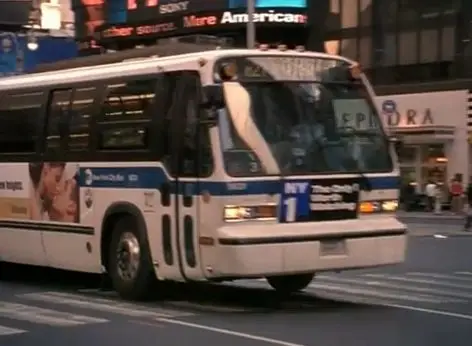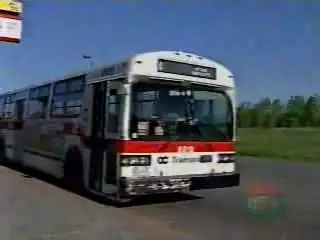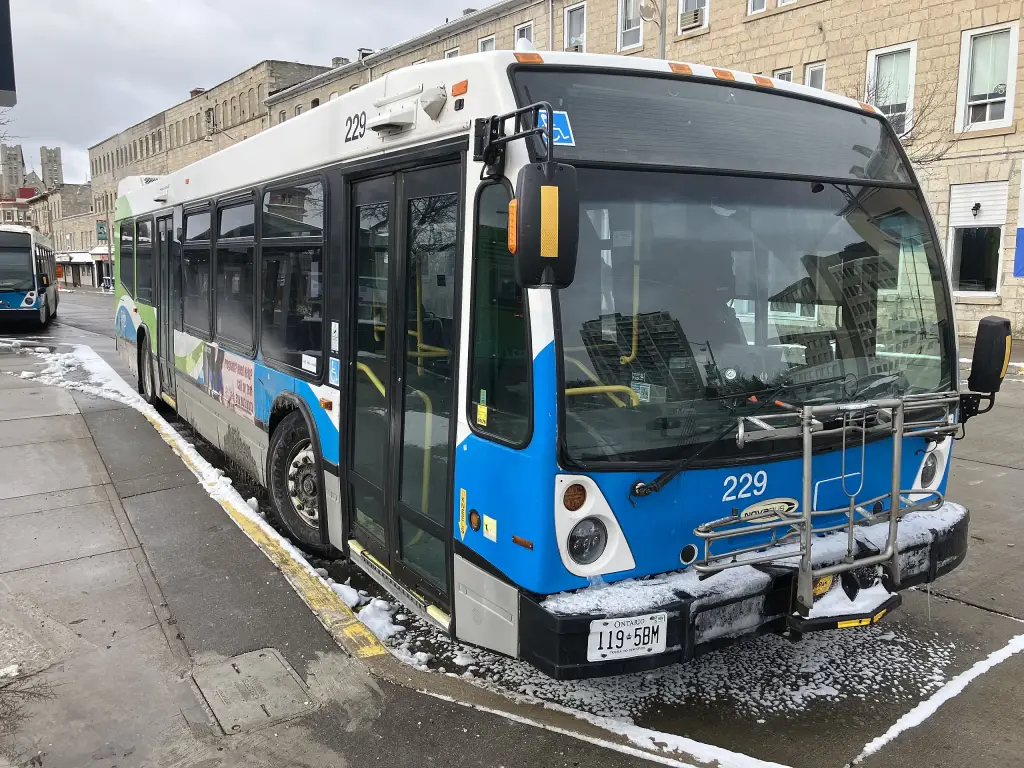
The Nova Bus LFS, short for Low Floor Series, is a low-floor city bus built in Saint-Eustache, Quebec, since 1996 and the first bus Nova Bus designed from scratch. Its stainless-steel frame, low step and triple-oval “nostril” under the windscreen made it one of the most familiar buses in Canada, and four generations later it is still the company’s only product.
Nova Bus LFS at a glance
| Maker | Nova Bus, Saint-Eustache, Quebec (Volvo Group since 2004) |
|---|---|
| Production | since 1996 |
| Class | low-floor transit bus, wheelchair accessible |
| Lengths | 40 ft (12 m) rigid and 62 ft (19 m) articulated |
| Frame | welded stainless steel, built at a separate plant in Saint-François-du-Lac |
| Powertrains | diesel, compressed natural gas, diesel-electric hybrid and battery-electric |
| Designers | Jean Labbé (exterior), Louis Côté (body engineering) |
| Signature | triple-oval “nostril” under the windscreen |
| Generations | four |
| Markets | Canada; the United States from 1996 to 2002 and again from 2009 to 2025 |
History of the Nova Bus LFS
Development
Nova Bus took over the former General Motors bus plant at Saint-Eustache from Motor Coach Industries in 1993, and Yvon Lafortune, who had led the Bombardier Venus project, became president. The Quebec government asked the new company to design a low-floor bus of the kind already common in Europe. The engineering staff that came with the plant had never designed a complete bus: the Classic then in production was an updated GM New Look of the late 1950s. After sixteen months of negotiations, nine Quebec transit agencies placed a final order for 330 Classics plus 60 low-floor buses. Because low-floor buses were rare in North America, Nova Bus signed a technology transfer agreement to adapt the Dutch Den Oudsten Alliance, receiving a demonstration B90 Alliance City bus and engineering staff; Den Oudsten ran into financial trouble, however, and could not help further, so Nova Bus finished the design alone to meet the American “white book” specifications. The Classic had a riveted structure and the Den Oudsten a welded tubular spaceframe, which led Nova Bus to open a separate frame factory in Saint-François-du-Lac.
Design
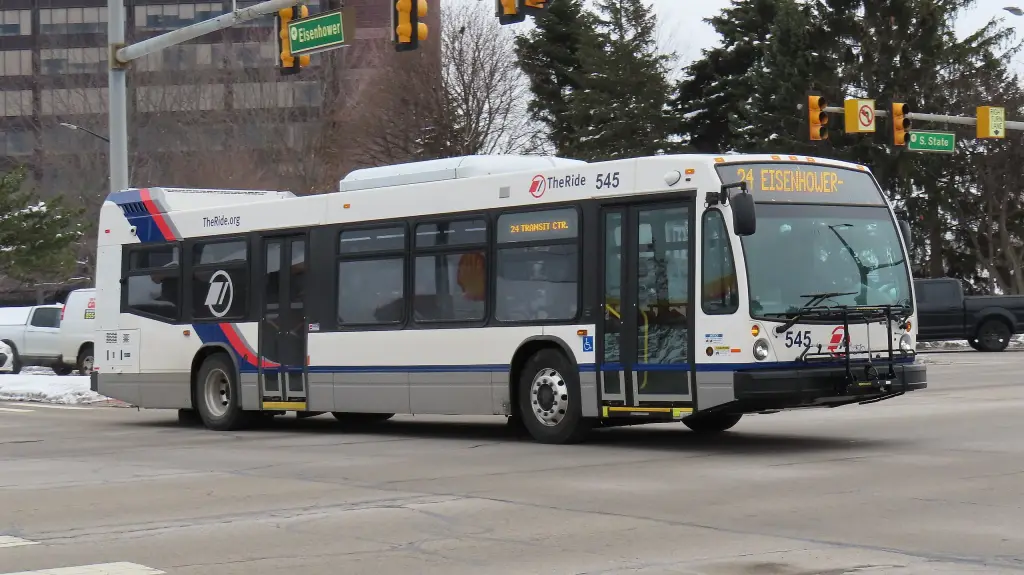
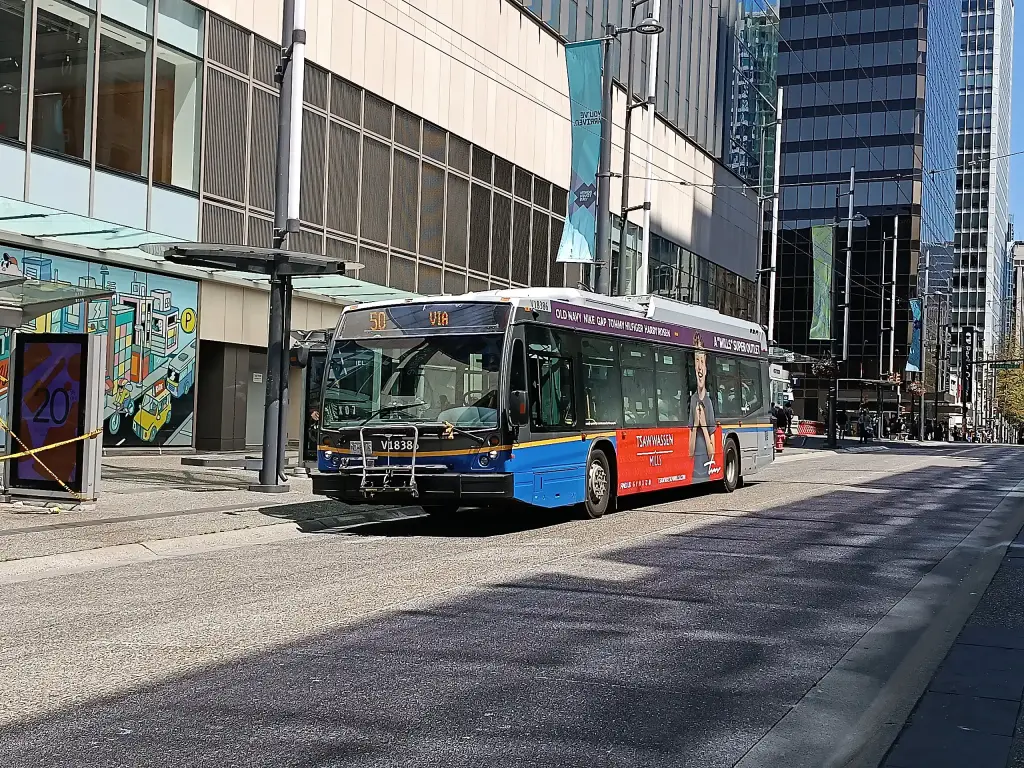
Louis Côté was hired as head of body design and the industrial designer Jean Labbé, another veteran of the Bombardier Venus, drew the exterior and layout. Labbé chose deliberately car-like styling, meant to look “friendly, and a little naive”, with “eyes wide open” and a triple-oval nostril centred under the windscreen; Côté replaced Labbé’s custom bumper with an off-the-shelf one to save money. The first prototype was shown at the APTA show in Boston in the autumn of 1994, with the teams working around the clock to meet the deadline; a second prototype went to Altoona for testing. The LFS was the second low-floor bus offered in North America, after the New Flyer Low Floor of 1991.
Launch and troubles
Detroit Diesel was winding down the two-stroke Series 71 and Series 92 engines that powered most North American buses, and the Cummins-powered Classic T-Drive of 1995 proved unreliable, so Nova Bus put its resources into the LFS and decided to drop the Classic as soon as the new bus was in full production. Production began in 1996. By the time the first LFS entered service with STCUM as 16-004 at the end of that year, about 400 buses had already been built and were waiting for acceptance; the early buses drew 2,500 complaints in their first eighteen months, spread across the whole vehicle rather than concentrated in the drivetrain. Because the Den Oudsten design allowed a third door, the engine of the first generation sat towards the driver’s side, leaving room for only a smaller Cummins engine. The frame was changed to stainless steel for the second generation in 1998 after early buses corroded; of the 451 delivered to STCUM, 400 were scrapped before their intended sixteen-year life.
Volvo and later generations
Volvo Buses bought an interest in Nova Bus in 1997 and took full control in 2004. The third generation moved the engine back to the centreline and dropped the third-door option. A hybrid LFS appeared in 2006, the articulated LFS Artic in 2009, a compressed natural gas version in 2013 and battery-electric models afterwards, the longer-range LFSe+ arriving in 2021. In the United States, Nova Bus built the bus for Chicago from 1998, opened a plant at Plattsburgh, New York, in June 2009 and supplied New York City, Honolulu, SEPTA and others. In June 2023 the company announced that it would leave the American market again in 2025 and close Plattsburgh, concentrating on Canada, where the LFS remains in production.
Design and features
- Low floor: a kneeling suspension and front-door ramp made the bus accessible without a rear lift.
- Stainless-steel frame: adopted in 1998, it answered the corrosion of the earliest buses.
- Car-like face: Jean Labbé’s triple-oval nostril became the model’s trademark.
- Many powertrains: diesel, CNG, diesel-electric hybrid and battery-electric versions share the body.
Nova Bus LFS versions
- LFS Diesel: the standard 40-foot bus.
- LFS Artic: 62-foot articulated version introduced in 2009.
- LFS HEV: hybrid with batteries on the roof.
- LFS CNG: compressed natural gas version of 2013.
- LFSe and LFSe+: battery-electric models, the second with a longer range.
- LFS Suburban: one-door version with coach-style seating.
The LFS replaced the high-floor Classic in the Saint-Eustache plant and took over from the RTS in the company’s American sales. More buses are in the Nova Bus collection.
Sources
- Nova Bus LFS, English Wikipedia: development, design, production history
- Nova Bus LFS, French Wikipedia: variants and powertrains
- Nova Bus, French Wikipedia: hybrid, articulated, CNG and electric dates