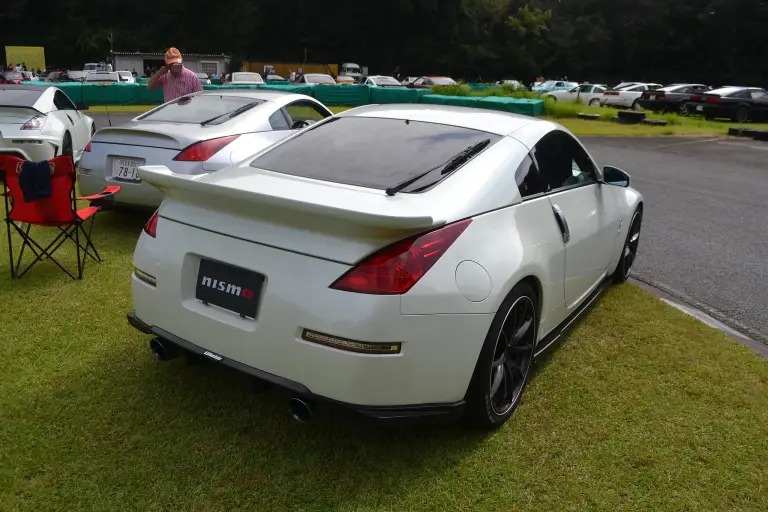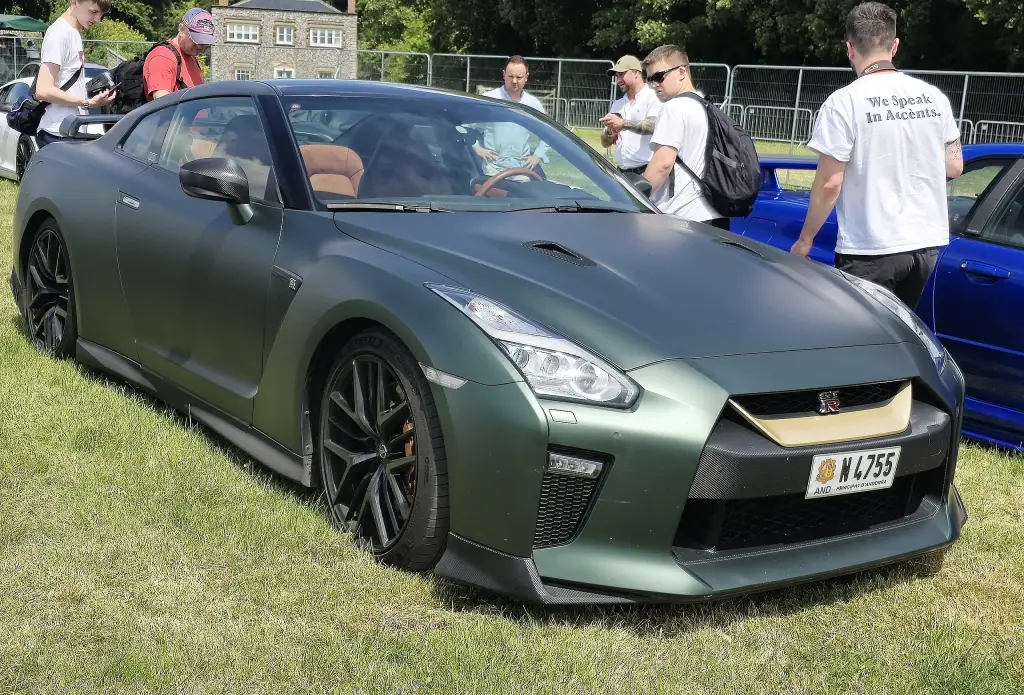
The Nismo GT-R is the version of the R35 GT-R prepared by Nismo, Nissan’s motorsport department. It appeared in August 2014 with a 3.8-litre twin-turbo V6 tuned to 441 kW (600 PS), in a car whose standard form could already reach 100 km/h in under 3.5 seconds.
Nismo GT-R at a glance
| Maker | Nissan, tuned by Nismo |
|---|---|
| Nismo | Nissan’s motorsport division |
| Introduced | August 2014 |
| Base car | Nissan GT-R (R35) |
| Engine | 3.8-litre VR38DETT twin-turbo V6 |
| Power, Nismo version | 441 kW (600 PS) |
| Power, standard car in 2014 | 404 kW (550 PS) |
| Drive | ATTESA E-TS Pro all-wheel drive |
| Gearbox | six-speed dual-clutch transaxle |
| Weight, standard GT-R | 1,740 kg |
| 0–100 km/h, standard GT-R | under 3.5 s |
| Top speed, standard GT-R | 310 km/h |
The Nismo version is described in a section of the German Wikipedia article on the GT-R; the English and Italian articles give the background of the standard car.
History of the Nismo GT-R
The car it was built on
The R35 GT-R went on sale in December 2007 as a separate model, no longer part of the Skyline range. Under the bonnet sat the VR38DETT, a hand-assembled 3.8-litre twin-turbo V6 with plasma-coated cylinders and four valves per cylinder. It drove all four wheels through a rear-mounted transaxle and a six-speed dual-clutch gearbox, the first car in the world to combine a transaxle with a dual-clutch transmission. Weight distribution was quoted at 53:47, kerb weight at 1,740 kg, and the drag coefficient at 0.27. Nissan claimed 0–100 km/h in under 3.5 seconds and 310 km/h, and a lap of the Nürburgring Nordschleife in 7:26.707.
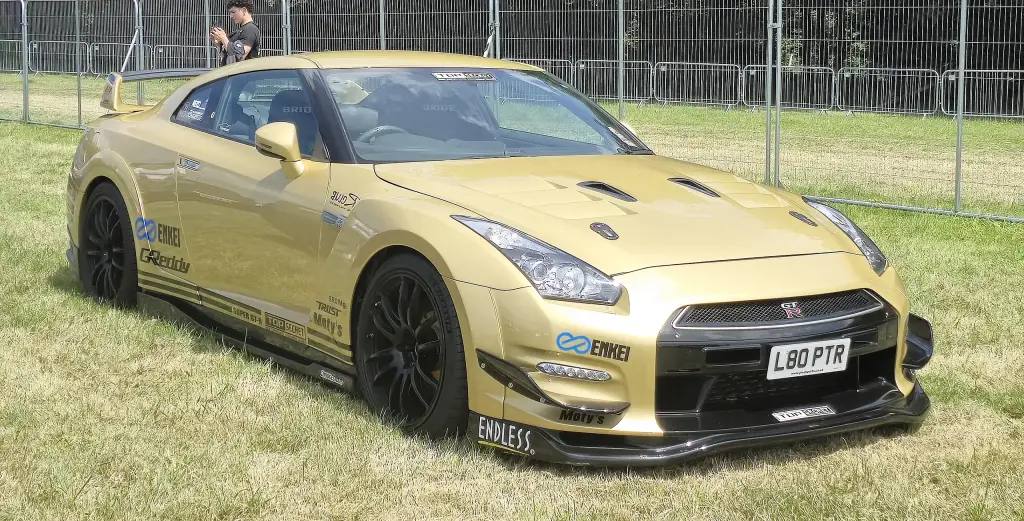
Nismo
Nismo is the motorsport department of Nissan, the part of the company responsible for the firm’s racing programmes. In the GT-R range its work appeared in August 2014, when a sport version of the car was offered with the engine lifted from 404 kW (550 PS) to 441 kW (600 PS).
One long life
The GT-R was updated often. The SpecV of 2009 lost about 80 kg, gained carbon-fibre racing seats, ceramic brakes and a titanium exhaust, and was limited to 40 cars for Europe. The 2011 model brought 390 kW (530 PS) and new LED daytime lights; the 2012 car went to 404 kW (550 PS), and model year 2014 added speed-sensitive LED headlights and four-ring tail lamps. The 2017 facelift raised the standard engine to 570 PS and gave the cabin its first full redesign. Production ended in August 2025 after 18 years and about 48,000 cars.
Design and features
- 600 PS: the Nismo version’s 441 kW put it above the 550 PS standard car of 2014.
- All-wheel drive: the ATTESA E-TS Pro system normally drives the rear wheels and brings the front axle in when they slip.
- Dual-clutch transaxle: gearbox and differential sit at the rear for a near-even weight balance.
- Everyday usability: 2+2 seating and a grand-touring brief, in a car timed at under 3.5 seconds to 100 km/h.
Nismo GT-R versions
- GT-R (2007–2025): the standard car, from 485 PS to 570 PS over its life.
- GT-R SpecV (2009): lighter, with carbon-ceramic brakes and a titanium exhaust.
- GT-R 2011 model year: 530 PS and revised suspension.
- GT-R Nismo (2014): 600 PS from the motorsport department.
- GT-R 2017 facelift: 570 PS and a new interior.
Nismo also prepared the smaller Z-car. More cars from the brand are in the Nismo collection.
Video: Nissan GT-R Nismo driven on road and track
Video on YouTube.
Sources
- Nissan GT-R, English Wikipedia: history, development, production
- Nissan GT-R, German Wikipedia: Nismo version, output figures, updates
- Nissan GT-R, Italian Wikipedia: engine and chassis details, performance