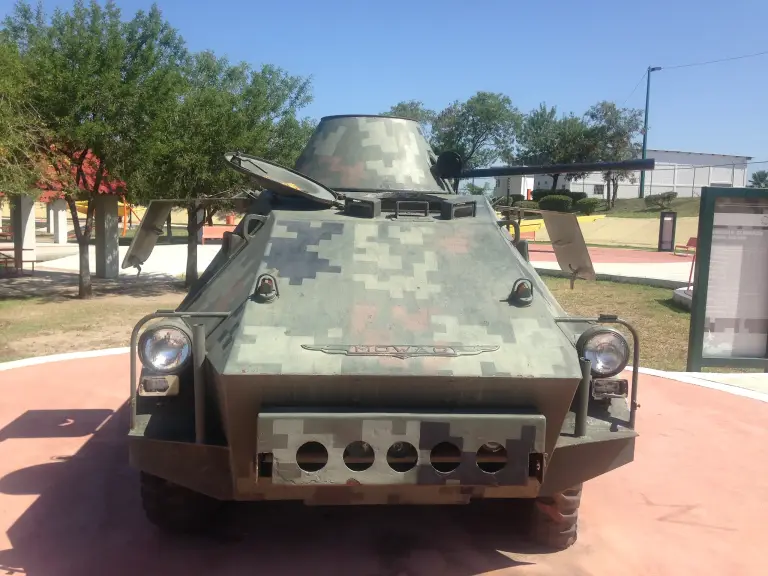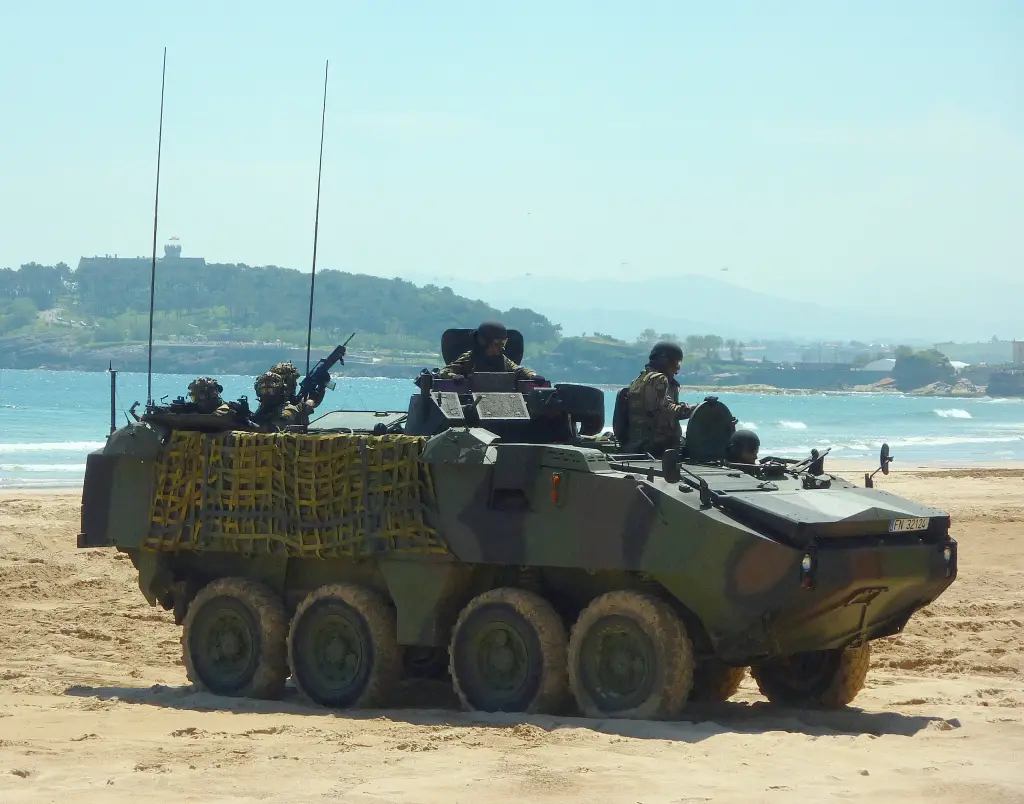
The Mowag Piranha is a family of wheeled armoured fighting vehicles designed by the Swiss company Mowag of Kreuzlingen, part of General Dynamics European Land Systems since 2010. Five generations of the vehicle have been built, either by Mowag or under licence abroad, and derivatives such as the LAV and the Stryker serve with forces around the world.
Mowag Piranha at a glance
| Designer | Mowag, Kreuzlingen, Switzerland |
|---|---|
| Later owner | General Dynamics European Land Systems – Mowag |
| First prototype | Piranha 6×6 IB, 1972 |
| Wheel layouts | 4×4, 6×6, 8×8, 10×10 |
| Generations | five, from Piranha I to Piranha V |
| Weight, standard versions | 12.5 to 25 tonnes |
| Payload | 3 to 10 tonnes |
| Amphibious | yes, twin propellers on early versions |
| In service worldwide | about 10,000 vehicles |
| Licence production | Canada, United Kingdom, Chile, United States |
Operators of the Piranha are listed at length in the sources; this page describes the vehicle itself and names only the main licence producers.
History of the Mowag Piranha
The first Piranha prototype was the 6×6 IB of 1972. It is regarded as a milestone of the series because of its independently suspended drive, its compact power unit in the right front and the twin propellers that made it amphibious. The prototype was demonstrated to potential customers with different engines and equipment, and the Canadian Army produced it locally as the AVGP. Switzerland sold a licence to build the vehicle to Chile in 1983.
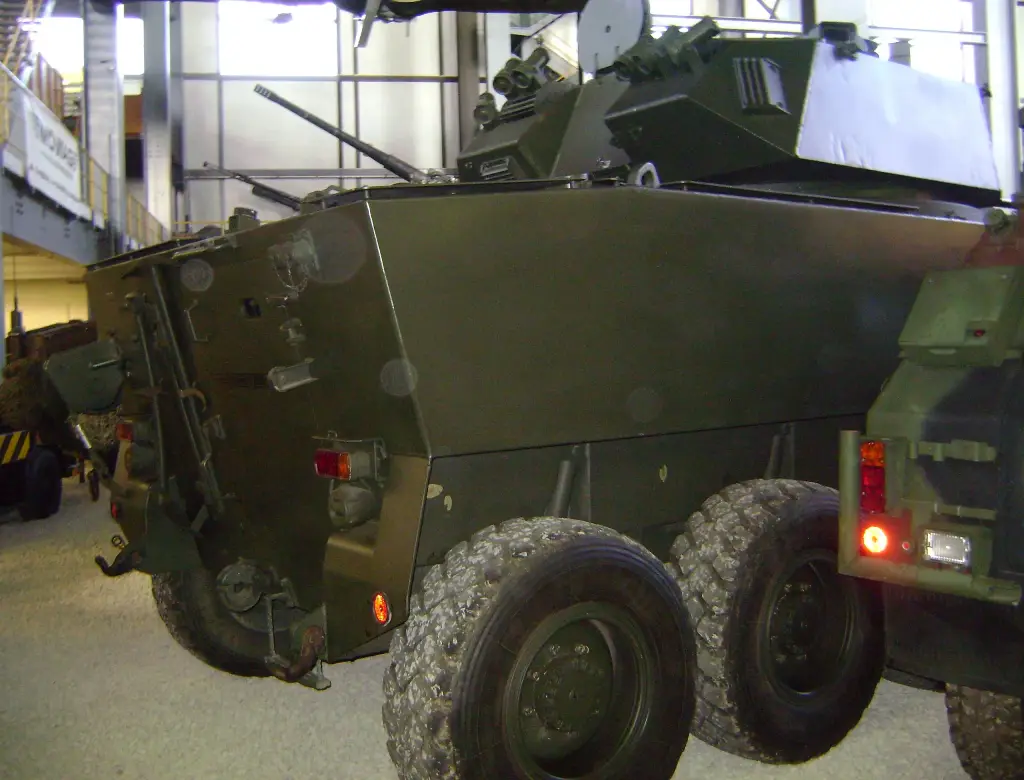
The Piranha I family was completed by the 4×4 IB, a light reconnaissance and attack vehicle that could take part in amphibious operations and work in NBC-contaminated areas; it was also meant for police use, and the Mowag Grenadier and Mowag Spy sub-versions were developed from it. No petrol-engined Piranha was ever sold, and the prototype now stands in the Swiss Military Museum at Full.
As demands on the design grew, the Piranha II and then the Piranha III followed. The 10×10 of 1994 added a fifth axle of the same type used on the smaller models to raise payload for heavy weapon carriers; only a small number were built for Sweden as the LIRKA command tank and the Kapris radar carrier. The Piranha IIIC 10×10 prototype, tested among other places in Sweden, is also preserved at Full.
The Piranha V, weighing between 25 and 30 tonnes, was named provisional winner of the British Army’s FRES programme in May 2008, but the choice was reversed seven months later and bidding restarted. General Dynamics European Land Systems presented the new Piranha Class 5 at Eurosatory in June 2010, when the British Ministry of Defence was again reported to be interested.
Design and features
- One concept, four layouts: the same design philosophy in 4×4, 6×6, 8×8 and 10×10 form.
- Independent suspension: a modern feature when the 6×6 prototype appeared in 1972.
- Compact power unit: mounted in the right front, leaving the rear free for troops or equipment.
- Amphibious capability: early versions swam with twin propellers.
- Flexible protection: several levels of armour and many turret options for different roles.
Mowag Piranha versions
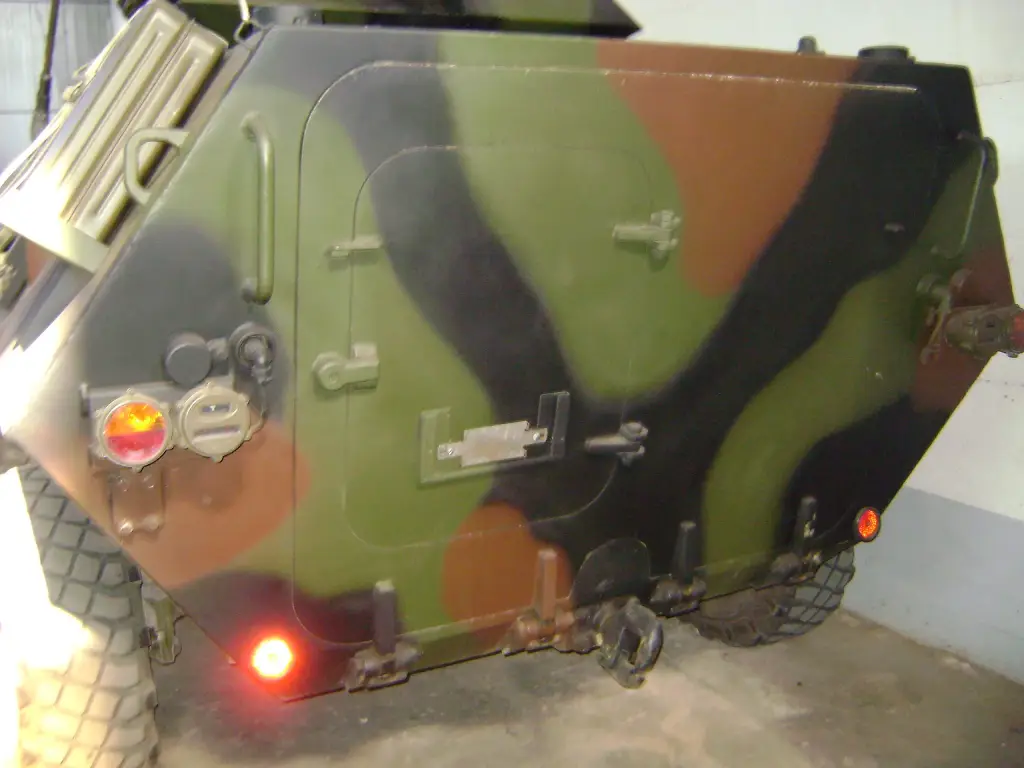
- Piranha 4×4 IB: light reconnaissance and attack vehicle with amphibious and NBC capability.
- Piranha 6×6 IB (1972): the first prototype, built in Switzerland and under licence in Canada as the AVGP.
- Piranha IIIC 8×8: the most widespread modern version, chosen by Belgium in seven variants and by Romania.
- Piranha 10×10: heavy weapons carrier built in small numbers for Sweden.
- Piranha V / Class 5: the 25–30 tonne generation shown in 2010.
The Swiss museum at Full also keeps the earlier MOWAG Roland armoured personnel carrier. Other military vehicles are collected in the Mowag section.
Video: General Dynamics European Land Systems – Mowag Piranha IIIC Armoured Personnel Carrier 8×8
Video on YouTube.
Sources
- Mowag Piranha, English Wikipedia: history, variants, operators
- Mowag Piranha, German Wikipedia: weights, payload, numbers in service