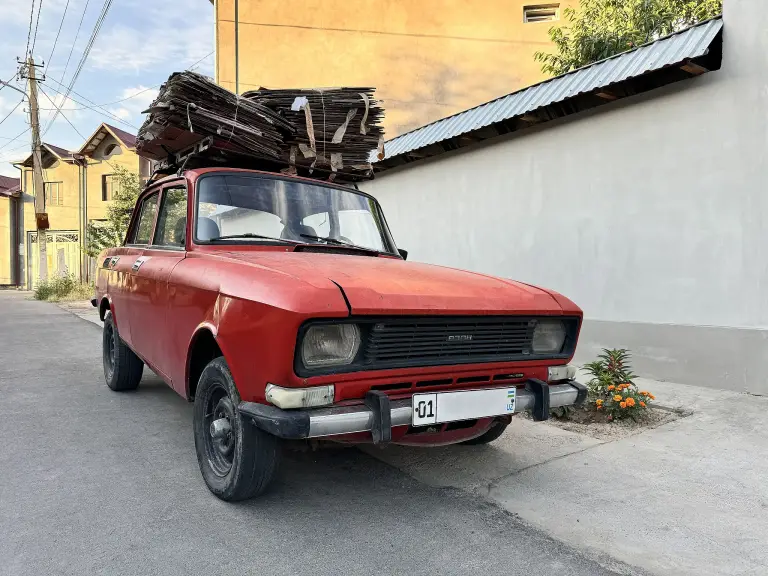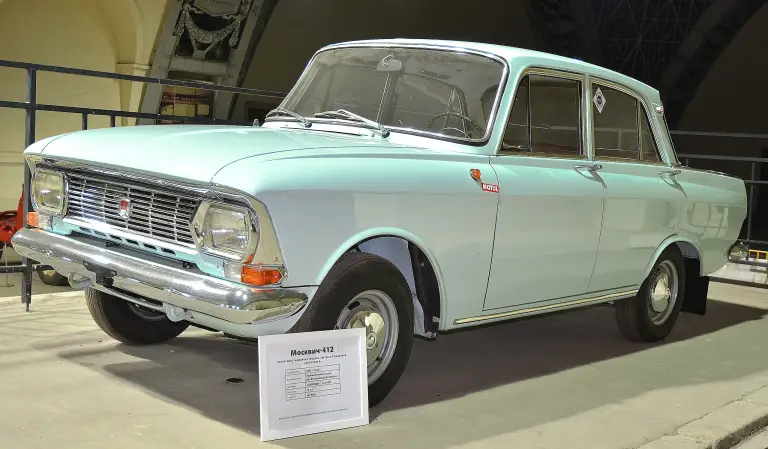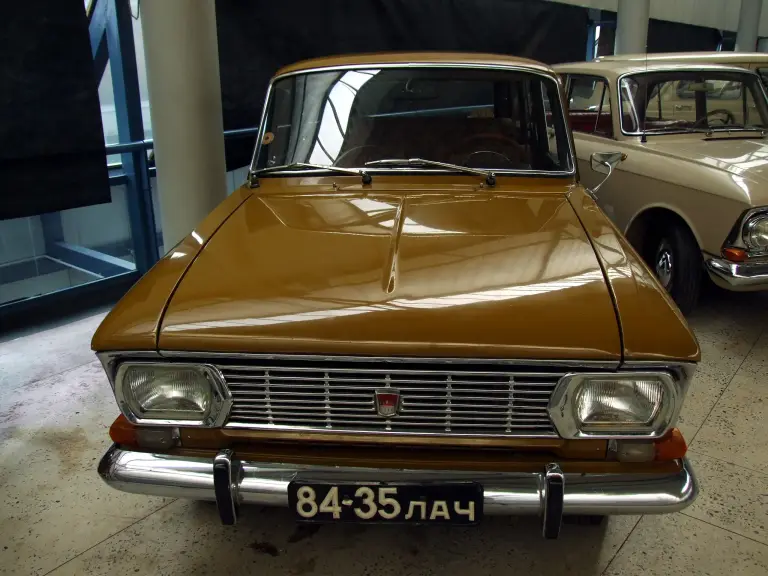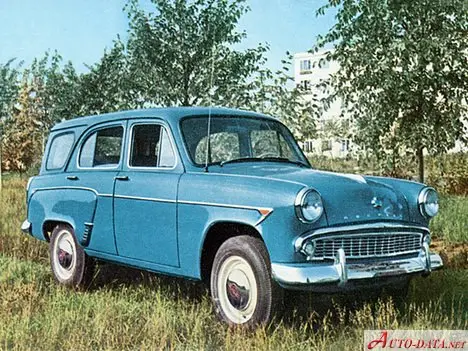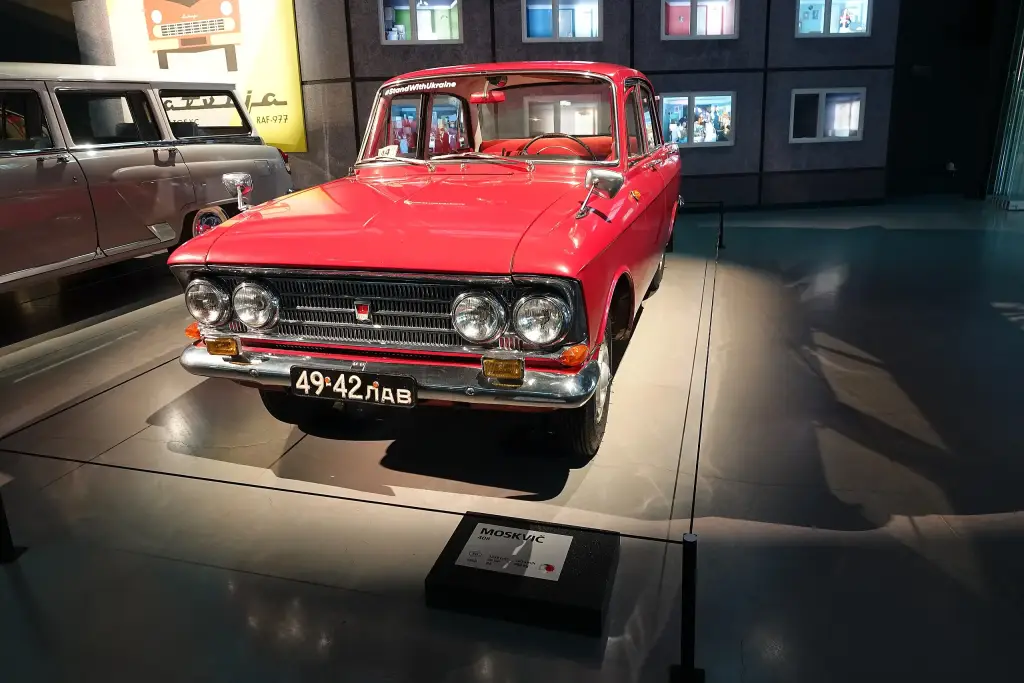
The Moskvich 408 replaced the 407 in 1964 as MZMA’s main model and stayed in production, through two series, until 1975. It brought a larger body, a 1,357 cc engine and, from 1969, the first deliberately designed safety equipment fitted to a Soviet car. It was also the model that made the marque a familiar sight in Western Europe.
Moskvich 408 at a glance
| Maker | MZMA / AZLK, Moscow |
|---|---|
| Production | August 1964 – 1975 |
| Body | four-door saloon; estate 426, van 433 |
| Engine | 1,357 cc overhead-valve four, 50 hp at 4,750 rpm |
| Export engine | 54 hp |
| First series | 1964–1969, vertical rear lights, round headlights |
| Second series | 1969–1976, rectangular headlights, horizontal lights |
| Brakes | drum; power-assisted with split circuit from 1969 |
| Gear lever | on the column until 1973 |
| 100,000th car | 20 August 1966 |
| Export share | 55 percent of production in 1968 |
| Also built | IZh-408 in Izhevsk, 1966–1967 |
History of the Moskvich 408
Design work on a new Moskvich began in 1959 under designer Boris Ivanov, at first as the “1963 car”. The project was introduced in three stages so that the factory could keep building cars: first the new chassis parts, tried out on the transitional Moskvich 403, then the modernised engine, and finally the new body. The first production 408 was built on 1 August 1964 and the car had its official debut on 21 October that year. The 100,000th example followed on 20 August 1966.
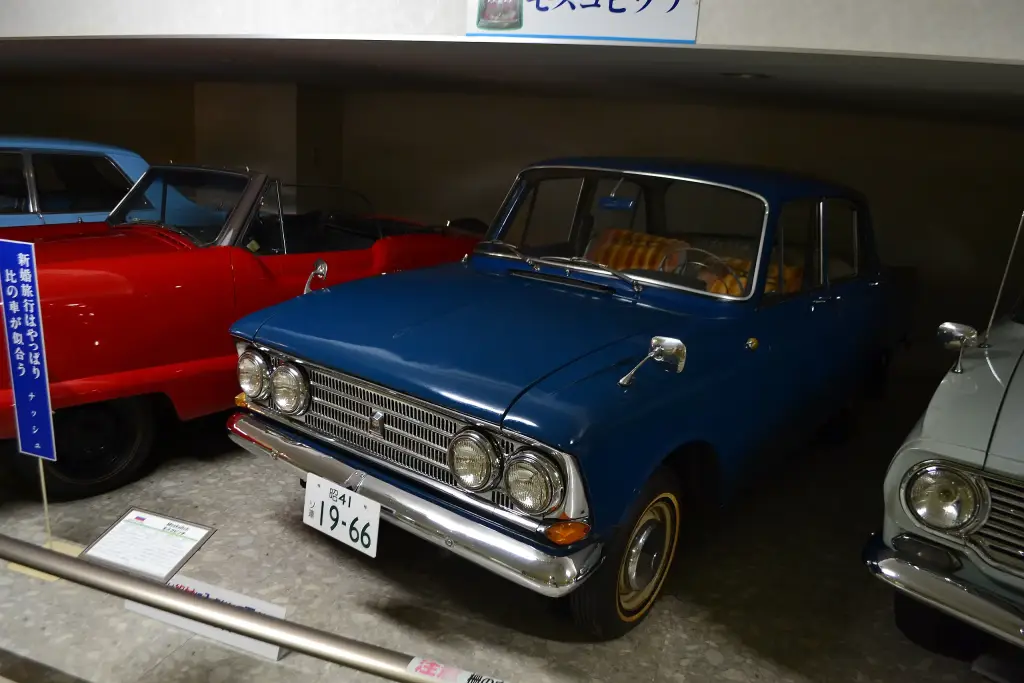
For 1964 the 408 was a modern shape: a squared-off body with a flat roof, sharp tail fins, a panoramic rear window and a semi-panoramic windscreen. Deluxe versions had the then-fashionable four round headlights and some were painted in two tones. Inside there was a trapezoidal instrument cluster, a column gear lever, an effective heater and colour-coded vinyl upholstery. The engine was a 1,357 cc overhead-valve four of 50 hp, built by UZAM in Ufa after 1967, with a single two-barrel carburettor; export versions were rated at 54 hp.
Two series were sold under the same name. Cars built between 1964 and 1969 had vertical rear lights, two or four round headlights, a front bench seat and a four-speed gearbox with a column lever. The second series, from 1969, kept the engine and transmission but gained rectangular headlights, horizontal rear lights with triangular side markers on the fins, separate front seats and a floor-mounted lever. From 1969 the brakes were power-assisted with a hydrovacuum servo and a split circuit.
That same year the 408 became the first Soviet-built car with deliberate safety equipment: crumple zones, a safer steering column, a soft-rimmed wheel, padded interior parts, seat belts and a padded dashboard. The range also included the 426 estate, from March 1967, and the 433 delivery van, from December 1966, while the IZh factory in Izhevsk built a rebadged IZh-408 in 1966–1967 before switching to the 412. Exports were central to the model: the 408 was sold in France as the Moskvitch 1300, in Finland as the Elite, in Norway as the Moskvich Carat, and the 408E with four headlights was the top export version. In 1968, 55 percent of production went abroad, and the car was also assembled in Bulgaria as the Rila 1400 and in Belgium by Scaldia.
Design and features
- Safety first: crumple zones, seat belts and a padded dashboard from 1969.
- Two clear series: round headlights and vertical lights before 1969, rectangular units after.
- Export network: sold as the Moskvitch 1300, Elite and Carat, and assembled in Belgium and Bulgaria.
- Body range: saloon, 426 estate and 433 delivery van.
- Power brakes: hydrovacuum servo and split circuit from 1969.
Moskvich 408 versions
- Moskvich 408 (1964–1969): first series with vertical rear lights and a bench seat.
- Moskvich 408IE (1969–1975): second series with rectangular lights and separate seats.
- Moskvich 408E: export version with four headlights and 54 hp.
- Moskvich 426 (1967): five-door estate with stiffer rear springs.
- Moskvich 433 (1966): three-door delivery van with a split rear door.
- IZh-408 (1966–1967): rebadged version built in Izhevsk.
The 408 replaced the Moskvich 402 and 407 and was developed into the Moskvich 412; its estate version is described under Moskvich 426. More models are in the Moskvich collection.
Sources
- Moskvitch 408, English Wikipedia: series, safety equipment, engines, exports
- Москвич-408, Russian Wikipedia: development, bodies, export names, assembly