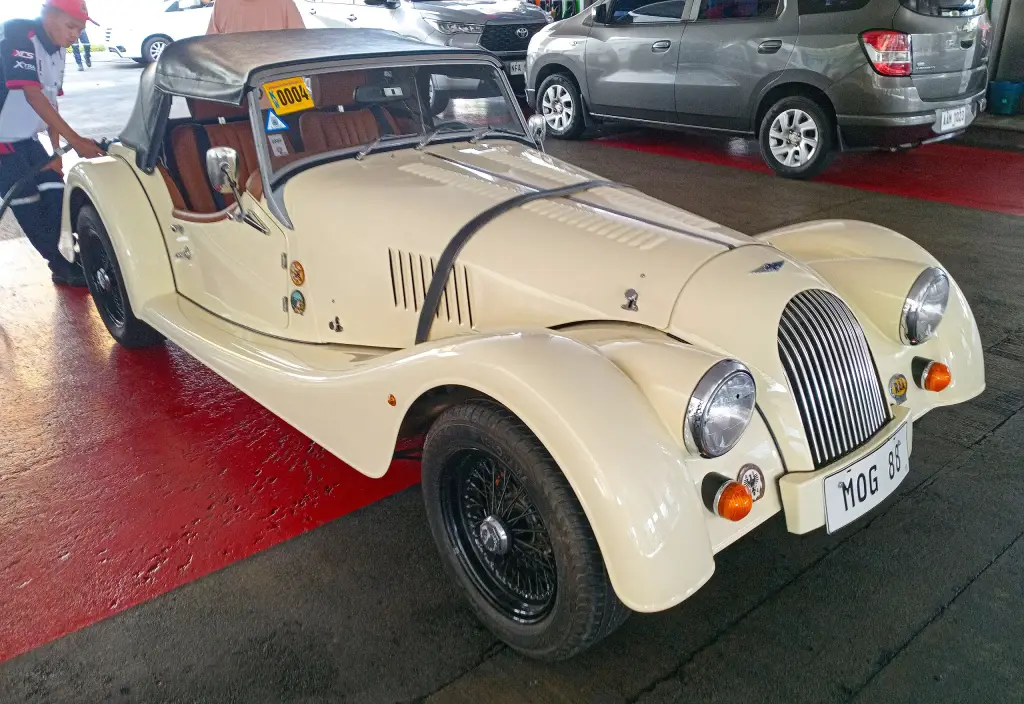
The Morgan Plus 4 is a sports car produced by the Morgan Motor Company. It is a more powerful and, in the case of the earlier cars, slightly longer version of the 4/4. Production ran from 1950 to 1969, the model was revived in 1985 to fill the gap between the 4/4 and the Plus 8 until 2000, and it was built again from 2005 until it was replaced in 2020 by the new Plus Four.
Morgan Plus 4 at a glance
| Maker | Morgan Motor Company, Malvern Link |
|---|---|
| First series | 1950–1969 |
| Second series | 1985–2000 |
| Third series | 2005–2020 |
| First engine | 2,088 cc Standard Vanguard |
| 1953 engine | 1,991 cc Triumph TR2, 90 bhp |
| 1956 engine | 1,991 cc Triumph TR3, 100 bhp |
| 1962 engine | 2,138 cc Triumph TR4 |
| Second series engine | 2.0 Fiat twin cam, then Rover M16i |
| Third series engine | 2.0 Ford Duratec, 145 to 154 hp |
| Wheelbase | 4 in (102 mm) longer than the 4/4 |
| Brakes | front discs optional 1959, standard 1960 |
Based on one source. Three production series of the same model are described together here.
History of the Morgan Plus 4
First series, 1950–1969
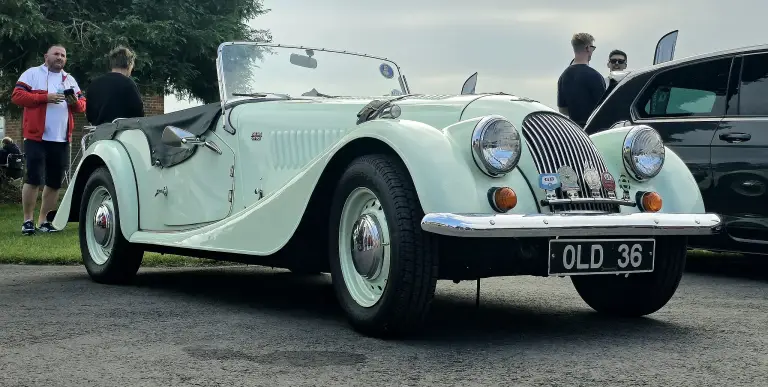
The Plus 4 was announced at the 1950 Earl’s Court Motor Show with a 2,088 cc Standard Vanguard engine in a widened and strengthened 4/4 chassis, its wheelbase lengthened by four inches. Hydraulic brakes, at first all drum, were fitted for the first time on a Morgan. In 1953 a higher-performance version used the 1,991 cc Triumph TR2 engine of 90 bhp while the Vanguard unit remained available until late 1956; from 1956 the TR3 engine of 100 bhp was used, and from 1962 the 2,138 cc TR4 unit. Front disc brakes became an option in 1959 and standard in 1960. Body styles were a two-seat sports, a four-seat sports and a drophead coupé, of which 556 were built between 1950 and January 1969. A fibreglass-bodied coupé called the +4+ appeared in 1963, but only 26 were built, and production ended in 1969 when supplies of the Triumph engine dried up.
Second series, 1985–2000
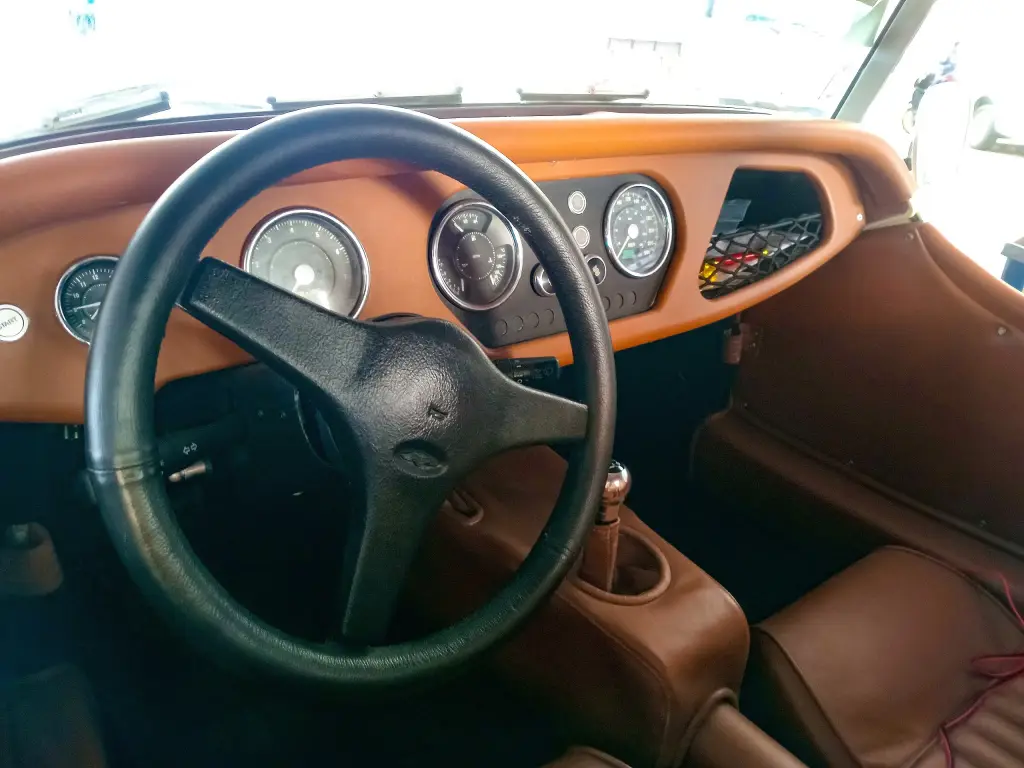
In 1985 the +4 name returned on a car with the two-litre version of Fiat’s twin-cam engine, coupled to the gearbox and clutch of the Plus 8. It was built until 1988, when Rover’s M16i unit and a five-speed manual replaced it; still two litres, power rose from 122 to 138 hp, with a catalysed 131 hp version for export. In 1992 the car switched to the wider Plus 8 chassis, adding four inches of cabin width, and the M16 gave way to the T16. The second series underwent 114 design changes, including a galvanised chassis from 1995 and superformed aluminium wings in 1998, and a long-door variant was added in 1997.
Third series, 2005–2020
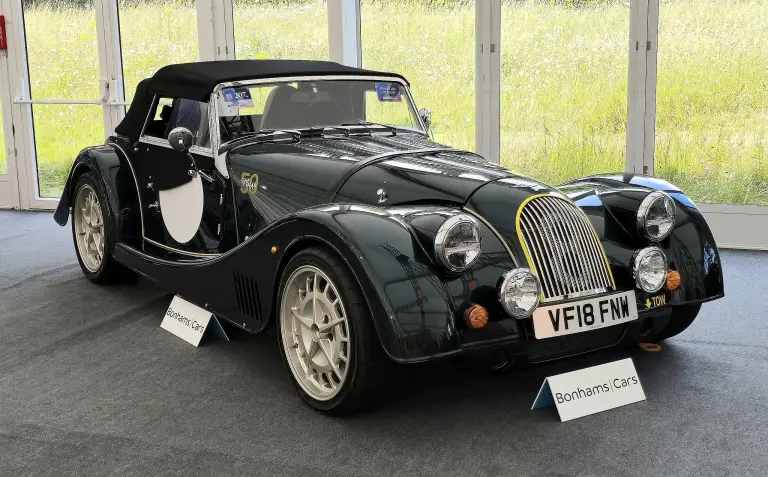
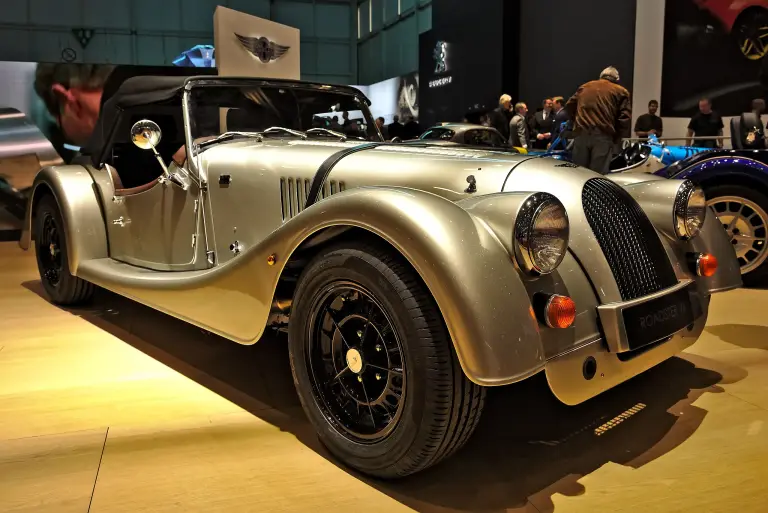
In late 2004 the +4 returned with a two-litre Ford (Mazda) Duratec engine of 145 hp, later raised to 154 hp. Production ended in 2020 in favour of the new CX-series Morgan Plus Four, built on a bonded aluminium platform.
Design and features
- Longer, stronger chassis: the Plus 4 used a widened 4/4 frame with a wheelbase four inches longer.
- Triumph power: TR2, TR3 and TR4 engines gave the first series its character.
- Competition success: Chris Lawrence and Richard Shepherd-Barron won the 1,601–2,000 cc GT class at Le Mans in 1962.
- Three lives: the model returned in 1985 with Fiat and Rover engines and again in 2005 with a Ford Duratec.
- Traditional body range: two-seat and four-seat sports cars plus the drophead coupé.
Morgan Plus 4 versions
- Plus 4 two-seater: the standard open sports car of the first series.
- Plus 4 four-seater: a four-seat sports body offered alongside it.
- Drophead Coupé: the more luxurious open car; 556 built to 1969.
- Plus 4 Super Sports (1962): tuned engine and lightweight aluminium body; just over 100 built.
- +4+ (1963): fibreglass-bodied coupé, only 26 built.
- Second and third series: Fiat, Rover and Ford-engined cars of 1985–2000 and 2005–2020.
The Plus 4 sat between the Morgan 4/4 and the V8 Plus 8. More cars are in the Morgan collection.
Sources
- Morgan +4, English Wikipedia: history, engines, bodies, competition