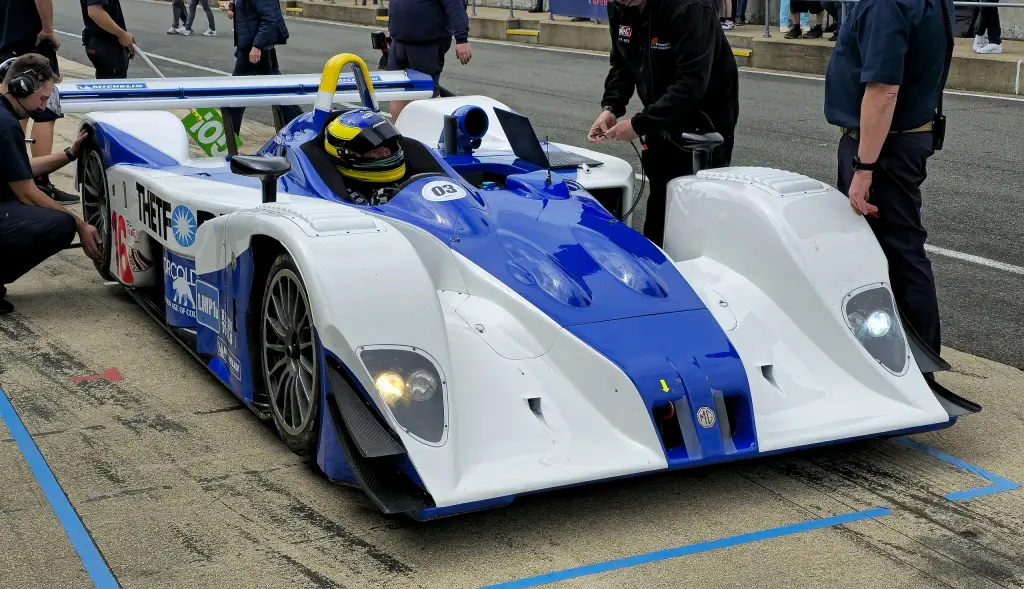
The MG-Lola EX257, sometimes called simply the MG EX257, was a Le Mans Prototype racing car built by Lola for MG’s attempt to compete again at the 24 Hours of Le Mans in 2001. It was Lola’s only car designed specifically to the LMP675 regulations, known by the factory as the Lola B01/60.
MG-Lola EX257 at a glance
| Builder | Lola Cars International for MG |
|---|---|
| Lola designation | B01/60 |
| Class | LMP675 Le Mans Prototype |
| Debut | 2001 24 Hours of Le Mans |
| Engine | 2.0-litre turbocharged inline-four, MG XP20 (AER P07) |
| Power | about 500 hp, limited by air restrictors |
| Turbocharger | Garrett |
| Weight | about 690 kg at launch, against a 675 kg minimum |
| Qualifying in 2001 | 14th and 17th overall, fastest two in LMP675 |
| Last original-spec car retired | 2007 |
History of the MG-Lola EX257
Why LMP675
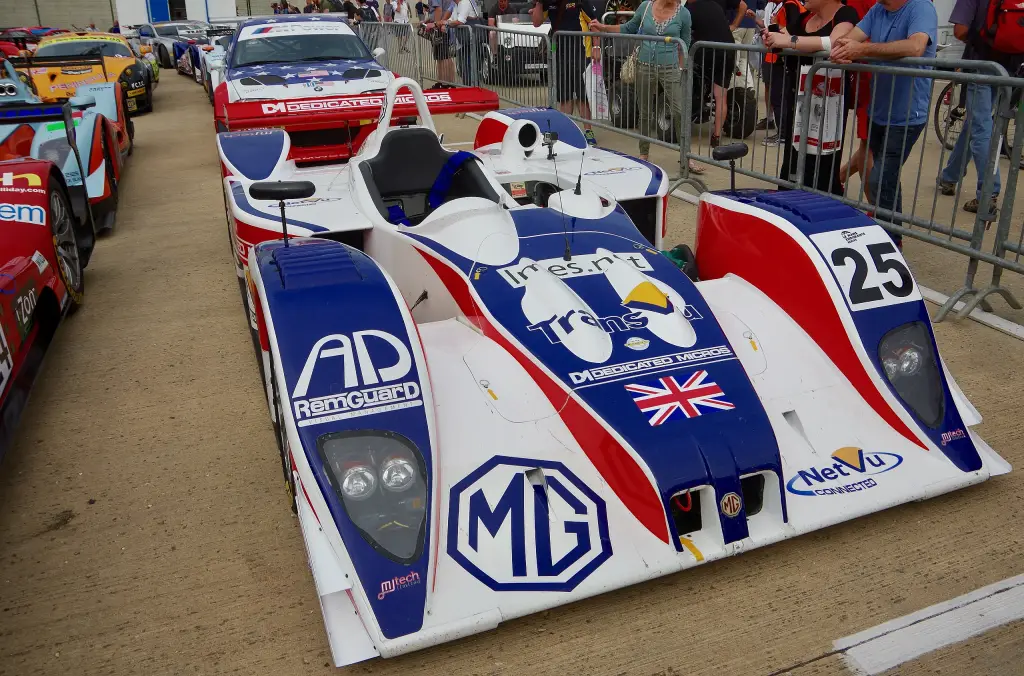
At the start of the 21st century MG decided to expand into motorsport, including sports car racing. The company had enjoyed success at Le Mans decades earlier but had never won outright. At about the same time the Automobile Club de l’Ouest changed the prototype regulations so that two classes could compete for overall victory: the new LMP675 class used smaller turbocharged engines but lighter, more nimble cars that could take on the larger LMP900 machines.
MG saw the chance to use a production-based engine instead of a custom-built unit larger than anything in its road cars, and agreed with Lola Cars International to enter the class. Lola had built the B2K/10 and B2K/40 in 2000, but neither had been designed around LMP675, so an all-new prototype was needed, drawing on the B2K/40 for many elements.
The car
The B01/60 kept a front fender design close to the B2K/40 but had a radically different nose with a large square airbox shaped like an MG grille in the raised section. The sidepods used sweeping lines to manage airflow, a large single air inlet sat on top of the car slightly to one side of the cockpit for the turbo intake, and a single rollbar behind the driver was borrowed from the Audi R8. At the rear the wing was mounted low on the chassis to increase top speed, and the car weighed about 690 kg at its launch against the 675 kg minimum.
For power MG turned to Advanced Engine Research for the engine and Garrett for the turbocharging. The 2.0-litre turbocharged inline-four, known as the MG XP20 and by AER as the P07, used elements of MG’s production engines and produced approximately 500 hp, limited by the air restrictors the ACO imposed to equalise the cars.
Racing record
The EX257 made its competition debut at the 2001 24 Hours of Le Mans with two cars run by MG Sport & Racing Ltd, qualifying 14th and 17th overall as the fastest two LMP675 entries. The weaknesses of the formula showed early: the small, highly stressed engines could not survive long distances. One MG retired after 30 laps with an exhaust failure, and a few hours later the second succumbed to an oil leak.
For 2002 the cars were offered to customers, and the American teams KnightHawk Racing and Intersport Racing bought a chassis each for the American Le Mans Series. Reliability improved: at Sebring Intersport took the LMP675 win and seventh overall, and over the season the pair dominated, taking four more wins, with KnightHawk taking the class championship by a single point. At Le Mans the works cars lasted longer but still failed to finish, one with gearbox problems after 129 laps and the other with an engine failure in the final hours. After two years without a finish and with financial strain on MG Rover, the sports car project was cancelled, although Lola continued to sell and support the cars; the last EX257 in original specification was retired from racing in 2007.
Design and features
- LMP675 design: Lola’s only car built specifically to the light prototype rules.
- MG XP20 engine: a 2.0-litre turbo four built by AER, about 500 hp.
- Light weight: roughly 690 kg at launch, close to the 675 kg minimum.
- MG grille airbox: the square nose intake shaped like the road-car grille.
MG-Lola EX257 versions
- EX257 works cars (2001–2002): run by MG Sport & Racing at Le Mans.
- Customer cars (2002): sold to KnightHawk and Intersport for the ALMS.
- Judd-engined cars (2003): Intersport replaced the MG engine with a Judd KV675 V8.
The EX257 was MG’s return to top-level racing before the XPower SV road car; more cars are in the MG collection.
Video: 2010 LMP2 test at Snetterton – Team RLR MG Lola
Video by TeamRLR on YouTube.
Sources
- MG-Lola EX257, English Wikipedia: design, engine, Le Mans and ALMS results