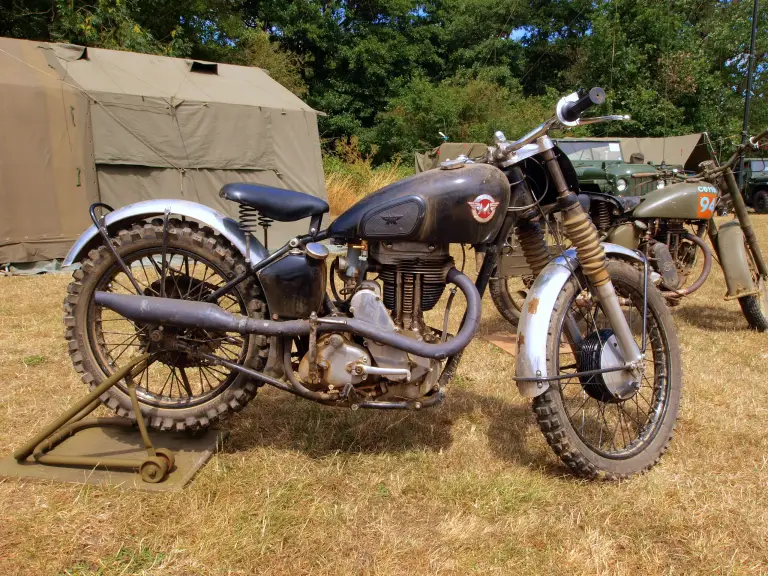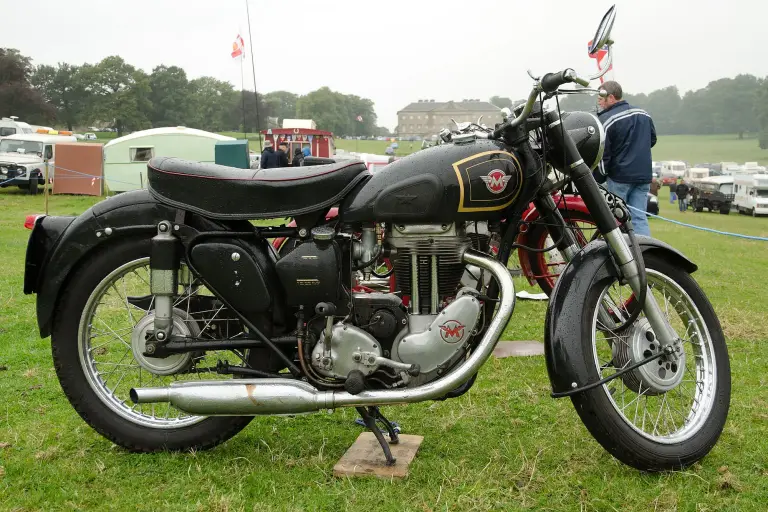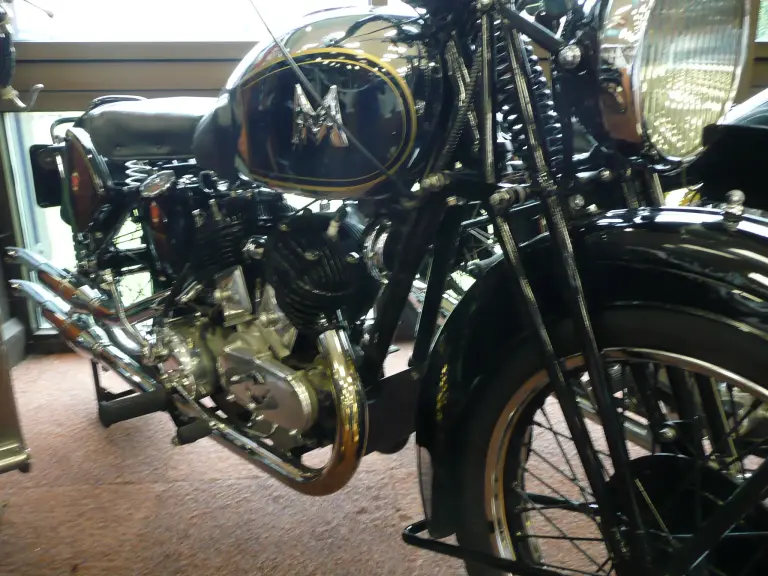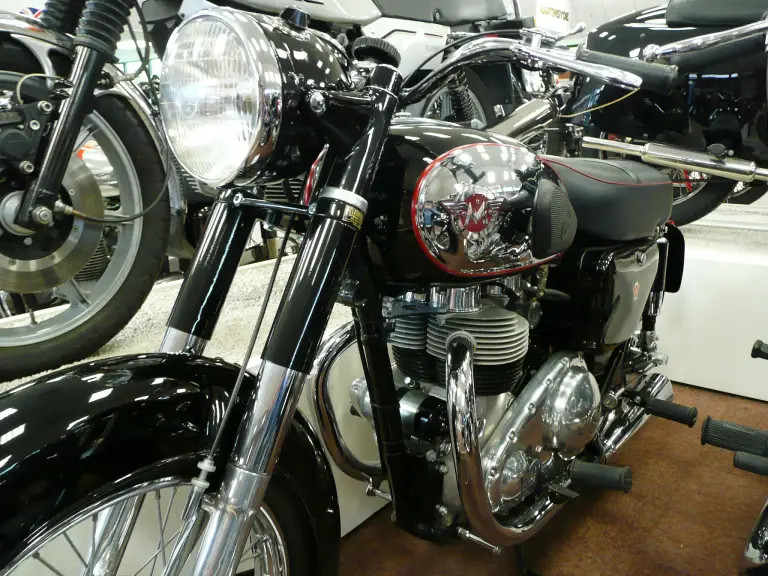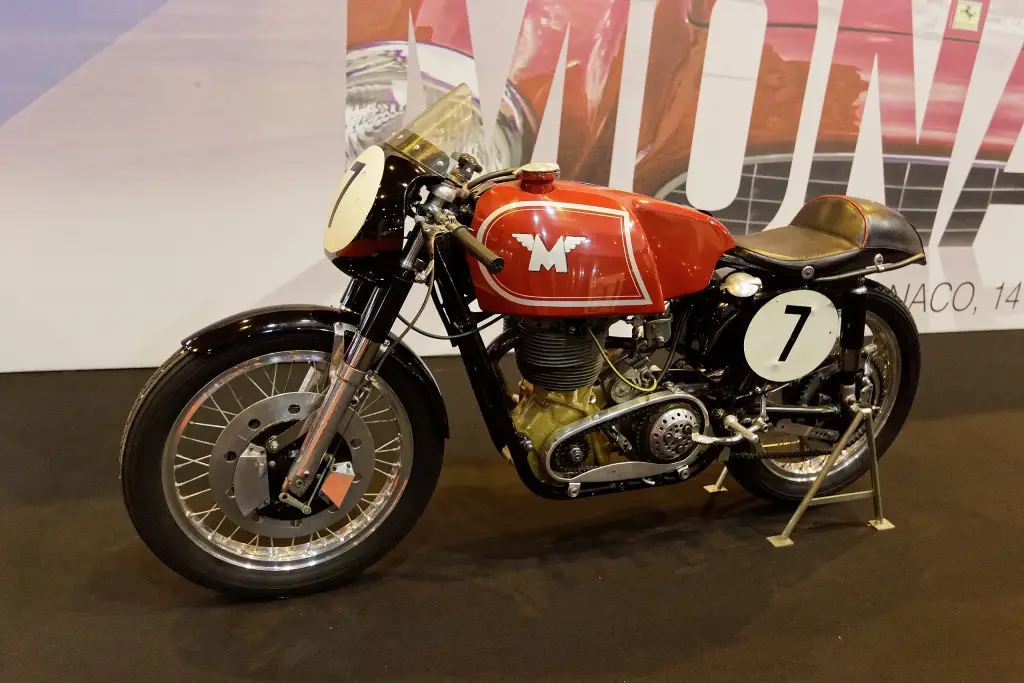
The Matchless G50 is an historic British racing motorcycle made by Associated Motorcycles at the former Matchless works in Plumstead, London. Developed in 1958 from the 350 cc AJS 7R with the engine enlarged to 500 cc, it was less powerful than the Norton Manx but lighter and faster through the bends, and only 180 were built before production ended in 1963.
Matchless G50 at a glance
| Maker | Associated Motor Cycles (Matchless), Plumstead, London |
|---|---|
| Production | 1958–1963 |
| Engine | 500 cc air-cooled single |
| Developed from | 350 cc AJS 7R |
| Built | 180 |
| Price when new | £300 |
| Main rival | Norton Manx |
| Street version | G50 CSR, 1963 |
| Tooling sold to | Colin Seeley, 1966 |
| Famous rider | Peter Williams on the Tom Arter Matchless |
| Replicas | still built today |
Based on one source: the English Wikipedia article on the Matchless G50.
History of the Matchless G50
From the AJS 7R
The Matchless G50 was developed in 1958 from the 350 cc AJS 7R with the engine enlarged to 500 cc. AMC built 180 of them over the next four years at Plumstead. Less powerful than its main rival, the Norton Manx, the G50 cost £300 and was faster round bends; financial problems at AMC ended production in 1963, but the design outlived the company, and high-specification replicas are still being built today.
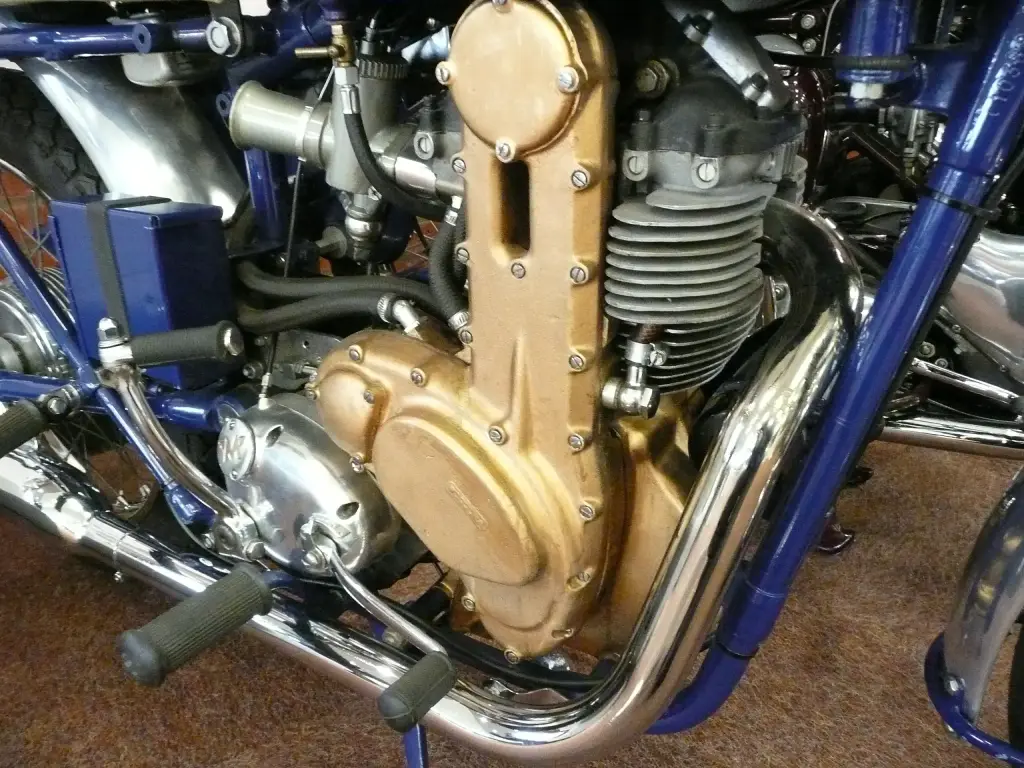
The G50 CSR
In 1963 the American Motorcyclist Association ruled that the G50 could not race in the United States because it was not based on a production street bike. Matchless answered with a limited-production, street-legal G50 CSR, putting the racing engine into the G80CS Scrambler frame. In AMC parlance CSR stood for Competition Sprung Roadster — quickly corrupted to Coffee Shop Racer — and the model later became known as the Golden Eagle from the gold finish of its engine casings. Buyers had just two choices: bright blue with a tan seat, or bright red and black with a black seat.
Seeley and Arter
In 1966 Colin Seeley, a sidecar Grand Prix racer, bought all the G50 tooling and spares and built his own frames around the engine, producing specials such as the Seeley Condor. The Seeley G50 Mk2 with Titchmarsh chassis, Walmsley engine and six-speed PGT gearbox is still built by TGA Ltd in northern France. The other great development was the Tom Arter machine raced by Peter Williams, who led the 1967 500 cc World Championship after three rounds before injuring an ankle at the East German Grand Prix. Rebuilt in 1969 with a lighter frame by Grand Prix Metalcraft, hydraulic disc brakes and six-spoke Elektron wheels nicknamed cart wheels, it won the 1970 North West 200 and finished second to Agostini in the Senior TT in 1970 and 1971. At the 1972 Hutchinson 100 Williams caught and passed Agostini’s MV Agusta, and in the 1973 Senior TT his average of 100.62 mph was quicker than Mike Hailwood’s winning speed on the Norton Manx in 1961 — a single-cylinder TT record that stood until 1997.
Design and features
- Light and agile: the G50 gave away power to the Manx but made it back in the corners.
- Racing single: the 500 cc engine grew out of the successful 350 cc AJS 7R.
- G50 CSR: a limited run of street-legal machines built so the model could race in America.
- Long afterlife: Seeley, Arter and later specialist builders kept the design competitive and in production.
Matchless G50 versions
- G50 racer (1958–1963): the works racing single.
- G50 CSR / Golden Eagle (1963): street-legal version in the G80CS frame.
- Seeley Condor: Colin Seeley’s special built around the G50 engine.
- Seeley G50 Mk2: a modern TGA-built racing machine with six-speed gearbox.
- Arter Matchless Special: Peter Williams’ lightened 1969 development.
- George Beale replicas: high-specification copies built by the former TT winner.
The G50 raced alongside the 650 cc Matchless G12 and used a frame related to the G80. More Matchless motorcycles are in the Matchless collection.
Video: 1962 Matchless G50 Factory Racer
Video on YouTube.
Sources
- Matchless G50, English Wikipedia: development, CSR, Seeley and Arter machines