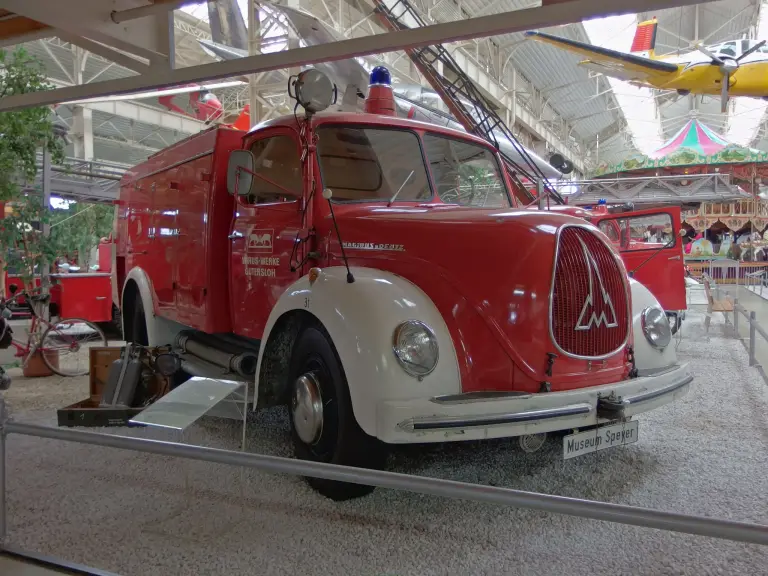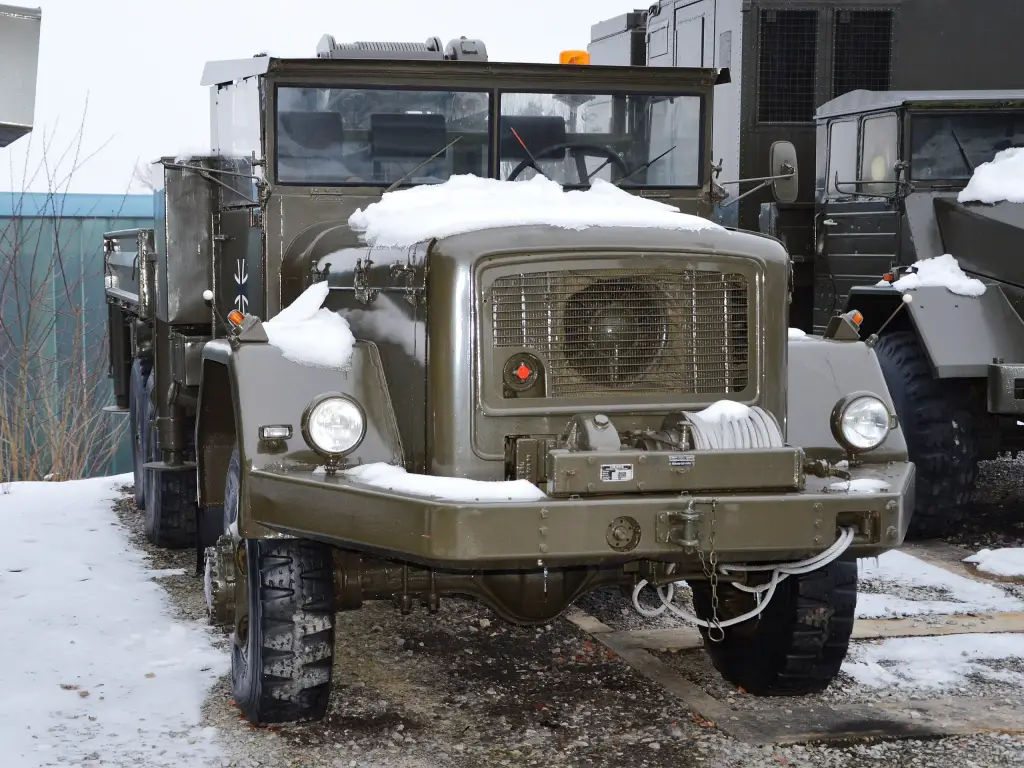
The Magirus-Deutz Jupiter 6×6 was an all-wheel-drive lorry built mainly for military use. Supplied from 1960 to the West German Bundeswehr, the Bundesgrenzschutz and foreign armies, it was also sold in civilian form as the Jupiter 6×6 Z. After the 1964 renaming of the range it was known as the M178D15A.
Magirus-Deutz Jupiter 6×6 at a glance
| Maker | Magirus-Deutz, Ulm (Klöckner-Humboldt-Deutz) |
|---|---|
| Production | 1960–1967, with later deliveries into the 1970s |
| Class | 7-tonne military lorry |
| Drive | 6×6, all-wheel drive |
| Engine | air-cooled V8, type F8L714A, 12,667 cc |
| Output | 110–131 kW for Bundeswehr vehicles, 143 kW in civilian form |
| Fuels | diesel, kerosene, petroleum, petrol, emergency lubricating oil |
| Renamed 1964 | M178D15A (178 PS, 15 tonnes gross weight, all-wheel drive) |
| Built for the Bundeswehr | about 7,800 |
| Bodies | recovery crane, personnel carrier, tipper, airfield fire engine, tanker, rocket launcher |
The Jupiter 6×6 has no English Wikipedia article; this page is based on the German article on the model and on the German article on the maker.
History of the Magirus-Deutz Jupiter 6×6
A name from the planet series
Jupiter was the top name in Magirus-Deutz’s bonneted lorry range. The company had begun naming its trucks after planets in the mid-1950s, and the Jupiter appeared on the largest models: first the S 7500 round-bonnet lorry and the A 7500 all-wheel-drive version, then, from 1958, a whole family of Jupiter types with outputs up to 200 PS. The 6×6 military lorry that carried the name from 1960 was a different machine from those civilian trucks, built to an army specification.
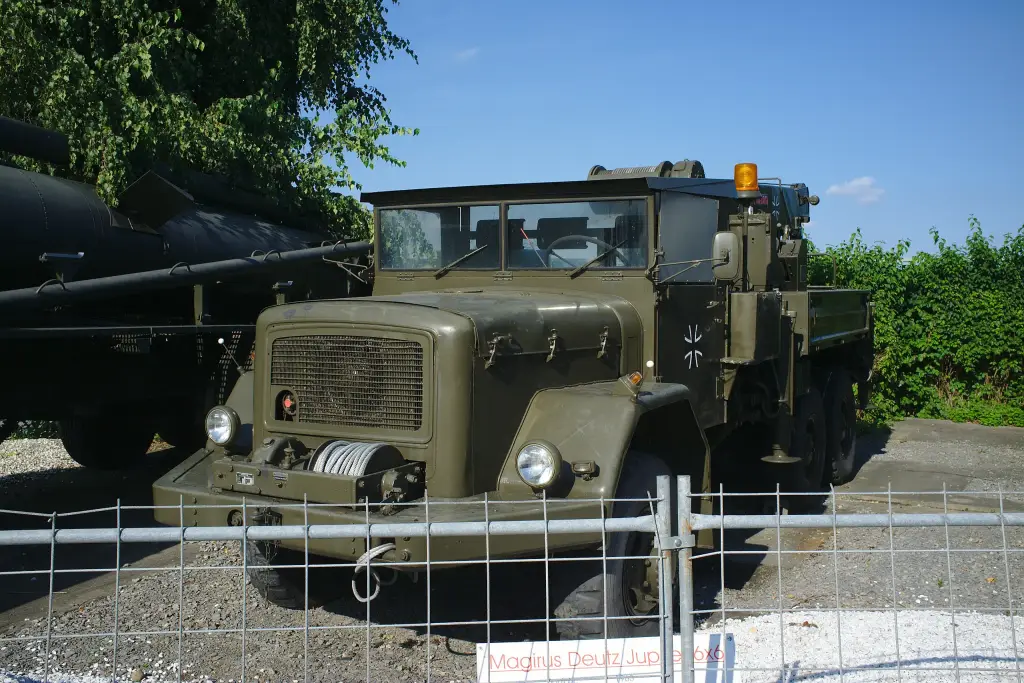
The Bundeswehr contract
Magirus-Deutz won the contract to supply vehicles in the Bundeswehr’s 7-tonne class, and delivery of the Jupiter 6×6 began in 1960. Compared with the earlier A 6500 and A 7500, the new lorry had a different axle and drive layout and, most importantly, a multi-fuel engine. The vehicles went to the army, to the federal border guard and to foreign armed forces, among them the Albanian army.
The multi-fuel V8
The engine was an air-cooled V8 of the type F8L714A from Klöckner-Humboldt-Deutz, with a displacement of 12,667 cc. In Bundeswehr vehicles it was derated to between 110 and 131 kW, depending on the fuel used and the setting of the injection pump; the civilian version produced 143 kW. Approved fuels were diesel, kerosene, petroleum and petrol. If none of these was available in sufficient quantity, the engine could run on piston lubricating oil, thinned by mixing it with the other fuels until its viscosity fell below 17 cSt at ambient temperature. In an emergency it would even burn vegetable oils such as frying oil.
Bodies and duties
The Jupiter chassis carried a wide range of bodies for the Bundeswehr: recovery cranes from Wilhag and Kirsten, personnel transport bodies, tipper bodies, airfield fire engines from Bachert, tankers and launchers for the Leichtes Artillerie-Raketen-System, or LARS 1. Tractor units were also available. The crane lorries, fitted with a front-mounted winch, were particularly important to the army’s engineer units and could climb gradients of up to 57.7 per cent.
M178D15A and the end of the line
When Magirus-Deutz changed its model nomenclature in 1964, the Jupiter 6×6 became the M178D15A: 178 stood for the power in PS, 15 for the 15-tonne gross vehicle weight and A for all-wheel drive. By the time the series ended in 1967 the Bundeswehr had received about 7,800 Jupiter 6×6 and M178D15A lorries, and a few more were delivered in the 1970s.
After military service
Retirement of the first vehicles began in the 1980s. Airfield fire engines often passed to volunteer fire brigades and some were still in service years later, while many crane and flatbed lorries went to the Technisches Hilfswerk and to private recovery and towing firms. Only single-figure numbers are thought to remain in Bundeswehr hands, and surviving examples are sought-after collector’s items.
Design and features
- Multi-fuel engine: the air-cooled V8 was approved for diesel, kerosene, petroleum and petrol, with lubricating oil and even vegetable oil as emergency fuels.
- All-wheel drive: the 6×6 chassis was built for military use and for difficult terrain.
- Purpose-built bodies: cranes, tippers, tankers, fire engines and rocket launchers were all mounted on the same chassis.
- Long service life: many vehicles were rebuilt or handed on to fire brigades and civil defence long after army service.
Magirus-Deutz Jupiter 6×6 versions
- Jupiter 6×6: the military lorry supplied from 1960.
- Jupiter 6×6 Z: the civilian version of the same vehicle.
- M178D15A: the designation used from 1964 under the new numbering system.
- Crane lorry: recovery crane with front winch, able to climb gradients of up to 57.7 per cent.
- Airfield fire engine: Bachert body, later often used by volunteer fire brigades.
The Jupiter was the largest of the round-bonnet Magirus-Deutz Rundhauber family. More vehicles of the make are in the Magirus collection.
Sources
- Magirus-Deutz Jupiter 6×6, German Wikipedia: engine, bodies, production numbers, service history
- Magirus-Deutz, German Wikipedia: planet naming and place of the Jupiter in the range