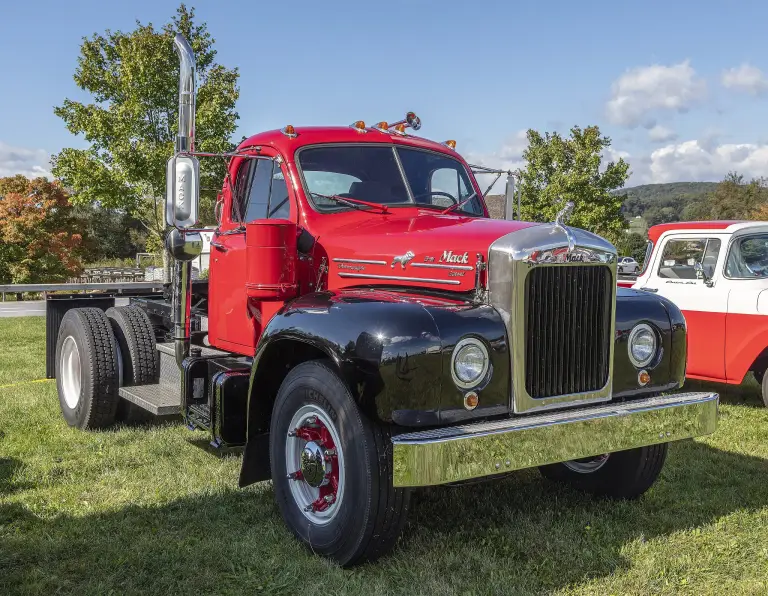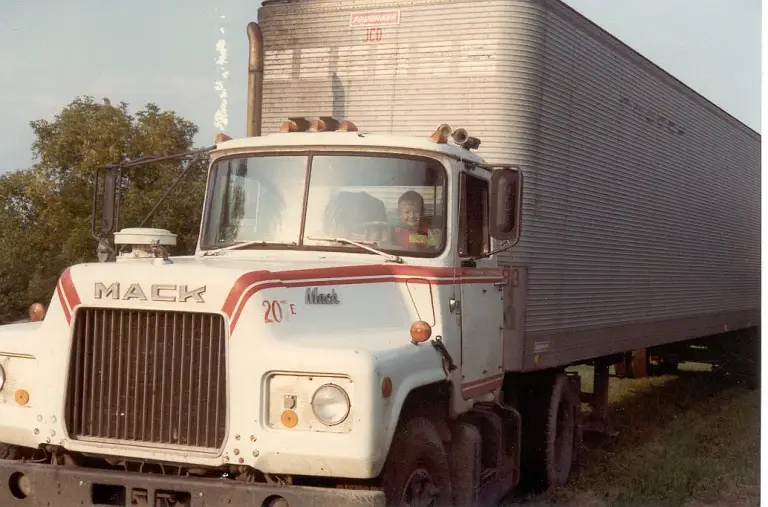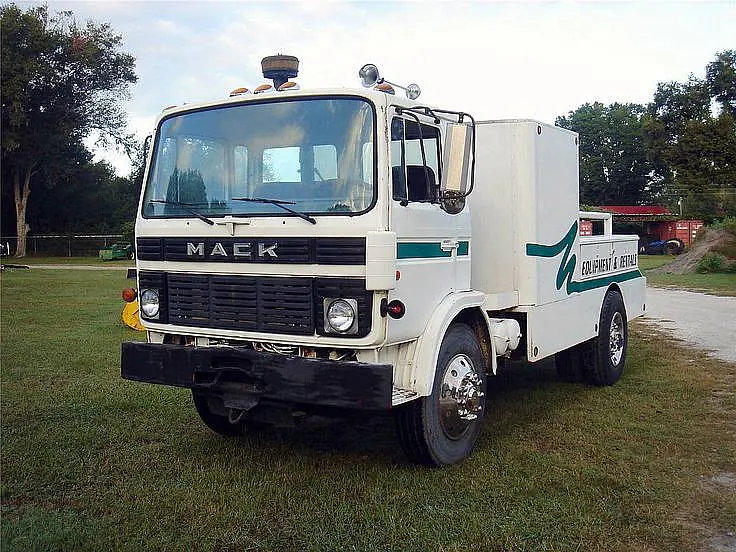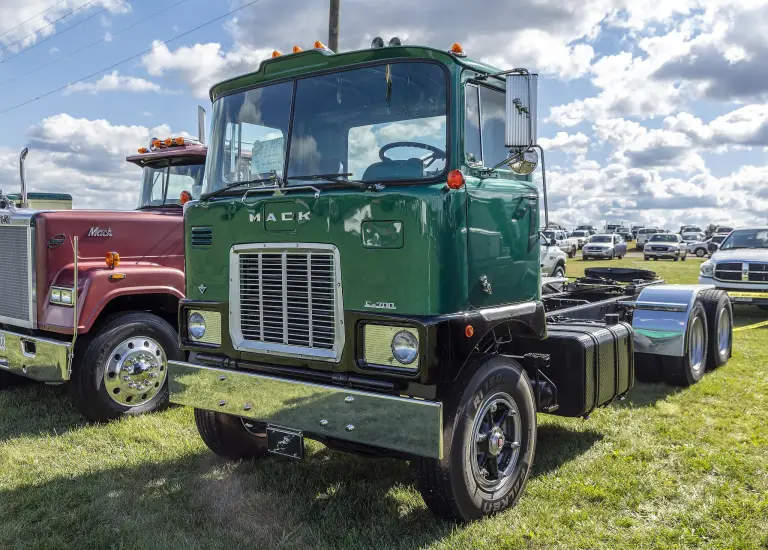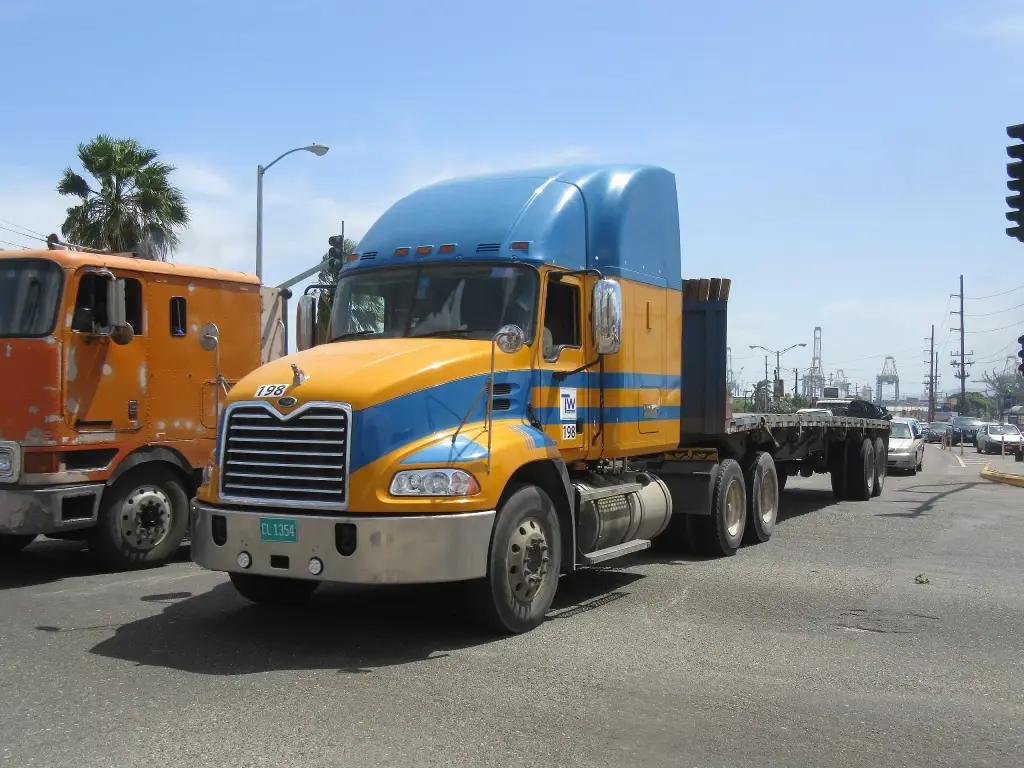
The Mack Pinnacle is a series of heavy-duty Class 8 trucks introduced in 2006 as the successor of the Mack Vision. It is sold mainly as a highway tractor in a set-forward front-axle configuration, built at Mack’s Lehigh Valley Operations plant in Macungie, Pennsylvania, and in 2026 it was succeeded by the Keystone.
Mack Pinnacle at a glance
| Production | from 2006; succeeded by the Keystone in 2026 |
|---|---|
| Predecessor | Mack Vision |
| Type | long-hood conventional semi-tractor |
| Front axle | set forward, the set-back version replaced by the Anthem |
| Cab | day cab usual, five sleepers from 48 to 70 inches |
| First engine | Mack MP7 from 2006, MP8 from 2007 |
| Current engine | Mack MP8, 12.8 L, 415–505 hp |
| Base transmission | Mack mDRIVE automated manual, 12, 13 or 14 speeds |
| Wheelbases | 166 to 247 in (420–630 cm) |
| Base rear suspension | Twin Y air suspension, 40,000 lb |
| Loaded weight | 62,000 lb as a truck, over 80,000 lb with trailers |
Based on one source, the English Wikipedia article on the Mack Pinnacle.
History of the Mack Pinnacle
The Pinnacle replaced the Vision in 2006. Mack designed it as a long-hood conventional semi-tractor for local and regional work, and it is sold only with a set-forward front axle: the set-back version was dropped in the United States and Canada, where the Anthem took over that job in 2017. A day cab is usual, but five sleepers are offered, from a 48-inch flat top to a 70-inch hi-rise, along with roof fairings, side shields and skirts. In Venezuela and Peru the truck is sold as the Mack Vision Elite.
When it arrived the Pinnacle used the new MP7 engine, a 10.8-litre overhead-cam turbocharged inline six of 325 to 425 hp; the 12.8-litre MP8 of 415 to 505 hp followed in 2007 and is now the only engine offered. The base transmission is the Mack mDRIVE automated manual, with 12, 13 or 14 speeds, alongside Mack manuals of 8 to 18 speeds, Eaton-Fuller UltraShift automated systems and Allison automatics. In 2008 Mack released the Pinnacle Rawhide Edition, a truck that combined the Pinnacle’s technology with classic styling: a chrome bumper, stainless steel cab and sleeper skirts, forward-mounted dual seven-inch stacks, a 13-inch stainless sun visor and four chrome air horns.
Under the cab is a ladder frame with beam axles, front and rear axles rated at 12,000 or 14,000 lb and 40,000 lb respectively, and the Twin Y air suspension as standard: its trailing arms fork to the rear and attach to the top and bottom of the axle, with an air bag behind the axle so that each axle is sprung separately. The earlier Camelback tandem was offered on earlier models. The set-forward axle and the high rectangular grille make the Pinnacle a high-drag truck, which is why it is used for local and regional hauling, dump, flatbed and lowboy work rather than long-distance freight.
Design and features
- Set-forward axle: the layout that survives in the range, chosen where length limits or weight distribution matter.
- Five sleepers: from 48-inch flat top to 70-inch hi-rise, with aerodynamic fairings.
- Twin Y air suspension: separate springing for each rear axle, rated at 40,000 lb.
- Rawhide Edition (2008): chrome bumper, stainless skirts, dual stacks, sun visor and four air horns.
- Mack driveline: MP8 engine and mDRIVE automated manual as standard.
Mack Pinnacle versions
- Pinnacle day cab: the usual local and regional configuration.
- Pinnacle with sleeper: 48, 60 or 70-inch flat top and hi-rise bunks.
- Pinnacle Rawhide Edition (2008): the classic-styled special edition.
- Mack Vision Elite: the name used in Venezuela and Peru.
- Keystone (2026): the model that succeeded the Pinnacle.
The Pinnacle replaced the Mack Vision, and its long-hood relative is the Mack CL series; the vocational truck of the same years is the Mack Granite. More trucks are in the Mack collection.
Sources
- Mack Pinnacle, English Wikipedia: design, engines, transmissions, frame, axles, applications